




5 Essential Entry-Level Kitchen Knives Every Home Cook Needs
Buying kitchen knives for the first time can be confusing. Large block sets often include many blades that look useful but rarely leave the drawer. For most home cooks, a smaller group of reliable, easy-to-handle knives is a better starting point than a crowded collection of specialized tools.
The goal of an entry-level knife set is simple: cover everyday prep work safely and efficiently. You should be able to chop vegetables, slice bread, trim fruit, cut sandwiches, and prepare meat or fish without fighting the tool in your hand. The five knives below form a practical foundation for most kitchens.
Key Takeaways
- A chef’s knife is the first knife most home cooks should buy because it handles the widest range of tasks.
- A paring knife, bread knife, utility knife, and santoku add precision, slicing ability, and comfort for different prep styles.
- Choose knives by balance, handle comfort, edge quality, and the foods you cook most often—not by the number of pieces in a set.
- Good care matters: wash by hand, dry promptly, store safely, and keep edges sharp.
1. Chef’s Knife: The Main Everyday Blade
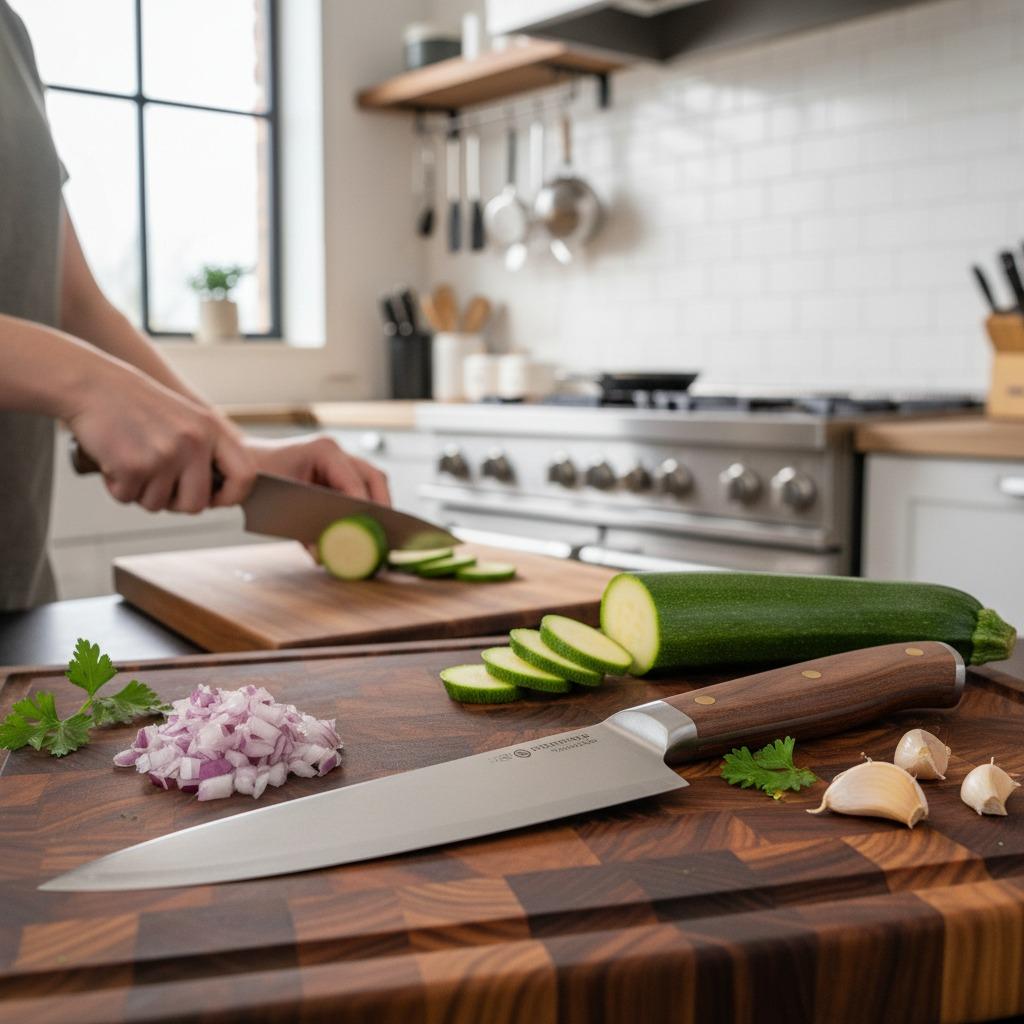
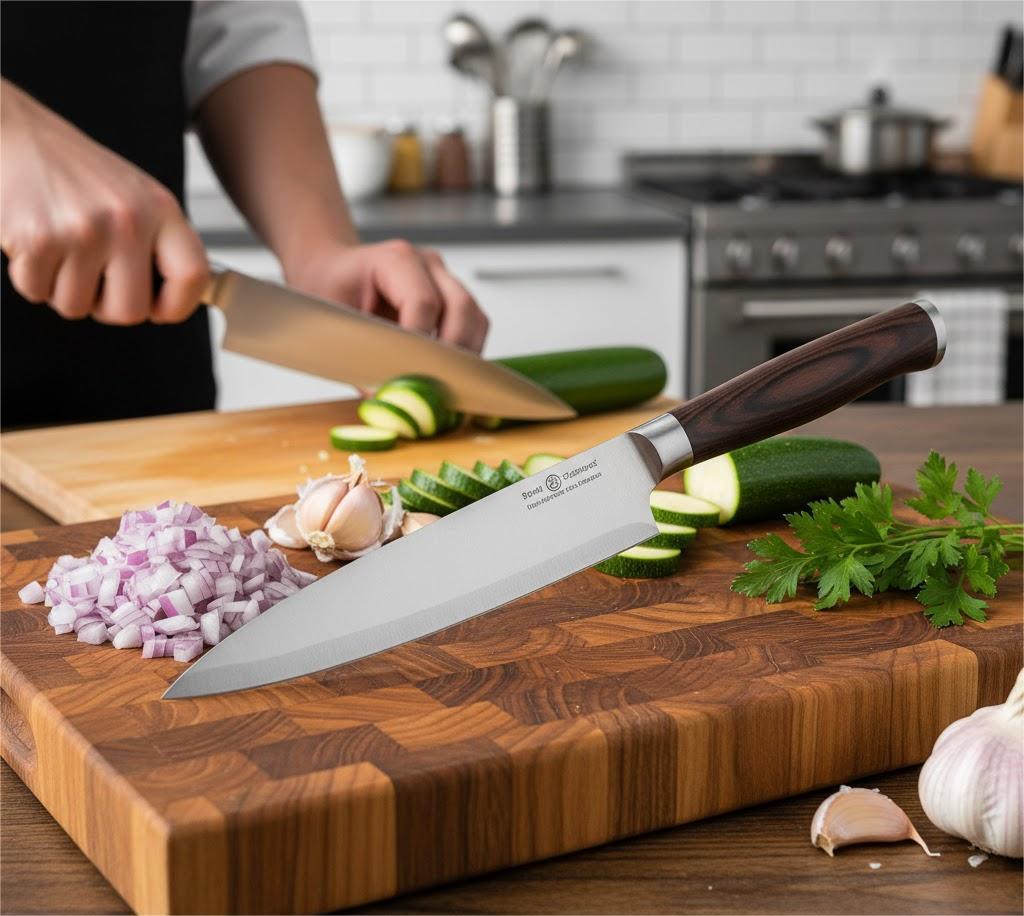
If you buy only one kitchen knife, start with a chef’s knife. An 8-inch chef’s knife is a common choice because it offers enough blade length for cabbage, onions, herbs, and meat while still being manageable for most home cooks.
A chef’s knife typically has a broad blade and a curved edge from heel to tip. That curve supports a rocking motion for chopping and mincing. The blade height also gives your knuckles clearance when cutting on a board.
Use it for dicing onions, slicing carrots, mincing garlic, chopping herbs, cutting boneless meat, and breaking down many everyday vegetables. When comparing options, pay attention to how the handle feels after several minutes of use. A knife that feels impressive for ten seconds may feel tiring during a full meal prep session.
2. Paring Knife: Small Tasks and Close Control
A paring knife is the detail tool of a starter kitchen. Its short blade, often around 3.5 inches, gives better control for small ingredients and trimming work. It is especially useful when a chef’s knife feels too large.
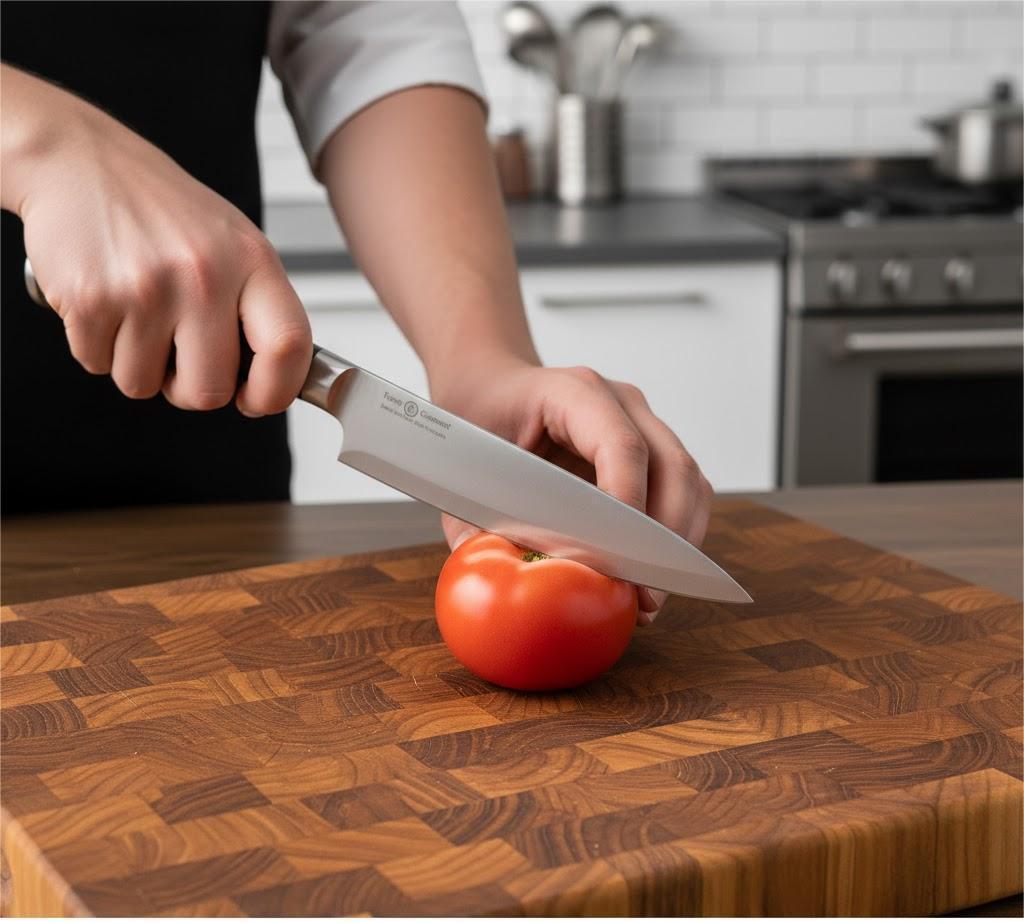
Reach for a paring knife when peeling fruit, hulling strawberries, coring tomatoes, trimming blemishes, deveining shrimp, or making small decorative cuts. Some tasks are done on a board, while others are performed carefully in hand. For safety, keep the blade sharp, cut away from your body, and avoid using a paring knife for hard foods that require force.
When choosing one, look for a handle that allows a secure pinch or fingertip grip. A paring knife should feel nimble, not bulky.
3. Serrated Bread Knife: Clean Slices Without Crushing
A serrated bread knife solves a problem that straight-edged knives handle poorly: cutting through tough exteriors and soft interiors. A crusty loaf, sponge cake, pastry, or ripe tomato can be crushed or torn by the wrong blade. Serrations grip the surface and saw through with less downward pressure.
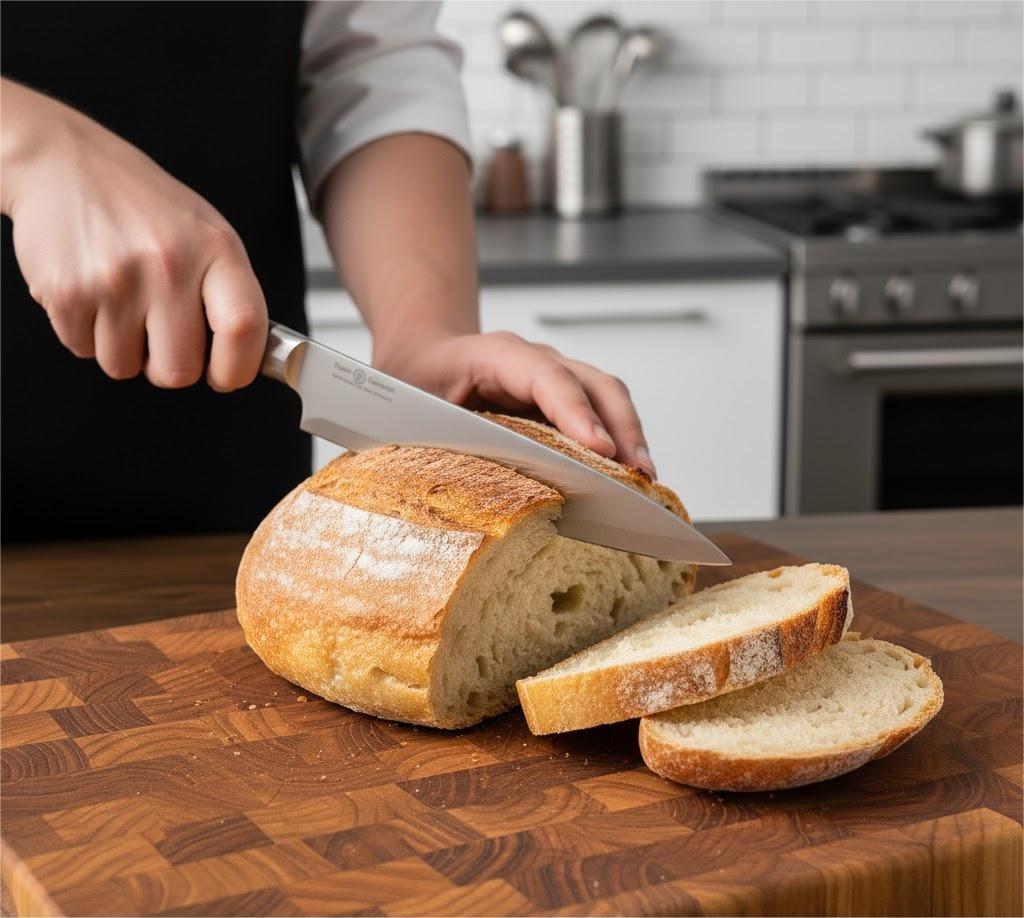
A 9-inch bread knife is a practical length for most loaves. It can also slice sandwiches, layer cakes, and delicate baked goods. The best technique is a gentle sawing motion. Let the teeth do the work rather than pressing hard.
Because serrated knives are harder to sharpen at home than plain-edge knives, choose one that feels sturdy and cuts smoothly from the start. Ask how the serrations should be maintained and whether professional sharpening is recommended.
4. Utility Knife: The Useful Middle Size
The utility knife fills the space between a chef’s knife and a paring knife. Usually around 5 to 6 inches long, it is helpful for tasks that need more reach than a paring knife but less size than a chef’s knife.
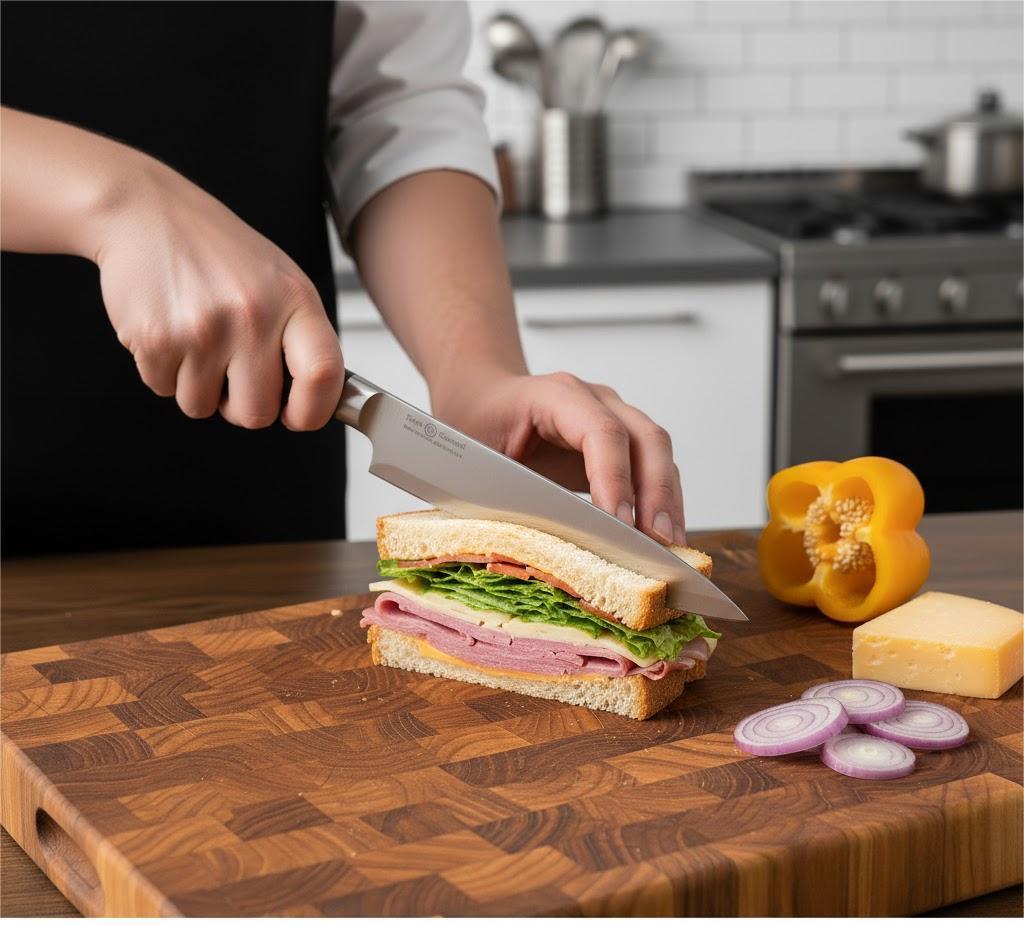
Use a utility knife for slicing sandwiches, trimming smaller cuts of meat, cutting cheese, halving apples, slicing citrus, or working with bell peppers and shallots. It is often the knife people reach for during quick snacks or small meals because it is easy to control and quick to clean.
For entry-level buyers, a utility knife is not always the first purchase. If budget is limited, buy a chef’s knife and paring knife first. Add a utility knife when you want more convenience for medium-size prep.
5. Santoku Knife: A Comfortable Alternative for Vegetables
The santoku is a Japanese-style all-purpose knife. The name is commonly associated with three core tasks: slicing, dicing, and mincing. It often has a straighter edge profile than a Western chef’s knife, making it well suited to a push-cut motion.
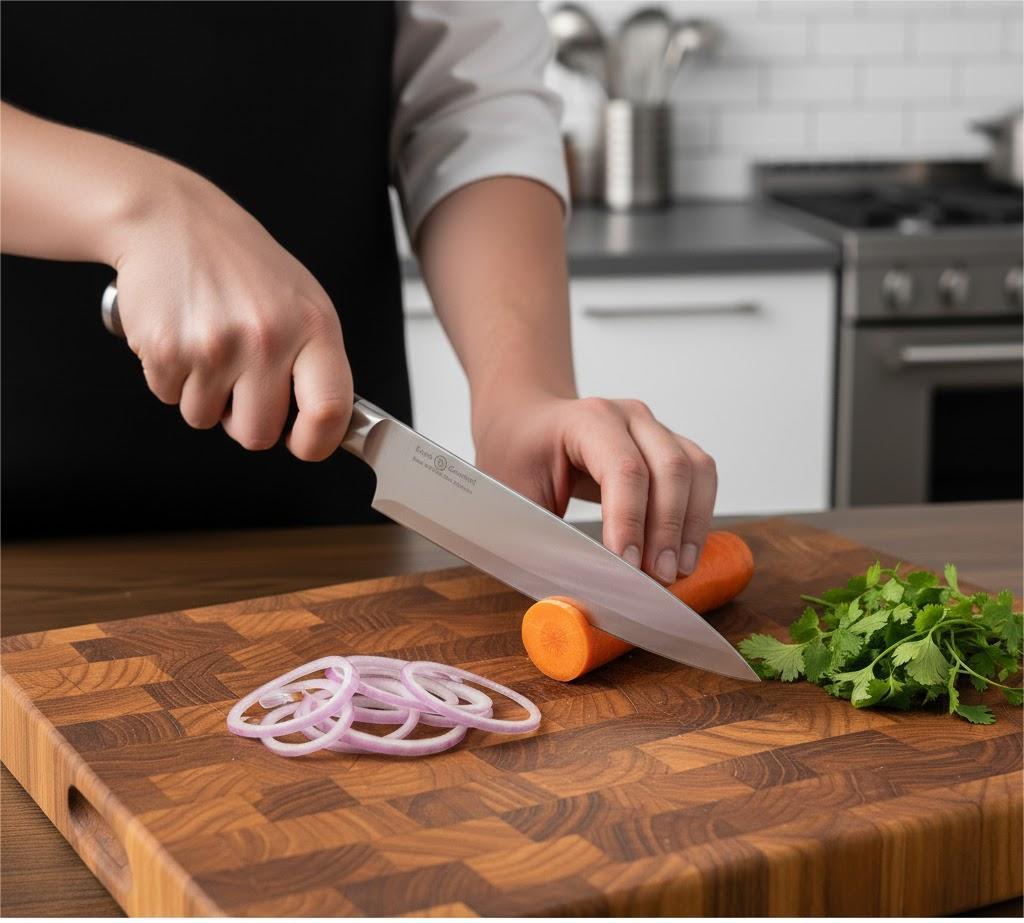
Many home cooks like a santoku for vegetable-heavy cooking because it can feel lighter and more compact than a chef’s knife. Some versions include hollow indentations along the blade to help reduce food sticking, though this feature varies by product and should be checked before purchase.
Do you need both a chef’s knife and a santoku? Not always. If you prefer a rocking motion, start with a chef’s knife. If you prefer straight up-and-down or forward push cuts, a santoku may feel more natural. Trying both styles in hand is the best way to decide.
Comparison Checklist for a Starter Knife Set
| Knife Type | Common Size | Best For | Selection Checklist |
|---|---|---|---|
| Chef’s Knife | 8 inch | Chopping, dicing, slicing, mincing | Balanced weight, comfortable handle, enough knuckle clearance |
| Paring Knife | 3.5 inch | Peeling, trimming, small precision cuts | Secure grip, fine tip, easy control |
| Serrated Bread Knife | 9 inch | Bread, cakes, pastries, ripe tomatoes | Even serrations, smooth sawing action, stable handle |
| Utility Knife | 5–6 inch | Sandwiches, fruit, cheese, small meat prep | Light handling, useful blade length, easy daily use |
| Santoku Knife | 7 inch | Vegetables, slicing, dicing, mincing | Comfortable push-cut feel, suitable blade height, stable grip |
How to Choose Entry-Level Kitchen Knives
Do not judge a knife only by appearance or the size of the set. A practical starter knife should feel safe, balanced, and appropriate for the foods you cook most often. Before buying, consider these points:
- Handle comfort: Check whether the handle shape fits your hand and supports a secure grip when dry and slightly wet.
- Balance: A knife should not feel overly blade-heavy or handle-heavy during normal cutting.
- Edge condition: A new knife should cut cleanly without needing excessive pressure.
- Storage: Plan for a knife block, magnetic strip, sheath, or drawer insert to protect the edge and your hands.
- Maintenance: Ask how the knife should be sharpened and whether it requires special care.
Use and Care Tips for Longer Knife Life
Even entry-level knives perform better and last longer with basic care. Wash knives by hand with mild detergent, then dry them promptly. Avoid leaving them in a sink where the edge can be damaged and where someone may reach in without seeing the blade.
Use a stable cutting board made for kitchen prep. Hard surfaces such as glass, stone, or ceramic can dull edges quickly. Do not twist the blade through hard foods, pry with the tip, or use kitchen knives to open packages, cans, or bones unless the knife is specifically designed for that job.
Honing can help maintain the edge between sharpenings, but honing is not the same as sharpening. When the knife begins to slip on tomato skin or requires extra force through onions, it may be time to sharpen it properly.
Practical FAQ
Do beginners need a full knife block set?
No. Most beginners are better served by a chef’s knife, paring knife, and bread knife first. Add a utility knife or santoku based on your cooking habits.
Should I choose a chef’s knife or a santoku?
Choose a chef’s knife if you like a rocking chop and want a general-purpose Western-style blade. Choose a santoku if you prefer push cuts and do a lot of vegetable prep.
How often should kitchen knives be sharpened?
It depends on use, cutting surface, and care. If the knife slips, crushes food, or needs more force than usual, it likely needs sharpening.
Can I put kitchen knives in the dishwasher?
Hand washing is generally safer for the edge, handle, and user. Dishwashers can knock knives against other items and may shorten their useful life.
What is the best first purchase?
Start with a comfortable 8-inch chef’s knife. It covers the broadest range of home cooking tasks and helps you learn basic cutting technique.
