




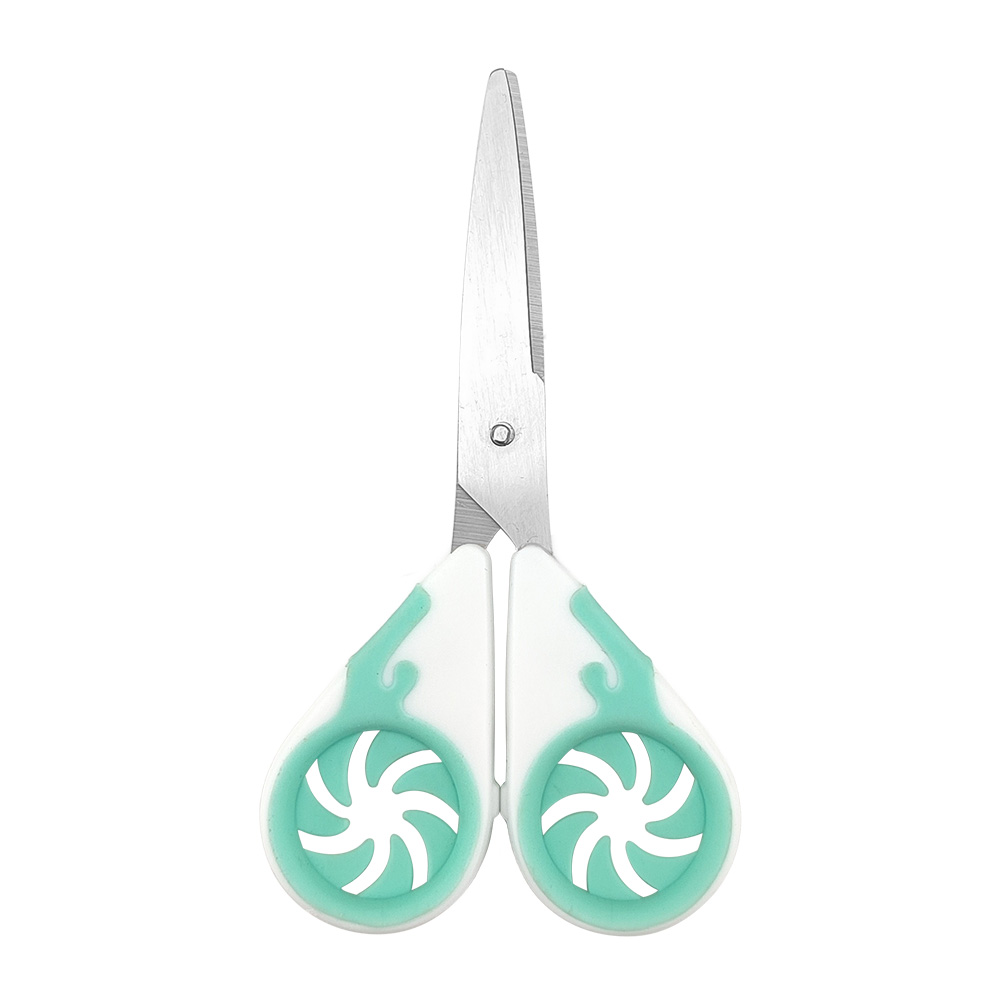
5 Inch School Scissors: Safety Meets Style for Kids
For schools, stationery retailers, craft brands, and distributors, 5 inch school scissors are a small product with important requirements. They need to be easy for children to control, comfortable enough for repeated classroom activities, and safe enough for supervised use. The original product presentation highlights a 5 inch school scissors design with soft grip handles, a mint green and white SwirlGrip pattern, rounded tips, and stainless steel blades. Those details make the product suitable for a practical discussion about how buyers should evaluate children’s scissors before placing wholesale or OEM orders.
Key Takeaways
- 5 inch school scissors are commonly selected for young learners because the compact size supports control during paper crafts and classroom tasks.
- Rounded tips, soft grip handles, and manageable blade length are important safety and comfort considerations.
- For OEM or wholesale sourcing, buyers should confirm materials, packaging, labeling, compliance documents, and quality inspection standards directly with the supplier.
- Do not choose children’s scissors based on appearance alone; test grip comfort, cutting performance, and suitability for the target age group.
Why the 5 Inch Size Works for School Use
A 5 inch pair of school scissors is designed to fit smaller hands better than full-size office scissors. The shorter length can help children guide cuts more steadily when working on paper, cardstock, worksheets, or simple craft materials. In classroom settings, this size also makes storage easier because multiple pairs can fit into bins, pencil cases, or supply kits.
Size alone, however, does not determine whether a pair of scissors is appropriate for children. Buyers should look at the handle opening, blade tip shape, overall weight, and how smoothly the scissors open and close. A product that feels stiff may frustrate a child, while a product that is too loose may reduce control. For school procurement, it is useful to request samples and have teachers or supervisors assess how the scissors perform in real tasks.
Safety Features to Evaluate Before Buying
The source article identifies rounded tips as a key feature. Rounded tips are important because they reduce the risk associated with accidental pokes during supervised classroom use. They do not remove the need for adult guidance, but they are a sensible design choice for children’s scissors.
Buyers should also review blade sharpness carefully. Children’s scissors must be sharp enough to cut paper cleanly, because dull blades can cause tearing and extra force. At the same time, the blade edges and tips should match the intended age group and use case. If the scissors are being sold into a regulated market, ask the supplier what safety requirements, warnings, and documentation are applicable. Do not assume compliance without reviewing documents and sample labeling.
Soft Grip Comfort and Classroom Control
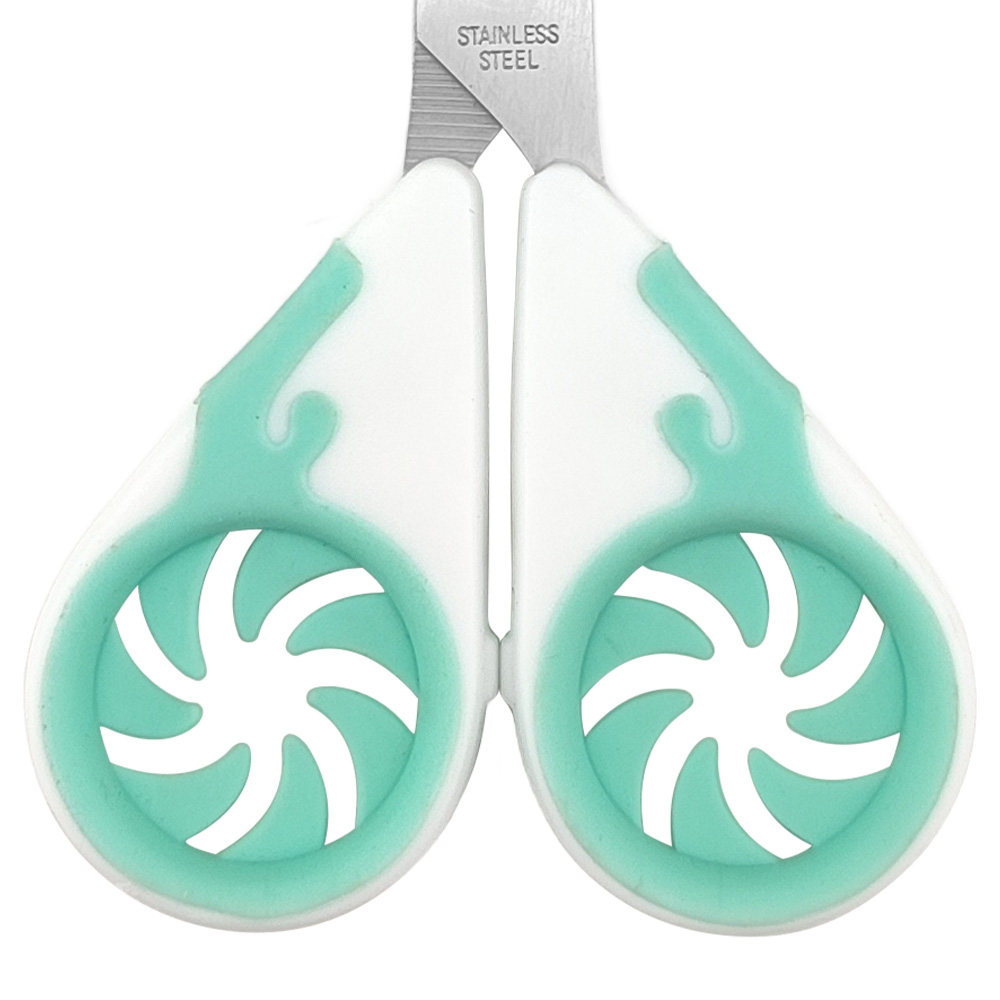
The original product description mentions soft grip handles and a mint green and white SwirlGrip design. A soft grip can improve comfort during repeated cutting tasks, especially for art lessons, scrapbooking activities, or group craft sessions. Better traction may also help reduce slipping when children are learning how to coordinate their hands.
For sourcing teams, comfort should be assessed through handling, not just product photos. Check whether the grip material feels secure, whether the handle edges are smooth, and whether the openings fit the intended user group. If the scissors are intended for both left- and right-handed users, ask whether the handle and blade orientation support that need. If separate left-handed models are required, clarify that early in the OEM discussion.
Comparison Checklist for Buyers
The table below can help importers, school supply buyers, and brand owners compare sample scissors before confirming an order.
| Evaluation Point | What to Check | Questions to Ask the Supplier |
|---|---|---|
| Size and handling | 5 inch length, weight, opening and closing feel | Can you provide samples for classroom handling tests? |
| Blade and tips | Stainless steel blades and rounded tips as described | What blade material and edge finish are used in production? |
| Grip comfort | Soft grip texture, handle shape, slip resistance | Can the grip color or pattern be customized for OEM orders? |
| Packaging | Retail card, bulk pack, classroom kit, or private label format | What packaging options are available, and what artwork files are required? |
| Quality control | Consistent cutting performance, smooth edges, clean assembly | What inspection steps are used before shipment? |
| Market requirements | Age grading, warnings, labeling, and documentation | Which compliance documents can you provide for the destination market? |
OEM and Wholesale Sourcing Guidance
When a product is described in connection with OEM school scissors or a students scissors factory, buyers should approach the conversation with a clear specification sheet. Include product size, handle color, blade material expectation, tip style, packaging format, barcode needs, carton marks, and target sales channel. This helps reduce misunderstandings and makes quotations easier to compare.
Because the source information does not state Bonet-specific capacity, minimum order quantity, prices, certifications, or testing results, buyers should request those details directly rather than assume them. Important questions include: What is the MOQ for standard colors? What is the MOQ for custom handle colors or branded packaging? Can pre-production samples be approved before mass production? What inspection report format is available? How are defective items handled after delivery?
For distributors and retail brands, packaging is often as important as the scissors themselves. A classroom bulk pack may prioritize durability and easy counting, while a retail blister card may need clear age guidance, product benefits, and attractive shelf presentation. If sustainability claims, recycled materials, or special coatings are desired, ask for evidence before using those claims in marketing.
Product Selection Tips for Schools and Parents
For consumer-facing selection, focus on the child’s age, hand size, and typical activities. A 5 inch pair may be suitable for many school crafts, but younger children should always be supervised. Before use, show children how to carry scissors safely, how to pass them handle-first, and how to cut only approved materials.
- Choose rounded tips for beginner and classroom use.
- Check that the handle is comfortable and not too large for the child’s hand.
- Test cutting on regular paper before using thicker craft materials.
- Store scissors in a case, pencil box, or classroom bin when not in use.
- Replace scissors if the blades become damaged, loose, or difficult to control.
Use and Care for Longer Service Life
Even simple school scissors benefit from proper care. Keep them dry after cleaning, avoid cutting adhesive-heavy materials that can leave residue, and wipe the blades if glue or tape builds up. Children should be taught not to cut hard items, wires, or objects outside the scissors’ intended use. In a classroom, teachers can assign a storage area and check scissors periodically for loose pivots, bent blades, or damaged grips.
For wholesale buyers, care instructions can also reduce customer complaints. If packaging space allows, include short usage and supervision reminders. Clear instructions help parents and teachers understand that children’s scissors are learning tools, not general-purpose cutting tools.
Practical FAQ
Are 5 inch school scissors suitable for all children?
Not automatically. The 5 inch size is often appropriate for school use, but suitability depends on the child’s age, hand size, coordination, and supervision level. Buyers should follow applicable age guidance and local safety requirements.
Why are rounded tips important?
Rounded tips help reduce the risk of accidental pokes during supervised activities. They are especially useful in classrooms where many children may be using scissors at the same time.
What should OEM buyers confirm before ordering?
Confirm blade material, handle material, color options, packaging, labeling, inspection process, MOQ, lead time, and any compliance documents needed for the destination market.
Can soft grip handles improve usability?
Soft grip handles can improve comfort and traction, particularly during repeated craft tasks. Buyers should still test samples to confirm the handle shape and feel suit the intended users.
How should schools maintain children’s scissors?
Store them dry, keep them in a designated container, clean adhesive residue from the blades, and remove any scissors with damaged blades, loose pivots, or broken handles.
