




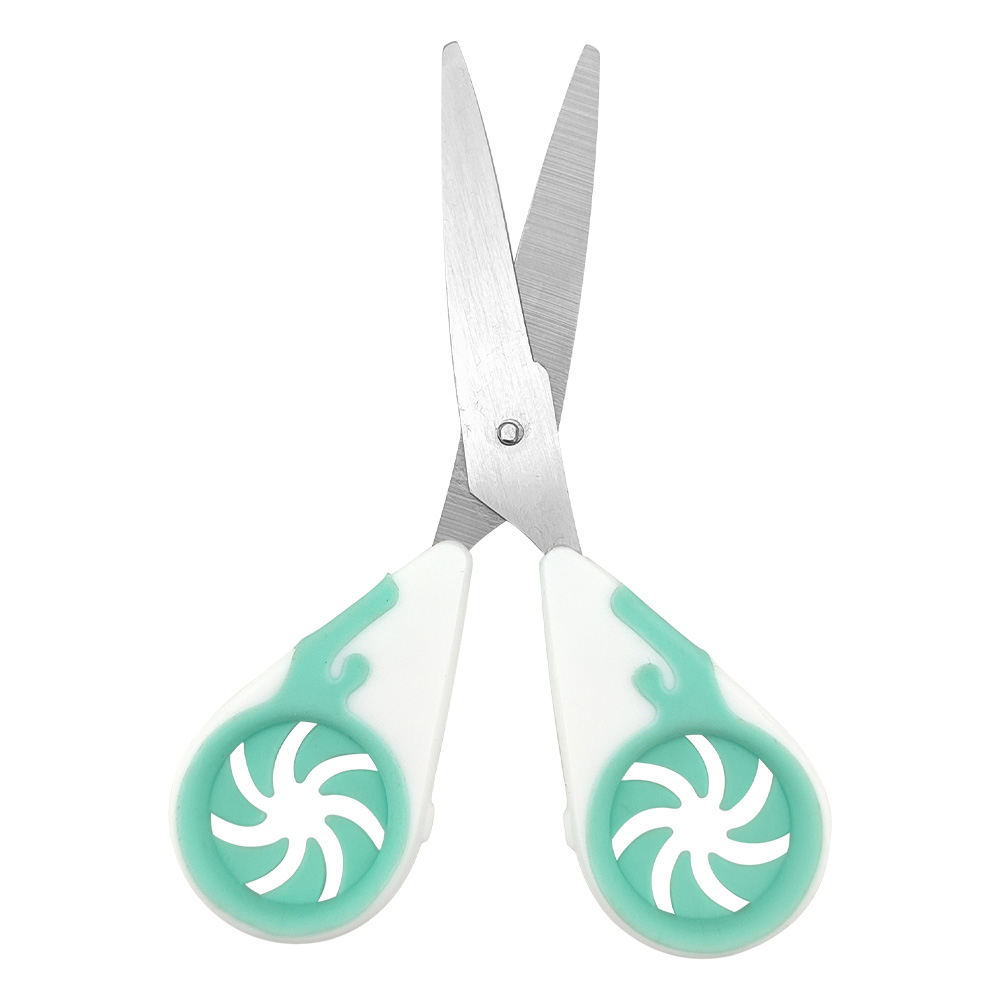
5 Inch School Scissors: B2B Sourcing and Selection Guide
For school supply distributors, stationery brands, educational retailers and OEM buyers, 5 inch school scissors sit in a high-volume category where small design choices matter. The product needs to be compact enough for young users, dependable enough for classroom use, and clear enough in its specifications for purchasing teams to compare offers from different suppliers.
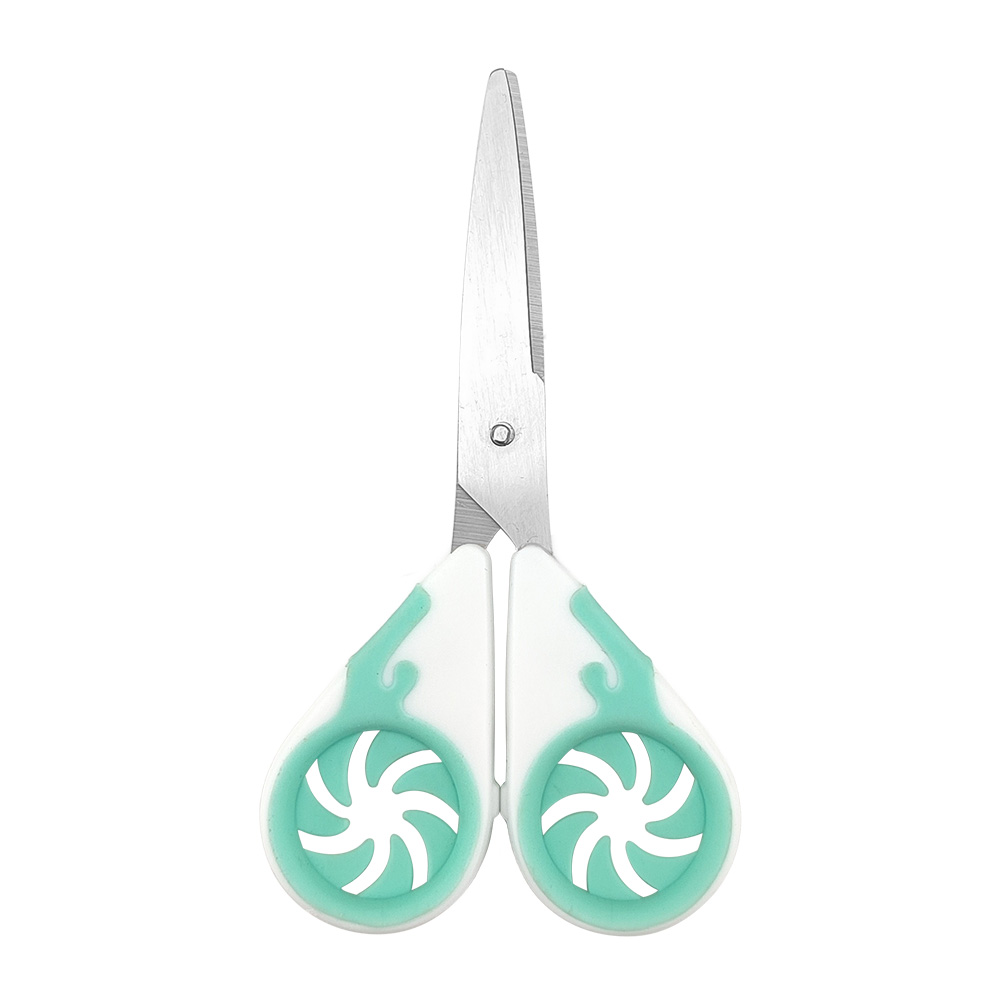
The original product description presents a 5 inch school scissor with mint green handles, soft grip comfort, spiral handle motifs and blades described as stainless steel and rust-resistant. Those are useful starting points, but a professional sourcing decision should go further: confirm materials, test cutting performance, review packaging, and ask the supplier for documentation relevant to the target market.
Key Takeaways
- 5 inch school scissors are commonly suited to classroom, craft, stationery and back-to-school programs.
- Soft grip handles can improve comfort, but buyers should test fit, control and durability with real users.
- Do not rely only on product photos; request material confirmation, samples and packaging details.
- For OEM school scissors, clarify branding, color matching, labeling, carton packing and inspection standards before ordering.
- If the product is marketed for children, ask the supplier what age grading, warnings and compliance documents are available for your sales region.
Where 5 Inch School Scissors Fit in the Market
The 5 inch format is popular because it balances portability and control. It is small enough for pencil cases, classroom supply bins and retail blister packs, while still offering more cutting reach than very small craft scissors. Typical use cases include paper cutting, classroom worksheets, scrapbooking, basic craft projects and light stationery tasks.
For B2B buyers, the product can be positioned in several ways: an entry-level school supply, a branded back-to-school item, a private-label stationery product, or part of a kit that includes rulers, glue, pencils or craft accessories. The right specification depends on the channel. A discount retailer may prioritize cost and simple packaging, while an education-focused distributor may care more about comfort, safety labeling and repeat purchase reliability.
Handle Comfort and User Control
The original copy highlights soft grip scissors with ergonomic handles and spiral motifs. For school products, handle comfort is not only a visual feature. It affects how confidently a child can open and close the scissors, how stable the hand feels during cutting, and whether the product is comfortable during longer craft sessions.
When assessing a sample, check the handle openings, edge smoothness, grip texture and flexibility. A soft grip should feel secure without becoming sticky, loose or easily damaged. Buyers should also evaluate whether the scissor is suitable for left-handed users or only designed for right-handed cutting. If your product listing will make left-hand or ambidextrous claims, confirm that with the supplier before printing packaging.
Blade Material, Cutting Performance and Durability
The source article describes the blades as stainless steel and rust-resistant. These are important claims, but they should be verified during sourcing. Ask the supplier to identify the blade material, surface treatment and any corrosion-resistance testing they can provide. Avoid placing unconfirmed material grades or performance claims on packaging or online listings.
Cutting performance should be tested on the materials your buyers actually expect to cut. For school scissors, paper is the baseline. Some users may also cut thin card, craft paper or lightweight fabric, but each added material increases performance expectations. Test several samples from the same batch to check consistency, blade alignment, tip finish, pivot tightness and whether the scissors chew or tear paper after repeated use.
Comparison Checklist for Buyers
| Evaluation Area | What to Check | Questions to Ask the Supplier |
|---|---|---|
| Size and fit | Overall 5 inch size, handle openings, weight and balance | Can you provide a dimension drawing and sample for review? |
| Grip comfort | Soft grip feel, handle edge smoothness and control | What handle material is used, and can colors be customized? |
| Blade details | Material confirmation, edge quality and pivot stability | What blade material is supplied, and is any test report available? |
| Child use | Tip shape, warning labels and age suitability | What age grading and safety documentation can be provided for my market? |
| OEM options | Logo placement, packaging, barcode and carton packing | What branding methods, artwork requirements and packing options are available? |
| Quality control | Sample consistency, defect tolerance and inspection process | What inspection standard is used before shipment? |
OEM and Wholesale Sourcing Considerations
If you are sourcing OEM school scissors, treat the product as more than a commodity. Ask about the supplier's experience with school stationery, available molds, handle color options, printing methods, packaging formats and lead times. Do not assume that every factory can support the same customization level. Some may offer standard colors only, while others may support Pantone matching, private labels or custom retail cards.
Commercial terms should be clarified early. Ask about minimum order quantity, sample cost, tooling needs, production time, payment terms, carton dimensions and shipping method. Because these details vary by supplier and order design, they should be confirmed in writing rather than copied from a generic product page.
For quality control, prepare a simple inspection checklist before production begins. Include appearance, handle color, logo placement, blade opening and closing, cutting test, packaging accuracy and carton labeling. This helps prevent misunderstandings between purchasing teams, factories and third-party inspectors.
Packaging, Labeling and Retail Presentation
Packaging is especially important for children's scissors because it communicates age suitability, warnings, barcode information and brand identity. Common packaging choices may include blister cards, hang cards, polybags or bulk classroom packs, depending on the sales channel. The best option depends on retail display needs, sustainability targets, price point and shipping protection.
Before confirming packaging artwork, ask the supplier what information they can legally and technically support. If you sell in multiple countries, your team may need local language labels, importer details or region-specific warnings. The supplier can provide product information, but the brand owner or importer is usually responsible for ensuring that final labeling matches the destination market's rules.
How to Select the Right 5 Inch School Scissors
- Define the buyer: classroom, retail, craft kit, promotional program or private label.
- Confirm core specifications: size, handle design, blade description, color and packaging.
- Request pre-production samples and test them on expected materials.
- Ask for available documentation, especially for children's product claims.
- Review OEM details such as logo position, artwork files and color tolerance.
- Set inspection criteria before placing a bulk order.
A good sourcing process reduces risk. Rather than choosing only by unit price, compare total value: sample quality, communication speed, packaging accuracy, production consistency and the supplier's willingness to answer technical questions.
FAQ
What are 5 inch school scissors best used for?
They are generally used for classroom paper cutting, stationery tasks and light craft projects. Buyers should test samples against their intended use before making performance claims.
Are soft grip scissors better for children?
Soft grip handles may improve comfort and control, but quality varies. Check the grip material, handle shape, edge smoothness and durability during sample evaluation.
Can 5 inch school scissors be customized for OEM orders?
Many school scissors suppliers may offer options such as handle color, logo printing or custom packaging. Ask each supplier about available customization, artwork requirements, MOQ and lead time.
What documents should B2B buyers request?
Ask for material information, product photos, sample approval records, packing details and any safety or compliance documents relevant to your target market. Do not print compliance claims unless they are verified.
How should wholesale buyers compare suppliers?
Compare sample quality, communication, packaging capability, inspection process, commercial terms and consistency across multiple samples. A slightly lower price may not be worthwhile if defects, unclear labeling or packaging errors increase downstream costs.
