




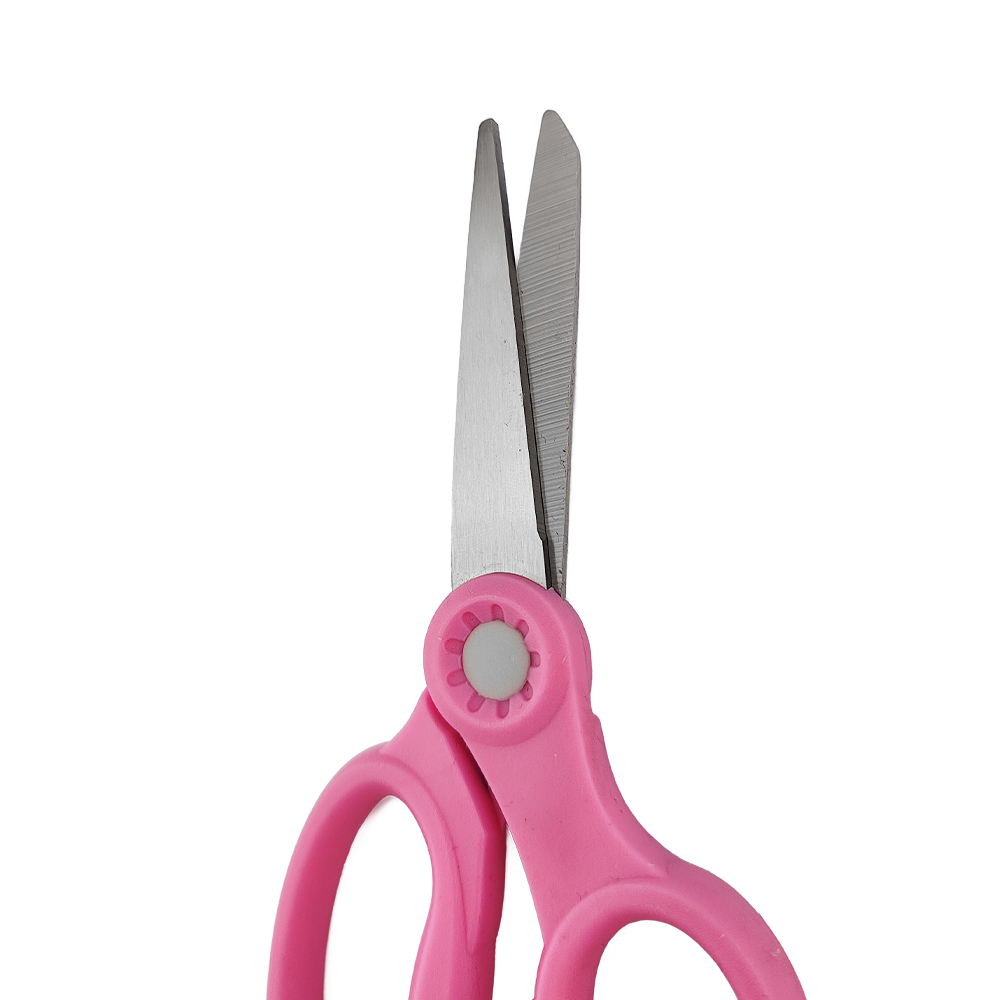
6 Inch Household Scissors: Precision & Versatility

Six inch household scissors occupy a useful middle ground: compact enough for drawers, sewing kits, office organizers, and craft boxes, yet large enough for common cutting jobs around the home. For consumers, the main question is whether a pair feels controlled, cuts cleanly, and holds up to regular use. For retailers, importers, and private-label buyers, the question is broader: how to evaluate a household scissors manufacturer or OEM scissors factory without relying only on appearance.
The original article highlights several explicit points: these scissors are positioned for home and workshop use, common tasks include trimming recipes, DIY projects, and light sewing, and the product is described with sharp stainless steel blades and ergonomic handles. This rewritten guide keeps those useful facts while focusing on practical selection, care, and sourcing questions buyers can apply before purchase or production.
Key Takeaways
- A 6 inch size is a versatile choice for paper, light fabric, packaging, coupons, labels, and general household tasks.
- Stainless steel blades and ergonomic handles are useful features when clearly confirmed by the supplier or product listing.
- Comfort, pivot smoothness, blade alignment, and cutting consistency matter as much as visual design.
- OEM and wholesale buyers should ask about materials, samples, packaging, quality checks, lead times, customization limits, and compliance needs.
- Proper cleaning, drying, storage, and task separation help household scissors stay reliable for longer.
What Makes 6 Inch Household Scissors Practical?
The 6 inch format is popular because it balances reach and control. Very small scissors can feel limiting when cutting longer lines, while larger shears may be unnecessary for light daily work. A 6 inch pair can be used for paper crafts, opening lightweight packaging, cutting tags, trimming thread, light sewing jobs, school projects, and general kitchen drawer tasks that do not involve food contact unless the scissors are intended and maintained for that use.
For most users, the best household scissors are not the heaviest or most complex. They are the pair that opens smoothly, closes cleanly, feels stable in the hand, and makes predictable cuts without requiring extra force. A well-proportioned handle can reduce hand fatigue during repeated cutting, especially for crafting or office work. Blade sharpness is important, but so are alignment and the quality of the pivot point.
How to Evaluate Blade and Handle Design
The original content states that the scissors feature stainless steel blades and ergonomic handles. When reviewing or sourcing a similar product, treat those points as starting criteria rather than complete proof of quality. Stainless steel is valued because it can resist corrosion better than some other steels, but buyers should still ask what grade is used, how the blades are finished, and whether the supplier can provide material information. If the grade is not stated, do not assume it.
Handle design is equally important. Ergonomic should mean more than a curved shape. A practical handle should offer enough space for fingers, avoid sharp edges, and provide control during both short snips and longer cuts. For household buyers, comfort can be tested immediately. For B2B buyers, request production samples and evaluate them with multiple users, not only with a visual inspection.
Comparison Checklist for Buyers
| Evaluation Area | What to Check | Questions to Ask |
|---|---|---|
| Blade performance | Clean cutting through paper, thread, and light fabric without tearing | What blade material and finish are used, and can samples be tested? |
| Handle comfort | Grip shape, finger room, edge smoothness, and control | Can handle color, texture, or shape be customized for OEM orders? |
| Pivot quality | Smooth opening and closing without wobble or stiffness | How is pivot consistency checked during production? |
| Appearance | Clean surface, consistent color, neat assembly, and no burrs | What cosmetic defect standards are applied before packing? |
| Packaging | Safe, protective, retail-ready, or bulk-packed options | Can the supplier support private-label packaging artwork and barcode needs? |
| Commercial terms | Sampling, lead time, order quantity, and after-sales process | What are the MOQ, sample cost, production timeline, and claim procedure? |
Use Cases Around the Home
Household scissors should be matched to the task. A 6 inch pair is generally suitable for light and medium daily cutting, but it should not be treated as an all-purpose tool for every hard material. Using household scissors on wire, thick plastic, heavy cardboard, or adhesive-heavy materials can dull the blades or damage alignment.
- Keep one pair for paper and office use to avoid blade contamination.
- Use a separate pair for light sewing or fabric so the edge stays cleaner and sharper.
- Avoid cutting food unless the scissors are designed, cleaned, and stored for that purpose.
- Do not use household scissors as a screwdriver, pry tool, or scraper.
- Store them closed and away from children when not in use.
OEM and Wholesale Sourcing Guidance
For distributors, retailers, promotional product buyers, and brand owners, custom scissors production involves more than selecting a handle color. A reliable OEM conversation should cover the product specification, sample approval, quality expectations, packaging, logistics, and documentation. If details such as MOQ, capacity, material grade, compliance testing, or certifications are not published, ask the supplier directly and request written confirmation before placing an order.
Useful sourcing questions include: What blade material is available? What handle materials and colors can be offered? Can the factory provide pre-production samples? What tolerances are used for blade alignment and pivot tension? What packaging options are available? Are private-label logos printed, molded, or applied by label? What inspection steps occur before shipment? Which tests or documents can be provided if required by the destination market?
It is also sensible to compare samples from more than one household scissors manufacturer. Look beyond first impressions. Test repeated cuts, check whether the blades meet cleanly from pivot to tip, inspect the handle finish, and confirm that packaging protects the product during transit. A lower unit cost may not be a saving if returns, complaints, or inconsistent batches create extra work later.
Care and Maintenance Tips
Good care extends the service life of household scissors. Wipe the blades after cutting adhesive labels, tape, or dusty materials. If the scissors become wet, dry them promptly before storage. Store them in a drawer organizer, sheath, or package compartment so the tips and edges do not knock against other tools. If the pivot becomes stiff, ask the manufacturer for maintenance guidance before applying oil, especially if the scissors may be used near food, fabric, or paper that could stain.
Users should also pay attention to changes in performance. If cutting begins to feel rough, the blades may be dirty, misaligned, or dull. For inexpensive household pairs, replacement may be more practical than repair. For bulk buyers, repeated complaints about dullness, loose pivots, or handle discomfort should be treated as quality signals to review with the supplier.
Practical FAQ
Are 6 inch household scissors suitable for fabric?
They can be suitable for light sewing and small fabric trimming, as noted in the original article. For heavier fabric or professional tailoring, dedicated fabric shears may perform better.
What should OEM buyers confirm before ordering?
Confirm blade material, handle material, customization options, sample process, MOQ, production lead time, packaging method, inspection standards, and any documents required for your market.
Does stainless steel mean the scissors will never rust?
No. Stainless steel can offer corrosion resistance, but performance depends on the grade, finish, environment, and care. Keep scissors clean and dry.
How can I judge comfort before a bulk order?
Request samples and test them with different hand sizes. Check grip space, pressure points, opening smoothness, weight balance, and control during repeated cutting.
Can household scissors be customized?
Customization may be possible through an OEM scissors factory, but buyers should ask what can actually be changed, such as handle color, packaging, logo method, and blade or handle options.
Final Buying Advice
A good pair of 6 inch household scissors should be simple, comfortable, and dependable. For consumers, focus on clean cutting, easy handling, safe storage, and correct use. For wholesale and OEM buyers, focus on verifiable specifications, sample testing, clear quality standards, and written commercial details. When those basics are handled carefully, this compact everyday tool can serve homes, craft areas, offices, and retail product lines with fewer surprises.
