




A Beginner’s Guide to Choosing Your First Pair of Professional Shears
Your first pair of professional shears can make sewing feel more controlled, accurate, and less tiring. Ordinary household scissors may cut thread or paper well enough, but fabric needs a cleaner edge and steadier blade alignment. If you are starting garment sewing, alterations, quilting basics, or home décor projects, choosing the right tailor scissor is one of the most practical early tool decisions you will make.
This guide focuses on what beginners should check before buying: size, comfort, blade behavior, maintenance, and safe use. It does not assume that the most expensive option is the best. The goal is to help you choose shears that match your hand, your fabric, and your learning stage.
What Makes Professional Shears Different?
Professional shears, often called tailor scissors, are designed for cutting fabric with long, controlled strokes. Compared with general-purpose scissors, they usually have longer blades, a more solid feel, and a handle shape that allows the lower blade to stay close to the cutting table. That table contact helps keep fabric flatter while you cut pattern pieces.
The main benefit is consistency. A good pair should open and close smoothly, cut from the base of the blade toward the tip, and leave fewer jagged edges. Beginners often notice that accurate cutting improves seam matching, hems, and finished project quality before any sewing machine adjustment is made.
Start With the Projects You Plan to Sew
Before comparing models, think about your first six months of projects. A beginner making cotton tote bags has different needs from someone trimming denim hems or cutting slippery lining fabric. You do not need a separate pair for every material at the start, but you should avoid buying only for appearance or weight.
- Apparel sewing: look for balanced shears that can handle curves, not just long straight cuts.
- Alterations: choose a size that gives control in tight areas around seams and hems.
- Quilting cotton: clean, straight cutting is important; comfort matters during repeated cuts.
- Thicker fabrics: ask whether the shears are suitable for the fabric thickness you expect to cut.
- Occasional crafts: do not use your fabric shears on paper, cardboard, wire, or plastic.
Key Buying Factors for Beginners
Most first-time buyers should evaluate shears by fit and control rather than by brand reputation alone. If possible, hold the tool before purchasing. If buying online, review the return policy and look for clear product photos of the handle, pivot, blade shape, and closed tip alignment.
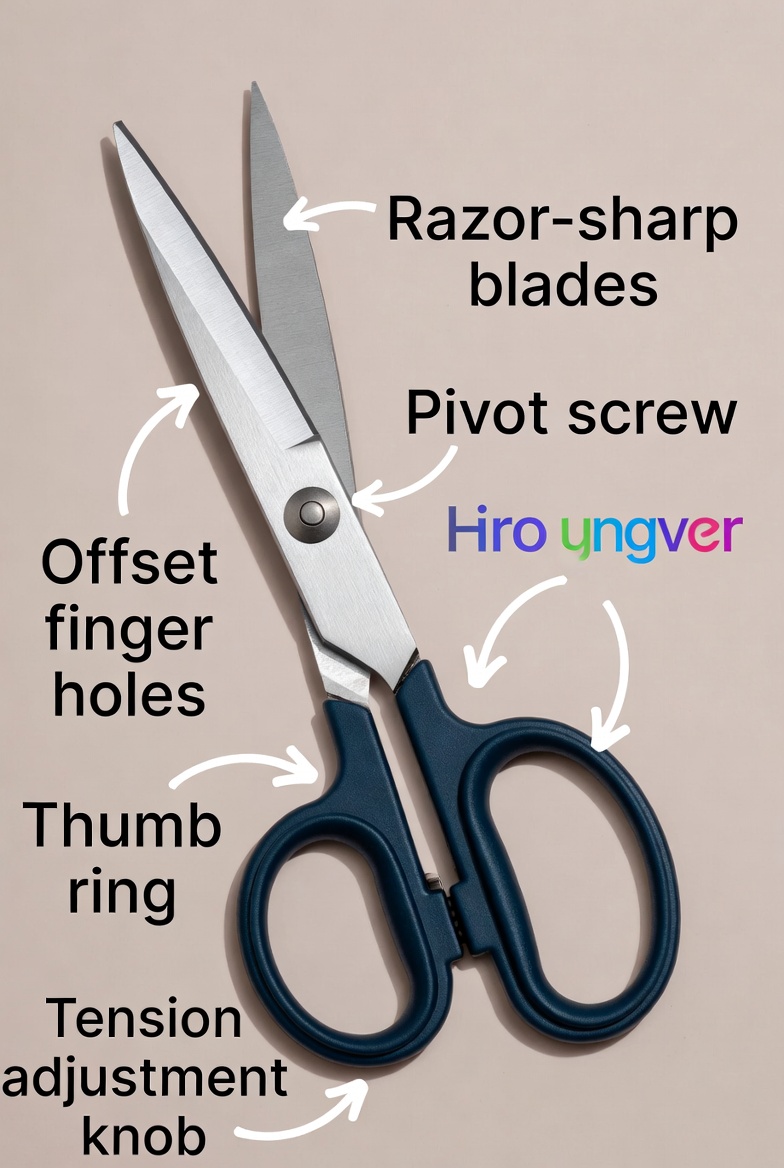
Blade length affects control. Many beginners are comfortable with an 8 to 9 inch range, while larger shears may suit long straight cuts but can feel awkward for small hands. Handle shape affects wrist angle; offset handles can help keep fabric flatter on the table. Weight should feel stable but not tiring. Pivot tension should allow smooth motion without blades wobbling.
Material descriptions vary by supplier, so read them carefully and ask questions if a listing is unclear. Instead of assuming a named steel or finish guarantees performance, check whether the seller explains sharpening, maintenance, and suitable fabric types.
Beginner Selection Checklist
| Feature to Check | Beginner-Friendly Choice | Why It Matters | Question to Ask |
|---|---|---|---|
| Blade length | Often 8 to 9 inches | Balances straight cuts with control around curves | Is this size recommended for general fabric cutting? |
| Handle fit | Comfortable grip with no pinching | Reduces hand strain during longer sessions | Will the handle suit small, medium, or large hands? |
| Blade action | Smooth opening and closing | Helps prevent skipped cuts and fabric shifting | Is the pivot adjustable or serviceable? |
| Tip alignment | Tips meet neatly when closed | Improves accuracy for notches and detail cuts | Are product photos available from multiple angles? |
| Care support | Clear cleaning and storage advice | Extends useful life and protects the edge | Does the supplier provide care instructions? |
How to Test Shears Before Keeping Them
When your shears arrive, do not begin with a major project. Test them carefully on fabric scraps similar to what you plan to sew. Open and close the blades slowly. They should not grind, stick, or feel loose. Cut a long straight line, then a gentle curve, then a small notch. The fabric should not fold between the blades.
- Check that the handles feel comfortable after several minutes of use.
- Cut with the full blade length, not just the tips.
- Try both single-layer and double-layer fabric scraps.
- Look for clean edges without excessive fraying caused by crushing.
- Store the shears safely if they pass your test; return or exchange them if they do not.
Use and Care: Protect the Cutting Edge
The fastest way to ruin fabric shears is to use them for the wrong materials. Keep one clearly marked pair for fabric only. Paper patterns, packaging, adhesive tape, and craft materials can dull or contaminate the cutting edge. If other people share your workspace, label the shears or store them separately.
After sewing, wipe the blades with a dry soft cloth to remove lint. Keep the pivot area clean. If the supplier recommends oiling, follow the instructions and use only a small amount, then wipe away excess before cutting fabric. Store the shears closed in a sheath, case, or drawer where the tips are protected. If cutting becomes difficult, ask a qualified sharpener whether the shears can be serviced; do not try aggressive home sharpening methods unless the manufacturer recommends them.
Common Mistakes to Avoid
Beginners often buy shears that are too large, too heavy, or chosen only because they look traditional. A classic tailor scissor shape can be excellent, but the tool still needs to match your hand and fabric. Another mistake is forcing dull shears through cloth. That can distort pattern pieces and make sewing more frustrating.
Also avoid comparing only price. Low-cost scissors may be fine for occasional craft use, while a better-built pair can be worthwhile if you sew weekly. The right value depends on comfort, clean cutting, and whether the shears can be maintained over time.
Key Takeaways
- Choose professional shears based on fabric type, hand comfort, and control.
- An 8 to 9 inch tailor scissor is often manageable for beginners, but fit matters most.
- Test new shears on scraps before using them on important fabric.
- Use fabric shears only on fabric and store them with the blades protected.
- Ask suppliers clear questions about size, care, pivot adjustment, and suitable materials.
FAQ
What size professional shears should a beginner buy?
Many beginners start with 8 to 9 inch shears because they offer a practical balance of cutting length and control. If your hands are small or you mainly alter garments, choose the size that feels easiest to guide accurately.
Are tailor scissors the same as professional shears?
The terms often overlap. Tailor scissors usually refer to fabric-cutting shears used for sewing and garment work. The important point is whether the tool is designed for fabric, not household cutting.
Can I use my fabric shears on paper patterns?
It is better not to. Keep a separate inexpensive pair for paper patterns and packaging. This helps protect the edge of your fabric shears.
How do I know when my shears need sharpening?
If they push fabric, leave uneven edges, or fail to cut near the tips after cleaning and normal adjustment, they may need professional sharpening or replacement.
Should I buy the most expensive pair first?
No. Buy the best-fitting pair you can reasonably maintain and use correctly. As your sewing skills develop, you will better understand whether you need a larger, lighter, or more specialized pair.
