




A Beginner’s Guide to Plastic Cutting Board Materials

A plastic cutting board is often one of the first kitchen tools people buy, and for good reason: it is lightweight, easy to clean, widely available, and practical for preparing meat, seafood, vegetables, fruit, bread, and cooked foods. The part that can feel confusing is the material. Many boards look similar on the shelf, but the plastic used can affect knife feel, heat tolerance, durability, staining, and cleaning habits.
This beginner’s guide explains the two common materials mentioned in plastic cutting board shopping—HDPE, or high-density polyethylene, and PP, or polypropylene. It also covers color coding, care, and when to replace a worn board. Use it as a practical checklist before buying a single board, a color-coded set, or a board for heavier daily prep.
Key Takeaways
- HDPE is commonly chosen for everyday cutting because it has a forgiving feel under a knife and good wear resistance.
- PP is often selected when buyers want a lighter, stiffer board with better heat tolerance than basic HDPE options.
- Color-coded boards help reduce the risk of mixing raw meat, seafood, vegetables, and ready-to-eat foods.
- Deep grooves are a hygiene warning sign; replace boards that are difficult to clean thoroughly.
- Always check the product label or supplier information for dishwasher guidance, food-contact suitability, and care limits.
Why Plastic Cutting Board Material Matters
Plastic boards are popular because their surfaces are non-porous compared with many natural materials, which makes them straightforward to wash after food preparation. However, no cutting board stays perfectly smooth forever. Knives create marks, and those marks can trap food residue if the board is heavily used or poorly cleaned. Material choice influences how quickly grooves form and how the board behaves in the dishwasher or near heat.
For home cooks, the best board is not always the thickest or most expensive. It should be stable on the counter, large enough for the food you cut most often, comfortable under your knife, and easy to clean with your normal routine. If you are buying for a shared kitchen, café, food service operation, or wholesale assortment, ask the supplier for clear details on material, thickness, temperature limits, packaging, care instructions, and any applicable food-contact documentation.
HDPE Plastic Cutting Boards
HDPE stands for high-density polyethylene. In cutting boards, it is valued because it feels slightly forgiving under the knife. That small amount of “give” can make chopping more comfortable and may be gentler on knife edges than very hard surfaces. HDPE boards are also common in both home and commercial-style kitchens because they are practical, affordable, and available in many sizes and colors.
Choose HDPE if you want a dependable board for general meal prep, including vegetables, cooked foods, and raw ingredients when cleaned properly between uses. It is a sensible starter material for beginners because it balances durability with easy maintenance. The main caution is heat: do not use a plastic cutting board as a trivet, do not place hot pans on it, and follow the manufacturer’s dishwasher instructions to reduce the chance of warping.
Polypropylene Plastic Cutting Boards
PP stands for polypropylene. Compared with many HDPE boards, PP boards are often lighter and more rigid. Polypropylene is commonly associated with better heat resistance, which can be useful for households that rely on dishwashers or prepare warm foods frequently. The exact heat limit still depends on the board design and the supplier’s instructions, so buyers should not assume all PP boards perform the same way.
A PP board can be a good choice when you prefer a firmer cutting surface or want a board that is easy to move, rinse, and store. The tradeoff is that a stiffer board may feel different under the knife, and heavy use can still create cuts over time. If you chop with force or use very sharp knives daily, inspect the surface regularly and replace it when grooves become deep or darkened.
HDPE vs PP: Quick Comparison Checklist
| Buying Point | HDPE Cutting Board | PP Cutting Board |
|---|---|---|
| Knife feel | Softer, more forgiving cutting feel | Firmer, more rigid cutting feel |
| Typical use | Everyday home prep and general chopping | Dishwasher-friendly routines and lighter handling |
| Heat awareness | Keep away from hot pans and high heat | Often better heat tolerance, but check label |
| Durability focus | Good resistance to everyday wear | Durable, but grooves can still form with heavy use |
| Weight and storage | Can feel more substantial depending on thickness | Often lighter and easy to lift |
| Best buying question | Is the board thick and stable enough for daily chopping? | What dishwasher and temperature guidance does the supplier provide? |
Color-Coded Cutting Boards for Safer Prep
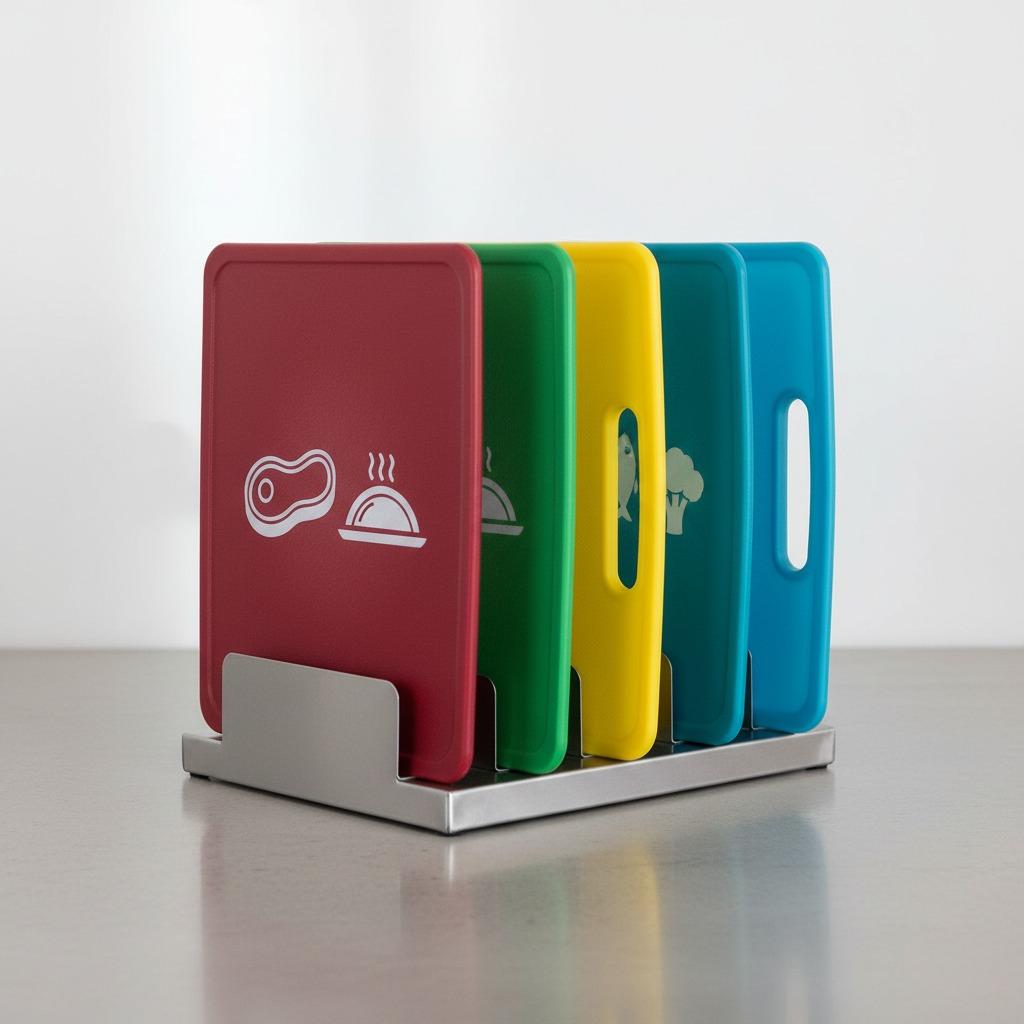
One of the strongest reasons to choose plastic is color coding. A set of different colors makes it easier to keep raw and ready-to-eat foods separate. The exact color system can vary, but many kitchens use red for raw meat, blue for fish or seafood, green for fruits and vegetables, and white or yellow for cooked foods, bread, or dairy-related prep.
Color coding works only if everyone in the kitchen follows the same system. If you share a kitchen with family, roommates, or staff, post a simple guide near the prep area. Wash boards immediately after use, especially after cutting raw meat or seafood, and never move salad, fruit, or cooked food onto a board that just held raw protein unless it has been cleaned and sanitized.
How to Choose the Right Plastic Cutting Board
Before buying, think about how you cook rather than choosing by color or price alone. A very small board is easy to store but frustrating for cabbage, roasts, melons, or batch prep. A board that is too thin may slide, flex, or feel unstable. A very large board may not fit your sink or dishwasher.
- Check the material: Look for HDPE or PP if you want a common plastic cutting board material with predictable everyday performance.
- Choose a practical size: Select a board large enough to keep food from falling off the edges, but small enough to wash easily.
- Look for stability: Consider thickness, weight, textured surfaces, or non-slip edges if the board will sit on a smooth counter.
- Read care instructions: Confirm whether the board is dishwasher safe and whether there are temperature or rack-placement recommendations.
- Ask supplier questions: For wholesale or OEM sourcing, request material details, packaging options, sample availability, labeling requirements, and documentation the supplier can provide.
Cleaning, Sanitizing, and Replacement
Good care matters more than the material name alone. After everyday cutting, wash the board with hot water and dish soap, scrub both sides, rinse well, and dry upright so air can circulate. If the board is dishwasher safe according to its label, use the recommended cycle and avoid placing it where excessive heat could cause bending.
For stronger cleaning after raw meat or seafood, use a kitchen-safe sanitizing method appropriate for food-contact surfaces and follow the cleaner’s instructions. Do not mix cleaning chemicals. Avoid abrasive tools that create unnecessary scratches, and do not try to sand or melt a plastic board at home. Replace the board when it has deep cuts, persistent odors, staining that does not wash away, or warping that prevents stable use.
FAQ
Is HDPE or PP better for beginners?
Both can work well. HDPE is a strong everyday choice for a forgiving knife feel, while PP may suit cooks who want a lighter, firmer board and often use a dishwasher. Check the product’s care label before deciding.
Can plastic cutting boards go in the dishwasher?
Many plastic boards are marketed as dishwasher safe, but not all boards tolerate the same heat or cycle. Follow the manufacturer’s instructions, and replace any board that warps or cracks.
Do I need separate boards for meat and vegetables?
Separate boards are a smart habit. A color-coded set makes it easier to keep raw meat, seafood, produce, and ready-to-eat foods apart, reducing cross-contamination during meal prep.
When should I replace a plastic cutting board?
Replace it when grooves are deep enough to hold residue, when odors remain after washing, when the surface is badly stained, or when the board no longer sits flat and stable.
What should B2B buyers ask a cutting board supplier?
Ask what plastic is used, available sizes and colors, packaging formats, customization options, sample process, care instructions, and what food-contact or quality documents the supplier can provide for your market.
Final Thoughts
A good plastic cutting board should make food prep cleaner, easier, and more organized. HDPE is a reliable everyday material with a comfortable cutting feel, while PP is worth considering if you prefer a lighter, firmer board with better heat tolerance. Match the material to your cooking habits, use color coding consistently, and replace boards before wear becomes a cleaning problem.
