




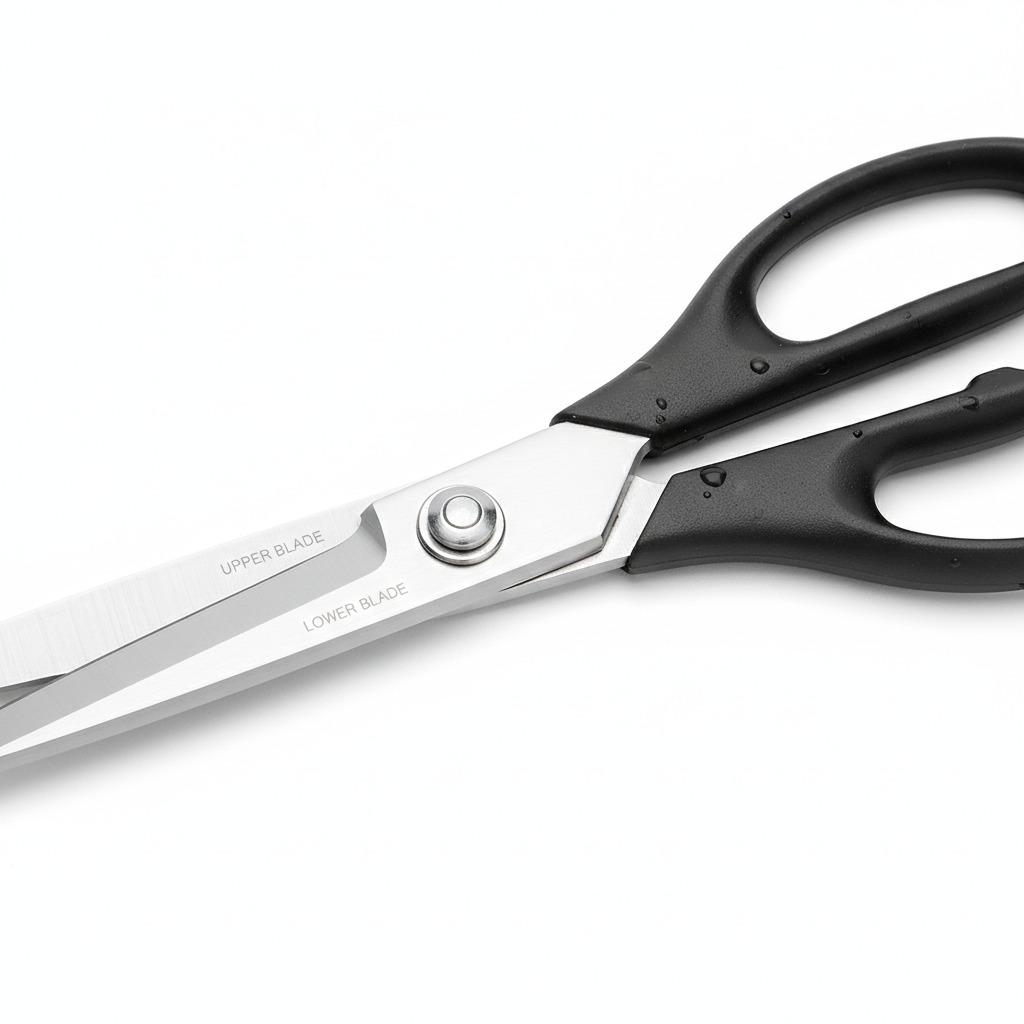
Adjusting the Pivot Screw: Finding the Perfect Tension
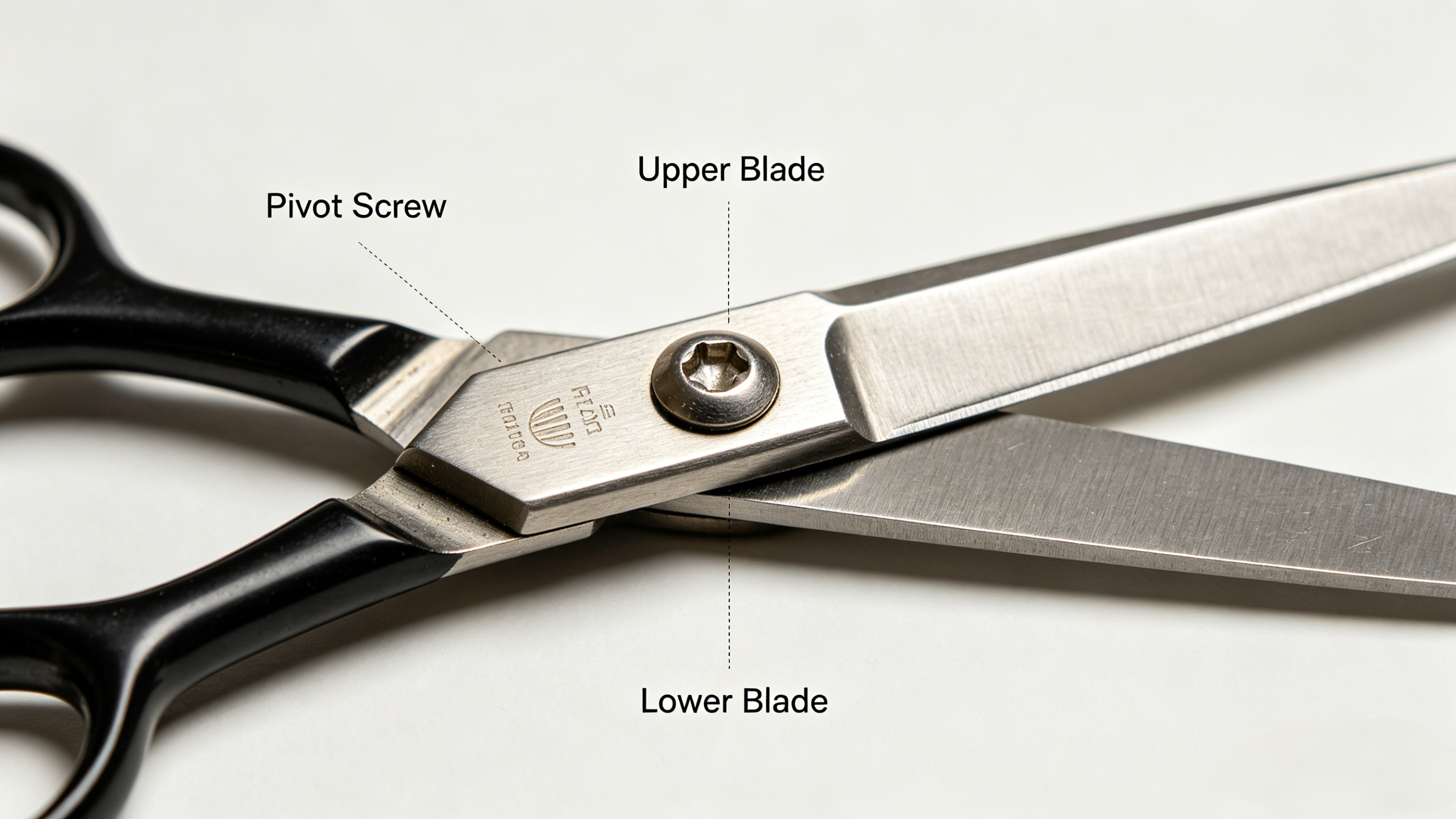
The pivot screw is a small part of tailor scissors, but it has a major effect on how the blades feel and cut. It controls the tension between the two blades. When the tension is balanced, the scissors open smoothly, the blades meet cleanly, and fabric cuts with less effort. When the tension is wrong, even sharp blades can drag, slip, chew fabric, or tire your hand during long cutting sessions.
This guide explains how to check pivot screw tension, how to adjust it safely, and how to maintain your tailor scissors after adjustment. It is written for sewing professionals, pattern makers, alteration shops, crafters, and anyone who depends on consistent fabric cutting.
Key Takeaways
- Correct pivot screw tension lets the blades glide without wobbling or forcing the hand.
- Use a simple vertical drop test before making any adjustment.
- Turn the screw only in very small increments, then test again.
- Clean lint and fabric dust from the joint before assuming the screw is too tight.
- If the blades are damaged, heavily worn, or still fail to cut after adjustment, professional sharpening or replacement may be needed.
Why Pivot Screw Tension Matters
Tailor scissors are used for cutting fabric accurately, often across long lines and multiple layers. The pivot screw helps keep the two blades aligned as they pass each other. Too much tension creates resistance, which can make the scissors feel stiff and can slow down long cuts. Too little tension allows the blades to separate slightly, which may cause fabric to fold, slip, or be missed between the blades.
The ideal setting is not simply the tightest possible screw position. The goal is controlled blade contact: enough pressure to keep the cutting edges aligned, but not so much that the scissors feel harsh or difficult to open. A small adjustment can make a noticeable difference, especially when cutting silk, chiffon, cotton, wool, denim, or canvas.
Tension Symptoms and What They Mean
| Tension condition | What you feel | Cutting result | Best next step |
|---|---|---|---|
| Too tight | Blades are stiff; hand strain appears quickly | Slow cuts, dragging, poor control on long lines | Clean the joint, then loosen the pivot screw slightly |
| Balanced | Smooth opening and closing with no side wobble | Clean fabric edges and predictable cutting | Maintain with cleaning, careful storage, and periodic checks |
| Too loose | Blades feel floppy or shift sideways | Jagged edges, fabric bunching, missed threads | Tighten the pivot screw slightly and retest |
| Dirty joint | Movement feels uneven or gritty | Inconsistent cutting even after small adjustments | Remove lint and debris before further tuning |
How to Test the Current Tension
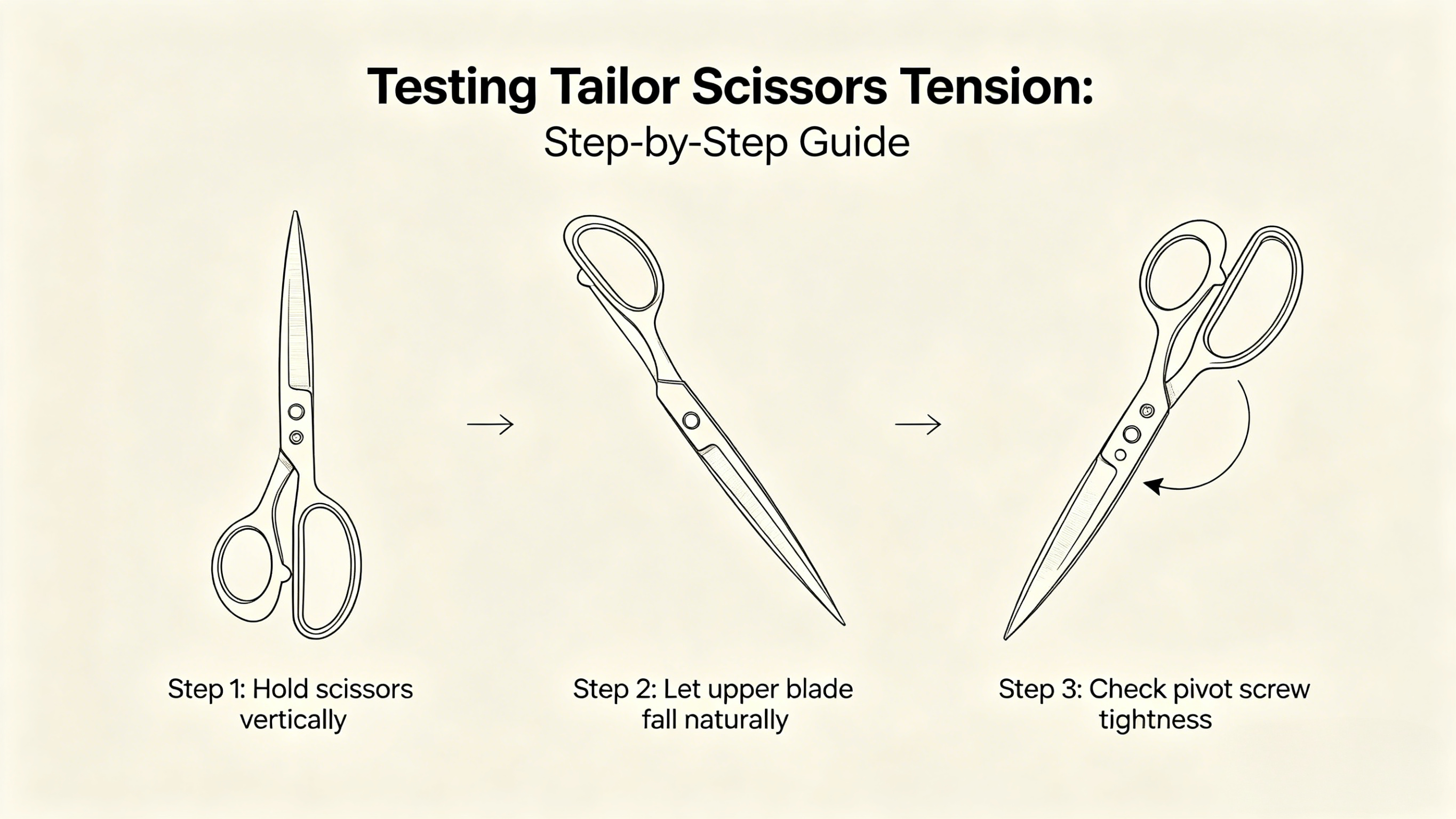
Before reaching for a screwdriver, test the scissors. This prevents over-adjustment and helps you understand whether the issue is tightness, looseness, dirt, or blade condition.
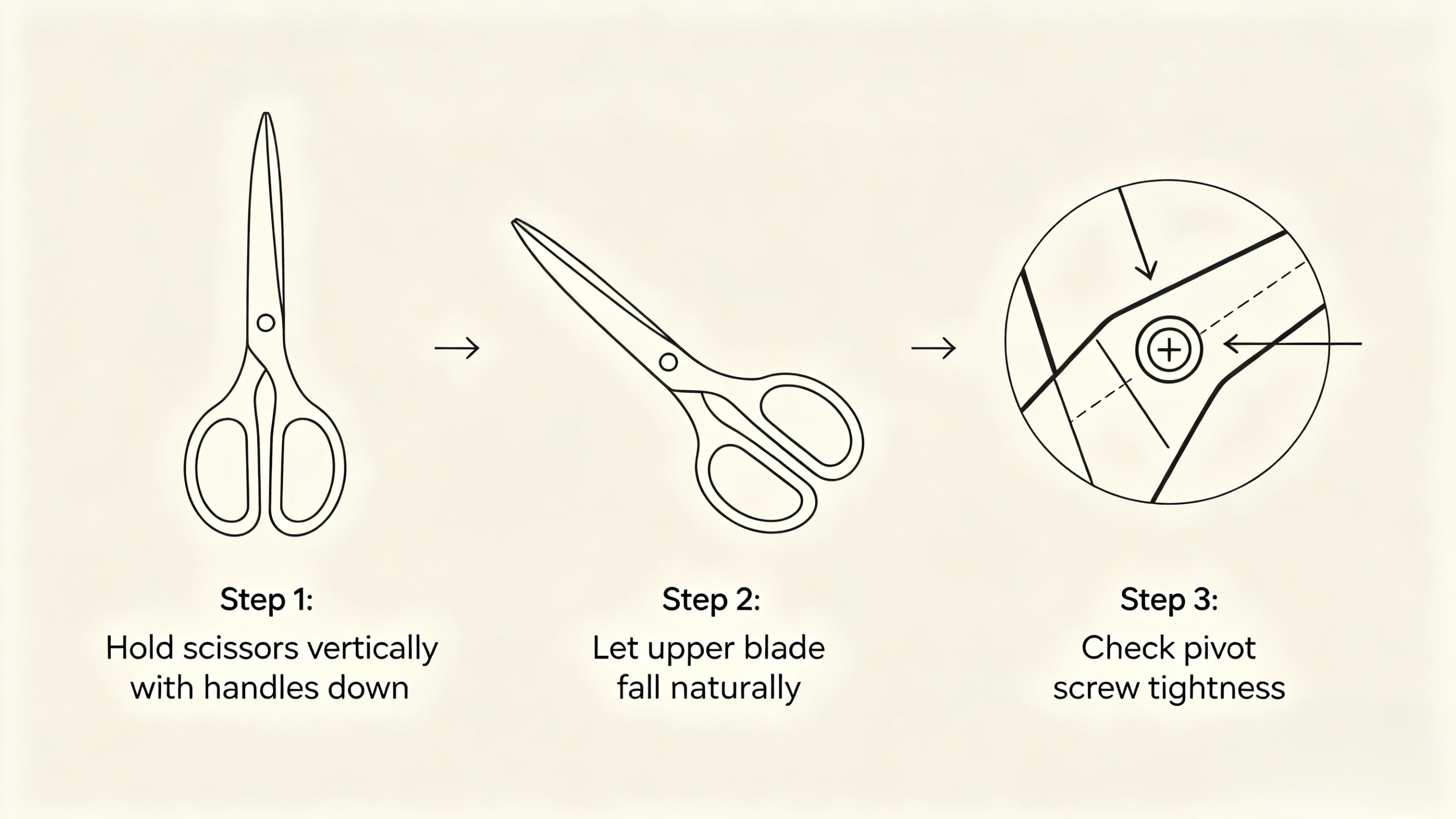
- Hold the scissors vertically by one handle, with the lower blade steady.
- Open the upper blade partway and let it move under its own weight.
- Watch how it falls. A controlled, smooth partial drop usually indicates workable tension.
- If the blade will not move at all, the joint may be too tight or dirty.
- If the blade drops shut instantly or feels loose side to side, the pivot screw may be too loose.
Also do a fabric test. Use a scrap of the type of fabric you normally cut. If the scissors perform well on paper but not on fabric, remember that paper testing can be misleading for sewing tools. Fabric performance is the more useful indicator for tailor scissors.
Tools and Preparation
Most pivot screw adjustments require only basic items. Use a screwdriver that fits the screw slot correctly. A poorly fitting tool can damage the screw head, making future maintenance harder.
- Small flathead screwdriver matched to the pivot screw
- Soft, dry cloth for wiping the blades and joint
- Small brush or cotton swab for removing lint
- A tiny amount of scissor oil, if you normally use it for tool care
- Fabric scrap for testing after each adjustment
Work on a stable surface with good lighting. Keep your fingers away from the cutting edges, and do not force a screw that seems stuck. If the screw is damaged or will not move with gentle pressure, seek help from a sharpening or repair professional.
Step-by-Step Pivot Screw Adjustment
Adjustment should be gradual. Large turns can shift the blades from one problem to another, so think in small movements and repeated testing.
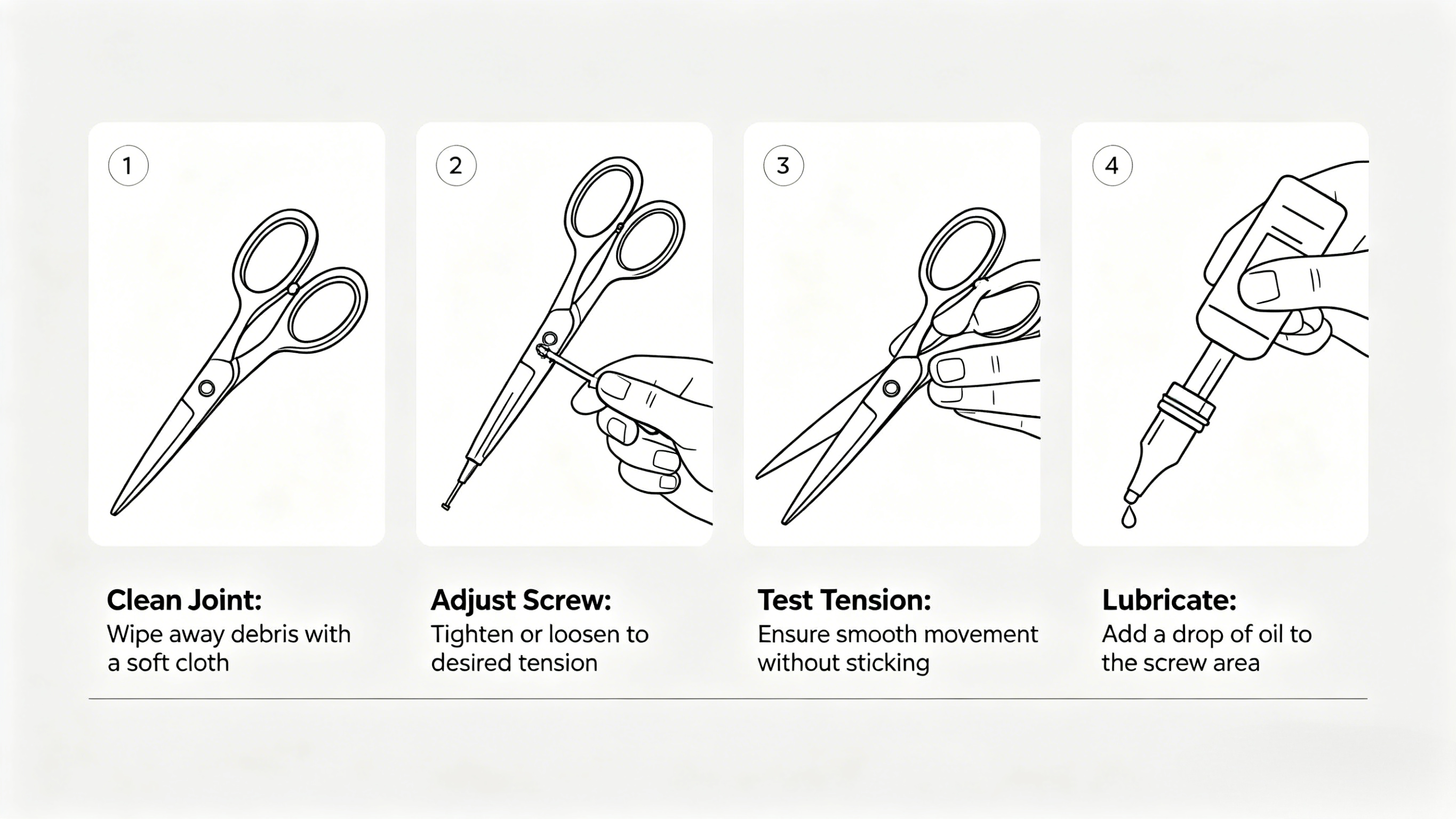
- Clean first. Wipe the area around the pivot. Remove thread, lint, fabric dust, or dried oil that may be causing friction.
- Check for looseness. Gently open and close the scissors. If the blades wobble sideways, the screw may need tightening.
- Tighten in small increments. If tension is too loose, turn the screw clockwise about one eighth of a turn. Do not keep turning without testing.
- Loosen in small increments. If the scissors are stiff, turn the screw counterclockwise about one eighth of a turn.
- Retest the blade drop. Repeat the vertical drop test after each small adjustment.
- Test on fabric. Make a few straight cuts and curved cuts on a scrap. The blades should cut without pushing fabric forward or leaving uncut threads.
- Add oil sparingly if appropriate. If using scissor oil, apply only a tiny drop at the pivot, open and close the blades several times, then wipe away excess.
Common Mistakes to Avoid
The most common mistake is over-tightening. A tight joint may feel secure at first, but it can make cutting uncomfortable and may cause unnecessary wear. Another mistake is adjusting tension before cleaning. Lint trapped in the pivot can imitate mechanical tightness, so cleaning should always come first.
Avoid using tailor scissors on materials they are not intended for, such as wire, plastic packaging, or abrasive paper. Cutting the wrong materials can dull the blades and affect how the pivot feels. If your scissors are shared in a studio or workshop, label them for fabric use only to reduce accidental misuse.
Maintenance Schedule for Reliable Cutting
How often you check tension depends on use. Daily professional use requires more frequent attention than occasional home sewing. A practical routine is to wipe the blades after cutting sessions, check the joint whenever the scissors begin to feel different, and test tension before important cutting work.
- After each session: wipe away lint and fabric dust.
- Weekly for frequent use: inspect the pivot screw and blade movement.
- Every few months: perform a more careful tension check and fabric test.
- Before storage: close the blades and keep the scissors protected from impact or moisture.
When Adjustment Is Not Enough
Pivot screw tuning cannot fix every cutting problem. If the blades are dull, nicked, bent, or misaligned beyond normal tension control, adjustment may not restore clean cutting. Signs that you may need professional service include repeated snagging after tension is balanced, visible chips on the cutting edge, a screw that will not hold position, or blades that cross unevenly.
For buyers comparing new tailor scissors, ask practical questions before purchasing: Is the pivot screw adjustable? What maintenance does the supplier recommend? Are replacement or repair options available? What materials and intended uses are stated for the product? Clear answers help you choose scissors that match your workload and care routine.
FAQ
How do I know if my tailor scissors are too loose?
If the blades wobble sideways, fabric folds between the blades, or the upper blade drops shut instantly during the vertical test, the pivot screw may be too loose.
Can I use any screwdriver?
Use a screwdriver that fits the screw slot closely. A tool that is too small or too large can damage the screw head.
Should I oil the pivot every time I adjust it?
Not always. Oil can help smooth movement, but only a tiny amount is needed. Excess oil can attract lint, so wipe away any residue.
Why do my scissors still cut poorly after adjustment?
The blades may be dull, damaged, dirty, or not suitable for the material being cut. Tension adjustment improves alignment, but it does not replace sharpening or proper tool selection.
How often should I check pivot tension?
Check it whenever cutting feels different. For frequent professional use, a quick inspection every few weeks and a more careful test every few months is practical.
