




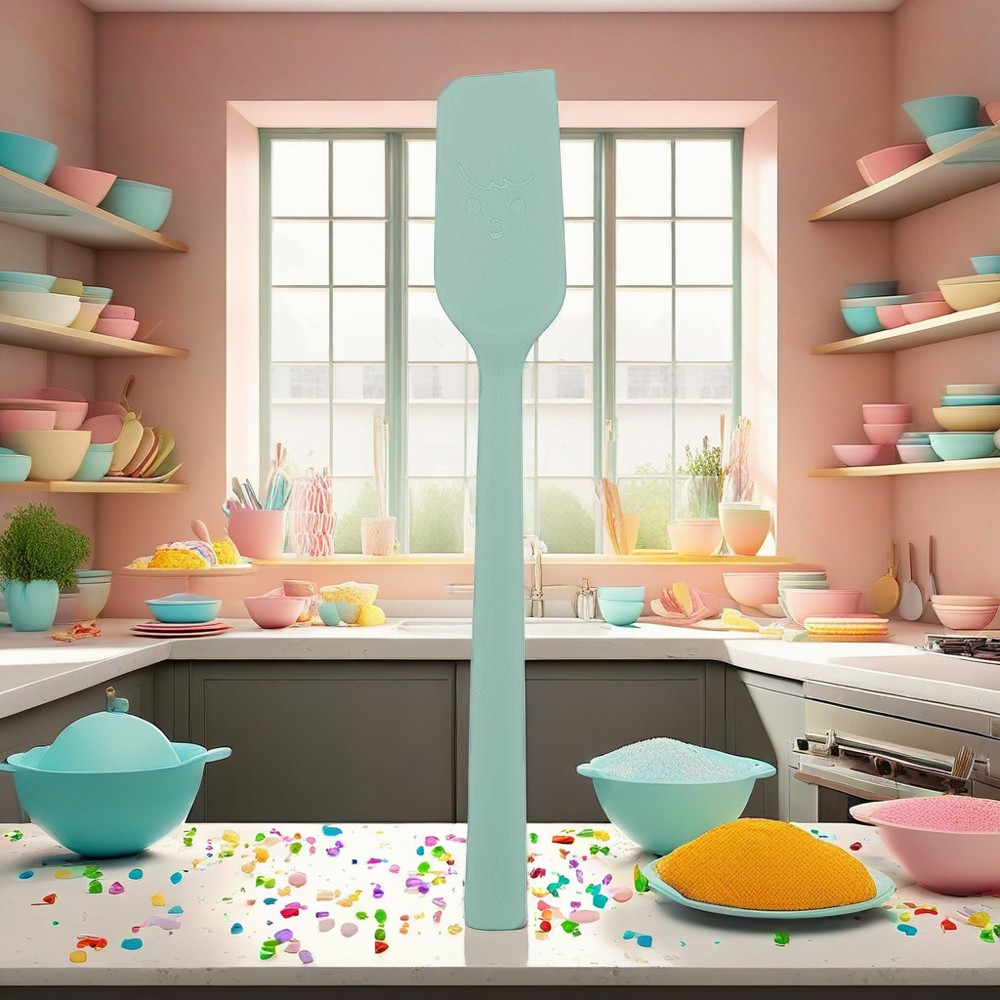
About Silicone Spoons and Silicone Kitchen Utensils
Silicone spoons, spatulas, and scrapers have become common tools in modern home kitchens because they are practical for many daily cooking tasks. A flexible silicone edge can help stir soup, fold batter, spread butter, scrape a jar, or serve dessert without requiring a drawer full of specialized utensils. For cooks who use non-stick cookware, silicone tools are also popular because they are generally gentler on coated surfaces than metal utensils.
This guide explains how to choose silicone kitchen tools based on task, shape, comfort, and care needs. It also looks at examples such as a mint silicone spatula, a smiley non-stick spatula, and a silicone jar scraper with a cat face imprint, while keeping the focus on useful selection advice rather than decoration alone.
Key Takeaways
- Match the utensil shape to the task: spoons for stirring and serving, spatulas for folding and spreading, and scrapers for jars and bowls.
- Check product details before buying, especially heat-resistance limits, handle construction, dishwasher guidance, and food-contact information.
- Silicone tools are often chosen for non-stick cookware because they are softer than metal, but they should still be used with care.
- Playful colors and patterns can make tools easier to identify, but comfort, edge flexibility, and cleaning should come first.
Why Silicone Tools Are Useful in Everyday Cooking
A good silicone spoon or spatula is valued for versatility. It can move between breakfast, baking, sauces, and serving with little effort. When flipping pancakes, a spatula needs enough flexibility to slide under food but enough support to lift it. When stirring soup, a spoon should feel stable in the hand. When serving dessert, a smooth edge helps transfer food neatly.
Silicone utensils are also appreciated for their durability in normal household use and their simple cleaning. Many designs have smooth surfaces that rinse easily after mixing sauces or scraping bowls. However, not all silicone tools are the same. Thickness, handle design, edge shape, and the way silicone is bonded or molded can change how a utensil performs.
How to Choose the Right Silicone Spoon or Spatula
Before choosing a silicone utensil, start with the job you want it to do most often. A wide spatula works well for flipping and folding. A narrow scraper reaches into jars. A deep spoon is better for stirring soup or serving sauce. If you cook with non-stick pans, look for a smooth edge with no sharp seams or exposed hard parts that could rub against the pan surface.
Comfort matters because kitchen tools are used repeatedly. An ergonomic handle, as mentioned in the original mint silicone spatula and silicone jar scraper examples, can make stirring, scraping, and spreading easier. The handle should not feel slippery when wet, and the utensil should feel balanced rather than top-heavy.
- Decide the main task: stirring, flipping, scraping, spreading, or serving.
- Check the head shape and edge flexibility.
- Confirm the stated heat-resistance range from the product information.
- Look for cleaning instructions, including whether dishwasher use is recommended.
- Inspect seams, joints, and handle comfort before regular use.
Comparison Checklist for Common Silicone Utensils
| Utensil type | Best everyday uses | What to check before buying |
|---|---|---|
| Silicone spoon | Stirring soups, mixing sauces, serving soft foods | Bowl depth, handle grip, edge smoothness, heat guidance |
| Mint silicone spatula | Folding batter, cooking eggs, scraping bowls, light pan work | Food-contact information, heat-resistance details, ergonomic feel |
| Smiley non-stick spatula | Spreading butter, light scraping, simple prep tasks | Blade flexibility, surface smoothness, whether the design traps residue |
| Silicone jar scraper | Scraping jars, cans, bowls, and containers with curved sides | Narrow edge precision, handle length, cleaning around decorative details |
Design Details: Color, Shape, and Playful Features
Color and character details can be useful as well as decorative. A mint green spatula is easy to spot in a utensil holder and may help separate baking tools from savory cooking tools. A smiley face on a spatula blade or a cat face imprint on a jar scraper adds personality, but it should not interfere with performance.
When a utensil has etched, raised, or imprinted details, check whether food can collect around the design. Smooth, shallow details are usually easier to clean than deep grooves. If the tool will be used for sticky ingredients such as peanut butter, honey, frosting, or thick sauces, cleaning access becomes more important.
Using Silicone Utensils with Non-Stick Cookware
Silicone tools are commonly selected for non-stick cookware because they are less abrasive than stainless steel tools. Still, gentle technique matters. Do not use any utensil to cut food inside a non-stick pan, and avoid pressing hard on the coating with a thin edge. Even a soft tool can cause wear if used aggressively or if grit is trapped on the pan.
For flipping pancakes or eggs, choose a spatula with a thin leading edge that can slide under food. For stirring soup or sauce in a saucepan, use a silicone spoon with a rounded profile that follows the curve of the pot. For scraping jars, a dedicated jar scraper with a precise silicone edge can reduce waste by reaching corners that a standard spoon misses.
Care and Cleaning Tips for Longer Service
Silicone utensils are generally easy to clean, but good habits keep them looking and performing better. Rinse tools soon after use, especially after oily sauces, tomato-based foods, or strongly colored spices. If a product label allows dishwasher cleaning, place the utensil where it will not bend under heavier items. If the care instructions are unclear, hand washing with warm water and mild dish soap is the safer approach.
- Avoid leaving silicone heads pressed against hot pan edges for long periods unless the stated heat limit supports it.
- Do not use abrasive pads that could roughen the surface.
- Check for cracks, loosened handles, odor retention, or sticky surfaces over time.
- Store utensils dry to reduce residue buildup in drawers or containers.
- Replace tools that show damage, especially if the head is separating from the handle.
Questions to Ask Before You Buy
Product descriptions sometimes use broad phrases such as “heat resistant” or “food grade.” These can be helpful, but shoppers should look for specific information. Ask what temperature range is recommended, whether the utensil is intended for stovetop contact or only food preparation, and how it should be cleaned. If you are buying a set, compare each piece rather than assuming every item has the same structure or purpose.
For households that cook often, it may be better to own a small group of well-chosen tools: one silicone spoon for stirring, one flexible spatula for pan and baking work, one jar scraper for containers, and one spreader for lighter tasks. This avoids clutter while covering most daily needs.
FAQ
Are silicone spoons safe for non-stick pans?
Silicone spoons are commonly used with non-stick pans because they are softer than metal. Use gentle pressure, avoid cutting in the pan, and confirm that the utensil has no rough seams or exposed hard edges.
Can silicone spatulas be used for high-heat cooking?
Some silicone spatulas are described as heat resistant, but the safe temperature can vary by product. Always check the manufacturer or supplier’s stated heat-resistance limit before using a tool near high heat.
What is a silicone jar scraper best for?
A silicone jar scraper is designed for reaching into jars, cans, bowls, and containers. A precise flexible edge helps collect remaining sauces, spreads, or batter that a regular spoon may leave behind.
How do I remove odors from silicone utensils?
Wash promptly with warm water and mild dish soap. For lingering odors, follow the product’s care guidance. Avoid harsh chemicals unless the supplier specifically recommends them.
Should I choose a playful design or a plain utensil?
Either can work well. Choose a playful smiley or cat-face design if it is easy to clean and comfortable to use. If the design creates deep grooves or hard-to-clean areas, a simpler tool may be more practical.
