








Bear Scissors OEM: Creative and Safe Kids' Tools
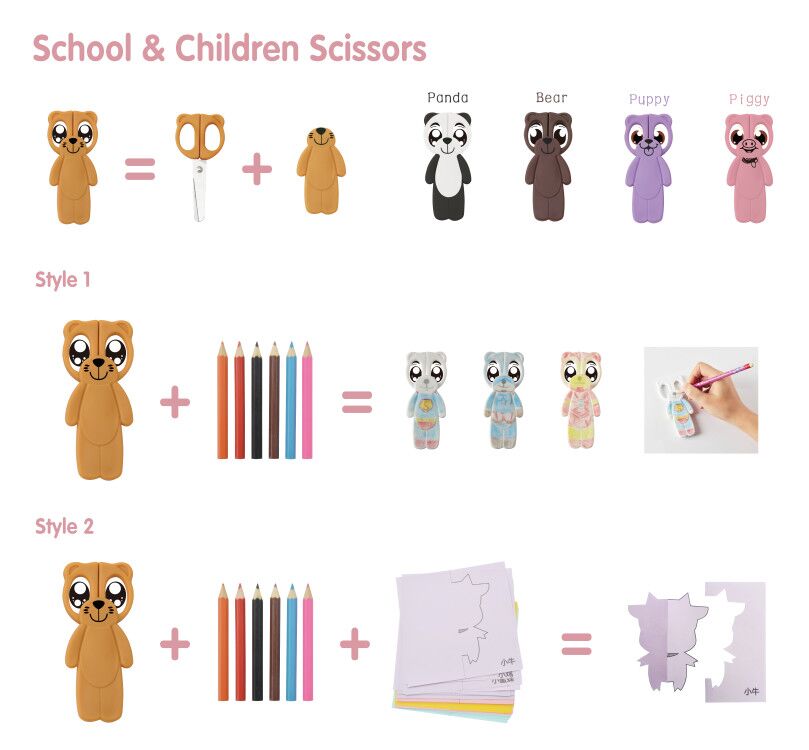
Bear scissors OEM projects combine a child-friendly shape with the practical requirements of school, stationery, craft, and gift channels. The original product concept is simple: bear-shaped scissors designed as cute, safe cutting tools for kids. For buyers, however, a successful order depends on more than a playful appearance. Importers, brand owners, distributors, and educational product buyers need to confirm safety, usability, packaging, customization scope, and factory communication before placing an OEM order.
This guide explains how to evaluate a kids bear scissors factory or OEM children’s scissors manufacturer without assuming details that should be verified directly. Use it as a checklist when comparing suppliers, requesting samples, or preparing a private-label children’s craft tool range.
Key Takeaways
- Bear-shaped scissors can support children’s craft activities when the design is comfortable, age-appropriate, and clearly positioned.
- OEM sourcing should begin with questions about materials, blade design, handle ergonomics, packaging, testing options, and customization limits.
- Do not rely on appearance alone; request samples and check cutting performance, grip comfort, finish quality, and labeling information.
- Ask the supplier which standards, documents, or test reports can be provided for your target market instead of assuming compliance.
- Clarify artwork files, colors, packaging, lead times, carton details, and inspection steps before confirming mass production.
Why Bear-Shaped Scissors Appeal to Kids’ Craft Buyers
Children often respond well to tools that feel approachable and playful. A bear-themed handle or profile can make scissors less intimidating and more engaging during paper cutting, classroom crafts, scrapbooking, or supervised home activities. The design can also help retailers create a stronger stationery display because the product is easier to understand visually than a plain utility item.
For B2B buyers, the appeal is not only decorative. A recognizable animal shape can support themed product lines, seasonal gift sets, back-to-school ranges, or educational craft kits. The key is to balance creativity with practical handling. A good children’s scissors product should be easy for small hands to hold, suitable for the intended age range, and consistent in quality across production batches.
What to Ask a Kids Bear Scissors Factory
Before discussing price, ask structured questions that reveal whether the factory understands children’s stationery products. The original article mentions ergonomic handles, colorful playful designs, and OEM customization. These are useful starting points, but buyers should verify the details for the exact item they plan to order.
- What materials are used for the handle and cutting parts, and can the supplier provide material information?
- What age range is the product intended for, and how is that reflected in the design?
- Are the blade tips, edges, and opening size appropriate for supervised children’s use?
- Can the supplier provide samples before production, and are pre-production samples available after artwork approval?
- Which packaging formats are available, such as blister card, hanging card, display box, or bulk pack?
- What customization is possible for color, logo placement, handle design, card artwork, or set configuration?
- What quality checks are performed during production and before shipment?
OEM Customization Options to Confirm
OEM children’s scissors projects often involve more than adding a logo. Buyers may need coordinated colors, brand packaging, multilingual warnings, barcodes, inner box requirements, or display-ready cartons. Some projects may require a bear shape that matches a brand character or a broader stationery collection. In that case, ask whether a new mold is needed, what files are required, and how the supplier manages design confirmation.
Color matching is another common issue. If your product line uses specific brand colors, ask whether the factory works with Pantone references or physical color samples. For packaging, request a dieline and confirm print method, coating, hang-hole position, and any market-specific labeling requirements. If the product is intended for schools, retailers, or craft kits, ask whether individual packing or set packing is more suitable for your distribution model.
Supplier Comparison Checklist
The table below can help purchasing teams compare factories more objectively. It does not replace due diligence, but it reduces the risk of choosing a supplier based only on a photo or a low quote.
| Evaluation Area | What to Check | Why It Matters |
|---|---|---|
| Product sample | Grip comfort, cutting action, finish, bear shape details | Confirms usability before bulk production |
| Safety information | Age guidance, warnings, material details, available test documents | Supports responsible children’s product sourcing |
| OEM scope | Logo, colors, packaging, artwork, possible mold changes | Shows whether the supplier can match your brand plan |
| Production control | Pre-production sample, inspection process, defect handling | Reduces inconsistency between sample and shipment |
| Commercial terms | MOQ, lead time, payment terms, carton data, shipping terms | Helps calculate landed cost and project timeline |
| Communication | Response speed, clear answers, file handling, documentation | Improves execution during artwork and production changes |
Safety and Quality Questions for Children’s Scissors
Because this product is intended for children, safety-related questions should be handled carefully. Do not assume that a cute design automatically makes the scissors suitable for all ages or markets. Ask the supplier what standards or testing can be arranged for your destination country. Requirements may differ for school supplies, toys, craft kits, promotional products, or retail stationery.
Buyers should also review the physical sample in a realistic use setting. Check whether the handle is comfortable for small hands, whether the opening and closing motion is smooth, whether the cutting edge works on paper without requiring excessive force, and whether the product has rough edges or loose parts. If the scissors will be included in a children’s craft set, test them with the actual paper or materials in that kit.
Packaging and Retail Readiness
Packaging plays a major role in both safety communication and sales presentation. For a bear scissors OEM order, packaging should protect the product, show the design clearly, and provide enough space for branding, usage information, warnings, and barcode placement. If the product will be sold online, consider whether the packaging photographs well and whether it can survive parcel handling. If it will be sold in stores, confirm hanging display requirements and carton packing.
Ask the factory for packaging samples or printed proofs before mass production. Artwork errors, unclear warnings, or mismatched colors can be expensive to correct after goods are packed. If your market requires language localization, provide final translated text and have it checked before printing.
How to Build a Better RFQ
A clear request for quotation saves time and helps suppliers respond accurately. Include the product image or reference, expected order quantity, target market, preferred packaging, logo requirements, color references, delivery timeline, and inspection expectations. If you need documents, samples, or test arrangements, mention them early. This prevents a quote from being based on assumptions that later change the cost or lead time.
It is also useful to ask the supplier to separate tooling, packaging, sample, and product costs where applicable. This makes it easier to compare offers and understand which parts of the project are fixed and which vary by quantity.
FAQ
What are bear scissors used for?
Bear scissors are typically used for children’s paper cutting, classroom crafts, stationery sets, and creative activities under appropriate supervision. Buyers should confirm the intended age range and use case with the supplier.
Can bear scissors be customized for private label orders?
Often, OEM projects may include color, logo, and packaging customization. The exact options depend on the factory, existing mold, order quantity, and artwork requirements, so buyers should request confirmation before quoting.
What should I check in a sample?
Check grip comfort, cutting smoothness, blade finish, handle strength, printed or molded details, packaging fit, and whether the product matches your market positioning.
Should I ask for safety documents?
Yes. Ask what material information, test reports, declarations, or third-party testing options are available for your target market. Do not assume compliance without documentation.
How can I avoid misunderstandings in OEM production?
Confirm specifications in writing, approve samples before mass production, review packaging artwork carefully, and define inspection criteria, shipment terms, and defect handling before placing the order.
