




Behind the Blade: How Professional Kitchen Knives Are Made
A professional kitchen knife looks simple, but its performance depends on a chain of decisions made long before it reaches a cutting board. Steel choice, forming method, heat treatment, grinding, handle assembly and final sharpening all affect how the knife feels, cuts and wears over time. For home cooks, understanding this process helps with product selection and care. For distributors, wholesalers and OEM buyers, it also helps you ask better questions when evaluating a kitchen knife supplier.
Bonet Houseware lists kitchen knives in its product range, but buyers should still confirm the exact material, construction, packaging and compliance details for any model under consideration. The guide below explains the manufacturing principles without assuming specifications that have not been published.
Key Takeaways
- Knife performance is shaped by steel selection, heat treatment and edge geometry, not only by visible appearance.
- Forged and stock-removal knives can both perform well when process control is consistent.
- Harder blades may hold an edge longer, while tougher blades may be more forgiving in busy kitchens.
- B2B buyers should verify steel grade, hardness range, handle material, quality-control process, packaging and after-sales terms with the supplier.
- Good care—hand washing, drying and appropriate sharpening—extends the service life of any kitchen knife.
1. Steel Selection: The Starting Point
Kitchen knife production begins with steel. The original article mentioned high-carbon stainless steels such as VG-10 or AUS-10, pure carbon steels such as White #1 or Blue #2, and professional hardness targets often around 58–62 HRC. These are useful reference points, but they should not be treated as universal specifications for every product. A supplier should state the steel grade used for a specific knife or product line.
In general, stainless steels are valued for easier corrosion resistance and lower maintenance. Carbon steels can take a very keen edge and are often appreciated by experienced users, but they require careful drying and may develop patina or rust if neglected. For commercial kitchens, cafeterias, hotels and retail programs, the best choice is often a balanced stainless option that can tolerate frequent washing and varied users.
2. Forming the Blade: Forging vs. Stock Removal
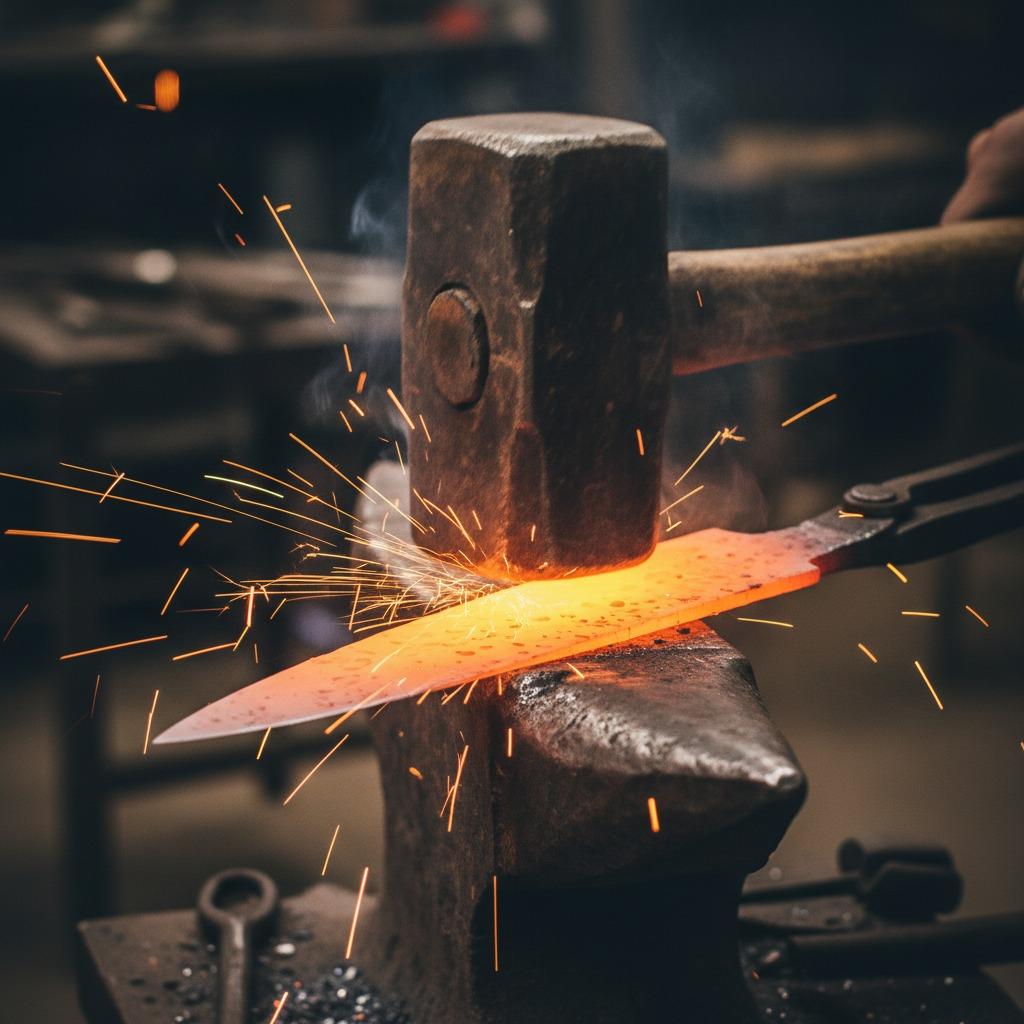
Two common production approaches are forging and precision stock removal. In forging, heated steel is shaped under a hammer, press or dies. This method is associated with traditional knife making and can produce a strong blade when the process is controlled. In stock removal, the blade profile is cut or machined from flat steel, then ground to shape. Modern stock-removal production can deliver excellent consistency, especially for larger orders.
Neither label alone guarantees quality. A forged knife can be poorly finished, and a stamped or stock-removal knife can be well made. For sourcing, ask how the blade is formed, what tolerances are controlled, whether production is manual, automated or mixed, and how consistency is checked from batch to batch.
3. Heat Treatment: Where Performance Is Set
Heat treatment is one of the most important steps in kitchen knife manufacturing. It normally includes heating the blade to a defined temperature, quenching it to harden the steel, and tempering it to reduce brittleness. The goal is not simply maximum hardness. A blade that is too hard for its geometry or intended use may chip; a blade that is too soft may lose its edge quickly.
When evaluating professional kitchen knives, buyers should ask the supplier for the stated hardness range and how it is verified. Do they use Rockwell hardness testing? Is testing performed on every batch or by sampling? Are heat-treatment records available for OEM or wholesale orders? These questions are especially important when ordering repeat runs, because consistent heat treatment helps ensure that the second shipment performs like the first.
4. Grinding, Edge Geometry and Cutting Feel
After heat treatment, the blade is ground to create its profile, bevels and final cutting geometry. This stage determines whether the knife feels thin and precise, sturdy and workhorse-like, or somewhere in between. Japanese-inspired chef knives often use thinner geometry for clean slicing. Western chef knives may have more belly for rocking cuts and a more robust edge for varied prep work.
For practical selection, match geometry to use. A thin slicing knife is excellent for vegetables, fish and fine prep, but it is not intended for frozen food, bones or twisting cuts. A more robust chef knife may not glide as delicately through delicate ingredients, but it may better suit busy shared kitchens. For B2B programs, consider who will use the knife: trained chefs, line cooks, home consumers, gift buyers or entry-level users.
5. Handle Assembly and Finishing
The handle affects safety, comfort and perceived quality. The original article mentioned materials such as pakkawood, Micarta and stabilized wood as examples commonly used in the market. For any specific product, confirm the actual handle material, construction and finish with the supplier. Handle details to review include grip shape, seam smoothness, rivet or adhesive construction, water resistance and whether the handle remains comfortable during long prep sessions.
Finishing may also include polishing, satin finishing, etching or decorative patterns. Decorative finishes can support retail presentation, but they should not distract from fundamentals such as balance, blade straightness and edge consistency. If the knives will be used in professional food-service environments, prioritize durability, easy cleaning and a secure grip.
6. Comparison Checklist for Buyers
| Evaluation Point | What to Check | Why It Matters | Question to Ask a Supplier |
|---|---|---|---|
| Steel grade | Named material for the exact model | Influences corrosion resistance, toughness and sharpening | What steel is used, and is it consistent across batches? |
| Hardness | Declared HRC range | Affects edge retention and chip risk | How is hardness tested and recorded? |
| Blade forming | Forged, stamped or stock removal | Impacts cost, appearance and consistency | Which process is used for this SKU? |
| Edge geometry | Thickness, bevel style and intended use | Determines cutting feel and durability | Is the edge designed for home, restaurant or heavy-duty use? |
| Handle | Material, shape and attachment | Affects comfort, hygiene and longevity | What handle material and assembly method are used? |
| Quality control | Inspection criteria and sampling | Reduces returns and inconsistent performance | What defects are checked before shipment? |
7. How to Choose and Care for a Professional Kitchen Knife
For consumer-facing selection, start with tasks rather than appearance. An 8-inch chef knife is a common all-purpose choice for chopping, slicing and mincing. A lighter, thinner blade suits precision prep; a heavier blade suits users who prefer momentum and stability. If the knife will be shared by many people, choose a forgiving material and a handle that fits a range of hand sizes.
- Use a suitable cutting board, such as wood or quality plastic, rather than glass or stone.
- Hand wash the knife after use and dry it promptly.
- Avoid cutting bones, frozen food or hard shells unless the knife is designed for that purpose.
- Store the blade in a block, sheath, rack or drawer insert to protect the edge.
- Hone or sharpen as needed with the correct tool and angle for the knife.
For wholesale and OEM sourcing, request samples before committing to a larger order. Test them in real use: tomato slicing, onion dicing, herb chopping and repeated board contact. Check whether the edge arrives consistent across multiple samples and whether handles show gaps, rough edges or uneven finishing.
8. Practical FAQ
Are forged knives always better than stamped knives?
No. Forging can be excellent, but quality depends on steel, heat treatment, grinding and inspection. Well-made stock-removal or stamped knives can also be reliable for professional and retail use.
What hardness should a professional kitchen knife have?
The original article referenced many professional knives targeting about 58–62 HRC. That range is common, but the right hardness depends on steel type, blade geometry and intended use. Ask the supplier for the exact range for the model you are buying.
Which steel is best for commercial kitchens?
Many commercial buyers prefer stainless options because they are easier to maintain in humid, fast-moving kitchens. However, the best choice depends on budget, user skill, sharpening routine and cleaning practices.
What should OEM or wholesale buyers confirm before ordering?
Confirm steel grade, hardness testing, handle material, packaging, labeling, inspection standards, sample availability, lead time, order terms and after-sales support. Do not rely on appearance alone.
How can I make a kitchen knife last longer?
Use the right board, wash by hand, dry immediately, avoid abusive cutting tasks, store the blade safely and sharpen before the edge becomes completely dull.
Final Thoughts
Professional kitchen knives are the result of many controlled steps: material selection, forming, heat treatment, grinding, finishing and inspection. Understanding those steps makes it easier to choose a knife for daily cooking, restaurant work or resale. When comparing options from any supplier, focus on verifiable details and real-use performance rather than broad claims. For Bonet Houseware kitchen knife inquiries, treat product specifications as details to confirm directly for the exact model and order requirements.
