




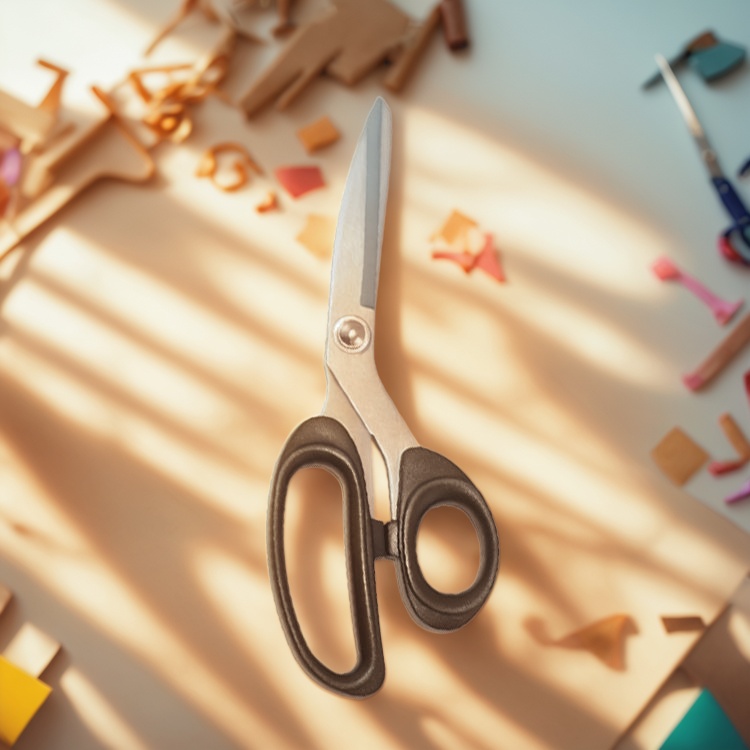
Best Tailor Scissors for Precision and Comfort
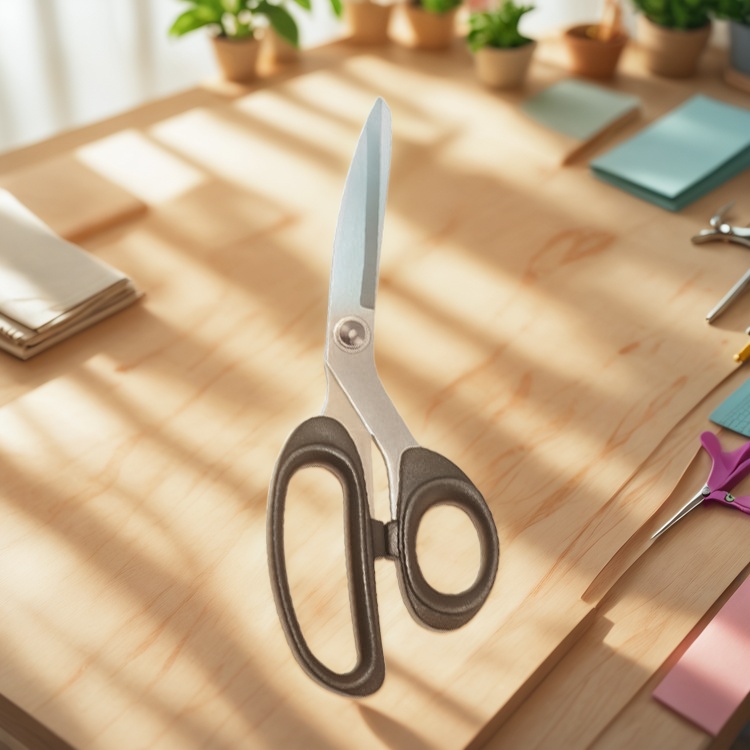
Choosing the best tailor scissors is not only about buying a sharp tool. For dressmakers, sewing studios, craft retailers, and wholesale buyers, the right pair affects cutting accuracy, hand comfort, fabric waste, and daily productivity. A good pair of tailor shears should feel stable in the hand, cut cleanly through common fabrics, and support repeated use without unnecessary strain.
The original product described here is a professional tailor's shears design made with high-grade stainless steel, a brushed metal finish, and black rubber-moulded ergonomic handles. It is presented as suitable for cutting a range of fabrics, from delicate silks to sturdy denim. Those explicit details are useful starting points, but buyers should still verify commercial and technical requirements with the supplier before placing bulk, OEM, or private-label orders.
Key Takeaways
- The best tailor scissors combine blade sharpness, stable alignment, and comfortable grip design.
- High-grade stainless steel, a brushed metal finish, and anti-slip black rubber handles are stated features of this product.
- For B2B sourcing, confirm packaging, inspection process, sample availability, lead time, and customization options directly with the supplier.
- Users should reserve tailor scissors for fabric only and maintain them with careful cleaning and dry storage.
What Makes Tailor Scissors Different?
Tailor scissors, often called tailor shears, are designed for fabric cutting rather than general household use. Their longer blades help create smoother cuts across flat fabric, while the angled handle position can keep material more stable on the cutting table. This matters when working with patterns, garment panels, quilting pieces, or sample fabrics where uneven edges can affect the final result.
Unlike small craft scissors, tailor shears are typically chosen for control and cutting length. They should open and close smoothly, without wobbling at the pivot or forcing the user to grip too hard. When the tool feels balanced, the operator can guide the cut more accurately along marked lines, curves, and seams.
Blade Material and Cutting Performance
The source article states that these Professional Tailor's Shears are made with high-grade stainless steel. Stainless steel is commonly valued in cutting tools because it can support durability and easier cleaning when properly maintained. However, buyers should avoid assuming a specific steel grade, hardness, or coating unless those details are provided by the supplier in writing.
For fabric cutting, the practical test is simple: the blades should start cutting near the pivot, continue cleanly through the middle, and finish neatly at the tip. A good pair should not chew, fold, or drag fabric. If you are sourcing for a sewing workshop or retail line, ask for samples and test them on the fabrics your customers actually use, such as cotton, denim, lining fabric, and lightweight silk-like materials.
Ergonomics and Hand Comfort
Comfort is a major reason to choose premium tailor scissors. The original description highlights an ergonomic grip intended to reduce hand fatigue and improve cutting precision. It also notes black rubber-moulded handles with an anti-slip design. These features are especially relevant for people who cut fabric repeatedly during production, alterations, classroom use, or home sewing projects.
When evaluating ergonomics, do not focus only on appearance. Check whether the finger openings fit your target users, whether the handle edges feel smooth, and whether the tool remains steady during long cutting sessions. For wholesale buyers, it may be worth collecting feedback from several users with different hand sizes before confirming a product for a larger order.
Comparison Checklist for Buyers
| Selection Point | What to Check | Why It Matters |
|---|---|---|
| Blade sharpness | Test clean cutting from heel to tip on different fabrics | Reduces fraying, snagging, and wasted material |
| Material details | Confirm the stated stainless steel specification with the supplier | Prevents assumptions about grade, hardness, or performance |
| Handle comfort | Review grip shape, rubber moulding, and anti-slip feel | Supports control during repeated cutting work |
| Finish | Inspect the brushed metal finish for consistency | Helps assess workmanship and retail presentation |
| Bulk sourcing | Ask about samples, packaging, lead time, and quality checks | Reduces risk before wholesale or OEM purchasing |
How to Choose for Sewing, Retail, or Wholesale
For individual sewing users, the best tailor scissors are the pair that cuts your main fabrics cleanly and feels comfortable after repeated use. If you work with denim, test whether the blades can move through thicker layers without twisting. If you sew delicate fabrics, check that the tips cut accurately without pulling threads.
For retailers, distributors, or OEM buyers, selection should include both product performance and supplier process. Ask whether product samples are available, how bulk goods are inspected, what packaging options can be discussed, and whether branding or private-label requests are possible. Do not assume minimum order quantity, pricing, lead time, or certification status from a product description; these should be confirmed directly with current supplier documentation.
- Request a physical sample before committing to a large order.
- Test the scissors on the fabrics most relevant to your customers.
- Check handle comfort with several users, not just one evaluator.
- Confirm packaging, labeling, and after-sales communication in advance.
- Document agreed specifications before production or shipment.
Care and Use Tips for Longer Service
Even high-quality tailor scissors perform poorly when used incorrectly. The most important habit is to reserve them for fabric only. Cutting paper, cardboard, wire, adhesive tape, or plastic packaging can dull the blades and create rough cutting edges. In a shared studio, label fabric scissors clearly so they are not used for general tasks.
After use, wipe the blades clean and store the scissors in a dry place. If lint builds up near the pivot, remove it carefully. Avoid dropping the tool, because impact can affect blade alignment. If cutting becomes uneven, consider professional sharpening rather than forcing the blades through fabric. For business buyers, include basic care instructions in packaging or product listings to reduce avoidable customer complaints.
Common Mistakes to Avoid
One common mistake is choosing scissors only by weight. A heavier pair can feel solid, but it may tire the hand if the handle design is not suitable. Another mistake is judging sharpness on a single fabric. A tool that performs well on thin cotton may still struggle with heavier textiles or multiple layers.
B2B buyers should also avoid relying on broad terms such as premium, professional, or high-grade without verification. These words can describe positioning, but they do not replace sample testing, specification confirmation, and quality inspection. A reliable sourcing process looks at the complete product: blades, pivot action, handle comfort, finish, packaging, and communication with the supplier.
FAQ
What are the best tailor scissors used for?
They are used for cutting fabric accurately in sewing, tailoring, dressmaking, quilting, sample making, and craft work. They should generally be kept for fabric rather than paper or general household cutting.
Are these scissors suitable for both silk and denim?
The original product description states that the scissors can cut fabrics ranging from delicate silks to sturdy denim. Buyers should still test samples on their own fabric types and layer thicknesses.
What supplier questions should wholesale buyers ask?
Ask about sample availability, current specifications, packaging options, quality control steps, lead time, customization possibilities, and any documentation needed for your market.
How do ergonomic handles help?
Ergonomic handles can improve grip stability and reduce hand fatigue during repeated cutting. The product described includes black rubber-moulded handles with an anti-slip design.
How should tailor scissors be maintained?
Use them only on fabric, wipe the blades after use, store them dry, avoid dropping them, and arrange sharpening when cuts become rough or uneven.
