




Canton Fair 2025: Scissors & Kitchen Tool Innovations
Canton Fair 2025 in Guangzhou, China, will again be an important meeting point for international buyers, household goods suppliers and manufacturers looking for new business opportunities. For importers, wholesalers, retailers and private-label brands, the fair is not only a place to see finished products; it is also a chance to compare factories, ask technical questions and understand how suppliers approach quality, packaging, OEM service and export communication.
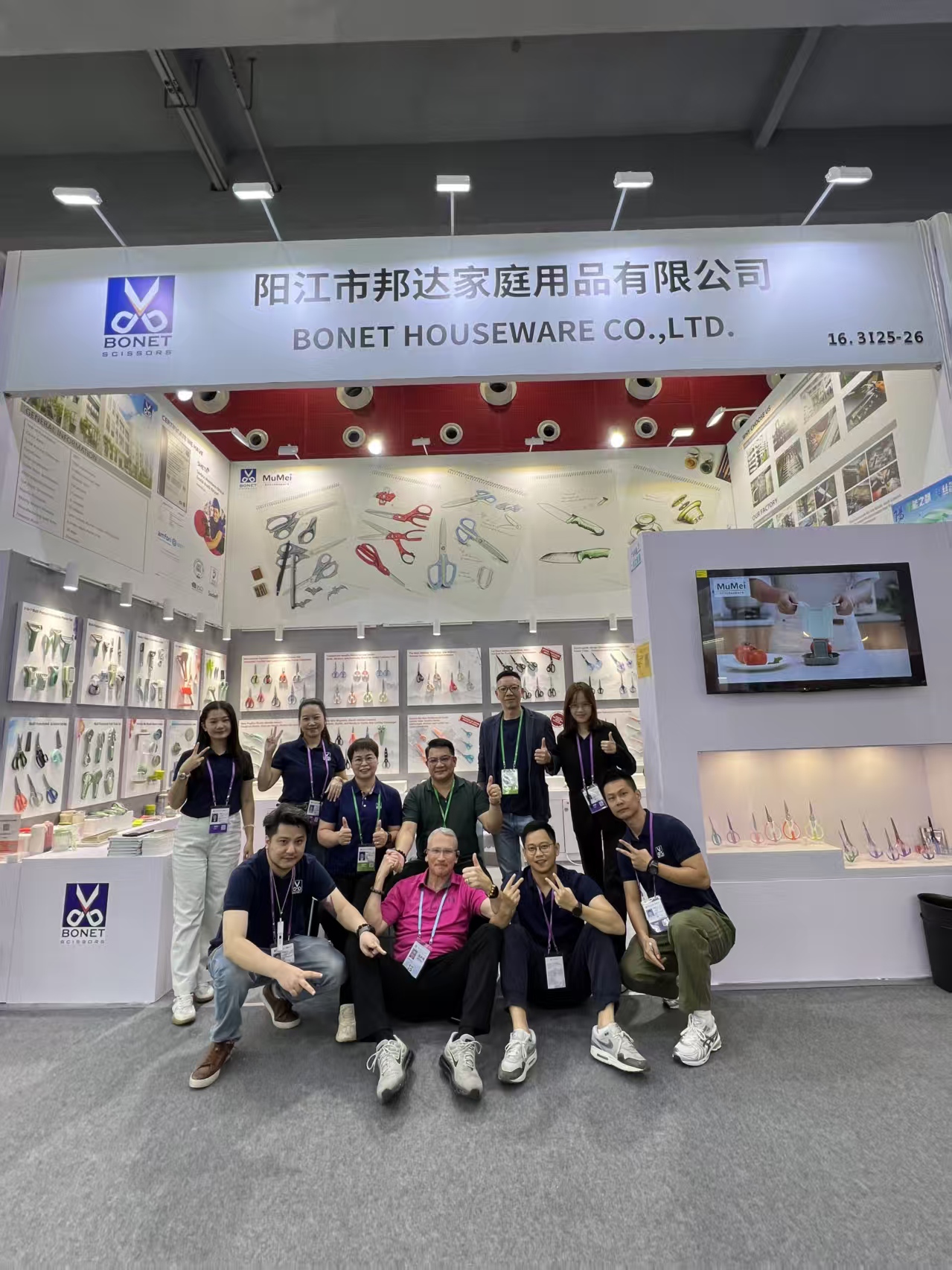
Scissors, knives and everyday kitchen tools are competitive categories because small differences in material, edge finish, handle comfort, packaging and inspection standards can affect customer satisfaction. A well-planned visit helps buyers move beyond attractive samples and evaluate whether a supplier can support repeat orders reliably.
Key Takeaways
- Canton Fair 2025 is useful for comparing kitchen tool and scissors suppliers face to face.
- Buyers should verify product details instead of relying only on display samples.
- Ask suppliers about OEM options, quality control, packaging, lead time and export experience.
- Do not confirm a supplier until samples, quotations and commercial terms have been reviewed in writing.
Why Canton Fair 2025 Matters for Kitchen Tool Buyers
The Canton Fair brings together exhibitors from many product categories, including household goods and kitchen essentials. For buyers sourcing scissors and kitchen tools, the value of the event is direct comparison. Within a short visit, you can see different product ranges, handle samples, check finishing quality and speak with supplier teams about customization.
This is especially helpful for buyers who need to build or refresh a product line. A catalogue can show dimensions and photos, but it cannot fully show balance, grip comfort, blade movement, hinge tightness or how a kitchen tool feels during use. At the fair, buyers can examine these details and create a shortlist for follow-up testing.
How to Evaluate a Scissors Factory at the Fair
When meeting a scissors factory, start with the product you plan to buy: kitchen scissors, household scissors, craft scissors or multipurpose designs. Ask what materials are used, what finishes are available and which product details can be customized. If a material grade, coating or performance claim is important for your market, request written confirmation and supporting documents rather than accepting a verbal answer.
Important questions include: Does the supplier produce in-house or work with partner factories? What inspection steps are used before shipment? Can the factory provide pre-production samples? What packaging formats are available? How are defects handled? What information is needed for OEM artwork or private-label packaging?
For scissors, buyers should also check blade alignment, opening and closing smoothness, handle edges, screw or rivet construction, tip safety and whether the product feels stable after repeated movement. These checks do not replace professional testing, but they help identify obvious differences between suppliers.
Kitchen Tools to Review Beyond the Display Sample
Kitchen tools at Canton Fair exhibitors may include scissors, knives, peelers, graters, openers, tongs and other household accessories. A display sample is a starting point, not a final approval. Ask whether the displayed item is from current production, a hand-prepared sample or a concept for future orders. This distinction matters because mass production must match the approved sample.
For each item, review the handle, edge, connection points, weight, surface finish and packaging. If the tool includes moving parts, test the motion several times. If the item will be sold online, ask for packaging dimensions and gross weight because shipping cost and storage efficiency may influence your final selection.
Comparison Checklist for Supplier Meetings
| Evaluation Area | What to Check | Questions to Ask |
|---|---|---|
| Product sample | Finish, grip, edge, balance and consistency | Is this sample from normal production? |
| OEM service | Logo, color, packaging and assortment options | What files and approvals are required? |
| Quality control | Inspection process and defect handling | What checks are done before shipment? |
| Commercial terms | MOQ, lead time, payment and shipping terms | Can you provide a written quotation? |
| Compliance needs | Market-specific documentation if required | What documents can be supplied for review? |
OEM and Wholesale Sourcing Questions to Prepare
Before arriving at the fair, prepare a short sourcing brief. Include your target product type, market, expected order volume range, packaging preference, branding needs and any retailer requirements. This makes supplier conversations more efficient and reduces misunderstandings.
- Define whether you need a standard product, private-label packaging or a modified design.
- Ask for MOQ, sample cost, sample lead time and mass production lead time in writing.
- Confirm whether artwork, barcode labels or carton marks can be handled by the supplier.
- Request the supplier’s product specification sheet for any item you are considering.
- Ask what testing or documentation is available, without assuming compliance unless evidence is provided.
For wholesale buyers, price is important, but it should not be the only decision factor. A lower unit cost may not be attractive if packaging is weak, communication is slow or product consistency is uncertain. Compare total landed cost, after-sales process and the supplier’s ability to repeat the same specification over future orders.
Trends to Watch in Scissors and Kitchen Tools
Canton Fair 2025 is likely to show continued interest in practical household tools that are easy to store, easy to clean and suitable for varied kitchen routines. Buyers may also see more attention to ergonomic handles, compact sets, retail-ready packaging and product ranges designed for e-commerce listings.
However, trend claims should be checked carefully. If a supplier describes a product as eco-friendly, durable, food-safe or professional grade, ask what that means in measurable terms. Request material information, packaging details or relevant documentation for your market. Clear definitions protect both the buyer and the supplier during order confirmation.
How to Follow Up After Canton Fair 2025
The most productive sourcing work often happens after the fair. Within a few days, organize business cards, photos, sample notes and quotation requests. Send each shortlisted supplier the same product brief so you can compare replies accurately. Ask for item numbers, product specifications, packaging details, MOQ, lead time and quotation validity.
Before placing an order, review physical samples and confirm every detail in a written purchase agreement or proforma invoice. This should include product description, approved sample reference, packaging, carton information, delivery terms, inspection expectations and any agreed artwork. If the order is for a new supplier, consider a smaller trial order or third-party inspection, depending on your risk level and sales channel requirements.
Practical FAQ
What should I bring when sourcing kitchen tools at Canton Fair 2025?
Bring a product brief, target price range, packaging examples, business cards, a measuring tape, notebook and a phone for photos. If you have retailer requirements, bring a checklist so you can ask suppliers consistent questions.
How do I know whether a scissors factory is suitable for OEM orders?
Ask about customization options, artwork requirements, sample approval steps, production lead time and inspection process. A suitable OEM supplier should answer clearly and confirm important details in writing.
Should I place an order during the fair?
It is usually better to collect information, request samples and compare written quotations before committing. If you discuss terms at the fair, follow up by email to confirm all product and commercial details.
What product details should be confirmed before mass production?
Confirm material description, dimensions, finish, handle color, packaging, logo placement, carton marks, quantity, lead time and inspection expectations. Keep an approved sample or signed specification as the reference.
Can Bonet Houseware be considered during supplier research?
Bonet Houseware may be reviewed like any other scissors and kitchen tool supplier: examine samples, ask sourcing questions, request specifications and compare written quotations before making a purchasing decision.
