




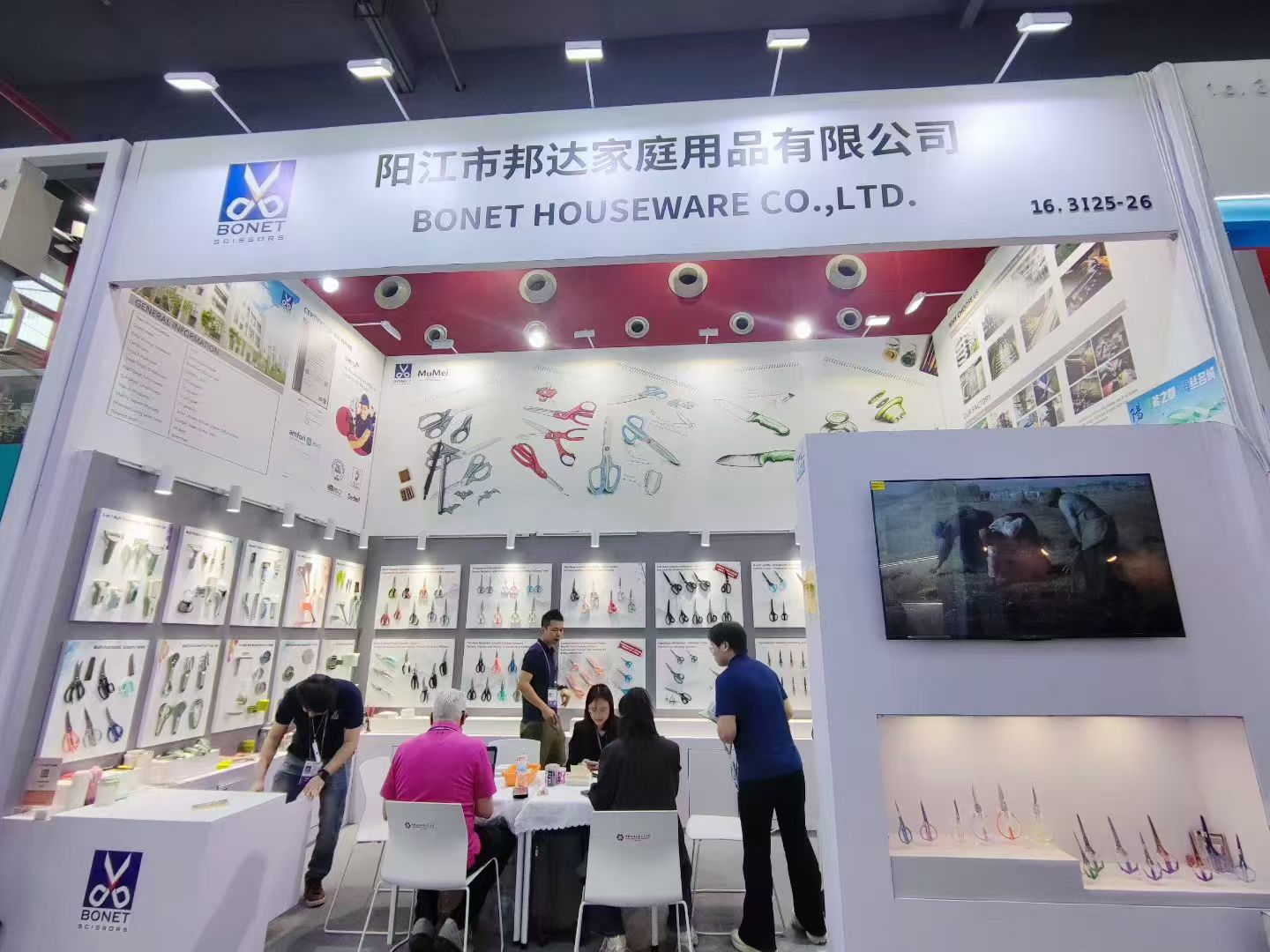
Canton Fair 2025: Sourcing Kitchen Scissors and Kitchen Tools
Canton Fair 2025 is an important meeting point for importers, wholesalers, distributors, retail buyers, and private-label brands looking for practical household products. For the kitchenware category, scissors and compact hand tools are often high-volume items because they are easy to merchandise, useful in everyday food preparation, and suitable for different retail channels.
This guide rewrites the original Bonet Houseware article with a stronger sourcing focus. It explains how buyers can evaluate kitchen scissors, multi-functional tools, supplier capability, samples, packaging, and OEM questions during a trade fair visit. Bonet Houseware Co., Ltd. is presented in the original article as a kitchen tools factory showing kitchen scissors and tools, including items under the InnooPro brand. Buyers should still verify all commercial, technical, and compliance details directly before placing orders.
Key Takeaways
- Canton Fair 2025 is useful for comparing kitchen scissors and hand tools from multiple suppliers in one trip.
- Buyers should inspect blade alignment, grip comfort, opening and closing action, packaging, and sample consistency.
- Do not rely only on booth presentation; ask for documentation, production details, and clear answers on OEM requirements.
- For wholesale kitchen scissors, confirm material, finish, carton packing, lead time, MOQ, labeling, and after-sales process.
Why Kitchen Scissors Matter in Wholesale Sourcing
Kitchen scissors are small products, but they can affect customer satisfaction quickly. A buyer may be sourcing for supermarkets, online retail, promotional programs, kitchenware stores, or food-service supply channels. In each case, the product must feel reliable in the hand and perform common cutting tasks without creating avoidable complaints.
The original article mentions ergonomic scissors, multi-functional tools, stainless steel construction, multi-colored handles, and varied blade shapes. These are useful directions for buyers to investigate at the fair. However, every feature should be checked against a physical sample and written specification. For example, if stainless steel is claimed, ask which steel type is used, how the surface is finished, and whether the supplier can provide supporting documentation if required by your market.
What to Look for at the Canton Fair Booth
A trade fair display can help you shortlist suppliers quickly, but it should not replace a structured evaluation. When reviewing kitchen scissors and related tools, handle several units rather than only the display sample. Open and close the scissors repeatedly, check whether the blades meet evenly, and look for burrs, loose screws, rough plastic edges, or uneven color.
For ergonomic grips, comfort is not only about shape. Buyers should consider hand size, left-hand or right-hand use, grip material, texture, and whether the handle remains comfortable during repeated cutting. For multi-functional tools, check whether each additional function is practical or simply decorative. A product with too many weak features may create more warranty risk than a simpler, better-made item.
Comparison Checklist for Kitchen Scissors and Tools
| Evaluation Point | What to Check | Questions to Ask the Supplier |
|---|---|---|
| Blade performance | Alignment, sharpness, cutting consistency, smooth opening and closing | What blade material and heat treatment are used? Can specifications be confirmed in writing? |
| Handle design | Comfort, grip texture, color consistency, edge finishing | Can handle colors be customized? Are color samples approved before mass production? |
| Multi-function features | Usefulness, safety, durability, ease of cleaning | Which functions are standard, and which can be changed for OEM projects? |
| Packaging | Retail display impact, barcode area, instruction space, carton strength | Can the supplier support private-label artwork and export carton markings? |
| Quality control | Sample consistency, inspection process, defect handling | What in-process and final inspection steps are used? Can third-party inspection be arranged? |
| Commercial terms | MOQ, lead time, payment terms, sample fees, reorder process | What are the current MOQ and lead time for standard and customized models? |
OEM and Private-Label Questions to Prepare
Many buyers visit Canton Fair with a private-label plan, but OEM discussions are most productive when requirements are specific. Before meeting suppliers, prepare target markets, sales channels, expected order range, packaging format, price level, and any required testing or labeling rules. If you are not sure which regulations apply, confirm them with a qualified compliance adviser in your destination market.
Useful OEM questions include:
- Which existing kitchen scissors models are available for branding or packaging customization?
- Can the supplier provide drawings, material descriptions, and pre-production samples for approval?
- What are the MOQ differences between standard items, custom colors, custom packaging, and new tooling?
- How are color, logo placement, blade finish, and packaging artwork approved before production?
- What happens if the final shipment does not match the approved sample?
These questions help separate general sales claims from practical manufacturing communication. A reliable sourcing discussion should produce clear next steps, not vague promises.
How to Evaluate Bonet Houseware at the Fair
The original article positions Bonet Houseware Co., Ltd. as a kitchen tools factory presenting kitchen scissors and multi-functional tools at Canton Fair 2025, including products associated with the InnooPro brand. Buyers interested in Bonet should use the same evaluation process they would apply to any supplier: inspect samples, request written specifications, compare product options, and clarify commercial terms.
If Bonet shows stainless steel kitchen scissors, ask for the exact steel description and intended use. If ergonomic grips are promoted, test them with different users if possible. If multi-colored handles or varied blade shapes are available, ask which options are standard and which require custom production. If the conversation turns to sustainability or long-lasting performance, request specific details instead of relying on general statements.
Sample Review and Follow-Up After Canton Fair
The most important work often happens after the booth meeting. Keep photos, sample labels, business cards, quoted model numbers, and notes in one folder. Ask for a formal quotation that lists product name, model, material description, packaging, carton quantity, MOQ, lead time, payment terms, and sample cost. If you discussed OEM packaging, request an artwork template and confirm who is responsible for barcode, warnings, language, and instruction content.
When samples arrive, compare them with the booth sample. Look for changes in blade feel, handle color, weight, packaging, and finishing. For online retail or repeat wholesale orders, consistency matters as much as first impression. If your company uses third-party inspection, share your inspection checklist with the supplier before production begins.
Practical FAQ for Buyers
What should I bring when sourcing kitchen scissors at Canton Fair 2025?
Bring your target price range, packaging examples, branding requirements, destination market details, and a simple product checklist. If possible, bring a current competitor sample so suppliers can understand your expected quality level.
Can I place an order directly at the fair?
You can start negotiations at the fair, but it is usually better to confirm specifications, samples, packaging, and written terms before placing a formal purchase order.
What is the most important quality point for wholesale kitchen scissors?
Blade alignment and smooth cutting action are critical. Handle comfort, screw stability, surface finishing, and packaging strength should also be checked before approval.
How should I discuss OEM kitchen scissors with a supplier?
Prepare clear requirements for logo, color, packaging, quantity, and target market. Ask what can be customized on existing models and what would require new tooling or a higher MOQ.
Should buyers ask about compliance documents?
Yes. Requirements vary by market and product use. Ask the supplier what documents are available, then verify whether they meet your importing, retail, or platform requirements.
Final Sourcing Advice
Canton Fair 2025 can be a useful opportunity to compare kitchen scissors and tools face to face, including displays from Bonet Houseware and other suppliers. The best results come from disciplined sourcing: handle the product, ask detailed questions, collect written information, verify samples, and avoid assumptions. For wholesale and OEM kitchen tools, a clear checklist is often more valuable than a quick booth impression.
