




Canton Fair 2025: Practical Scissors Sourcing Guide
Canton Fair 2025 is a useful place for importers, distributors, retail buyers, and private-label teams to compare scissors in person. A product photo can show shape and color, but it cannot fully show balance, grip comfort, blade alignment, cutting feel, packaging quality, or how clearly a supplier answers technical questions. For scissors, those details matter because the product is handled directly by end users and is often expected to perform across repeated household, office, craft, or kitchen tasks.
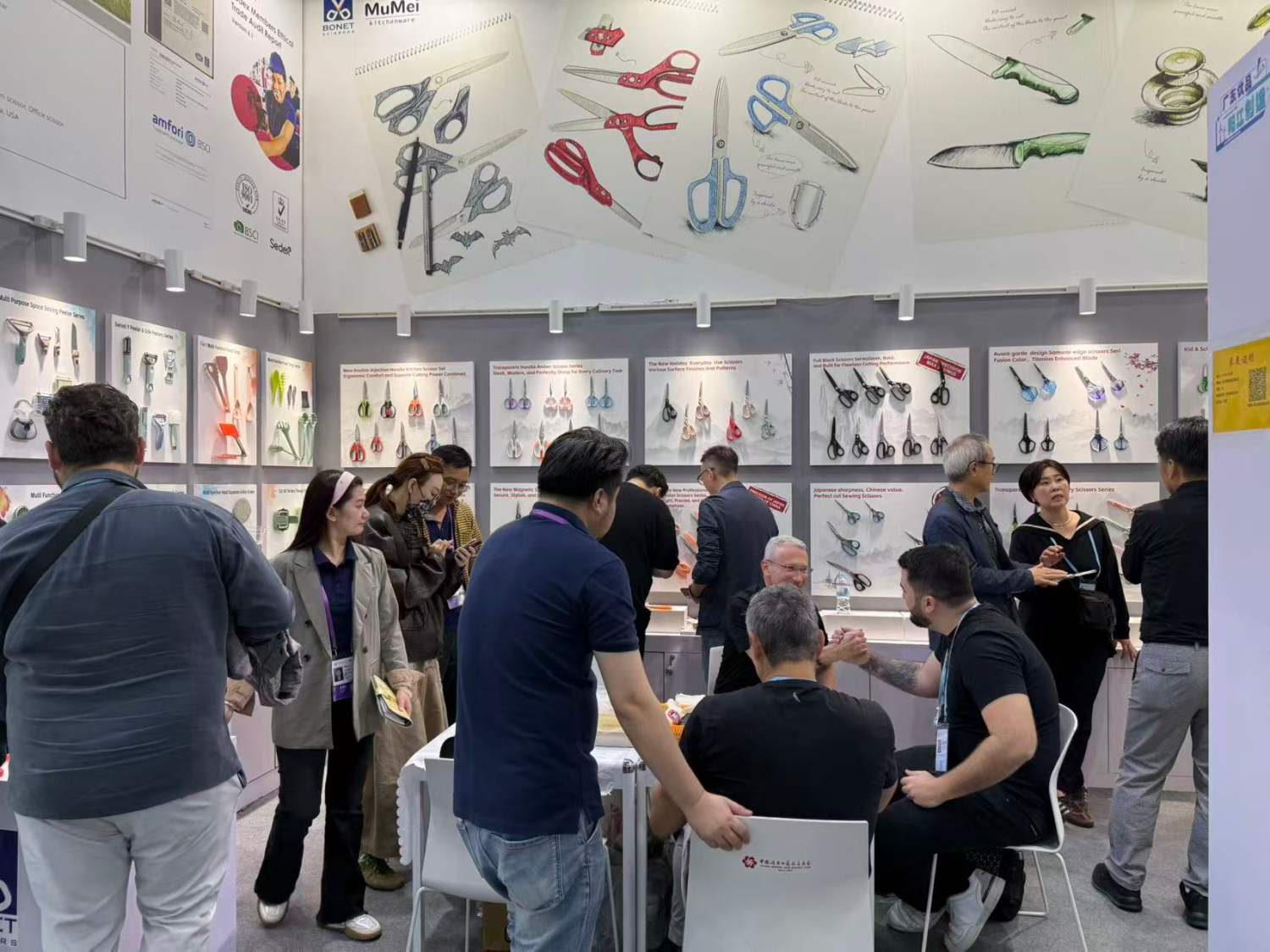
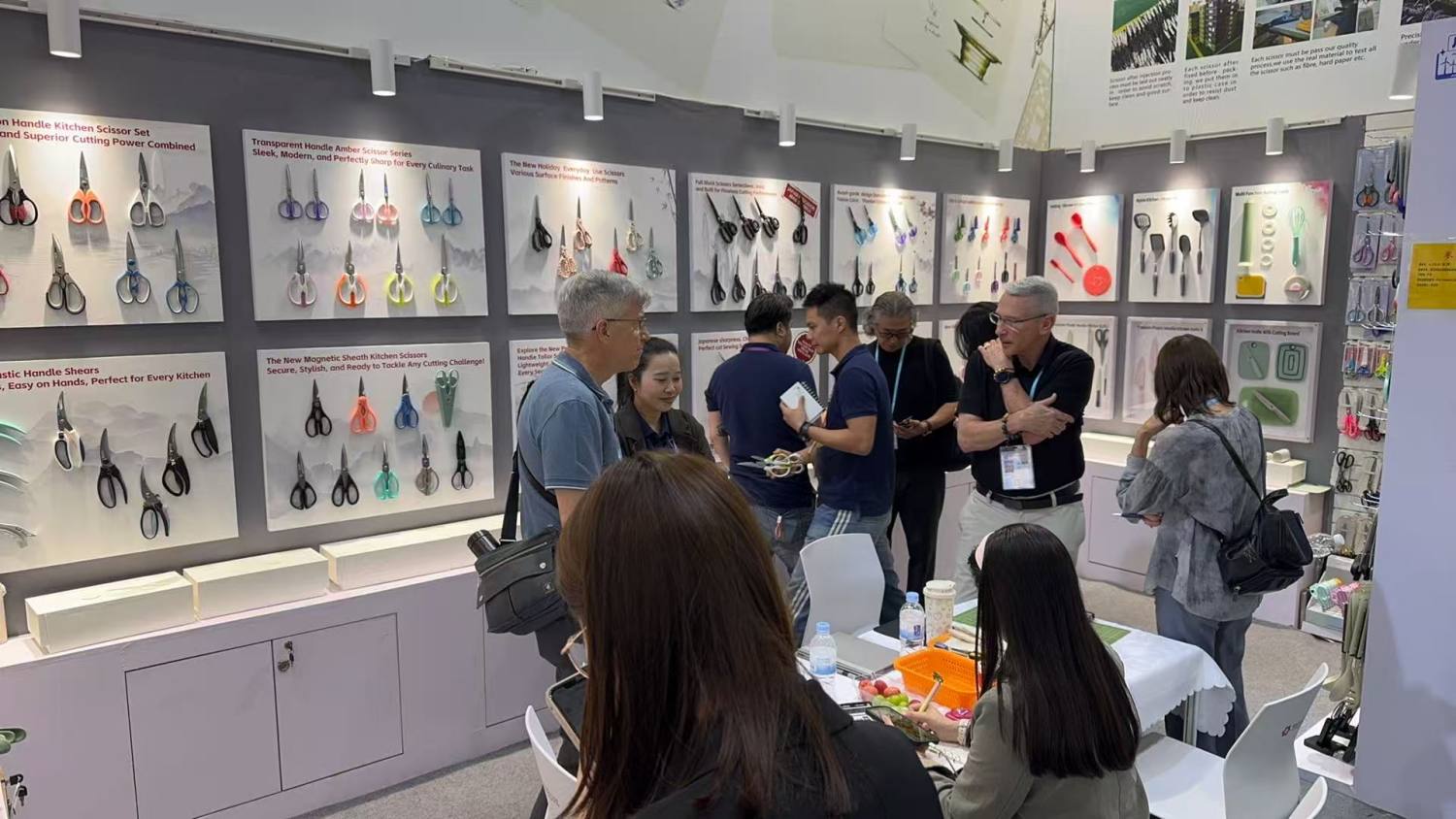
The original Bonet Houseware fair preview highlighted several scissors lines, including Vibrant Dual-Tone Handle Kitchen Scissor Set, Transparent Handle Amber Scissor series, New Magnetic Sheath Kitchen Scissors, New Nobility Textured Grip Scissors, Full Select Home Essential Scissors, and Eco-Friendly Plastic Handle Shears. This updated guide turns that preview into a practical sourcing checklist for buyers planning Canton Fair meetings. It focuses on what to inspect, what to ask, and how to compare options without relying on vague claims.
Why Canton Fair Meetings Matter for Scissors Buyers
Scissors are simple in appearance but detailed in execution. Buyers should evaluate how the two blades meet, whether the handle suits the intended user, how the pivot feels, and whether the packaging supports the target sales channel. A kitchen scissor set may need clear instructions and safe storage, while office or craft scissors may need a comfortable handle for longer use.
At a trade fair, the goal is not only to collect catalogs. It is to narrow down suppliers that can communicate clearly, provide consistent samples, explain available materials and finishes, and support your order requirements. If you are sourcing for OEM or wholesale, prepare a short specification sheet before the meeting so both sides discuss the same product expectations.
Product Lines to Review at the Booth
The fair preview mentions a wide range of scissors concepts. Each has a different sourcing angle, so buyers should match the product to the sales channel rather than choosing only by appearance.
- Vibrant Dual-Tone Handle Kitchen Scissor Set: suitable for buyers looking for color variety and kitchen-focused assortment planning. Ask what color options are available and whether colors can be kept consistent across repeat orders.
- Transparent Handle Amber Scissor series: a visually distinctive option for modern retail displays. Inspect handle clarity, surface finish, and packaging visibility.
- New Magnetic Sheath Kitchen Scissors: designed around convenient storage. Confirm how the sheath attaches, how the magnet is positioned, and what safety instructions should be included.
- New Nobility Textured Grip Scissors: relevant for office, creative, or extended-use applications. Test the grip with different hand sizes and check for pressure points.
- Full Select Home Essential Scissors: a broad household option. Ask which sizes and configurations are available for multi-SKU programs.
- Eco-Friendly Plastic Handle Shears: if an environmental claim is used in marketing, ask the supplier to define the material, documentation, and claim language that can be supported in your market.
Comparison Checklist for Sample Evaluation
Use the following table during or after the fair to compare samples consistently. It helps avoid subjective decisions based only on color, booth display, or first impression.
| Evaluation point | What to check | Questions to ask the supplier |
|---|---|---|
| Blade alignment | Open and close the scissors several times and inspect whether the blades meet evenly. | How is blade alignment checked before packing? |
| Cutting performance | Test on materials relevant to the product, such as paper, packaging film, herbs, or light kitchen tasks. | What sample testing can be arranged before order confirmation? |
| Handle comfort | Hold for at least one minute and note pressure, slipping, and finger clearance. | Are alternative handle shapes, textures, or colors available? |
| Pivot feel | Check whether movement is too loose, too tight, or inconsistent across samples. | Can pivot tension requirements be specified for production samples? |
| Storage and safety | For sheath or magnetic sheath designs, check fit, retention, and instructions. | What packaging and user guidance are recommended? |
| Branding and packaging | Review label space, barcode placement, retail display needs, and carton protection. | What OEM artwork files and approval steps are required? |
OEM and Wholesale Questions to Prepare
For B2B buyers, a productive meeting depends on specific questions. Avoid asking only for a general price list. Instead, describe your intended channel, target retail position, packaging format, and inspection expectations. If commercial details are not published, ask the supplier directly rather than assuming.
- What customization options are available for handle color, packaging, logo placement, and assortment design?
- What information is needed to quote accurately, such as size, handle material preference, packaging type, and order quantity?
- What is the sample process, including sample cost, lead time, and approval steps?
- What are the minimum order requirements for standard items and customized items?
- How are pre-production samples confirmed before mass production?
- Which documents, product information, or test reports can be provided if required by the destination market?
- How are product changes, color tolerances, and packaging artwork revisions managed?
How to Inspect Scissors Samples at the Fair
Bring a small evaluation kit if possible: paper, thin cardboard, packaging film, and any material similar to what your customers will cut. For kitchen scissors, ask whether the sample is intended for food-preparation tasks, household packaging tasks, or general kitchen utility. Do not assume that all kitchen-labeled scissors share the same construction or use range.
When testing, compare multiple pieces from the same line. A single good sample is encouraging, but consistency across samples is more important for wholesale programs. Listen for scraping, look for blade gaps, and check if the handles feel symmetrical. For sheathed products, insert and remove the scissors several times. For textured grips, pay attention to whether the texture improves control or simply changes appearance.
Packaging, Retail Display, and After-Sales Planning
Scissors are often purchased in visual retail environments, so packaging should communicate use clearly. Buyers should consider whether they need blister cards, paper cards, gift boxes, hang holes, multilingual instructions, or private-label artwork. Packaging must also protect blade tips and handles during transport. Ask how samples will be packed and whether the supplier can provide packaging prototypes for approval.
For online channels, additional priorities may include photo-ready packaging, clear product dimensions, safe unpacking instructions, and carton durability. For distributor channels, consistency of SKU labeling and carton markings can reduce warehouse errors. These details are not always exciting, but they directly affect customer complaints and reorder confidence.
Key Takeaways
- Canton Fair 2025 is a chance to evaluate scissors by hand, not only by catalog image.
- Match each scissors line to a clear sales channel: kitchen, office, craft, household, or private label.
- Use a written checklist for blade alignment, grip comfort, pivot feel, storage, and packaging.
- For OEM and wholesale projects, ask direct questions about samples, customization, MOQ, documents, and approval steps.
- If a product name includes an environmental or special-use claim, ask what support can be provided for that claim.
FAQ for Scissors Sourcing at Canton Fair 2025
What should I bring to a scissors supplier meeting?
Bring your target product brief, expected sales channel, packaging reference, logo or branding requirements, and simple test materials. This helps the supplier understand whether you need a standard item, modified item, or OEM project.
How do I compare kitchen scissors with office scissors?
Kitchen scissors should be reviewed for intended kitchen tasks, safe storage, cleaning guidance, and packaging instructions. Office or craft scissors should be reviewed for comfort during repeated use, cutting smoothness, and handle fit.
Can I ask for custom colors or private-label packaging?
Yes, but availability depends on the supplier and product line. Ask what customization options exist, what files are required, whether samples can be made, and what minimum order quantities apply.
How should I treat sustainability claims?
Do not rely on a product name alone. Ask the supplier to explain the material, provide any available documentation, and clarify what wording can be used responsibly in your market.
What is the best next step after the fair?
Shortlist the most relevant samples, request written quotations and sample details, confirm packaging requirements, and document all agreed specifications before moving toward order negotiation.
