




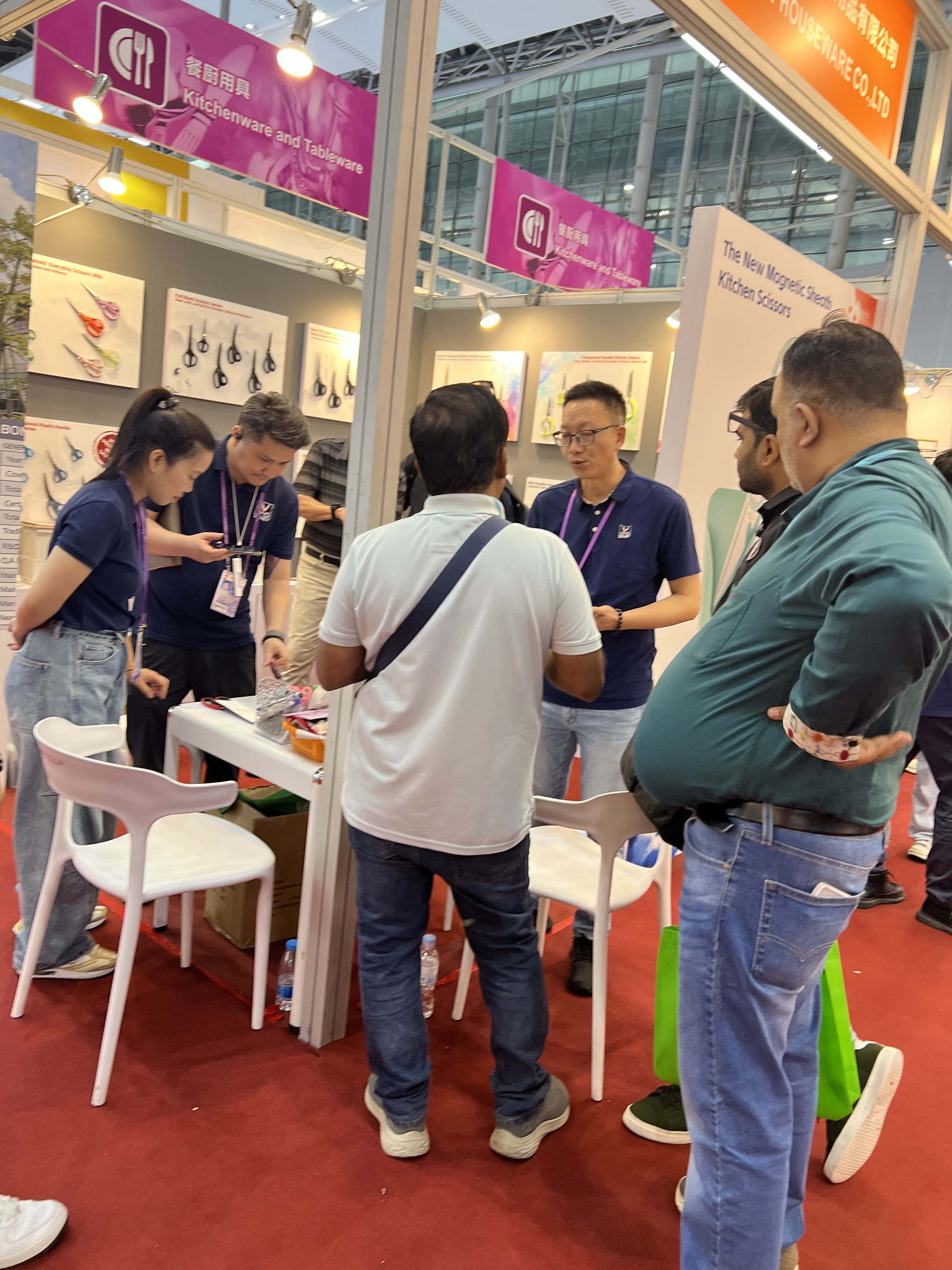
Canton Fair Kitchen Scissors: A Practical Sourcing Guide for Modern Houseware Buyers
The Canton Fair is often used by importers, distributors, retailers, and private-label buyers to discover houseware products that fit changing consumer needs. Among the kitchen and daily-use tools commonly reviewed at trade shows, scissors and kitchen shears deserve careful attention. They look simple, but small differences in blade alignment, handle comfort, packaging, storage design, and supplier communication can affect sell-through, return rates, and long-term customer satisfaction.
The original article highlighted two product directions: transparent-handle kitchen shears and magnetic scissors for varied household, craft, office, and kitchen tasks. This rewritten guide keeps those useful ideas but focuses on how a professional buyer should evaluate them before placing a wholesale, OEM, or trial order.
Key Takeaways
- Kitchen scissors should be evaluated as functional tools, not only as attractive display items.
- Transparent handles may help a product stand out visually, but buyers should still verify comfort, grip, durability, and cleaning expectations.
- Magnetic scissors can offer convenient storage on compatible metal surfaces, but magnet strength and safety should be checked with samples.
- B2B buyers should ask suppliers about materials, testing, packaging, replacement policy, labeling, and production consistency instead of assuming specifications.
- A small pre-shipment inspection plan can reduce the risk of blade misalignment, weak packaging, or inconsistent finishing.
Why Kitchen Scissors Attract Attention at Trade Fairs
Scissors are compact, affordable to sample, easy to display, and suitable for many sales channels. A kitchenware buyer may consider them for supermarkets, home goods stores, promotional bundles, online marketplaces, restaurant supply assortments, or private-label kitchen tool ranges. Because the product category is familiar, consumers can quickly understand the use case. That familiarity, however, also means competition is high.
At a trade fair, visual design can draw a buyer to a booth. Transparent handles, contemporary color choices, or a magnetic storage feature may create the first impression. The buying decision should then move beyond appearance. A serious sourcing process looks at how the scissors cut, how they feel in different hand sizes, whether the blades close smoothly, how safely they are packed, and whether the supplier can repeat the same quality in bulk.
Transparent-Handle Kitchen Shears: What to Evaluate
The original article described transparent-handle kitchen shears as a product that combines contemporary design with practical use. For buyers, the transparent handle is mainly a design and merchandising point. It may support a clean, modern shelf appearance, especially when paired with simple packaging. Still, the handle material, finish, and construction should not be assumed from appearance alone.
When reviewing samples, check whether the handle edges feel smooth, whether the grip remains comfortable during repeated cutting, and whether the transparent area shows scratches, bubbles, stress marks, or discoloration. Ask the supplier what handle material is used and whether the material has any relevant test reports for the intended market. Do not rely on broad terms such as durable, food safe, or premium unless the supplier can explain and document them.
Kitchen shears may be used for tasks such as cutting food packaging, trimming herbs, or handling poultry, but not every product is designed for heavy-duty kitchen work. Buyers should ask what use cases the supplier recommends and what limitations should be printed on packaging or instructions. If the scissors are intended for food-contact situations, request clarification on the blade and handle materials, cleaning guidance, and any applicable compliance documentation for your target market.
Magnetic Scissors: Convenience and Risk Checks
The original article also mentioned multi-use magnetic scissors that can be stored on metal surfaces and used for craft, office, home, or kitchen tasks. This feature can be useful for consumers who want quick access on a refrigerator, metal shelf, or workshop surface. For wholesale buyers, the magnetic function should be tested carefully because it affects both convenience and safety.
Request samples and test them on several metal surfaces, not just the demonstration board used at a booth. Check whether the scissors slide down when attached vertically, whether the magnet remains secure after repeated use, and whether the magnet placement creates any awkward balance in the hand. If the product is marketed for households, consider how packaging should warn users to keep sharp tools away from children. If the product is sold for office or craft use, make sure the marketing language does not imply kitchen or food-use suitability unless the supplier can support that claim.
Comparison Checklist for Buyers
| Evaluation Point | Transparent-Handle Kitchen Shears | Magnetic Scissors | Questions to Ask the Supplier |
|---|---|---|---|
| Main appeal | Modern visual design and kitchen use | Convenient storage and multi-use positioning | Which sales channels and end users is this model designed for? |
| Function checks | Blade alignment, grip comfort, cutting performance | Cutting performance plus magnet hold | Can you provide production samples from the same line used for bulk orders? |
| Material clarity | Handle and blade materials need confirmation | Blade, handle, and magnet details need confirmation | What materials are used, and can documentation be provided? |
| Packaging needs | Protect blade tips and show design clearly | Protect blade tips and explain magnetic storage safely | Can packaging be customized, and what warnings are recommended? |
| Quality risk | Scratches, rough handle edges, loose pivot | Weak magnet, unstable attachment, loose pivot | What inspections are performed before shipment? |
Supplier Questions Before OEM or Wholesale Orders
For B2B sourcing, the most important step is turning booth interest into verifiable information. Ask direct questions and record answers in writing. If a supplier cannot answer immediately, that is not always a problem, but they should be able to follow up with clear documentation.
- What are the blade, handle, pivot, and magnet materials for this exact model?
- Is the sample handmade, from pilot production, or from regular mass production?
- What customization options are available for color, logo, packaging, barcode, and instruction text?
- What testing or inspection reports are available for the intended destination market?
- What is the normal lead time, and how does it change during peak production seasons?
- How are sharp edges, blade tips, and cartons protected during transport?
- What is the process if a shipment contains defective or inconsistent units?
Avoid assuming minimum order quantity, price, certifications, or production capacity unless the supplier provides them for the specific item. These details can vary by model, customization level, packaging type, and order timing.
Sample Testing Before Committing to Bulk Purchase
A useful sample review does not need to be complicated. Create a small checklist and test several units, not just one. Open and close the scissors repeatedly to check smoothness. Cut paper, thin packaging, herbs, and other materials that match the claimed use. Inspect whether the blades meet evenly from base to tip. Check the pivot for looseness after use. For transparent handles, look for cracks or rough finishing. For magnetic scissors, attach and remove them multiple times from a metal surface and observe whether the magnet remains secure.
If the product will be sold online, photograph the sample in normal lighting and compare it with the supplier’s marketing images. If the difference is large, ask for updated product photos or plan your own content. Clear expectations reduce disputes and help retailers present the product accurately.
Packaging, Labeling, and End-User Instructions
Scissors require packaging that protects both the product and the person handling it. Blister cards, paper cards, boxes, or sleeves may all work depending on the channel, but the blade tips should not puncture the package during shipping. For private-label or retail programs, buyers should review warning statements, cleaning instructions, country-of-origin labeling, barcode placement, and any market-specific requirements with their compliance team.
Simple use-and-care language can improve the customer experience. For example, consumers should know whether the scissors are intended for kitchen use, craft use, or general household use; how to clean and dry them; and where to store them safely. If magnetic storage is promoted, the packaging should explain that it only works on suitable metal surfaces and should be kept away from children.
Practical FAQ
Are transparent-handle kitchen shears better than standard handles?
Not automatically. Transparent handles can make the product look distinctive, but buyers should still verify comfort, material information, finishing quality, and durability through samples.
Can magnetic scissors be marketed for kitchen use?
Only if the supplier confirms the materials, construction, and intended use support kitchen applications. If documentation is unclear, market them as general household, office, or craft scissors instead.
What should buyers avoid when sourcing scissors at a trade fair?
Avoid placing a bulk order based only on booth appearance. Always request samples, confirm specifications, review packaging, and ask how the supplier controls quality during mass production.
How many samples should be tested?
Testing several units is better than testing one. Multiple samples help reveal inconsistency in blade alignment, pivot tightness, handle finish, and magnetic strength.
What is the best next step after finding a promising model?
Ask for a written quotation, material details, packaging options, sample approval process, available documentation, and inspection plan. Then compare suppliers using the same checklist rather than relying on general product descriptions.
