




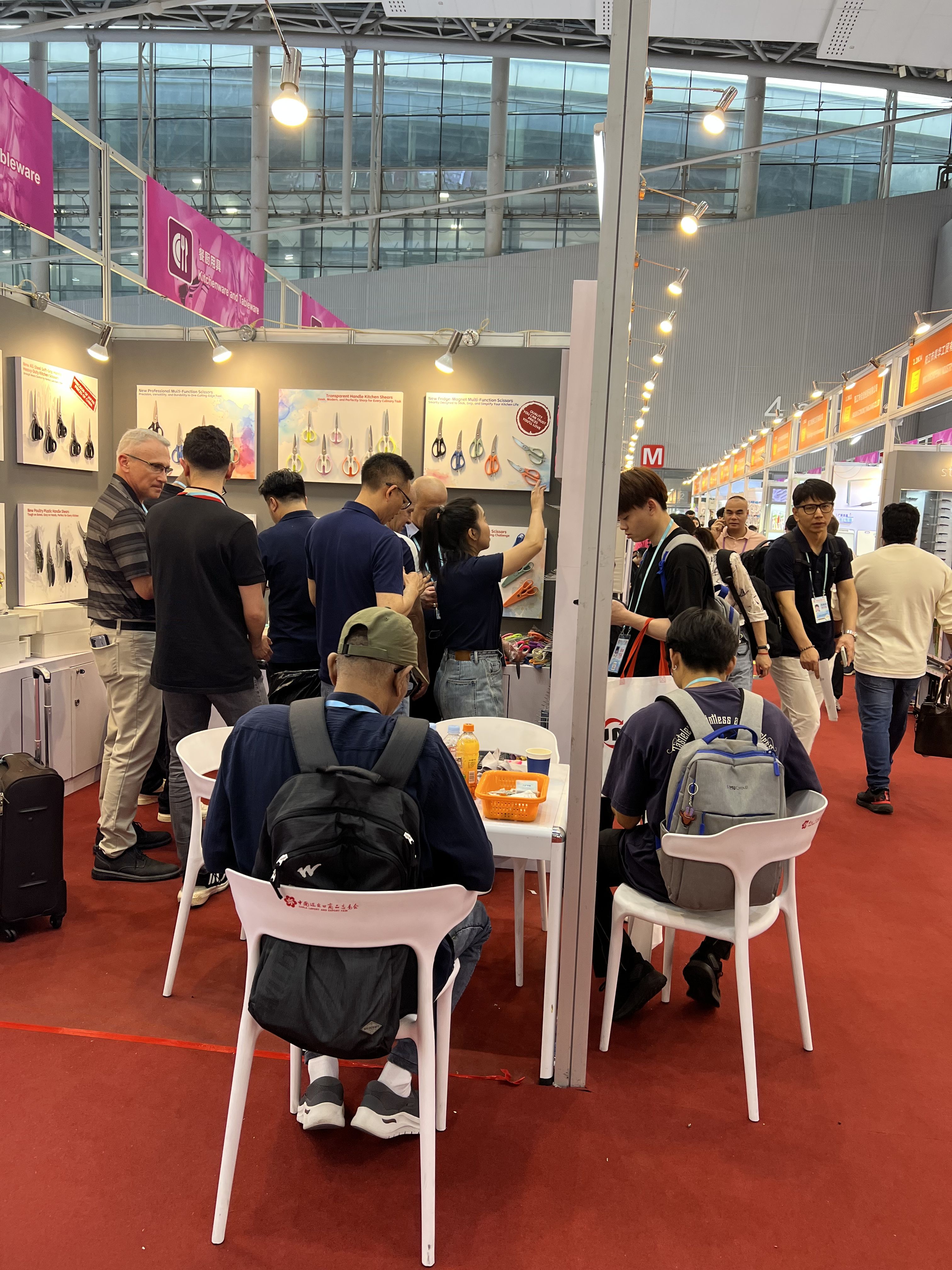
Guangzhou Fair Kitchenware: How to Source Innovative Scissors with Confidence
Kitchen scissors and multipurpose shears are easy to overlook until a buyer compares them side by side. At a Guangzhou kitchenware fair, the category often appears in compact booth displays, but the differences between products can affect retail appeal, end-user comfort and repeat purchasing. The original showcase described a range of scissors presented for kitchen, creative and everyday use, including robust kitchen shears, precision multipurpose scissors, ergonomic designs, transparent handles in soft shades, smooth metal handle styles and magnetic multipurpose scissors. For importers, wholesalers and private-label buyers, those details are a useful starting point, not a final purchasing decision.
This guide rewrites the fair-focused topic into practical sourcing advice. It explains what to look for when evaluating scissors at a trade show, which questions to ask suppliers and how to compare design features without relying on unverified claims.
Key Takeaways
- Start with the intended use: kitchen prep, household tasks, craft work or multipurpose retail assortments.
- Assess handle comfort, grip security and opening tension by testing samples, not just viewing the display.
- Ask suppliers to explain materials, blade finishing, packaging options and quality-control steps in writing.
- Do not assume certifications, steel grades, dishwasher safety or food-contact compliance unless the supplier provides documentation.
- Compare scissors by use case, replacement risk and target market instead of choosing only by appearance.
What Buyers Can Learn from a Guangzhou Fair Display
A well-organized booth can help buyers quickly understand product positioning. The original article noted a bright, orderly display that separated different scissors by purpose and emphasized handle color, shape and finish. This matters because scissors are tactile products: the product has to look clear on a shelf, feel stable in the hand and perform consistently during common cutting tasks.
However, a display is only the first layer of evaluation. A buyer should handle each sample, open and close the blades repeatedly and check whether the product feels balanced. If the item is intended for kitchen use, ask what foods or packaging materials the sample is designed to cut. If the supplier uses terms such as heavy duty, ergonomic or multipurpose, request a practical explanation of what those terms mean for that specific model.
Matching Scissor Types to Market Needs
The source article mentioned several product directions: robust kitchen shears, precision multipurpose scissors, ergonomic designs, transparent handles, metal handles and magnetic multipurpose scissors. Each direction can serve a different customer segment. Kitchen shears may appeal to home cooks who need a tool for food preparation and packaging. Multipurpose scissors may fit household aisles, stationery assortments or promotional kits. Decorative or transparent handles can help a product stand out in lifestyle retail, while metal handles may suit buyers seeking a more classic appearance.
Before discussing price, define the channel. A supermarket buyer may prioritize packaging clarity, barcode placement and safe handling. A kitchenware wholesaler may need a broader assortment with consistent branding. An OEM or private-label buyer may need handle color options, blister card artwork, carton information and repeatable production quality. The better the sourcing brief, the easier it is for a supplier to recommend a suitable model.
Comparison Checklist for Scissor Selection
| Evaluation Point | What to Check at the Fair | Questions to Ask the Supplier |
|---|---|---|
| Intended use | Kitchen, craft, household or mixed-use positioning | What cutting tasks is this model designed for? |
| Handle design | Grip comfort, finger space, surface texture and balance | Are there handle color, finish or packaging options? |
| Blade feel | Smooth opening, closing tension and alignment | What blade material and finishing process are used? |
| Safety and packaging | Tip protection, display packaging and user instructions | Can packaging be adapted for the target market? |
| Quality control | Consistency across multiple samples | What checks are performed before shipment? |
| Commercial details | Sample availability and lead-time discussion | What are the MOQ, pricing tiers and delivery terms? |
Handle Design: More Than Appearance
The original article highlighted transparent handles in soft shades and smooth metal handle scissors. These design elements can influence customer attention, but buyers should evaluate them practically. A transparent handle may support a modern visual style, yet the important questions are whether it feels secure, resists slipping during use and remains comfortable after repeated cutting. A metal handle may create a more refined look, but it should still be tested for weight, edge comfort and grip stability.
Ergonomic claims deserve careful review. Ask who the product is designed for and whether the supplier has any test method or feedback process. If no formal data is available, conduct your own simple sample review with several users. Have them cut paper, flexible packaging and typical kitchen packaging materials, then record comfort, control and fatigue. This is especially useful when choosing products for broad retail markets where hand sizes and use habits vary.
Evaluating Multipurpose and Magnetic Scissors
Multipurpose scissors can be attractive because they promise flexibility. The source article referred to magnetic multipurpose scissors that combine cutting with other functions. For sourcing, the key is to clarify each added function and decide whether it genuinely helps the end user. Extra features can improve perceived value, but they can also introduce more quality-control points, more packaging explanation and higher return risk if the function is unclear.
Ask the supplier to demonstrate the complete use of the product. If a magnetic feature is included, ask where it is intended to attach, how the magnet is integrated and whether there are warnings or packaging notes required for your market. Do not make performance or safety claims in product listings unless they are supported by supplier documents and your own compliance review.
Supplier Questions for OEM and Wholesale Buyers
For B2B buyers, a fair conversation should move from design interest to operational clarity. Instead of asking only for a quotation, prepare a short sourcing checklist. Ask whether the product is available as an existing stock item or only as a customized order. Ask which elements can be customized, such as handle color, packaging format, logo placement or assortment mix. Request sample terms, production lead time, carton packing details and photo references of standard packaging.
Quality documentation is equally important. Buyers should ask what incoming material checks, in-process inspections and final inspections are performed. If the target market requires specific food-contact, safety or labeling standards, ask the supplier what documentation is available and verify it independently. The original article did not state certifications, material grades or test results, so these should be treated as open questions rather than assumptions.
Sample Testing Before Placing an Order
After the fair, shortlist a small number of models and request samples from the supplier. Test several units, not just one. Check whether the blades align consistently, whether the handles have rough edges, whether screws or joints feel stable and whether packaging protects the product during transport. If the scissors are intended for kitchen use, test them on common household tasks that match your product description. If they are intended for craft or office use, test them on paper, card and light packaging materials.
Document results with photos and simple notes. This creates a useful reference when negotiating specifications and approving pre-production samples. It also reduces the risk of approving a visually attractive product that does not match customer expectations in daily use.
FAQ
Are kitchen shears and multipurpose scissors the same product?
Not always. Kitchen shears are usually positioned for food preparation or kitchen packaging tasks, while multipurpose scissors may be designed for household, craft or office use. Buyers should confirm the intended use with the supplier.
Can I claim a specific blade material in my listing?
Only if the supplier provides clear written specifications and, where needed, supporting documents. The source article did not state a blade grade, so it should not be invented.
What should I check first at a trade fair booth?
Start with the product purpose, handle comfort, blade movement and packaging concept. Then ask commercial questions about samples, MOQ, customization, lead time and quality-control procedures.
Are transparent handles a good choice for retail?
They can be visually appealing, especially in lifestyle or household assortments, but buyers should still test grip, comfort and durability before ordering.
How should I compare suppliers after the fair?
Compare sample quality, communication clarity, documentation, customization capability and consistency across multiple units. Price matters, but it should not be the only selection factor.
