




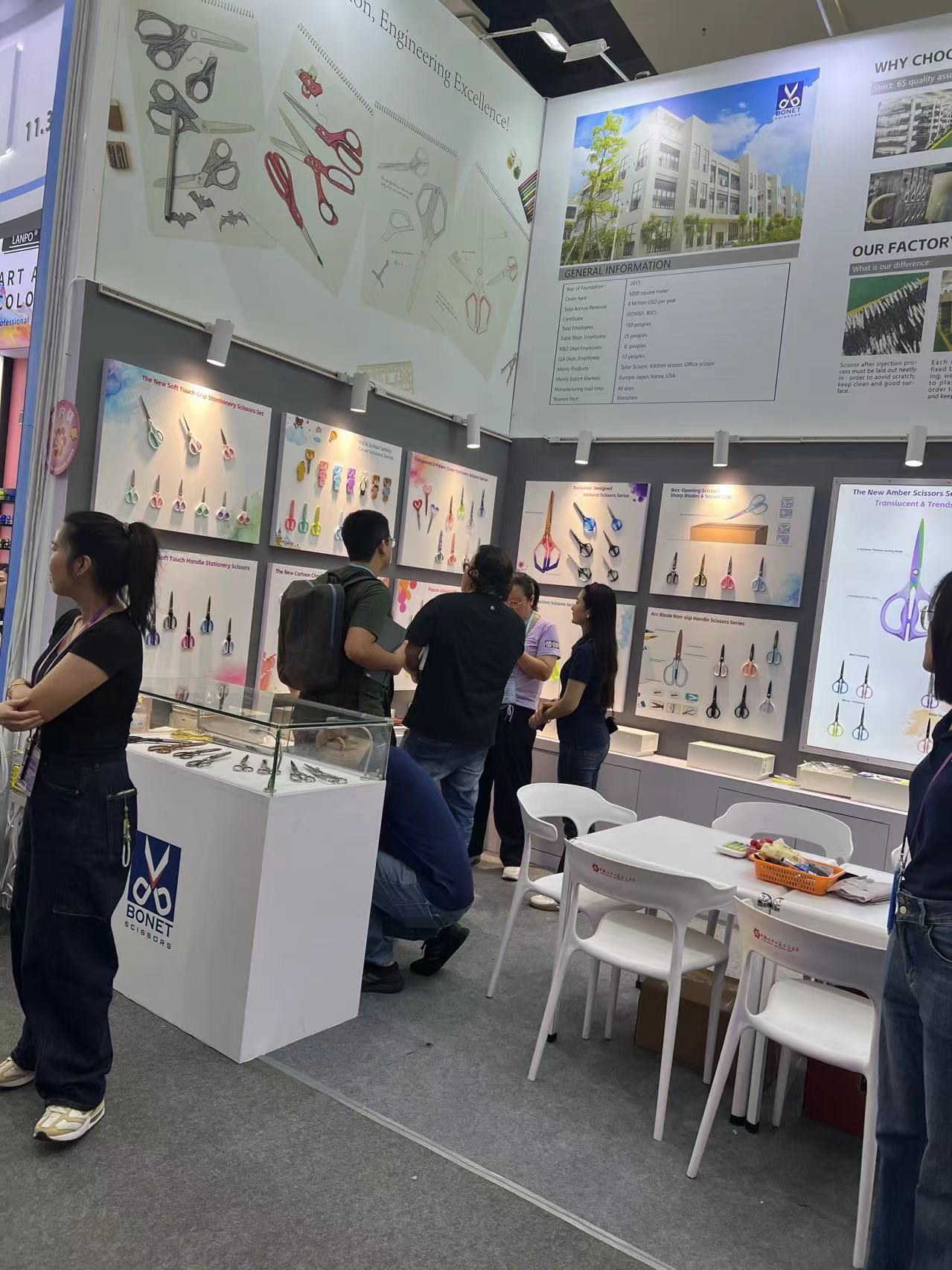
Canton Fair Stationery Sourcing: How to Evaluate Bonet Scissors
The Canton Fair remains an important place for buyers to compare stationery, office tools, craft supplies, and everyday work products in person. For scissors, the sourcing task is not only about appearance. A good purchasing decision should consider cutting performance, comfort, packaging, order flexibility, and whether the supplier can support your sales channel. The original Bonet Houseware article introduced Bonet scissors as colorful, versatile tools for school projects, office use, crafting, and broader work applications. This rewritten guide keeps that core idea but turns it into a practical B2B sourcing article for importers, wholesalers, distributors, and retailers evaluating Bonet scissors or similar stationery scissors at a trade fair.
Key Takeaways
- Use the Canton Fair to test real samples, not just catalogue images or booth displays.
- Match scissor types to clear market segments such as school, office, craft, promotional, or general household use.
- Ask suppliers direct questions about materials, blade options, packaging, labeling, lead time, MOQ, and quality control instead of assuming details.
- Evaluate comfort, cutting consistency, handle design, and packaging durability before discussing a larger order.
- For OEM or private label projects, confirm artwork, sample approval, carton marking, and replacement policies in writing.
Why Scissors Still Matter in Stationery Sourcing
Scissors are a small product, but they have a wide sales base. They are used in offices, classrooms, craft rooms, homes, studios, packaging stations, and promotional kits. This makes them attractive for buyers who need steady, practical stationery items rather than seasonal novelty goods. At the same time, scissors are easy for customers to judge: if the tool feels awkward, cuts poorly, or becomes loose quickly, complaints can appear fast.
For that reason, a Canton Fair visit should focus on hands-on testing. Open and close the scissors several times. Cut common materials that match your target market, such as copy paper, thin card, wrapping paper, fabric scraps, or packaging film. The original article highlighted Bonet scissors as useful for paper, fabric, school projects, crafts, office work, and industrial-style tasks. Buyers should turn those broad claims into specific test scenarios and decide which models fit their own customers.
Understanding the Product Positioning
Bonet scissors are presented as combining practical cutting with modern, colorful design. The original article mentioned bold colors, creative patterns, ergonomic handle design, precision blade engineering, and packaging with a clean, giftable look. Those points can be useful for market positioning, but they should be verified by sample review and supplier discussion.
Before choosing an item, define the shelf role. Is it a low-cost back-to-school scissor? A more comfortable office scissor for daily use? A craft scissor aimed at design-conscious customers? A multipack item for wholesalers? Or a private label product for a retailer? Clear positioning helps buyers avoid mixing features that do not match the final price point.
Buyer Checklist for Comparing Scissors at the Fair
| Evaluation area | What to check | Questions to ask the supplier |
|---|---|---|
| Cutting performance | Try straight cuts, repeated cuts, and tip cuts on materials relevant to your market. | Which materials are these scissors designed to cut, and what limitations should buyers know? |
| Handle comfort | Check grip shape, finger space, surface feel, and comfort during repeated use. | Are there different handle sizes or designs for students, office users, or craft users? |
| Design and colors | Review whether colors and patterns suit your retail shelf, catalogue, or promotion. | Which colors are standard, and which require custom production or special approval? |
| Packaging | Inspect blister cards, paper cards, boxes, labels, and carton protection if shown. | Can packaging be customized, and what files, approvals, and lead times are required? |
| Quality control | Look for consistency between display samples and any extra samples from stock. | What incoming, in-process, and final inspection steps are used before shipment? |
| Commercial terms | Compare pricing structure only after confirming specifications and packaging. | What are the MOQ, sample cost, lead time, payment terms, and replacement process? |
Sample Testing: Simple Checks That Reveal Problems
A buyer does not need a laboratory to identify many common issues. Basic sample checks at the booth or office can reveal whether a scissor model is appropriate for your channel. Start with cutting consistency. A good sample should cut cleanly along most of the blade length without tearing normal paper. Next, test the tips. Some scissors cut well near the hinge but fail at the tip, which matters for craft users and office users making precise cuts.
Then check the pivot area. Open and close the scissors several times and feel for wobble, stiffness, scraping, or uneven movement. Look at the handle edges and inside grip area for rough spots. If the product is intended for children or schools, ask the supplier what age group it is designed for and what safety-related features are available, but do not assume compliance claims unless they are documented and relevant to your destination market.
Matching Scissors to Sales Channels
Different channels require different choices. A school stationery distributor may prioritize safe handling, price stability, clear packaging, and bulk availability. An office supplies wholesaler may care more about comfort, durability in daily use, and neutral color options. A craft retailer may prefer colorful designs, patterns, sharper-looking presentation, and packaging that explains the intended use. A promotional products buyer may need custom logo placement, predictable color matching, and simple packing for kit assembly.
Use the following segmentation approach before placing an order:
- Define the end user: student, office worker, crafter, household user, or light industrial user.
- Define the cutting materials: paper only, card, fabric, packaging material, or mixed use.
- Define the retail format: single unit, multipack, counter display, gift set, or OEM private label.
- Define the acceptable price band after packaging, freight, duty, and margin are included.
- Confirm that the sample, packaging, and carton details match the product you will actually receive.
OEM, Wholesale, and Supplier Questions to Confirm
If the purpose of meeting Bonet or another scissor supplier is wholesale or OEM sourcing, the most important work happens after the booth conversation. Ask for a written specification sheet for each selected model. If information is not provided, request it rather than guessing. Useful questions include: What blade material is used? What handle material is used? Which colors are standard? Can the handle, packaging, or logo be customized? What is the MOQ for each model and for each color? What is the normal lead time after sample approval? How are goods packed for export? What inspection standard is used before shipment?
Buyers should also ask what documents are available for the destination market. Do not treat a general statement at a trade show as proof of compliance. If your market requires specific labeling, warning text, barcode formats, packaging recycling marks, or safety documentation, list those requirements in your purchase inquiry and contract.
Packaging and Presentation Considerations
The original article mentioned premium-looking packaging and a minimalist presentation. Packaging can support retail sales, but it also affects freight cost, shelf space, damage risk, and sustainability expectations. A beautiful pack that bends easily or wastes too much space may create problems for wholesalers. Review packaging samples closely. Check print clarity, hang-hole strength, sealing method, barcode placement, and whether the product remains secure during transport.
For private label buyers, confirm artwork responsibilities early. Ask which file formats are required, who prepares the dieline, how color proofs are approved, and whether pre-production samples are available. Also ask how cartons are marked and whether inner packs can match your warehouse receiving process.
Practical FAQ
Are Bonet scissors only for office use?
The original article described use cases including school projects, crafting, office work, and broader applications. Buyers should choose models based on the materials their customers will cut and verify performance with samples.
What should I test first when reviewing a scissor sample?
Start with repeated paper cuts, tip cutting, handle comfort, opening and closing smoothness, and whether the blades meet evenly. Then test any extra materials relevant to your sales channel.
Can I request custom colors or packaging?
Possibly, but the buyer should ask the supplier directly about available standard colors, custom color conditions, MOQ, artwork requirements, approval steps, and lead time.
How should buyers compare prices between suppliers?
Compare only like-for-like offers. Confirm the same scissor size, materials, handle design, packaging, carton quantity, inspection terms, and delivery terms before judging the price.
What information should be included in a purchase inquiry?
Include target market, use case, quantity estimate, packaging preference, private label needs, destination country, required documents, inspection expectations, and requested sample details.
Final Sourcing Advice
Bonet scissors, as presented in the original Canton Fair stationery article, offer a combination of practical utility, colorful design, and broad use potential. For buyers, the opportunity is strongest when those general strengths are translated into a clear product brief. Test samples carefully, ask detailed supplier questions, and document every agreed specification before ordering. This approach helps turn a trade fair discovery into a reliable stationery item for wholesale, retail, office supply, or OEM programs.
