




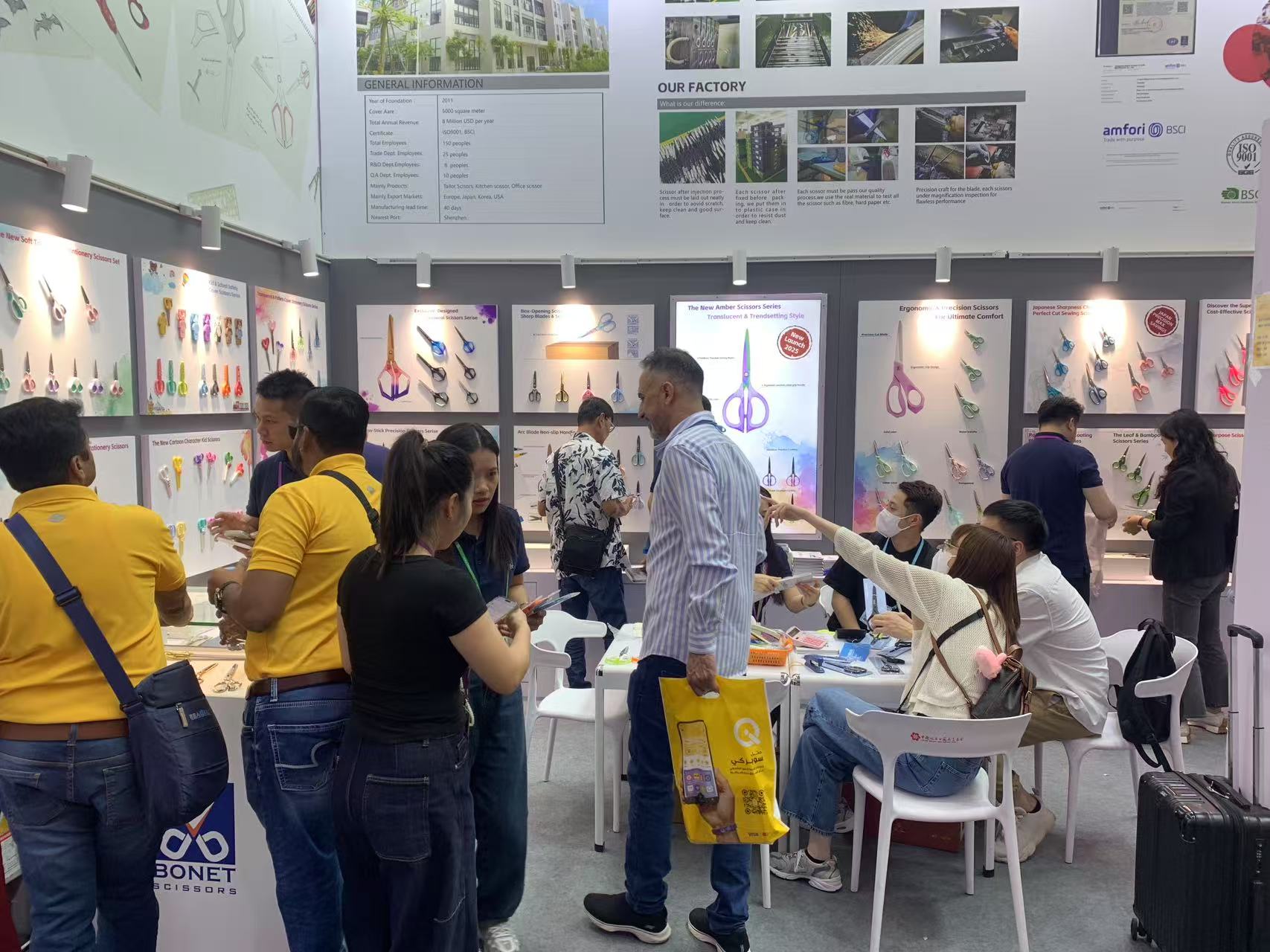
Canton Fair Stationery Sourcing: Evaluating Bonet Scissors Precision
The Canton Fair stationery market is a useful place for buyers to compare cutting tools in person. Scissors may look simple, but small differences in blade alignment, handle comfort, finishing, packaging, and supplier support can affect customer satisfaction after purchase. For buyers reviewing Bonet scissors, the goal should be practical evaluation rather than quick visual judgment.
The original article highlighted several useful points: Bonet scissors were presented for different tasks, including textile scissors, precision scissors, and durable kitchen shears; the article also mentioned stainless steel, ergonomic handles, aesthetic color choices, patterns, and possible special edition or customized options. This rewritten guide turns those ideas into a sourcing checklist for retailers, distributors, stationery buyers, promotional product teams, and private-label purchasers.
Key Takeaways
- Choose scissors by end use first: fabric, paper, detailed craft work, office use, or kitchen cutting.
- Ask suppliers to explain blade material, handle material, finishing, packaging, and quality inspection procedures.
- Test cutting feel with realistic materials instead of relying only on appearance.
- For customization, confirm artwork rules, color matching, sample approval steps, lead time, and packaging options.
- Do not assume specifications, certifications, MOQ, or pricing; request written confirmation from the supplier.
Why Scissors Need Careful B2B Evaluation
In stationery and houseware sourcing, scissors are often treated as a basic product. That can lead to mistakes. A pair that looks attractive in a booth may feel stiff after repeated use, cut unevenly near the tip, or have handles that are uncomfortable for long working sessions. For retailers, a poor cutting experience can create returns and negative reviews. For promotional buyers, weak customization quality can reduce the perceived value of a campaign.
At a trade fair, buyers have the advantage of handling samples directly. Use that time to compare opening and closing smoothness, check whether the blades meet evenly, and ask how the supplier controls consistency across production batches. If the product will be sold under your own brand, also evaluate whether the scissors match your target price tier and customer expectations.
Match the Scissors to the Intended Task
The original Bonet article referred to several styles, including textile scissors, precision scissors, and kitchen shears. Each category should be assessed differently. Textile scissors need a clean, continuous cut through fabric and should not snag edges. Precision scissors should be judged by tip control and fine cutting accuracy. Kitchen shears need comfortable grip, stable blade action, and practical cutting strength for common kitchen tasks.
Before placing an order, define the primary application clearly. A general office scissor is not the same as a craft scissor, and craft customers may care more about fine tip control than kitchen users. If you are building an assortment, consider offering different models for different use cases instead of relying on one universal pair.
Material, Handle Comfort, and Finish
The source article mentions stainless steel and ergonomic handles. Those are useful starting points, but buyers should still ask for the exact material description and any available technical information. Stainless steel can vary in composition, hardness, finish, and corrosion resistance. Do not assume a specific grade unless the supplier provides it in writing.
Handle design also matters. Ergonomic claims should be tested by actual use. Ask several team members to hold the sample, including people with different hand sizes. Check for sharp plastic edges, pressure points, slippery surfaces, and whether the thumb and finger holes feel comfortable during repeated cuts. For children’s, office, craft, or kitchen categories, user expectations will be different.
Comparison Checklist for Trade Fair Buyers
| Evaluation Area | What to Check | Questions to Ask the Supplier |
|---|---|---|
| Cutting performance | Clean cut from base to tip; smooth opening and closing; no blade wobble | What materials is this model designed to cut? How is blade alignment checked? |
| Material details | Blade finish, handle material, visible burrs, corrosion protection | What stainless steel description can be provided? Are material documents available? |
| Comfort | Grip size, edge smoothness, pressure points during repeated use | Is this handle available in other sizes or shapes? |
| Customization | Logo position, color options, patterns, special edition feasibility | What are the artwork requirements, sample steps, and color approval process? |
| Packaging | Retail display, barcode space, safety protection, carton labeling | Can packaging be customized? What information must the buyer provide? |
| Commercial terms | MOQ, lead time, pricing tiers, payment terms, after-sales handling | Can all commercial details be confirmed in a written quotation? |
Customization and Private-Label Considerations
The original article mentioned special edition and custom possibilities, including patterns, configurations, and colors. For B2B buyers, customization should be managed with clear documentation. Ask whether logo printing, handle color selection, pattern application, gift packaging, or retail packaging customization is available for the model you want. Different models may have different customization limits.
Buyers should also confirm how samples are approved. A good process usually includes artwork review, pre-production sample confirmation, color reference approval, and final packaging confirmation. If your brand has strict color standards, ask whether the supplier can work with your color reference system and whether slight production variation is possible. If the scissors will be used as promotional gifts, verify the available print area and durability of the logo method.
Quality Control Questions to Ask Before Ordering
Trade fair conversations are often short, so prepare questions in advance. Instead of asking only for the lowest price, focus on the risks that affect your market. Useful questions include:
- What is the intended use for this scissor model?
- What blade and handle materials are used, and can they be documented?
- How is cutting performance inspected during production?
- Can you provide samples from current production rather than only display samples?
- What packaging options are available for retail, wholesale, or private label orders?
- What are the MOQ, lead time, quotation validity, and payment terms?
- How are defective products, shipment damage, or quality complaints handled?
These questions do not imply that a supplier has or lacks a specific capability. They help buyers collect the information needed for a professional comparison.
How to Test Samples After the Fair
After collecting Bonet scissors samples or quotations, test them in conditions close to real customer use. For textile scissors, cut several fabric types and check whether the edge frays. For precision scissors, test fine lines, corners, and tip accuracy. For kitchen shears, use safe, realistic kitchen materials and check cleaning convenience. For office scissors, cut paper, cardboard, labels, and packaging tape if appropriate.
Record results in a simple spreadsheet with ratings for cutting smoothness, comfort, appearance, packaging, and value. If multiple staff members test the same sample, you will get a more reliable view than from one person’s opinion. Keep one approved sample as a reference if you move forward with an order.
Practical FAQ
Are Bonet scissors suitable for wholesale sourcing?
They may be suitable depending on your target market, model choice, order requirements, and supplier terms. Ask for written details on MOQ, pricing, lead time, packaging, and available customization before deciding.
What should I check first at the Canton Fair booth?
Start with the intended use, cutting feel, handle comfort, and visible finishing. Then ask for material information, packaging options, customization steps, and commercial terms.
Can I request custom colors or patterns?
The source article mentions customization possibilities, including colors and patterns. Availability may depend on the model and order details, so confirm artwork rules, sample charges if any, approval process, and production lead time with the supplier.
Should I rely on booth samples for final approval?
No. Booth samples are helpful for initial screening, but buyers should request confirmed samples and written specifications before placing a production order.
What information should be included in a supplier quotation?
A useful quotation should include model name or number, material description, packaging method, customization details, MOQ, unit price, lead time, payment terms, carton information if available, and validity period.
Final Sourcing Advice
Bonet scissors at the Canton Fair can be evaluated as part of a broader stationery, craft, or houseware sourcing plan. The strongest buying decisions come from matching each scissor model to a clear use case, testing samples carefully, and confirming all commercial and technical details in writing. Attractive colors and patterns can help a product stand out, but consistent cutting performance, comfortable handling, and dependable supplier communication are what make a scissors program easier to manage over time.
