




China Tailor Scissors: Precision, Style, and Durability
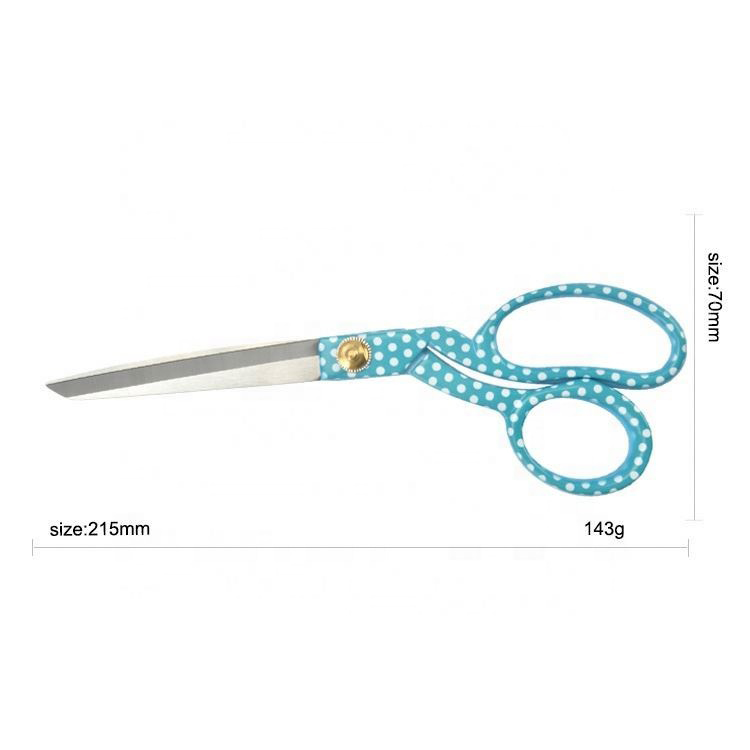
China tailor scissors are widely considered by sewing shops, craft brands, garment studios, and wholesale buyers because they combine everyday cutting function with a wide range of handle styles and packaging options. The original product shown features turquoise handles with white polka dots, a golden screw pivot, and stainless steel blades. Those visible details make it suitable for a buyer who wants a tailor scissor that looks distinctive on a retail shelf while still serving common sewing, tailoring, and craft tasks.
For organic search and real purchasing decisions, the important question is not simply whether the scissors look attractive. Buyers should evaluate cutting feel, blade consistency, handle comfort, supplier communication, packaging suitability, and quality control before placing a bulk order. This guide explains how to assess China tailor scissors for wholesale, OEM, private label, and fashion design use without relying on unverified claims.
Key Takeaways
- Choose tailor scissors based on intended use: fabric cutting, sewing kits, craft retail, promotional sets, or fashion design classrooms.
- Verify blade material, edge sharpness, pivot stability, and handle comfort with samples before confirming wholesale orders.
- The visible product has stainless steel blades, turquoise polka-dot handles, and a golden screw pivot; ask the supplier for any further specifications.
- For OEM or private label projects, confirm packaging artwork, logo method, carton details, sample approval, and inspection standards in writing.
- A good supplier discussion should include quality tolerance, replacement policy, lead time, and product-use recommendations.
What Makes Tailor Scissors Different from General Scissors?
Tailor scissors are designed for controlled cutting along fabric, patterns, thread, and craft materials. Compared with many office scissors, they usually require a more stable pivot, a sharper cutting edge, and a handle shape that remains comfortable during repeated use. A tailor may cut long fabric panels, trim seams, or shape curves, so poor blade alignment quickly becomes a productivity problem.
For fashion design students, home sewing users, and craft retailers, appearance can also matter. The polka-dot handle in this article gives the product a more recognizable look than plain utility scissors. However, visual design should not replace practical assessment. A buyer should still test whether the scissors open smoothly, close evenly, and cut cleanly from the base of the blade to the tip.
Product Details Explicitly Shown in the Source
The original article identified several useful facts that can be preserved. The scissors are presented for fashion design, sewing, tailoring, and crafting projects. The handle is turquoise with white polka dots. A golden screw functions as the pivot point, and the blades are described as stainless steel. The original text also emphasizes precision, durability, comfort, and reduced fatigue during extended use.
Those points are a good starting point, but buyers should not assume additional specifications unless the supplier confirms them. For example, stainless steel can cover many compositions and finishing methods, so commercial buyers should ask what blade grade, hardness target, surface finish, and corrosion-resistance expectations apply to the specific order. If these details are important for your market, request written confirmation and sample testing.
Comparison Checklist for Wholesale Buyers
| Evaluation Point | What to Check | Questions to Ask the Supplier |
|---|---|---|
| Blade performance | Clean cutting on common fabric and craft materials | What materials is this model recommended to cut? |
| Blade material | Confirmed stainless steel specification | What stainless steel grade or standard is used? |
| Pivot stability | Smooth opening, no excessive looseness | Can the screw tension be adjusted or inspected before packing? |
| Handle comfort | Grip size, edge smoothness, hand fatigue during repeated cuts | Is the handle suitable for extended sewing or classroom use? |
| Visual design | Color consistency and polka-dot printing quality | Can color samples or approved artwork be confirmed before production? |
| Packaging | Retail card, blister, box, or bulk packing suitability | What packaging options are available for wholesale or OEM orders? |
| Quality control | Sample approval, inspection method, defect definitions | What inspection steps are used before shipment? |
How to Source China Tailor Scissors for B2B Orders
When sourcing tailor scissors from China, begin with a clear use case. A fashion design school may need dependable classroom tools that tolerate frequent handling. A craft retailer may care more about shelf appeal and packaging. A sewing kit brand may need compact packing, barcode labels, and consistent color. A promotional buyer may focus on logo placement and cost control. Each use case changes the right questions to ask.
Request samples before discussing large-volume production. During sample review, cut several materials that match your market, such as cotton fabric, felt, ribbon, pattern paper, or light craft sheets. Check whether the blades chew, snag, or leave uneven edges. Open and close the scissors repeatedly to test pivot feel. Inspect handle molding or finishing for rough edges that could irritate the user.
If the project involves OEM or private label work, ask whether the supplier can support your required packaging, labeling, and artwork workflow. Do not assume logo printing, custom color, or special cartons are included. Confirm whether there are setup charges, artwork requirements, sample approval steps, production lead times, and pre-shipment inspection options.
Quality Control Points Before Confirming an Order
Quality control for tailor scissors should be practical and measurable. Start by agreeing on a reference sample. This sample should define acceptable blade alignment, handle color, screw appearance, opening tension, packaging layout, and general workmanship. For patterned handles such as turquoise with white polka dots, color variation and print clarity should be discussed in advance.
- Check blade alignment by closing the scissors slowly and observing whether the edges meet evenly.
- Test cutting from heel to tip on the materials your customers will actually use.
- Inspect the golden screw pivot for secure fitting and consistent appearance.
- Review handle comfort, especially around finger openings and molded edges.
- Confirm packaging protects the tips and prevents surface scratches during transit.
- Define how defective pieces will be handled if inspection finds cutting or appearance issues.
These steps are especially important for wholesale sewing scissors because small inconsistencies can create returns, poor reviews, or complaints from professional users. A low unit price is not helpful if cutting performance varies from carton to carton.
Use and Care Guidance for Sewing and Craft Users
For end users, tailor scissors last longer when used for the right materials. If a pair is intended for fabric, avoid using it on heavy cardboard, wire, hard plastic, or adhesive materials unless the supplier confirms suitability. Cutting unsuitable materials can dull the edge or disturb blade alignment.
Keep the blades dry after use and store the scissors in a pouch, sleeve, or drawer where the tips are protected. Wipe lint and thread dust from the pivot area. If the screw becomes loose or the cutting feel changes, ask the supplier or a repair professional whether adjustment is possible. For shared classrooms or studios, label scissors by use so fabric scissors are not mixed with paper or utility tools.
Practical FAQ
Are these China tailor scissors suitable for fashion design?
The original article presents them for fashion design, sewing, tailoring, and crafting. Buyers should still test samples with the fabrics and materials used in their own studio or retail market.
What product features are visible or stated?
The source shows turquoise handles with white polka dots, a golden screw pivot, and stainless steel blades. It also describes comfort, precision, and smooth cutting, but additional technical specifications should be confirmed with the supplier.
Can I order these as wholesale or OEM scissors?
That depends on the supplier's commercial terms. Ask about minimum order quantity, custom packaging, logo options, sample cost, production lead time, and inspection process before assuming OEM support.
How should I compare suppliers?
Compare sample quality, communication speed, packaging options, defect handling, and willingness to provide written specifications. Price matters, but cutting consistency and after-sales clarity are often more important for repeat orders.
What should be included in a purchase specification?
Include blade material confirmation, handle color reference, packaging type, labeling needs, inspection criteria, approved sample photos, carton requirements, and shipment expectations. Clear written specifications reduce misunderstandings.
Final Buying Advice
China tailor scissors can be a strong option for sewing, fashion design, and craft markets when the buyer balances appearance with verified function. The polka-dot handle and golden pivot give this model a recognizable look, while the stainless steel blades provide the core cutting element stated in the source. Before placing a bulk order, treat the product as a sourcing project: request samples, test real materials, define quality expectations, and confirm packaging and commercial details in writing.
