




Chinese Scissors Factory: Sourcing Precision Cutting Tools
Finding the right Chinese scissors factory is not only about locating a low-cost source. For importers, wholesalers, kitchenware distributors, promotional product buyers, and retail brands, the more important question is whether a supplier can consistently deliver scissors that cut cleanly, feel comfortable in the hand, and match the intended use. A pair of scissors may look simple, but blade alignment, pivot smoothness, handle design, packaging, and sample consistency all affect customer satisfaction.
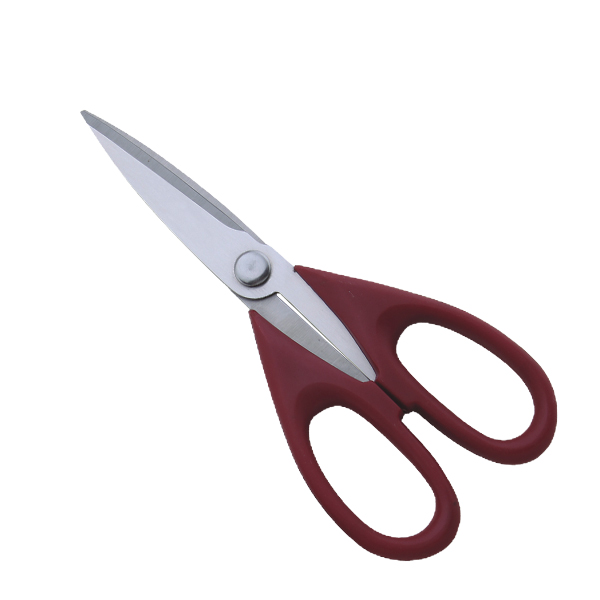
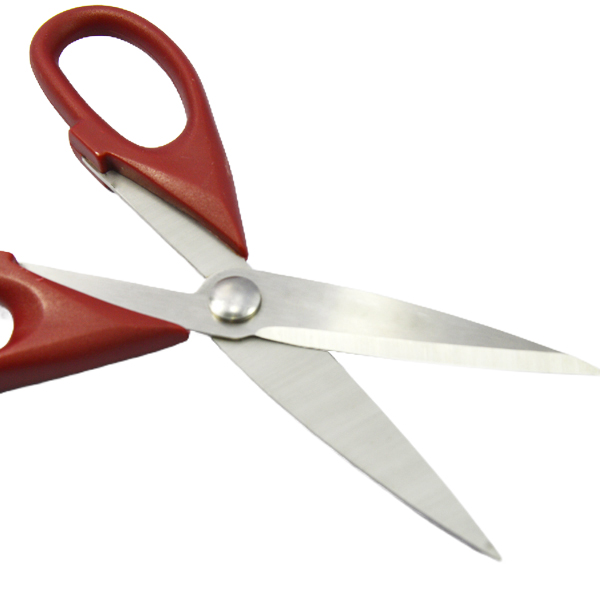
The original product example highlights a pair of Precision Cut Titanium Scissors with a deep red ergonomic handle, a soft-grip inner lining, and high-grade stainless steel blades. These are useful reference points for buyers because they show the kinds of details that should be checked when comparing suppliers. Before placing an OEM, wholesale, or private-label order, buyers should verify each specification directly with the factory and confirm it on the quotation, sample approval record, and purchase order.
Key Takeaways
- A reliable scissors supplier should be evaluated by samples, communication, documentation, and repeatability, not by price alone.
- Useful sourcing questions include blade material, handle material, pivot construction, packaging options, inspection process, MOQ, lead time, and customization limits.
- For scissors used in kitchens, offices, schools, or craft settings, buyers should match blade size, handle comfort, and cutting performance to the target user.
- Do not assume certifications, food-contact compliance, or special coatings unless the supplier provides clear written confirmation and supporting documents.
What Buyers Should Expect from a Modern Scissors Supplier
A professional scissors manufacturer in China should be able to explain the product clearly. Buyers should ask what materials are used for the blades and handles, how the pivot is assembled, what types of packaging are available, and whether the product is intended for kitchen, office, craft, school, or general household use. If a supplier describes a product as suitable for kitchen use, ask what tests or declarations are available for food-contact markets, rather than assuming compliance.
The source article mentions stainless steel blades engineered for sharpness and durability, a smooth and quiet pivot, and aligned cutting performance. These are practical quality indicators. However, buyers should still test actual samples on relevant materials, such as paper, light fabric, food packaging, herbs, thin cardboard, or other items used by the target market. A good sample should cut from the base of the blade to the tip without tearing or shifting.
Product Features to Check Before Ordering
When reviewing scissors from a factory, separate visible design from functional performance. A deep red handle may support shelf appeal, but the shape, grip surface, and finger opening are what determine comfort during repeated use. The original product description refers to an ergonomic handle with a soft-grip inner lining designed to reduce hand fatigue. For wholesale buyers, this type of claim should be evaluated by handling the sample for several cutting tasks, not only by looking at product photos.
- Blade alignment: Close the scissors slowly and check whether the blades meet evenly from pivot to tip.
- Cutting feel: The motion should be controlled and smooth, without wobbling or grinding.
- Handle comfort: Test the grip with different hand sizes if the product is intended for a broad consumer audience.
- Edge consistency: Cut several materials and check whether performance changes after repeated use.
- Packaging fit: Confirm that the scissors are protected from scratches, blade exposure, and movement during transit.
Comparison Checklist for Factory Evaluation
The following table can help sourcing teams compare samples and suppliers in a structured way. It is not a substitute for professional inspection, but it gives buyers a practical framework for early-stage evaluation.
| Evaluation Item | What to Check | Questions to Ask the Supplier |
|---|---|---|
| Blade material | Sharpness, corrosion resistance, edge retention, and finish | What blade material is used, and can it be stated on the quotation? |
| Handle design | Grip comfort, finger opening size, surface texture, and color consistency | Can the handle color or material be customized for OEM orders? |
| Pivot mechanism | Smooth opening and closing, no looseness, no excessive friction | How is pivot tightness controlled during production? |
| Cutting performance | Clean cuts on intended materials without tearing or slipping | Which materials is this model designed to cut? |
| Packaging | Retail presentation, safety protection, barcode space, carton strength | What packaging formats are available, and what artwork files are required? |
| Commercial terms | MOQ, lead time, payment terms, sample cost, and shipping method | What are the current MOQ and production lead time for this model? |
OEM and Wholesale Sourcing Questions
For OEM scissors projects, clarity prevents delays. Buyers should provide a target market, expected use case, preferred packaging style, labeling needs, color references, and any required documentation. If the product will be sold as kitchen scissors, ask the supplier what documents they can provide for the destination market. If the product will be sold as general-purpose household scissors, define that clearly to avoid confusion.
Important supplier questions include: Can you provide pre-production samples? What is the sample approval process? Are color tolerances defined? Can the factory pack mixed colors or single colors? What is the inspection standard before shipment? Are spare packaging materials available for reference? Can the factory provide product photos or should the buyer arrange photography independently? These questions are practical and do not require the supplier to make unsupported claims.
How to Judge Sample Quality
Sample review should be documented. Take photos, record measurements if relevant, and note the cutting performance on different materials. For the scissors described in the source article, useful sample checks would include the deep red handle color, the softness of the inner grip, the appearance of the stainless steel blades, and the smoothness of the pivot mechanism. Buyers should also check whether the sample received matches the product description and quotation.
One sample is not enough to confirm mass-production consistency, but it can reveal whether the design suits the target channel. Retail buyers may care about shelf appearance and packaging safety. Promotional buyers may focus on logo placement and color matching. Kitchenware distributors may prioritize comfort, wash-and-store habits, and whether the blade length is practical for food preparation tasks.
Packaging, Labeling, and Market Fit
Scissors are sharp tools, so packaging should protect both the product and the person handling it. Ask whether the supplier offers blister packaging, carded packaging, paper boxes, or other formats, and confirm which option is appropriate for the sales channel. For e-commerce, packaging may need stronger transit protection than a simple retail display pack. For wholesale cartons, buyers should ask about inner quantity, carton markings, and whether the scissors can move inside the packaging during shipping.
Labeling should be reviewed carefully. Do not add claims such as food-safe, dishwasher-safe, titanium-coated, professional-grade, or certified unless they are supported by the supplier’s written documents and are appropriate for the destination market. Clear, accurate product names and instructions reduce customer complaints and compliance risk.
Practical FAQ
What should I ask a Chinese scissors factory first?
Start with the intended use, blade material, handle material, MOQ, sample availability, lead time, packaging options, and whether the supplier can support OEM branding. Ask for written confirmation rather than relying only on verbal descriptions.
Are stainless steel blades always suitable for kitchen scissors?
Not automatically. Stainless steel is commonly used for cutting tools, but kitchen use may involve food-contact expectations in certain markets. Buyers should ask the supplier what documentation is available for the target country or region.
How can I compare two scissors samples fairly?
Use the same cutting materials, repeat the same number of cuts, and test comfort over several minutes. Compare blade alignment, pivot feel, handle comfort, finish quality, and packaging protection.
Can a supplier customize handle color and packaging?
Many suppliers may offer customization, but available options, MOQ, lead time, and artwork requirements vary. Buyers should ask for exact customization terms before confirming an order.
What is the main risk when sourcing low-priced scissors?
The main risk is inconsistent performance. A low unit price may not compensate for poor blade alignment, weak packaging, uncomfortable handles, or product descriptions that do not match the delivered goods.
