




Chinese Scissors Manufacturer: Quality Culinary Tools
Kitchen scissors are a small tool with a large influence on food preparation, packaging tasks, and day-to-day kitchen efficiency. For importers, distributors, private-label buyers, and kitchenware retailers, choosing a Chinese scissors manufacturer is not only about finding an attractive product. It is about confirming whether the supplier can deliver consistent cutting performance, safe handling, practical packaging, and reliable communication across repeated orders.
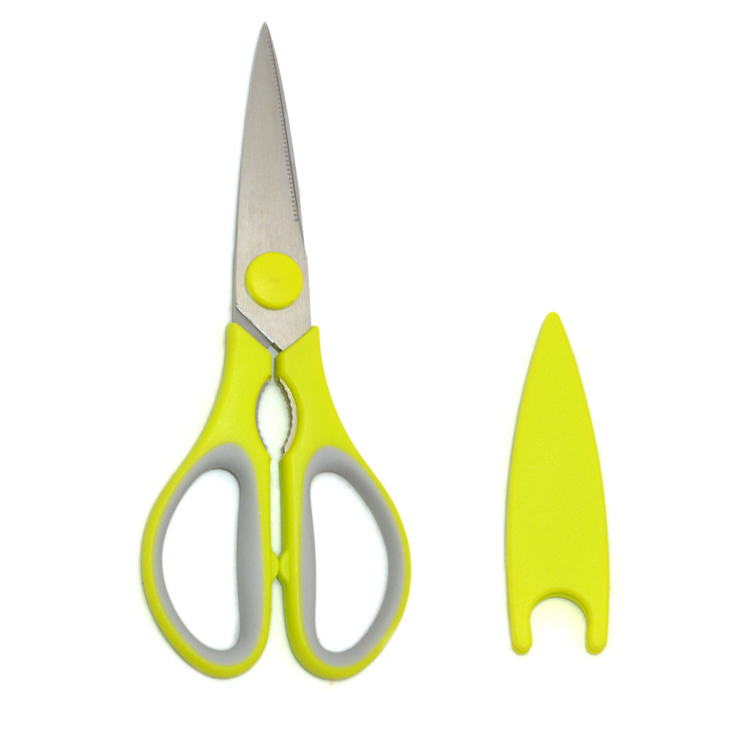
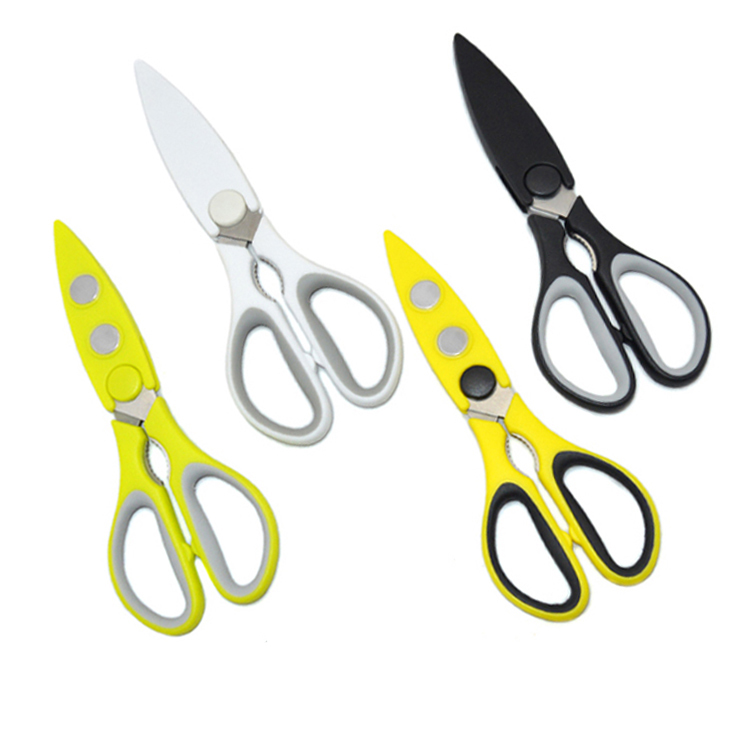
The product shown in the original article is a pair of multifunctional kitchen scissors with stainless steel blades, ergonomic non-slip handles, a lime green and gray appearance, and a matching protective cover. The cover includes two magnets, allowing the scissors to be stored on a refrigerator or another suitable metal surface. These are useful product details, but buyers should still verify technical specifications, packaging options, quality checks, and commercial terms directly with the supplier before placing an order.
Key Takeaways
- Kitchen scissors should be evaluated for cutting performance, handle comfort, blade protection, storage convenience, and packaging suitability.
- A magnetic cover can improve storage convenience, but magnet strength, fit, and safety should be checked with samples.
- For OEM or wholesale sourcing, ask suppliers specific questions about materials, inspection methods, branding options, lead times, and after-sales support.
- Do not rely only on product photos; request samples and test them against real kitchen tasks before committing to volume orders.
Why Kitchen Scissors Matter in a Product Line
Kitchen scissors are often purchased as practical add-on items, gift-set components, supermarket kitchenware products, or private-label accessories. Their appeal comes from versatility: a well-designed pair can snip herbs, cut meat, trim food packaging, and handle quick preparation tasks that may be awkward with a knife. For many end users, the main expectations are simple: sharp blades, comfortable grip, easy access, safe storage, and straightforward cleaning.
For B2B buyers, these everyday expectations become sourcing criteria. If scissors feel uncomfortable, arrive with inconsistent sharpness, or are difficult to package attractively, customer satisfaction can suffer. A product that looks good in a catalog must also perform reliably in a kitchen. That is why sample testing and supplier evaluation are essential when comparing Chinese scissors manufacturers.
Product Features to Evaluate Before Ordering
The featured kitchen scissors include several practical features that buyers commonly look for. Stainless steel blades are described in the source article, and buyers should ask the supplier to clarify the exact steel type, blade thickness, hardness target, edge process, and corrosion-resistance expectations. Without written confirmation, material grade or performance should not be assumed.
The ergonomic non-slip handles are another important point. Handle comfort affects repeat use, especially for consumers who cut herbs, meat, or packaging frequently. Buyers should check whether the handle fits different hand sizes, whether the grip remains secure when hands are slightly wet, and whether the material has any odor, rough edges, or weak joining points.
The included cover is also significant. A protective sheath helps prevent accidental contact with the blades and reduces blade damage during storage. In this design, the cover includes two magnets so the scissors can be placed on a refrigerator or another metal surface. For retail buyers, this feature can be easy to explain to consumers, but it should be tested for stability, fit, and long-term usability.
Comparison Checklist for Supplier and Product Review
| Review Area | What to Check | Questions to Ask the Supplier |
|---|---|---|
| Blade performance | Sharpness, alignment, smooth opening and closing, cutting consistency | What blade material and edge process are used? How is sharpness inspected? |
| Handle comfort | Grip shape, non-slip feel, finish quality, hand fatigue during repeated cuts | Can handle color, material, or branding be customized for OEM orders? |
| Protective cover | Secure fit, blade coverage, ease of removal, durability | How is the cover tested to ensure it stays in place during normal storage? |
| Magnetic storage | Magnet placement, holding strength, surface compatibility | What magnet details can be provided, and how should users store the scissors safely? |
| Packaging | Retail display, barcode space, instruction text, damage prevention in transit | What packaging formats are available for wholesale or private-label projects? |
| Quality control | Incoming material checks, in-process checks, final inspection criteria | Can the supplier share an inspection checklist or accept third-party inspection? |
OEM and Wholesale Sourcing Guidance
When the search intent is to find a Chinese scissors manufacturer, buyers should move beyond general claims such as “high quality” or “durable.” Instead, build a clear sourcing brief. Include the intended sales channel, target price range, expected packaging style, branding requirements, order quantity estimate, and any market-specific compliance or labeling needs that may apply to your business.
Useful supplier questions include:
- What customization options are available for handle color, logo placement, cover design, and packaging?
- What information can you provide about blade material, handle material, and magnet construction?
- How are scissors inspected before shipment, and what defects are considered unacceptable?
- Can you provide samples from current production rather than only showroom samples?
- What are the standard lead times, payment terms, carton details, and shipping support options?
- How are replacement, shortage, or quality claims handled after delivery?
These questions help separate a basic trading conversation from a professional purchasing process. They also reduce misunderstanding before artwork, packaging, and production schedules are finalized.
Sample Testing: Practical Tasks to Perform
Before approving a kitchen scissors order, buyers should test samples in conditions that resemble real consumer use. Try snipping fresh herbs, cutting food packaging, trimming meat, and opening sealed bags. Check whether the blades meet cleanly from base to tip and whether the screw or pivot area feels stable. If the scissors drag, twist, or leave uneven cuts, ask the supplier whether this is sample variation or a production concern.
Also test the cover and magnets. The sheath should cover the blades properly and should not be so loose that it falls off easily during normal handling. Place the covered scissors on a refrigerator or suitable metal surface to evaluate whether the magnets hold as expected. Because metal surfaces vary, product instructions should avoid implying universal compatibility unless properly verified.
Packaging, Instructions, and End-User Clarity
Good packaging does more than display the product. It explains use, storage, and care in a way that reduces complaints. For magnetic cover kitchen scissors, packaging or inserts may need to explain that the scissors should be stored out of reach of children, that the cover should be used when the product is not in use, and that magnetic storage depends on a compatible metal surface.
Buyers should also confirm whether the supplier can support private-label packaging files, multilingual text, barcode placement, retail hang holes, or protective inner packing. Do not assume these services are included. Request dielines, print requirements, and pre-production packaging samples when branding accuracy matters.
Care and Use Guidance for Consumers
Although this is a sourcing-focused topic, consumer satisfaction depends partly on proper use and care. Kitchen scissors should be cleaned after contact with food, dried before storage, and kept in the protective cover when not in use. Users should avoid forcing scissors through materials beyond their intended kitchen tasks, as misuse can affect blade alignment or handle integrity.
Retailers and distributors can reduce returns by providing simple care guidance. If the product is marketed for herbs, meat, and packaging, the instructions should remain consistent with those tasks and avoid unsupported claims. Clear expectations are often better than exaggerated marketing language.
FAQ
What should buyers verify with a Chinese scissors manufacturer?
Buyers should verify material details, blade sharpness inspection, handle construction, cover fit, magnet performance, packaging options, lead time, quality-control process, and after-sales claim handling.
Are magnetic cover kitchen scissors suitable for all metal surfaces?
Not necessarily. Magnetic performance depends on the surface material, thickness, coating, and magnet strength. Buyers should test samples and provide careful storage instructions for end users.
Can kitchen scissors be customized for private-label projects?
Many suppliers may offer customization, but the exact options should be confirmed. Ask about handle color, logo method, packaging design, carton markings, sample approval, and any extra costs or lead time.
How should samples be tested before a wholesale order?
Test cutting performance on herbs, meat, and packaging; check handle comfort; inspect the blade pivot; confirm the protective cover fit; and evaluate magnetic storage on suitable surfaces.
What claims should buyers avoid without documentation?
Avoid unsupported claims about steel grade, certifications, compliance, dishwasher safety, cutting test results, or durability. Request written specifications and test documentation where needed.
