




Chinese Scissors Manufacturer: OEM Kitchen Scissors Sourcing Guide
For importers, distributors, kitchenware brands, and promotional product buyers, kitchen scissors are a practical category with broad everyday demand. The product is simple at first glance, but small details determine whether it feels reliable, stores safely, and fits a retail or private-label range. This article rewrites the original product introduction into a sourcing-focused guide for buyers evaluating a Chinese scissors manufacturer for OEM kitchen essentials.
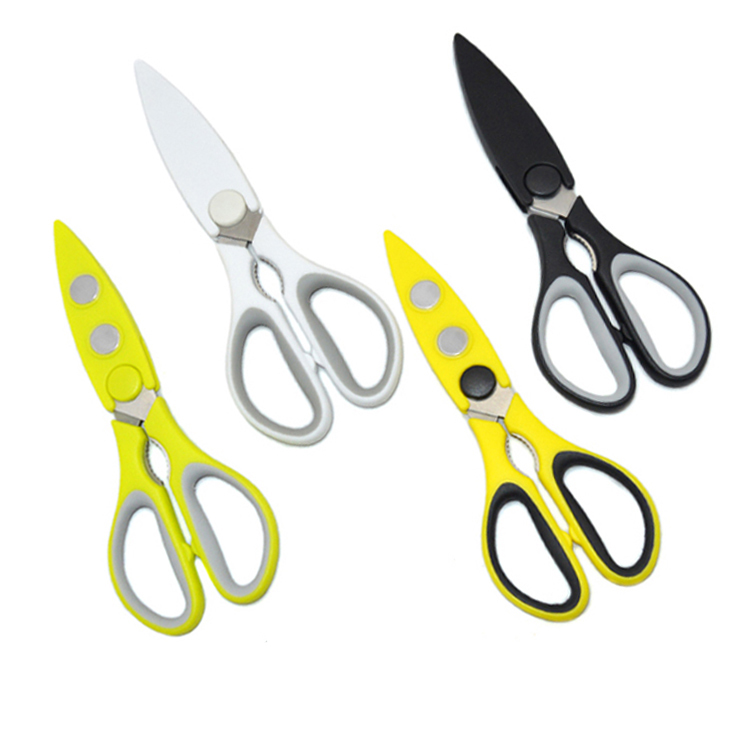
The featured item is a pair of kitchen scissors with a vibrant lime green look, stainless steel blades, soft gray ergonomic handles, and a matching protective sheath. The cover includes dual magnets, allowing the scissors to be attached to a refrigerator or another magnetic surface. These visible features create a useful starting point for discussing how to assess design, function, and OEM readiness.
Key Takeaways
- Kitchen scissors should be evaluated for cutting performance, grip comfort, storage safety, and ease of cleaning.
- A magnetic cover can improve accessibility, but buyers should ask how magnet strength and attachment reliability are checked.
- OEM buyers should confirm material details, packaging options, labeling requirements, and quality inspection methods before ordering.
- A Chinese scissors manufacturer should be assessed with samples, clear specifications, and written commercial terms rather than assumptions.
Product Positioning: Why Kitchen Scissors Remain Relevant
Kitchen scissors are used for cutting herbs, trimming food packaging, portioning meat, opening bags, and handling quick preparation tasks. For retailers, they can sit in several categories: kitchen tools, food preparation accessories, houseware sets, or seasonal gift assortments. For OEM brands, the category is attractive because color, handle design, cover style, and packaging can often be adapted to match a target market.
The original product concept focuses on a modern household use case: a pair of kitchen scissors that can be stored visibly and reached quickly. The lime green color is not only decorative; it also helps users locate the tool in a drawer or on a magnetic surface. For buyers, color is a branding decision as much as a design decision. Ask whether custom colors are possible, what reference system is used for color matching, and whether color variation is controlled during production.
Design Features to Review Before OEM Ordering
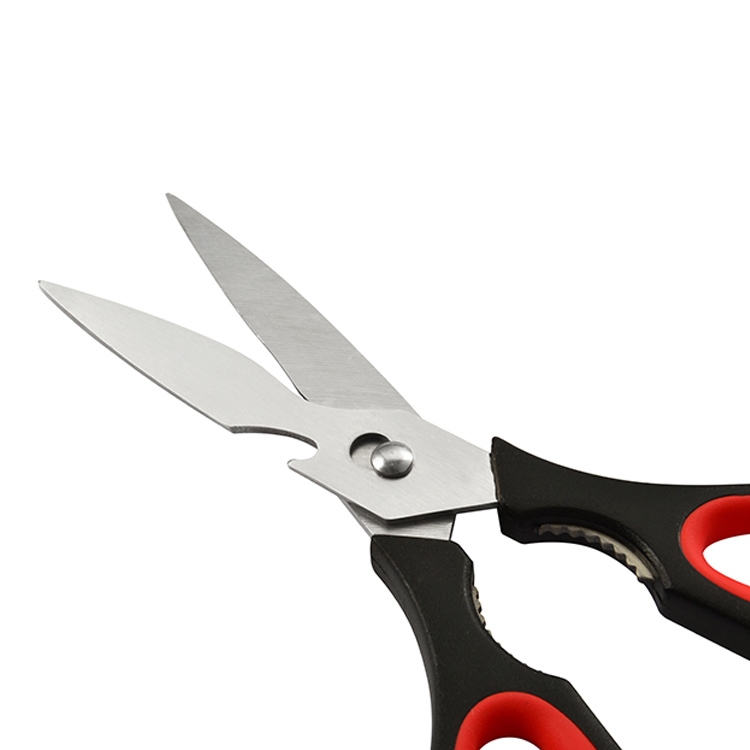
The product shown includes stainless steel blades, ergonomic handles with a soft gray grip, and a matching lime green sheath. These features should be checked in sample testing rather than accepted only from a catalog image. Stainless steel blades can differ in composition, hardness, finish, edge geometry, and corrosion resistance, so buyers should ask the supplier to state the exact material specification and available test documentation.
Handle comfort matters because kitchen scissors are often used with wet or greasy hands. A soft grip can improve handling, but it should also resist peeling, looseness, odor, and discoloration. During sample evaluation, test how the handles feel for different hand sizes, whether the thumb and finger openings are comfortable, and whether the tool remains stable during repetitive cutting.
Magnetic Cover: Convenience and Safety Considerations
The matching sheath is a useful feature because it protects the blades when the scissors are stored. The dual magnets add another practical storage option: the covered scissors can be attached to a refrigerator or another magnetic surface. This can help keep the tool within reach while reducing loose blade exposure in a drawer.
However, buyers should verify how the magnetic function performs in real conditions. Not every metal surface is equally magnetic, and refrigerator door finishes vary. Ask the supplier how the magnets are fixed inside the cover, whether they can shift or detach, and what surfaces were used during internal checks. If selling in family-oriented retail channels, also consider whether packaging instructions should warn users to keep sharp tools away from children.
Comparison Checklist for Buyer Evaluation
| Evaluation Area | What to Check | Questions to Ask the Supplier |
|---|---|---|
| Blade material | Stainless steel type, edge finish, corrosion resistance | What exact stainless steel specification is used, and can it be documented? |
| Cutting performance | Herbs, food packaging, poultry skin, light kitchen tasks | What sample tests are recommended before mass production approval? |
| Handle comfort | Grip softness, balance, hand fit, slip resistance | Can the handle color, grip texture, or logo placement be customized? |
| Protective cover | Blade coverage, fit, removal force, durability | How is the cover fit inspected during production? |
| Magnet function | Attachment to magnetic surfaces, magnet security | How are the dual magnets installed and checked? |
| Packaging | Retail card, box, barcode, instructions, private label | What packaging options are available for OEM orders? |
OEM Sourcing Guidance for Importers and Brands
When working with a Chinese scissors manufacturer, the most important step is to convert a general product idea into a clear specification sheet. Include dimensions, blade material, handle material, color references, cover design, magnet requirement, logo method, packaging type, carton labeling, and inspection criteria. If these points are not confirmed, two samples that look similar online may perform very differently.
Buyers should request pre-production samples before approving bulk manufacturing. Use those samples for practical cutting, washing, drying, storage, and packaging drop checks. If the product will be sold through retail channels, ask what compliance information is required for your destination market and clarify who is responsible for testing, documentation, and labeling. Do not assume certifications or test results exist; request current documents that match the exact product and material combination.
Sample Testing: Simple Checks Buyers Can Do
- Cut several common kitchen items, such as herbs, food packaging, and meat pieces, then note whether the blades pull, crush, or cut cleanly.
- Open and close the scissors repeatedly to assess smoothness, alignment, and hand fatigue.
- Place the covered scissors on different magnetic surfaces to evaluate stability.
- Wash and dry the scissors according to the supplier’s suggested care method, then check for spots, loosened parts, or handle changes.
- Inspect the cover after repeated insertion and removal to see whether the fit remains secure.
These checks do not replace professional testing, but they help purchasing teams identify issues early. Share written feedback and photos with the supplier so improvements can be confirmed before production.
Use and Care Points for End Customers
If these scissors are sold to consumers, clear instructions can reduce misuse and returns. Recommend using them for normal kitchen preparation rather than hard materials outside their intended purpose. After use, the blades should be cleaned and dried promptly. The protective cover should be fitted before storage, especially if the scissors are placed in a drawer. When using the magnetic cover, users should confirm that the surface holds the tool securely before leaving it in place.
Retail packaging or an insert can also explain the benefit of the cover: it protects the blade edge, reduces accidental contact, and provides a visible storage option. Keep instructions factual and avoid exaggerated claims that cannot be proven.
Practical FAQ
What should buyers confirm before placing an OEM order?
Confirm the exact blade material, handle material, color standard, logo method, packaging format, inspection process, lead time, payment terms, and responsibility for any required market testing.
Are magnetic cover kitchen scissors suitable for every refrigerator?
Not necessarily. Magnetic performance depends on the surface material and finish. Buyers should test samples on surfaces common in the target market and include suitable usage guidance.
Can the lime green color be changed for private label projects?
Color customization may be possible, but it should be confirmed with the supplier. Ask about color matching methods, minimum order requirements, sample approval, and acceptable color tolerance.
What information should be included in retail packaging?
Useful packaging information includes basic use instructions, care guidance, safety warnings for sharp blades, barcode placement, brand details, and any legally required labeling for the sales market.
How can buyers reduce quality risks?
Approve a sealed sample, create a written specification sheet, define inspection standards, request production photos when appropriate, and arrange pre-shipment inspection for large or repeat orders.
Final Thoughts
A kitchen scissors product with stainless steel blades, ergonomic handles, and a magnetic protective cover can be a practical addition to an OEM kitchenware range. The key is not only the visual design, but also the details behind it: blade quality, handle comfort, cover fit, magnet reliability, packaging, and supplier communication. For professional buyers, a structured sourcing process will produce better results than relying on appearance alone.
