




Chinese Style Scissors: Elegance Meets Precision
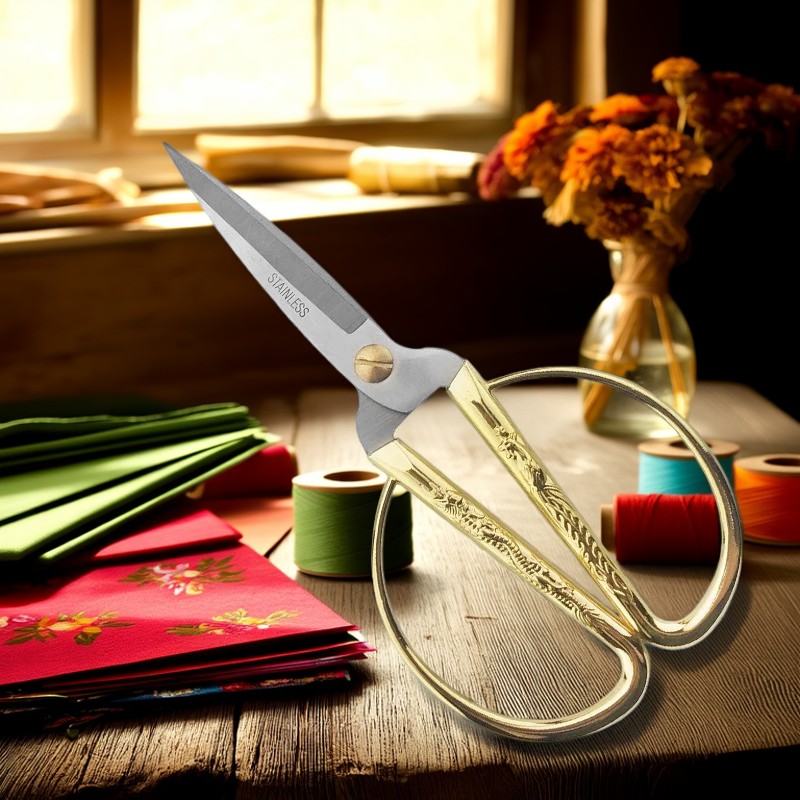
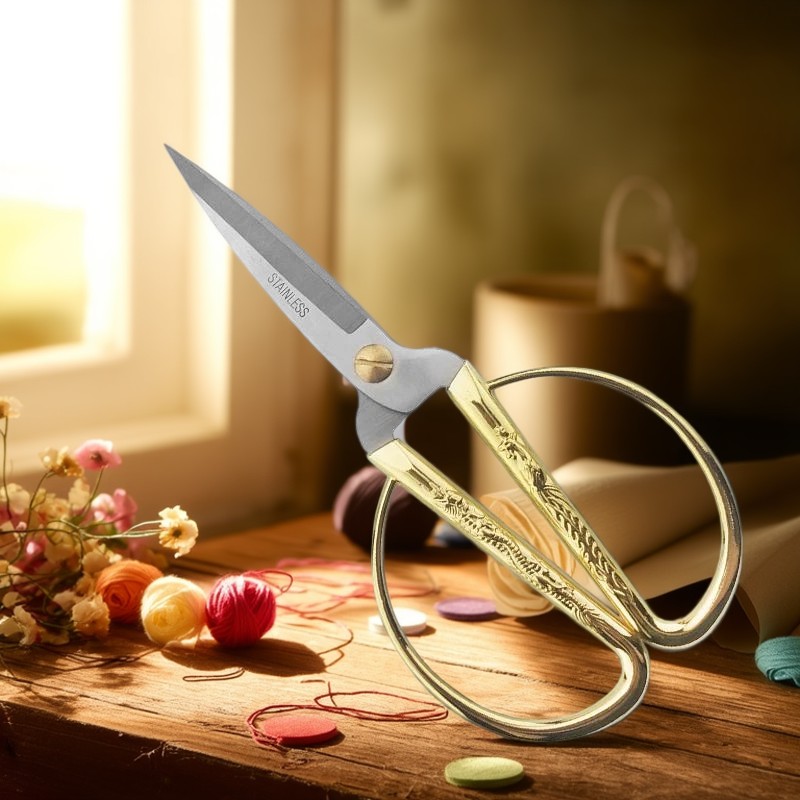
Chinese style scissors are often chosen for more than simple cutting. Their appeal comes from a mix of decorative detail, familiar utility, and a shape that feels different from standard office scissors. The Golden Floral Stainless Steel Scissors shown here combine a polished blade with gold-plated handles and delicate floral engravings, giving the tool a traditional visual character while keeping it useful for everyday work.
For crafters, sewing users, stationery buyers, and household tool shoppers, the key question is not only whether the scissors look attractive. It is whether the blade, handle shape, balance, and care requirements match the materials you cut most often. This guide explains how to evaluate Chinese style scissors before buying and how to keep them performing well over time.
Key Takeaways
- Chinese style scissors are valued for their decorative appearance and practical cutting role.
- The featured design includes stainless steel blades, gold-plated handles, and floral engraving details.
- They may suit paper, fabric, leather, craft projects, sewing work, and general household cutting, depending on thickness and use frequency.
- Buyers should check blade alignment, handle comfort, finish quality, and maintenance needs before purchasing.
- For wholesale or OEM sourcing, ask suppliers for product specifications, sample policies, packaging options, and quality control details rather than assuming them.
What Makes Chinese Style Scissors Different?
Chinese style scissors usually stand out because of their silhouette and decorative handle treatment. Compared with plain utility scissors, they often have a more ornamental presence, making them suitable for craft rooms, sewing tables, gift sets, stationery collections, or display-friendly workspaces. In the featured product, the gold-plated handles and floral engravings create a refined look without changing the basic purpose of the tool: controlled cutting.
The design is especially relevant for users who want a tool that remains visible on a desk or crafting bench. However, appearance should not be the only factor. A good pair of scissors needs clean blade contact, a comfortable grip, and a pivot that opens and closes smoothly. Decorative scissors that fail in these areas may become frustrating during longer projects.
Best Uses: Crafting, Sewing, Paper, Fabric, and Household Tasks
The original product description highlights use with materials such as leather, fabric, paper, and more. In practical terms, users should match the scissors to the thickness and resistance of the material. Paper and light craft materials are generally easier to cut than dense fabric or leather. For repeated heavy-duty cutting, it is worth confirming whether the blade thickness, pivot strength, and edge geometry are designed for that workload.
These scissors can be considered for:
- Paper cutting for cards, labels, wrapping, and scrapbooking.
- Light fabric trimming for sewing preparation and small alterations.
- Craft projects that require accurate hand control.
- Household cutting tasks such as ribbon, thread, packaging, or thin sheet materials.
- Decorative tool sets where appearance matters as much as everyday usefulness.
If you plan to cut adhesive materials, wire, plastic straps, or very thick leather, test a sample first. Using scissors beyond their intended workload can dull the blades or loosen the pivot.
Design Details to Check Before Buying
The Golden Floral Stainless Steel Scissors are described with stainless steel blades, a polished blade finish, gold-plated handles, and floral engravings. Those details make the product visually distinctive, but buyers should still inspect the functional points that affect daily use.
| Selection Point | What to Check | Why It Matters |
|---|---|---|
| Blade alignment | Blades should meet evenly from pivot to tip. | Poor alignment can cause folding, tearing, or uneven cuts. |
| Blade finish | Look for smooth polishing and no visible burrs. | A clean surface helps cutting feel smoother and easier to maintain. |
| Handle comfort | Test the loop size and finger placement. | Comfort reduces strain during repeated craft or sewing work. |
| Pivot movement | Open and close the scissors several times. | A balanced pivot should feel stable, not loose or stiff. |
| Decorative finish | Check plating and engraving consistency. | Finish quality affects appearance, especially for gifts or retail display. |
| Intended material | Confirm whether the scissors suit paper, fabric, leather, or other materials. | Matching the tool to the job protects the blade edge. |
Comfort and Control During Creative Work
Comfort is easy to overlook until a project takes longer than expected. The featured scissors use a loop handle design, which can help users maintain control during detailed cutting. Still, hand size and working habits vary. Someone trimming thread may prefer a smaller, lighter feel, while someone cutting templates or fabric panels may want more leverage.
When evaluating comfort, hold the scissors in the same way you expect to use them. Check whether your fingers fit naturally, whether the handles press into the skin, and whether the weight feels balanced between blade and handle. If buying for a team, classroom, workshop, or retail assortment, consider testing samples with several users rather than relying only on product photos.
Use and Care Tips for Longer Service
Stainless steel scissors are generally easy to maintain, but care still matters. The goal is to protect the edge, keep the pivot moving smoothly, and prevent residue from affecting performance. Decorative handles also deserve careful handling so the finish remains attractive.
- Use the scissors on suitable materials and avoid cutting metal wire or hard plastic unless the supplier confirms that use.
- Wipe the blades after cutting adhesive paper, tape, or materials that leave residue.
- Keep the pivot area clean and dry after use.
- Store the scissors in a drawer, sleeve, or organizer so the tips and edges do not knock against other tools.
- Do not use the blades as a screwdriver, prying tool, or box opener for heavy packaging.
- If cutting fabric, avoid using the same pair frequently on paper if you want to preserve a cleaner fabric edge.
For sharpening, use a qualified sharpening service or follow the supplier’s guidance. Decorative scissors should be handled carefully during maintenance to avoid scratching the plated or engraved handle area.
Guidance for Wholesale, OEM, and Retail Buyers
For B2B buyers, Chinese style scissors can be positioned in several categories: craft tools, sewing accessories, stationery gifts, household scissors, or decorative utility items. Because commercial requirements differ by market, avoid assuming specifications that are not listed. Instead, prepare clear questions for the supplier.
Useful supplier questions include:
- What are the exact blade and handle materials?
- What blade size, total length, and weight are available?
- Can the gold-plated handle finish or floral pattern be customized?
- What packaging options are available for retail, gift, or wholesale cartons?
- Are samples available before bulk ordering?
- What quality checks are performed for blade alignment, sharpness, pivot stability, and surface finish?
- What product labeling, barcode, or branding options can be discussed?
- What compliance documents are relevant for the target sales market?
These questions help buyers compare suppliers on verifiable information instead of relying on appearance alone. If the product is intended for children’s craft kits, professional sewing use, or premium gift sets, the requirements may be different and should be confirmed in writing.
FAQ
Are Chinese style scissors only decorative?
No. While the gold-plated handles and floral engravings make them visually distinctive, the scissors are still intended as cutting tools. Buyers should evaluate blade alignment, sharpness, and comfort as well as appearance.
Can these scissors cut fabric and leather?
The original description mentions use with materials such as leather, fabric, and paper. For thicker leather or repeated heavy cutting, ask the supplier whether the specific model is suitable and test a sample first.
How should I clean the blades?
Wipe the blades with a soft dry cloth after normal use. If residue remains from tape or adhesive materials, clean gently and dry the scissors before storage. Avoid soaking decorative handles unless the supplier recommends it.
Are they suitable as gifts?
They can be a good gift option for craft, sewing, or stationery users because of the floral handle design. For retail gifting, confirm packaging, finish consistency, and any branding options with the supplier.
What should B2B buyers confirm before ordering?
Confirm material details, dimensions, finish options, sample availability, packaging, quality control checks, and any documents required for your sales market. Do not assume MOQ, certifications, or customization terms without supplier confirmation.
Final Thoughts
Chinese style scissors offer a practical balance of decorative character and everyday cutting value. The Golden Floral Stainless Steel Scissors are notable for their stainless steel blades, gold-plated handles, floral engravings, and polished appearance. For individual users, the best choice depends on comfort, cutting material, and care habits. For wholesale or OEM buyers, the best decision comes from samples, clear specifications, and supplier questions that verify performance as well as presentation.
