




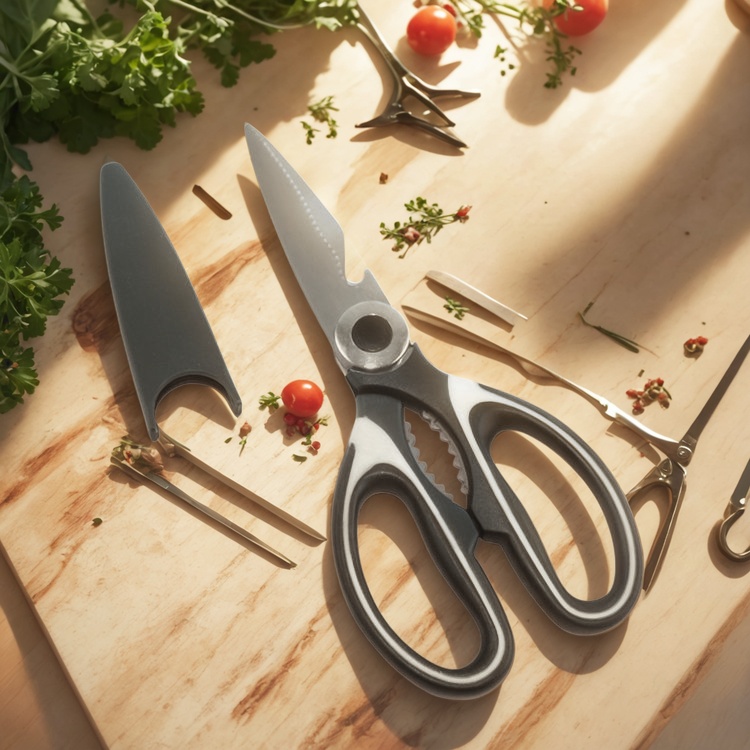
Choosing the Best Kitchen Scissors OEM Partner
Finding the right kitchen scissors OEM partner is not only about locating a factory that can make a cutting tool. For importers, private-label brands, wholesalers, and retail buyers, the decision affects product safety, user satisfaction, packaging quality, delivery reliability, and repeat orders. Kitchen scissors are simple in appearance, but buyers still need to review blade performance, handle comfort, assembly consistency, packaging protection, and after-sales communication before moving into production.
The original article highlights the importance of an OEM source, a capable factory for kitchen scissors, multifunctional design, and protective covers. This rewritten guide keeps those useful themes while turning them into a practical sourcing checklist. If you are comparing suppliers for a new kitchen shears line, use the points below to prepare questions, evaluate samples, and reduce avoidable sourcing risk.
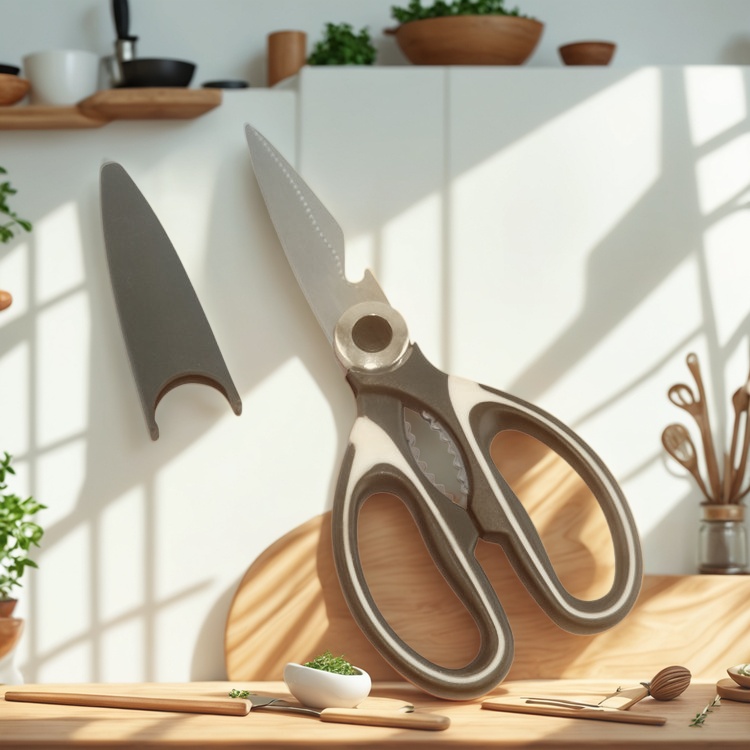
Key Takeaways
- A reliable OEM partner should be evaluated through samples, documentation, communication quality, and consistency, not marketing claims alone.
- Kitchen scissors buyers should confirm blade material, handle material, coating, size, weight, packaging, and any multifunction features before quotation comparison.
- Multifunction designs such as bottle openers, nutcracker-style handle areas, serrated edges, or blade covers can add value, but each feature should be tested for real usability.
- Commercial details such as MOQ, lead time, customization cost, inspection process, and shipping terms should be asked directly because they vary by supplier and order plan.
What an OEM Kitchen Scissors Partner Should Do
An OEM partner helps turn a buyer's product concept into a finished item that can be sold under the buyer's brand or packaging plan. For kitchen scissors, this may include confirming the blade shape, handle design, color, surface treatment, packaging format, logo placement, and accessory choices. A strong supplier should also help identify whether a requested design is practical for production and whether it may create quality or usability issues.
When speaking with a factory, ask how they normally handle product development. Do they provide existing models for private-label packaging, or can they support tooling for a custom handle or blade shape? Can they share sample approval steps? How do they record final specifications before mass production? These questions matter because many sourcing problems start when a buyer and supplier rely on informal descriptions instead of a clear specification sheet.
Factory Evaluation Checklist for B2B Buyers
Before choosing a kitchen scissors factory, review more than unit price. A low quotation may be useful only if the supplier can also maintain stable quality, communicate clearly, and protect the product during shipping. The table below can help structure supplier comparison.
| Evaluation Area | What to Check | Questions to Ask the Supplier |
|---|---|---|
| Product specification | Blade material, handle material, size, weight, finish, color, and accessories | Can you provide a written specification sheet for the quoted model? |
| Sample quality | Cutting feel, handle comfort, opening and closing motion, edge alignment, and surface finish | Will the production goods match the approved sample? |
| Multifunction features | Serrated section, opener, nutcracker-style area, detachable parts, or blade cover if included | Which features are available on this model, and can they be tested before order confirmation? |
| Branding and packaging | Logo method, retail box, card, instruction insert, barcode placement, and carton packing | What packaging files or artwork formats do you require? |
| Quality control | Incoming material checks, in-process checks, final inspection, and defect handling | What inspection standard do you use, and can buyers arrange third-party inspection? |
| Commercial terms | MOQ, sample cost, tooling cost, lead time, payment terms, and shipping terms | What details change when the order quantity or customization level changes? |
Blade, Handle, and Safety Details to Confirm
The original article notes that consumers expect durability, comfort, and convenience. For B2B sourcing, these expectations should be translated into measurable requirements. Start with the blade. Ask the supplier to confirm the material, thickness, hardness target if applicable, edge type, surface finish, and whether the blade is designed for general food preparation, poultry, herbs, packaging, or mixed household use. Do not assume a material grade unless it is written in the supplier's specification and approved for your order.
Next, check the handle. Kitchen scissors are used with wet or oily hands, so grip shape and comfort are important. Test whether the handles feel stable during repeated cutting and whether the finger openings suit your target market. If your line includes multiple colors, confirm color matching standards and whether color differences may occur between batches.
Safety should also be discussed early. The source article mentions a protective cover as a useful feature. If a cover is included, test whether it stays on securely during storage and transport. If the scissors are detachable or include extra functions, confirm cleaning instructions and whether the design creates any sharp contact points during use.
How to Judge Multifunctional Design
Multifunction kitchen shears can be attractive for retail and wholesale buyers because they give shoppers a clear reason to compare one model against another. Common features may include a serrated cutting area, a bottle opener, a nutcracker-style grip area, or a protective blade cover. However, features should not be added only for appearance. Each added function can affect weight, balance, tooling complexity, packaging space, and customer expectations.
During sample review, create a simple use test. Cut herbs, paper packaging, thin food packaging, and other materials that match your intended positioning. If the product includes an opener or nutcracker-style feature, test whether it is comfortable and practical. If the product has a serrated area, check whether it improves control on tougher materials or creates cleaning difficulty. Record results with photos and notes so your team can compare suppliers objectively.
OEM Customization Questions to Ask Before Quotation
Kitchen scissors OEM projects often involve different customization levels. Some buyers only need existing scissors with private-label packaging, while others want color changes, logo placement, a modified handle, or a new product structure. The more customization you request, the more important it becomes to clarify costs, timeline, and approval steps.
- Which parts of the current model can be customized without new tooling?
- What logo methods are available for the handle, blade, cover, or packaging?
- What files are needed for packaging artwork and brand marks?
- What is the sample approval process before mass production?
- How are approved samples stored or referenced for future repeat orders?
- What happens if production goods differ from the confirmed sample?
These questions help prevent misunderstandings. They also allow you to compare factories on process quality, not only on the initial price quote.
Quality Control and Inspection Planning
For wholesale and OEM buyers, quality control should be planned before placing the order. Ask the supplier how they inspect blade sharpness, assembly, handle finish, packaging, and carton condition. If your market requires specific compliance documents, food-contact declarations, labeling language, or safety warnings, ask the supplier what they can provide and verify those documents independently. Do not rely on assumptions.
It is also wise to define acceptable and unacceptable defects. Examples may include loose assembly, rough edges, visible scratches, poor printing, mismatched colors, damaged packaging, or missing accessories. For larger orders, consider arranging a pre-shipment inspection. The inspection can compare mass production against the approved sample and your written specification sheet.
Working With Bonet Houseware
The source article identifies BONET HOUSEWARE CO., LTD. and provides contact details for Jeff Lin, along with a scissors product page at https://bonethome.com/scissors. Buyers interested in kitchen scissors OEM cooperation can use those details to request current models, customization options, sample procedures, quotation terms, and documentation relevant to their market.
When contacting any supplier, including Bonet Houseware, provide a clear inquiry. Include target quantity, destination market, preferred packaging, logo requirements, expected retail channel, and any required documents. A detailed inquiry usually receives a more useful quotation than a short request for the lowest price.
Practical FAQ for Kitchen Scissors OEM Buyers
What should I send to a kitchen scissors OEM supplier first?
Send your target model reference, quantity estimate, branding needs, packaging style, destination market, and any required documents. If you already have a product specification, include it with your inquiry.
Should I choose an existing model or request a custom design?
An existing model may be faster and simpler for private-label sourcing. A custom design may help differentiation, but buyers should ask about tooling, sample time, approval steps, and minimum order requirements.
How can I compare samples from different factories?
Use the same test process for every sample. Check cutting performance, handle comfort, surface finish, included accessories, packaging strength, and whether the supplier's written specification matches the sample.
Are multifunction kitchen scissors always better?
Not always. Multifunction features can add value when they work well, but they may also increase complexity. Test each feature and decide whether it supports your target customer and price position.
What commercial details should I confirm before placing an order?
Ask about MOQ, sample cost, tooling cost, production lead time, payment terms, packaging cost, inspection options, shipping terms, and how the supplier handles quality issues after delivery.
