




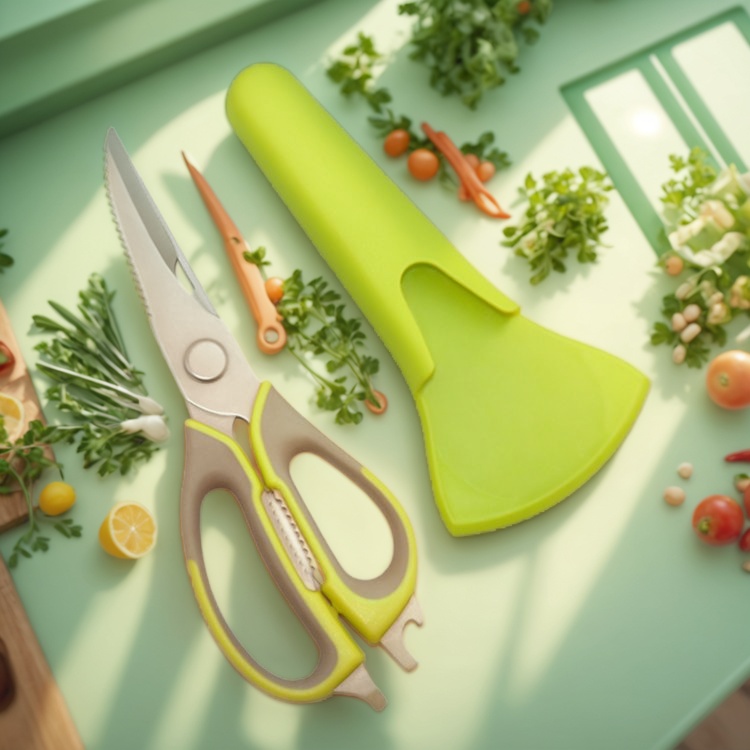
Choosing the Best OEM Kitchen Scissors Manufacturer
Finding the right OEM kitchen scissors manufacturer is not only about choosing a sharp pair of scissors. For importers, distributors, kitchenware brands, and promotional product buyers, the bigger question is whether a supplier can consistently deliver safe, usable, and well-finished products that match the expectations of your market. Kitchen scissors are handled daily, often around food, water, packaging, poultry, herbs, and other slippery materials, so small design choices can affect user confidence and repeat sales.
The original product example highlights several useful features buyers often look for: stainless steel blades, a serrated edge for grip, ergonomic non-slip handles in vibrant colors, and a protective cover for safer storage. The existing product image is preserved here for reference: 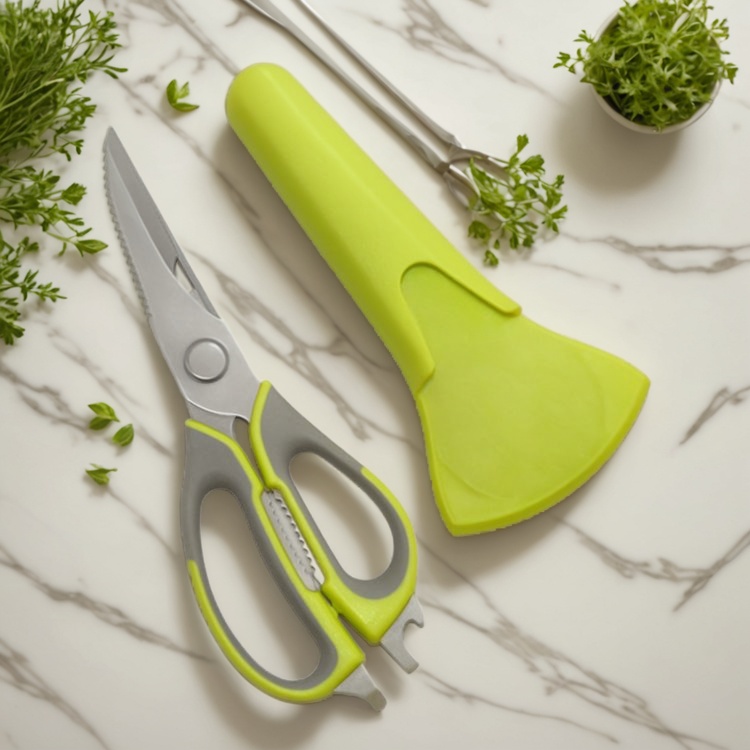
Key Takeaways
- Start with real use cases, such as trimming herbs, opening food packaging, or cutting poultry, before discussing appearance or packaging.
- Confirm blade material, edge design, handle comfort, cover fit, and cleaning method with samples rather than relying only on catalog photos.
- Ask suppliers direct questions about quality control, packaging options, customization limits, lead times, and replacement procedures.
- A kitchen scissors with cover design can improve storage safety, but the cover should be tested for fit, durability, and ease of removal.
- A good OEM kitchen scissors manufacturer should support clear communication, repeatable production, and practical documentation.
Define the Buyer and End User Before Sampling
Before comparing factories, define who will use the scissors and where they will be sold. A retail kitchenware brand may prioritize presentation, handle color, and giftable packaging. A restaurant supply distributor may focus more on durability, cleaning convenience, and repeat ordering. A supermarket private-label buyer may need a balance of price, shelf impact, safety labeling, and dependable supply.
Clear positioning helps you avoid over-specifying or under-specifying the product. For example, a general-purpose kitchen scissor may need comfortable handles and a protective cover more than advanced specialty features. If the product is promoted as suitable for heavier kitchen tasks, ask the manufacturer how the design is tested and what maintenance the end user should expect. Do not assume a scissor is suitable for every cutting task simply because it looks strong.
Evaluate Design and Build Quality
The source article explicitly mentions stainless steel blades, sharp and durable construction, a serrated edge, ergonomic handles, non-slip grip, vibrant colors, and a protective cover. These are useful starting points for a sourcing checklist. Stainless steel is widely used in kitchen tools, but buyers should still ask the supplier to specify the exact material, finishing process, and care instructions. A general statement such as “stainless steel” is not enough for technical purchasing decisions.
The serrated edge is especially relevant for slippery items because it can help grip food surfaces while cutting. During sample review, check whether the serrations are even, whether the two blades meet smoothly, and whether the pivot feels stable. The handles should feel secure with both dry and slightly wet hands. If the supplier offers several color options, request color samples under normal lighting and confirm whether future production will match the approved sample.
Review the Protective Cover and Storage Safety
A kitchen scissors with cover design can be attractive for both home and professional buyers because exposed blades create storage and handling concerns. However, the cover should not be treated as a simple accessory. It should slide on and off without excessive force, stay in place during normal storage, and avoid damaging the blade edge.
Ask the manufacturer whether the cover material, color, shape, and logo area can be customized. Also ask how the cover is packed with the scissors to avoid scratches during shipping. If the product is intended for retail shelves, consider whether the covered blades are visible enough for shoppers to understand the product while still keeping the packaging safe and tidy.
Compare OEM Supplier Options
| Evaluation Area | What to Check | Questions to Ask the Supplier |
|---|---|---|
| Blade design | Sharpness, stainless steel claim, serrated edge, alignment | What blade material is used, and how is sharpness checked before shipment? |
| Handle comfort | Ergonomic shape, non-slip grip, color consistency | Can we approve handle color and grip texture with a pre-production sample? |
| Cover or sheath | Fit, removal force, storage safety, finish | Can the cover be customized, and how is it protected in packaging? |
| OEM customization | Logo placement, packaging, color options, labeling | Which parts can be customized without changing the mold or tool design? |
| Quality process | Incoming checks, in-line inspection, final inspection | What inspection records or sample approval steps are available? |
| Commercial terms | MOQ, lead time, payment terms, reorder process | What are the current MOQ, production lead time, and sample charges? |
Test Performance in Daily Kitchen Tasks
The original review notes that the scissors handled tasks such as trimming herbs and cutting poultry, while heavier-duty work might require more frequent sharpening. This is a practical point for buyers: performance should be checked against realistic use, not a single dramatic demonstration. When reviewing samples, create a simple test plan that reflects your target market.
- Open common food packaging and check whether the blades cut cleanly without slipping.
- Trim herbs and leafy ingredients to evaluate precision and control.
- Cut poultry or similar kitchen items only if that use will be part of your product positioning.
- Wash and dry the scissors according to the supplier’s instructions, then check for residue or stiffness.
- Fit and remove the protective cover repeatedly to see whether it remains secure.
Record results with photos and notes. If multiple team members test the same sample, compare feedback on grip comfort, cutting feel, and perceived safety. This reduces the risk of choosing a product based only on one person’s preference.
Ask the Right OEM and Wholesale Questions
For B2B sourcing, communication quality is often as important as the product sample. A dependable OEM kitchen scissors manufacturer should be able to answer practical questions clearly. Ask what customization is available for logos, handle colors, cover colors, retail cards, cartons, and instruction sheets. Ask whether any changes will affect tooling cost, sample time, or production schedule.
Do not assume certifications, compliance results, or market approvals unless the supplier provides current documents for the exact product and destination market. Requirements may vary by country and sales channel. If your retailer requires specific labeling, packaging warnings, or material documentation, provide those requirements early and ask the supplier to confirm feasibility before order placement.
Check Packaging, Labeling, and After-Sales Risk
Kitchen scissors are compact, but they can still create packaging challenges. Sharp edges, covers, handles, and retail display needs must all be considered. Ask for packaging drop-test information if available, or arrange your own checks. Confirm barcode placement, carton markings, inner pack quantities, and whether the scissors can be removed safely by the final customer.
For wholesale buyers, after-sales risk includes inconsistent color, loose pivots, poor cover fit, dull blades, and packaging damage. Set clear acceptance standards before mass production. If possible, approve a golden sample and require the supplier to keep one for production reference. Also define how defects will be reported and resolved, especially for repeat orders.
FAQ
What should I ask an OEM kitchen scissors manufacturer first?
Start with intended use, blade material, available customization, MOQ, sample cost, lead time, packaging options, and quality inspection process.
Are kitchen scissors with cover better for wholesale programs?
They can be, especially when safety and storage are important to the end user. Buyers should still test cover fit, durability, and packaging compatibility.
Can I claim the scissors are suitable for poultry or heavy-duty cutting?
Only make that claim if the supplier confirms the intended use and you validate it through product testing for your market.
What is the difference between an OEM manufacturer and a detachable kitchen scissors supplier?
An OEM manufacturer focuses on producing to a buyer’s branding or specification. A detachable kitchen scissors supplier may offer designs that separate for cleaning, but that feature should be confirmed on the exact sample.
How many samples should I review before placing an order?
Review enough samples to check consistency across blade alignment, handle finish, cover fit, and packaging. For private-label orders, request a pre-production sample before mass production.
Final Sourcing Advice
The best OEM kitchen scissors manufacturer for your project is the one that matches product function, safety expectations, customization needs, and communication standards. Use the visible features, such as stainless steel blades, serrated edge, ergonomic non-slip handles, vibrant colors, and protective cover, as the beginning of your review rather than the end. A careful sample test, clear supplier questions, and written quality expectations will help you choose kitchen scissors that are practical for users and manageable for long-term wholesale supply.
