




Choosing the Best Stainless Steel Grater Supplier
Finding the right stainless steel grater supplier is not only about locating a product that looks good in a catalog. For retailers, kitchenware brands, distributors, and hospitality buyers, the better question is whether the supplier can deliver consistent quality, practical packaging, clear communication, and repeatable specifications. A grater or zester is a simple tool, but small details such as blade sharpness, handle comfort, protective covers, and finishing quality can affect user satisfaction and return rates.
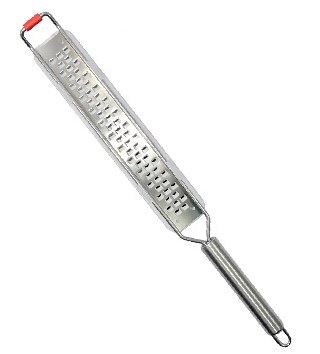
The original product focus here is a Premium Stainless Steel Zester designed for fine grating tasks such as citrus fruits, ginger, garlic, nutmeg, and hard cheeses like Parmesan. Explicit product details include stainless steel blades, an ergonomic non-slip handle with a black finish, and protective covers intended to help maintain blade sharpness and improve safety. This guide explains how to evaluate suppliers around those real product attributes without relying on unsupported claims.
Key Takeaways
- Check the product first: blade quality, handle grip, cover fit, finishing, and consistency matter more than generic supplier promises.
- Ask suppliers to confirm stainless steel grade, testing, packaging, MOQ, lead time, and customization options instead of assuming them.
- For OEM or wholesale orders, request samples from the same production standard expected for bulk production.
- Compare suppliers using written criteria so sourcing decisions are based on evidence, not only price.
What a Stainless Steel Grater Supplier Should Provide
A reliable stainless steel grater supplier should make product selection easier, not more confusing. At minimum, buyers should expect clear photos, dimensions, material descriptions, handle details, packaging information, and sample availability. If the product is a zester, the supplier should clarify whether it is best suited for fine zesting, spice grating, garlic and ginger preparation, or harder ingredients such as Parmesan.
Because the original article mentions precision-engineered stainless steel blades and a non-slip ergonomic handle, these are useful points to verify during sourcing. Ask whether the blade pattern is consistent across production batches, whether the handle is comfortable for repeated use, and whether the protective cover fits securely without being difficult to remove. These are practical questions that affect both home cooks and professional kitchen users.
Product Details to Check Before You Request a Quote
Before comparing prices, define the product you need. Stainless steel kitchen graters can include box graters, flat graters, rotary graters, coarse graters, fine graters, and zesters. A zester is usually selected for fine textures and aromatic ingredients. If your category is focused on citrus zest, ginger, garlic, nutmeg, and hard cheese, a fine-blade zester may be more relevant than a general-purpose grater.
When reviewing a sample, inspect the blade surface for uniform openings, burrs, rough edges, or weak points. Run a practical test using the ingredients your customers are likely to use. The tool should grate cleanly without requiring excessive pressure. Also evaluate the handle. The original product description includes an ergonomic, non-slip handle with a black finish, so buyers should confirm grip comfort, handle attachment strength, and whether the surface remains stable when hands are slightly wet.
Supplier Comparison Checklist
A structured checklist helps sourcing teams avoid choosing only on the lowest unit price. Use the table below when comparing stainless steel grater manufacturers or trading suppliers.
| Evaluation Area | What to Check | Questions to Ask the Supplier |
|---|---|---|
| Blade performance | Sharpness, consistency, fine grating ability, smooth finishing | Can you provide a production sample and confirm the blade material grade? |
| Handle design | Grip comfort, non-slip feel, attachment strength, black finish quality | Is the handle design fixed, or can it be customized for OEM orders? |
| Safety details | Protective cover fit, edge finishing, user instructions | Is a protective cover included as standard, and how is it packed? |
| Packaging | Retail box, hang card, bulk packing, labeling options | What packaging formats are available, and can barcodes or brand artwork be applied? |
| Commercial terms | MOQ, lead time, sample cost, payment terms, inspection options | What is the MOQ for standard and customized orders? |
How to Assess Stainless Steel Grater Manufacturers
Manufacturers and suppliers may use similar language, but they are not always the same. A manufacturer may produce the grater directly, while a trading supplier may coordinate sourcing from one or more factories. Either model can work, but the buyer should understand who controls production, quality checks, and packaging.
For factory or OEM sourcing, request direct answers about tooling, customization, inspection procedures, and sample approval. Do not assume manufacturing capacity, certifications, compliance test results, or delivery schedules unless the supplier provides documentation. If your market requires specific food-contact documentation or labeling rules, ask the supplier what documents they can provide and verify them independently before confirming an order.
OEM and Wholesale Questions Buyers Should Ask
Bulk kitchenware sourcing benefits from clear written communication. A supplier may offer stainless steel kitchen graters for sale, but the details behind the offer decide whether the order fits your business. Prepare a short questionnaire before requesting a quotation.
- What stainless steel grade is used for the blade and any exposed metal parts?
- Can you provide current product dimensions, weight, and packaging measurements?
- Is the protective cover included in the standard quote?
- What customization options are available for handle color, logo, packaging, or instruction inserts?
- What are the MOQ, sample lead time, mass production lead time, and payment terms?
- What quality inspection steps are used before shipment?
- Can the supplier provide documentation needed for your target market, if required?
These questions are not only for large brands. Small retailers and distributors also benefit from written confirmation because it reduces misunderstandings about what is included in the quoted price.
Sample Testing for a Premium Stainless Steel Zester
Sample testing should reflect real use. For a fine zester, test citrus peel to see whether it removes zest without excessive bitter pith. Try ginger and garlic to check clogging and cleaning effort. Use nutmeg or Parmesan to assess how the blade handles harder ingredients. Since the original product is described as suitable for these ingredients, they are reasonable test materials for confirming performance.
Also test handling. Hold the zester for several minutes and note wrist comfort, grip stability, and whether the handle shape feels secure. Put the protective cover on and off multiple times. A cover that is too loose may fall off during storage, while one that is too tight may frustrate users. Finally, wash the sample according to the supplier's care instructions and inspect for trapped food, rough seams, or visible changes.
Balancing Price, Quality, and Long-Term Supply
Low pricing is attractive, but a grater that feels flimsy, arrives with inconsistent finishing, or lacks suitable packaging can create higher costs later. Buyers should compare landed cost, defect risk, repacking labor, customer reviews, and reorder reliability. If two suppliers quote very different prices, ask what accounts for the difference: material, blade process, handle construction, packaging, inspection, or order volume.
For ongoing wholesale programs, consistency is important. Ask whether future batches will match the approved sample, how changes are communicated, and whether pre-shipment inspection is allowed. A professional supplier should be willing to define the product clearly and answer commercial questions without vague promises.
FAQ
What is the difference between a grater and a zester?
A zester is generally used for fine grating, especially citrus peel, ginger, garlic, nutmeg, and hard cheeses. A grater can refer to many formats, including coarse, fine, box, and flat designs.
Should I ask for the stainless steel grade?
Yes. The source description confirms stainless steel blades but does not state a grade. Buyers should ask the supplier to confirm the exact grade and provide supporting documentation if required for the market.
Is a protective cover important?
For sharp fine graters, a protective cover helps protect the blade during storage and reduces accidental contact. Confirm whether it is included in the standard product and packaging.
Can a stainless steel grater supplier support OEM orders?
Possibly, but do not assume it. Ask about logo options, handle color, packaging artwork, MOQ, sample approval, and lead time before planning an OEM project.
How should buyers choose between suppliers?
Compare samples, written specifications, packaging options, communication quality, documentation, and total landed cost. The best supplier is the one that can repeat the approved product reliably, not simply the one with the lowest quote.
