




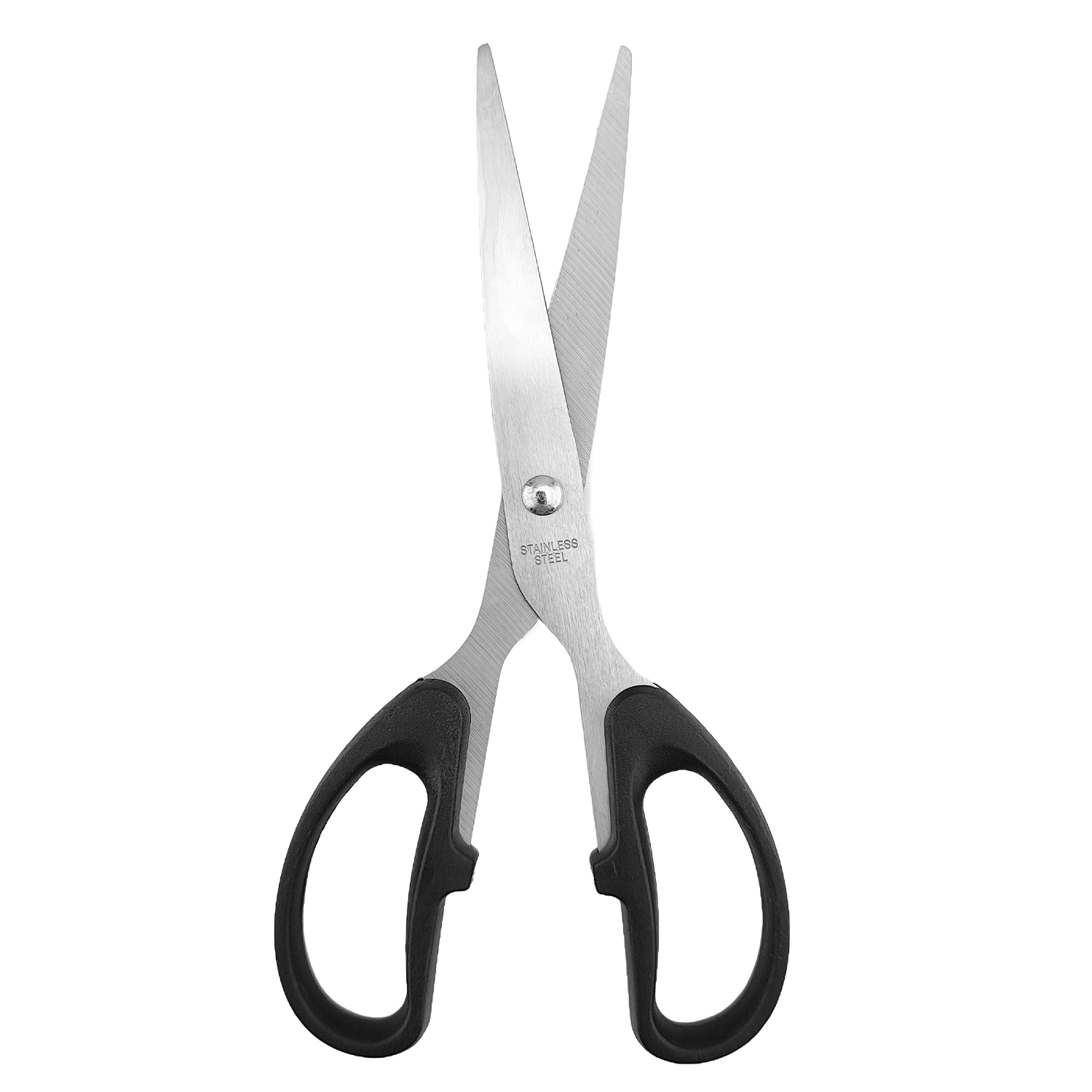
Classic Household Scissors: Practical Selection Guide
Classic household scissors are simple tools, but choosing the right pair still matters. A dependable pair should cut paper, packaging, thread, labels, and light craft materials cleanly without feeling awkward in the hand. For retailers, distributors, and OEM buyers, the challenge is slightly different: the product must be easy to understand, consistent in quality, suitable for the intended market, and supported by clear supplier communication.
This guide rewrites the original product introduction into a more useful buying article. It keeps the explicit facts from the source: the product is presented as stainless steel precision scissors with black soft-grip handles, designed for everyday household, craft, office, and light professional tasks. It also includes practical sourcing questions buyers should ask before placing a wholesale or OEM order.

Key Takeaways
- Classic household scissors should match the end user's most common tasks, not just look good in product photos.
- Stainless steel is stated in the original product information, but buyers should still ask about the specific grade, hardness, and finishing process.
- Soft-grip handles can improve comfort, especially for repeated light cutting tasks.
- Wholesale and OEM buyers should confirm samples, packaging, labeling, inspection standards, and compliance requirements before production.
- A good supplier conversation focuses on measurable details rather than vague claims about sharpness or durability.
What Makes Classic Household Scissors Useful?
A classic household scissor is expected to be versatile rather than specialized. It may be used in the kitchen to open food packaging, in the office to cut envelopes and paper, in a craft room to trim light materials, or in a utility drawer for daily chores. Because the use cases vary, the best selection criteria are balance, comfort, cutting control, and reliable edge alignment.
The original article positions the product as stainless steel precision scissors. That description suggests a general-purpose tool with a focus on clean cutting. However, buyers should avoid assuming performance beyond what has been verified. For example, cutting paper and light packaging is very different from cutting heavy fabric, wire, plastic strapping, or food bones. Clear use limits protect both the seller and the customer.
Design and Build Quality Checks
The source article highlights durable stainless steel construction and black ergonomic soft-grip handles. These are useful features for household scissors, but they should be checked carefully during sourcing. Stainless steel can vary by grade, heat treatment, edge retention, corrosion resistance, and surface finish. A buyer should ask the supplier which stainless steel grade is used and whether that information can be documented for the order.
Handle comfort is also important. Soft-grip handles may reduce hand fatigue during repeated cuts, but comfort depends on shape, opening size, surface texture, and how the handles are bonded or assembled. For a retail product, the grip should feel secure in both dry and slightly damp hands. For OEM projects, buyers may also need to decide whether handle color, logo placement, and packaging artwork can be customized.
How to Match Scissors to End-User Needs
Before selecting classic household scissors, define the main user and the main task. A family utility drawer, stationery set, craft kit, supermarket household aisle, and promotional bundle may all require slightly different priorities. For example, an office-focused pair may need clean paper cutting and a professional appearance, while a household multipack may emphasize comfort, safety, and value.
- List the top three materials the scissors should cut, such as paper, thread, labels, or light packaging.
- Decide whether the product is for retail display, e-commerce, wholesale distribution, or OEM branding.
- Request samples and test them under realistic conditions, not only with new paper sheets.
- Check whether the handle size suits the target market and expected user group.
- Confirm packaging, barcode, labeling, and carton information before mass production.
Comparison Checklist for Buyers
| Selection Point | What to Check | Question to Ask the Supplier |
|---|---|---|
| Blade material | Stainless steel is stated, but grade and treatment are not specified in the source. | What stainless steel grade is used, and can it be listed on the quotation or specification sheet? |
| Cutting performance | Clean cuts on paper, thread, light packaging, and craft materials. | What materials are these scissors intended to cut, and what materials should users avoid? |
| Handle comfort | Black soft-grip handles are stated; check size, texture, and fit. | Can you provide samples for hand-feel testing before confirming the order? |
| OEM options | Logo, handle color, packaging, and carton marking may vary by supplier capability. | Which OEM elements are available, and what information is needed for accurate quotation? |
| Quality control | Blade alignment, screw tension, edge consistency, burrs, and handle finish. | What inspection criteria are used before shipment, and can they be agreed in writing? |
| Commercial terms | MOQ, lead time, payment terms, and sample policy are not provided in the source. | What are the current MOQ, lead time, sample cost, and production timeline for this item? |
OEM and Wholesale Sourcing Guidance
For B2B buyers, the product itself is only one part of the decision. A scissors factory or wholesale supplier should be able to communicate clearly about specifications, samples, production process, quality control, packing, and shipment preparation. If the product is being sourced from a region known for knife and scissors production, such as Yangjiang, buyers should still evaluate the individual supplier rather than relying on regional reputation alone.
Ask for a written specification sheet before approving production. It should cover blade material, handle material, size, weight if available, color, packaging format, carton details, and any customization requirements. If the supplier cannot provide a full specification immediately, use the quotation stage to clarify missing details. This prevents misunderstandings when comparing offers from multiple factories.
Buyers should also request pre-production samples when customizing packaging, colors, or branding. A sample helps verify blade alignment, smooth opening and closing, handle comfort, printing quality, and packaging fit. For larger orders, discuss whether pre-shipment inspection is accepted and what defect categories will be used.
Use and Care Tips for End Users
Even general-purpose household scissors last longer when used properly. Keep one pair for clean household tasks and avoid using it on hard materials that may damage the edge. After cutting adhesive tape or sticky labels, wipe the blades carefully so residue does not affect smooth cutting. If the scissors are used near moisture, dry them before storage.
Store scissors closed and away from children. If the pivot becomes stiff, the user can clean the joint area and check whether debris is trapped near the screw. Do not force the blades through materials beyond their intended use. Misuse can bend the blades, loosen the pivot, or create uneven cutting pressure.
Practical FAQ
Are classic household scissors suitable for fabric?
They may cut light fabric or thread, but they are not the same as dedicated tailoring scissors. If fabric cutting is a key use case, ask the supplier for sample testing on the exact fabric type.
What should OEM buyers confirm before ordering?
Confirm blade material details, handle material, product dimensions, logo method, packaging artwork, carton information, sample approval process, MOQ, lead time, and inspection standards.
Does stainless steel mean the scissors will never rust?
No. Stainless steel generally offers corrosion resistance, but performance depends on grade, finish, environment, and care. Buyers should ask for the specific material grade and recommended use conditions.
How can a retailer evaluate sample quality?
Test several pairs, not just one. Check blade alignment, opening smoothness, grip comfort, cutting consistency, visible burrs, handle finish, and whether the product matches the agreed packaging.
Should wholesale buyers choose the lowest price?
Price matters, but the lowest quote may not include the same material, finish, packaging, inspection, or service level. Compare written specifications and tested samples before deciding.
Final Thoughts
Classic household scissors are everyday tools, but a good sourcing decision depends on clear product requirements and careful sample review. The stainless steel precision scissors described in the original article offer a familiar household format with black soft-grip handles and broad everyday use. For consumers, the main goal is choosing a comfortable pair for realistic tasks. For wholesale and OEM buyers, the priority is confirming specifications, customization options, quality control, and commercial terms before committing to production.
