




Classic Kitchen Scissors: A Practical OEM Sourcing Guide
Classic kitchen scissors remain one of the most familiar tools in home kitchens, restaurant prep stations, gift sets, and retail houseware aisles. Their value is simple: they cut food packaging, trim herbs, portion meat, open bags, and support many everyday preparation tasks without requiring a cutting board for every small job. For buyers, however, the challenge is not just finding a pair that looks familiar. It is choosing a kitchen scissors factory or OEM kitchen shears supplier that can deliver consistent cutting performance, comfortable handling, safe packaging, and dependable communication.
This guide focuses on B2B sourcing decisions for classic kitchen scissors. It does not assume a specific material grade, test result, production capacity, minimum order quantity, certification, or price. Instead, it outlines the questions buyers should ask and the details that should be confirmed before placing an order.
Key Takeaways
- Classic kitchen scissors are purchased for practical cutting tasks, so sample testing is more useful than appearance alone.
- When comparing OEM kitchen shears, confirm blade material, handle material, sharpness standard, packaging, and inspection method in writing.
- Multifunction designs can add value, but every extra feature should be tested for comfort, safety, and durability.
- A reliable kitchen shears manufacturer should answer technical questions clearly and provide pre-production samples when customization is required.
What Makes Classic Kitchen Scissors Different?
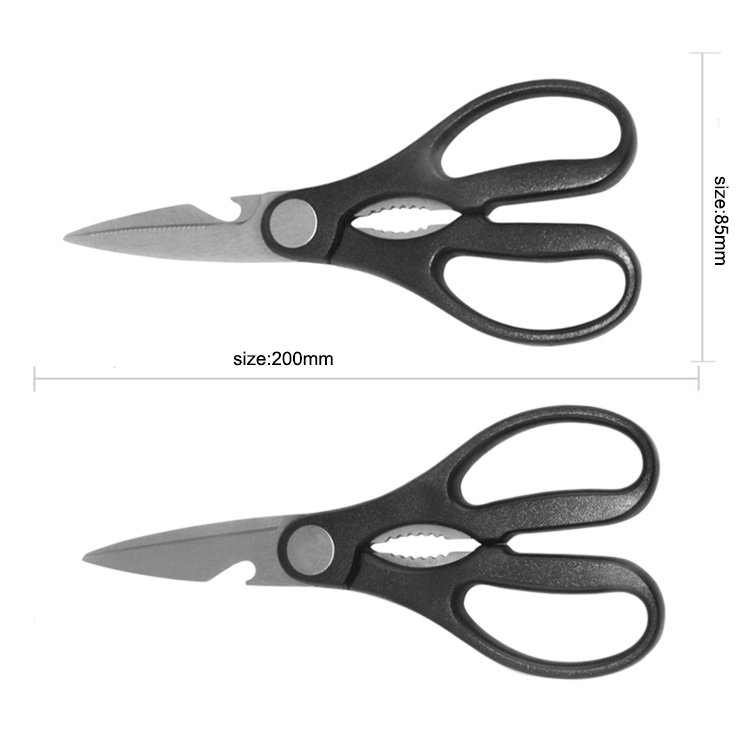
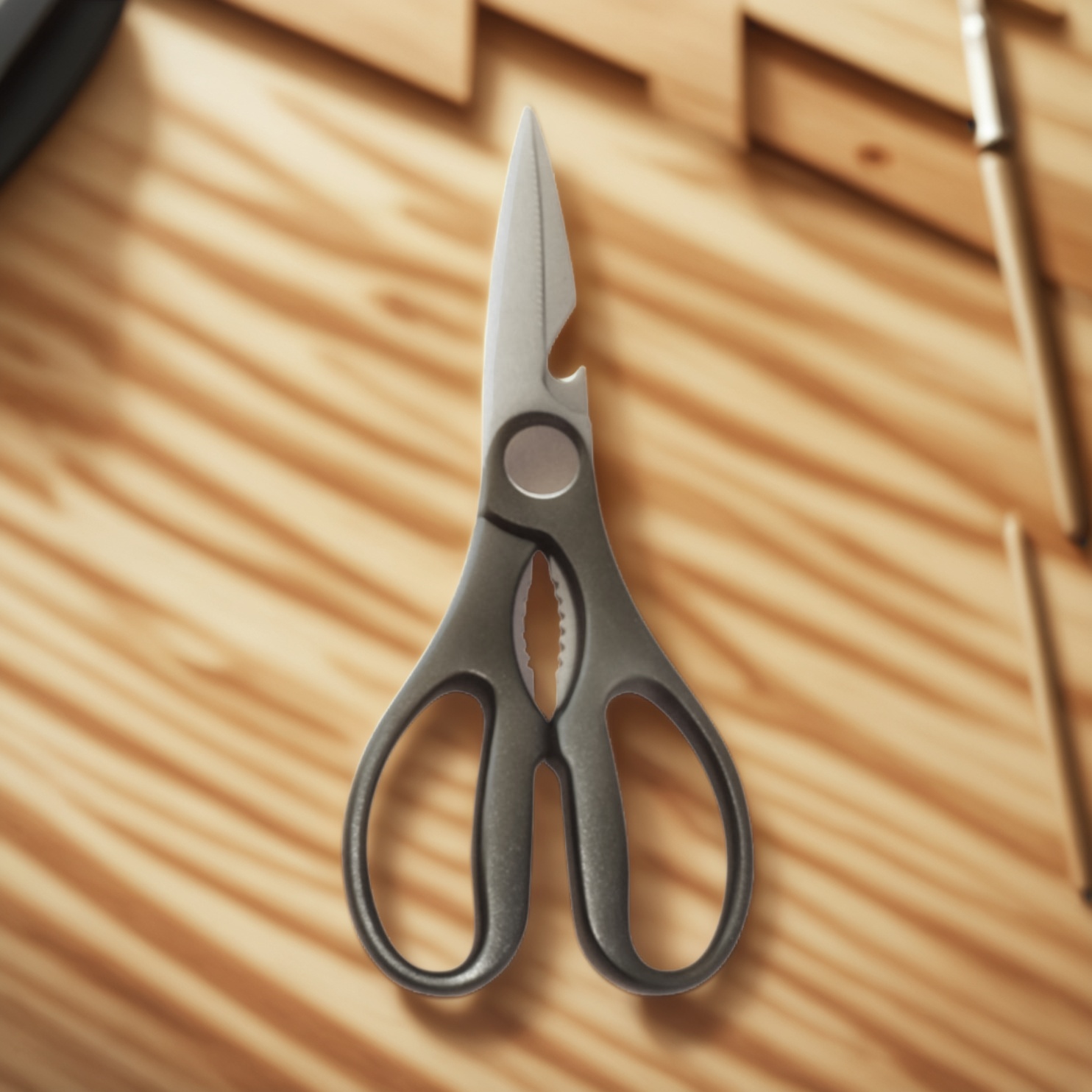
Classic kitchen scissors usually follow a straightforward design: two cutting blades, handles sized for kitchen use, and a profile suitable for repeated household tasks. Some models are simple food-prep scissors, while others include additional functions such as a bottle opener, nutcracker, or jar-opening grip. The original product description for this category references multifunctional stainless steel kitchen scissors, but buyers should still verify the exact material, finish, and feature set for the model they plan to source.
For retailers and wholesalers, the appeal of the classic format is broad consumer recognition. Shoppers understand what the product is and how it will be used. For OEM buyers, this means product differentiation often depends on small but important details: blade feel, handle comfort, packaging quality, logo placement, color options, and the consistency of each batch.
Common Use Cases to Consider Before Sourcing
Before contacting a supplier, define where the scissors will be sold and how end users are likely to use them. A promotional kitchen tool, a supermarket blister-card product, and a premium boxed kitchen shear may all require different design priorities.
- Home cooking: Buyers should focus on comfortable grip, safe storage, and easy cleaning.
- Food preparation: Cutting performance on herbs, meat trimming, and food packaging should be checked with samples.
- Retail replacement items: Shelf presentation, barcode placement, and multilingual instructions may matter as much as the tool itself.
- Gift or set programs: Color matching, insert cards, and outer carton protection should be discussed early.
Comparison Checklist for OEM Kitchen Shears
The table below can help buyers compare suppliers without relying on vague claims. Ask each kitchen scissors factory to complete the same checklist so that quotations are easier to evaluate.
| Evaluation Area | What to Confirm | Why It Matters |
|---|---|---|
| Blade material | Exact material description, finish, and corrosion-care advice | Impacts cutting feel, maintenance, and customer expectations |
| Cutting performance | Sample tests on packaging, herbs, poultry skin, or target materials | Shows whether the scissors fit the intended use case |
| Handle design | Grip size, left/right hand suitability, surface texture, color options | Affects comfort, safety, and repeat use |
| Multifunction features | Availability of bottle opener, nutcracker, jar grip, or other tools | Adds value only if features work reliably and do not reduce comfort |
| Packaging | Blister card, gift box, sleeve, instruction sheet, barcode position | Supports retail presentation and reduces handling problems |
| Quality control | Inspection points, acceptable defect limits, and sample approval process | Reduces the risk of inconsistent bulk shipments |
Questions to Ask a Kitchen Scissors Factory
A professional supplier should be able to explain how a product is made, what can be customized, and which details must remain standard. Instead of asking only for the lowest price, prepare practical sourcing questions:
- What blade and handle materials are available for this exact model?
- Can you provide pre-production samples with our logo, color, or packaging?
- Which parts of the scissors are customizable and which require tooling changes?
- How is cutting sharpness checked before shipment?
- What packaging options are suitable for e-commerce, wholesale cartons, or retail shelves?
- Can you provide care instructions or warning labels for the target market?
- What information is needed to quote accurately, including quantity, packaging, and shipping terms?
These questions help separate general trading responses from detailed factory communication. They also create a written record that can be used when approving samples and confirming orders.
OEM Customization: Useful Options and Cautions
OEM kitchen shears can often be adapted for different brands or retail programs, but customization should be managed carefully. Logo printing may look simple, yet placement, durability, and visibility depend on the handle material and surface. Color matching also requires confirmation under real lighting and, if needed, reference to an agreed color standard.
Packaging customization deserves equal attention. A pair of scissors may pass a cutting test but still fail commercially if the card bends, the box scuffs easily, or the product is not protected during transit. Ask for packaging mockups, drop protection suggestions, carton quantity, and carton marking details before approving bulk production. If the product includes sharp blades, confirm how the tips and edges are protected inside the package.
Sample Testing Before a Bulk Order
Samples should be tested by the same people who understand the sales channel. For example, a wholesale buyer may focus on carton strength and cost structure, while a retailer may focus on shelf appeal and consumer handling. A simple internal test plan can include:
- Opening and closing the scissors repeatedly to check smoothness.
- Cutting common kitchen materials relevant to the target customer.
- Checking whether the handles cause pressure points during repeated use.
- Washing and drying according to the supplier’s care instructions.
- Inspecting packaging after transport simulation or courier shipment.
Record findings with photos and written comments. If changes are requested, ask the supplier to confirm whether the revised sample will be the approved production reference.
How to Compare Suppliers Beyond Price
Price is important, but classic kitchen scissors compete in a crowded category where returns, complaints, and inconsistent packaging can erase short-term savings. Compare suppliers by response quality, sample accuracy, willingness to clarify specifications, and ability to document agreed details. A kitchen shears manufacturer that asks follow-up questions about your market, packaging, and labeling needs may be easier to work with than one that sends only a quick quotation.
Buyers should also consider communication during order execution. Ask how production updates are shared, when inspection can be arranged, and what happens if a sample detail is not matched in bulk production. These are commercial process questions, not claims about any one supplier, and they help reduce uncertainty.
Practical FAQ
Are classic kitchen scissors the same as kitchen shears?
The terms are often used interchangeably. “Kitchen shears” may imply a stronger or more specialized kitchen tool, while “kitchen scissors” is a broader retail-friendly term. Always confirm the actual design and intended use.
Should buyers choose a multifunction model?
Multifunction features can be useful, especially for retail value perception. However, test each added feature and make sure it does not make the scissors uncomfortable, bulky, or difficult to clean.
What information is needed for an accurate OEM quote?
Provide target quantity, destination market, packaging type, logo requirements, preferred materials if known, inspection expectations, and any labeling needs. Ask the supplier to list assumptions clearly.
Can a supplier claim the scissors are rust-resistant?
Only use that claim if the supplier provides a clear material description, care instructions, and any relevant support for the statement. Avoid broad claims unless they are verified for your market and product.
What should be approved before mass production?
Approve a final sample, packaging artwork, carton marks, color references, logo placement, and written specifications. Keep these documents as the reference for inspection and shipment review.
