








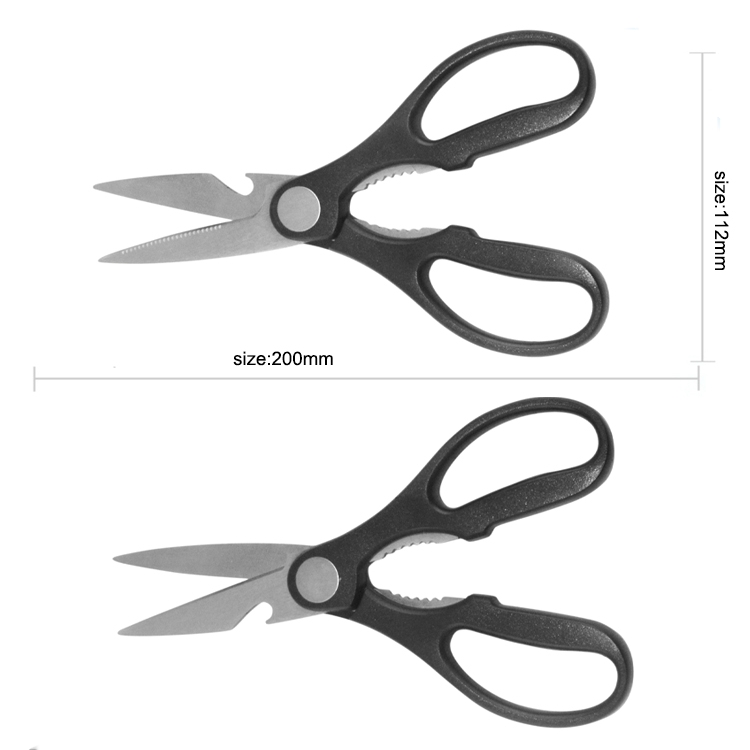
Classic Kitchen Scissors: Versatile Culinary Essential

Classic kitchen scissors remain one of the most practical tools in a kitchen drawer because they solve many small cutting tasks quickly. For home cooks, they can help with snipping herbs, opening food packaging, cutting twine, trimming meat, and portioning seafood. For distributors, importers, and private-label buyers, they are also a steady product category because the design is familiar, easy to demonstrate, and relevant across many kitchenware assortments.
The original article highlights a traditional kitchen scissors design with multifunction use, a satin appearance, non-slip handles, and extra functions such as a bottle opener, nutcracker, and serrated section for twisting jar lids. This rewritten guide keeps the focus on what buyers and users should evaluate before choosing classic kitchen scissors, especially when discussing OEM kitchen shears, a kitchen scissors factory, or a kitchen shears manufacturer.
Key Takeaways
- Classic kitchen scissors are useful for everyday food prep and light kitchen utility tasks.
- Build quality, blade alignment, handle comfort, and safe grip matter more than decorative details.
- Multifunction features can add value, but only if they are comfortable and easy to clean.
- B2B buyers should ask suppliers clear questions about materials, testing, packaging, customization, and order terms.
- Proper cleaning and drying help maintain cutting performance and reduce wear over time.
What Makes Classic Kitchen Scissors Useful?
Unlike a chef knife, kitchen scissors cut with a controlled squeezing motion. That makes them convenient for tasks where a cutting board is not always necessary, such as trimming herbs directly into a bowl or cutting food-safe string. They are also helpful for opening sealed bags, separating small portions, and handling awkward shapes that may slip under a knife.
The word classic is important. A classic design usually means a familiar shape, straightforward operation, and a balance between kitchen preparation and utility use. Some versions include integrated tools, including a bottle opener, nutcracker, or serrated gripping area. These additions may reduce the need for separate gadgets, but they should not interfere with the scissors' main purpose: clean, controlled cutting.
Build Quality Points to Check
The original source mentions stainless steel blades, corrosion resistance, sharpness retention, a satin finish, and ergonomic non-slip handles. When reviewing any kitchen shears product, treat those points as starting criteria rather than final proof of quality. Buyers should inspect samples, request documentation where relevant, and test the scissors under realistic use conditions.
| Checklist Item | Why It Matters | Questions to Ask a Supplier |
|---|---|---|
| Blade alignment | Poor alignment can cause tearing instead of cutting. | How is blade alignment checked during production? |
| Blade material | Material affects corrosion resistance, sharpness, and durability. | What blade material is used, and can it be documented? |
| Handle grip | A secure handle improves control during wet or oily prep work. | What handle material and texture options are available? |
| Multifunction parts | Extra tools should be usable without making cleaning difficult. | Can samples be tested for the opener, nutcracker, and gripping areas? |
| Packaging | Retail, wholesale, and private-label channels need different presentation. | What packaging formats and branding options can be quoted? |
Everyday Uses in Home and Commercial Kitchens
Classic kitchen scissors are not limited to one job. In a home kitchen, they can cut herbs, trim fat from meat, open ingredient pouches, section cooked noodles, cut parchment paper, or trim flower stems for table use. In foodservice or demonstration settings, they can support fast prep tasks where repeated knife work would be slower.
However, users should match the tool to the job. Kitchen scissors are not a replacement for heavy-duty poultry shears unless the product is designed and tested for that use. They should also not be used for hard materials beyond their intended purpose. Clear product instructions help reduce misuse, returns, and customer dissatisfaction.
Multifunction Design: Helpful or Overcomplicated?
Multifunction kitchen scissors can be appealing because one tool may support several common tasks. The original description mentions a built-in bottle opener, nutcracker, and serrated section for twisting jar lids. These features are useful only when the overall design remains comfortable, stable, and easy to clean.
- Check whether the primary cutting action still feels smooth.
- Confirm that added functions do not create sharp or uncomfortable pressure points.
- Test cleaning around grooves, pivots, and textured areas.
- Make sure product packaging explains the functions clearly.
For B2B buyers, multifunction features should be evaluated against target market expectations. A supermarket promotion may value visible extra functions, while a professional kitchenware line may prioritize blade performance and cleanability.
OEM and Wholesale Sourcing Guidance
When sourcing from an OEM kitchen shears supplier or kitchen scissors factory, avoid relying only on product photos. Ask for production samples and compare them across repeated cutting tasks. If the supplier offers customization, clarify what can actually be changed, such as handle color, logo placement, packaging type, or finish. Do not assume that every component can be modified without cost, tooling, or lead-time impact.
Important commercial details should be confirmed directly with the supplier. Buyers can ask about minimum order quantity, sample policy, available packaging, lead time, inspection process, export documentation, and whether third-party testing can be arranged if required by the destination market. If compliance standards apply to your sales region, ask what documentation is available instead of assuming certification.
Care and Maintenance Tips
Good kitchen scissors should be cleaned promptly after use, especially after contact with meat, seafood, sticky sauces, or acidic ingredients. Wash with warm water and mild detergent, then dry thoroughly before storing. If the scissors include textured areas, a hinge, or multifunction grooves, pay extra attention to trapped food particles.
To help preserve performance, avoid cutting bones, wire, frozen blocks, or other hard items unless the product is specifically designed for them. Store the scissors in a drawer organizer, sheath, or safe position where the blades will not be damaged by heavier utensils. Regular inspection is also useful: if the blades feel loose, misaligned, or dull, the tool may need adjustment, sharpening, or replacement.
Practical FAQ
Are classic kitchen scissors the same as poultry shears?
Not always. Some kitchen scissors can trim meat or small poultry portions, but heavy-duty poultry shears are usually designed for tougher cutting tasks. Check the supplier's intended-use guidance before positioning the product.
What should importers ask before ordering OEM kitchen shears?
Ask about blade material, handle material, sample availability, customization options, packaging, MOQ, lead time, inspection process, and available documentation for your target market.
Are multifunction kitchen scissors harder to clean?
They can be if the design has deep grooves or tight spaces around extra functions. Sample testing should include washing and drying, not only cutting performance.
What features matter most for consumer satisfaction?
Smooth cutting, comfortable grip, safe handling, easy cleaning, and clear instructions usually matter more than adding many secondary functions.
How can wholesalers compare two similar scissors models?
Use the same cutting tasks, cleaning routine, and packaging review for both samples. Record blade feel, hand comfort, finish consistency, and any issues after repeated use.
Final Selection Advice
Classic kitchen scissors are valuable because they are simple, familiar, and useful across many kitchens. For consumers, the best choice is a pair that feels secure in the hand, cuts cleanly, and is easy to wash. For wholesale and OEM buyers, the best choice is a product that matches the intended sales channel and is supported by clear supplier answers, consistent samples, and suitable packaging. A careful evaluation process helps turn a common kitchen tool into a reliable product for everyday use and repeat purchasing.
