




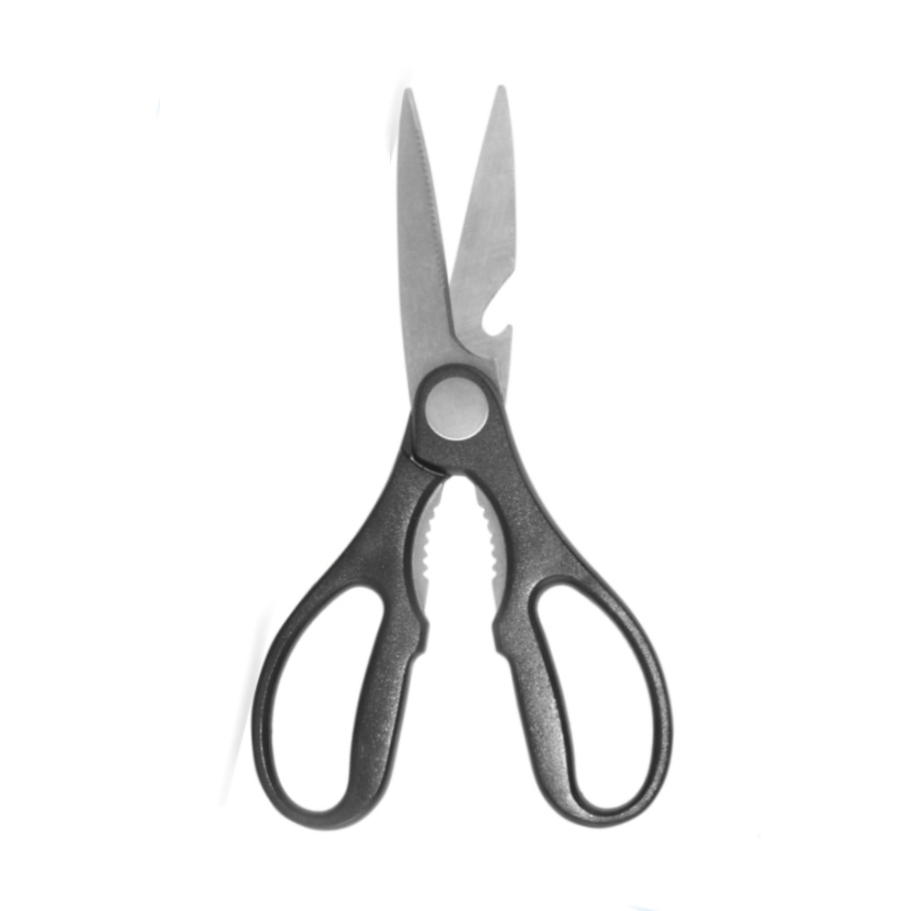
Classic Kitchen Scissors: Versatile Tools for Every Home
Classic kitchen scissors are simple tools, but they carry a surprising amount of purchasing risk for retailers, importers, private-label brands, and household buyers. A pair may look familiar at first glance, yet blade feel, handle comfort, hinge stability, packaging, and after-use cleaning all influence whether it becomes a trusted kitchen item or an unused drawer accessory.
The original Bonet Houseware article introduced classic kitchen scissors as versatile tools for everyday preparation and mentioned OEM kitchen shears, factory sourcing, stainless steel construction, ergonomic black handles, a built-in nutcracker, and a bottle opener. This rewritten guide keeps those explicit points while focusing on practical selection and B2B sourcing questions buyers can use when comparing suppliers.

What Classic Kitchen Scissors Are Used For
Kitchen scissors are intended for food preparation and light kitchen tasks where a knife is not always the most convenient option. Typical uses include cutting herbs, trimming food packaging, portioning thin ingredients, preparing garnishes, and handling small everyday tasks around the cooking area. Some multifunction kitchen shears also include secondary features such as a toothed section that can help crack nuts or shellfish and an integrated bottle opener.
For household users, the main value is convenience. A well-designed pair of scissors can reduce the need to switch between several tools during preparation. For business buyers, the value depends on whether the product fits the target market: basic household use, promotional kitchenware, private-label retail, gift sets, or broader houseware assortments.
Key Takeaways
- Classic kitchen scissors should be evaluated by real cutting comfort, hinge stability, cleaning ease, and handle fit, not appearance alone.
- OEM kitchen shears can support customized branding, packaging, and design requests, but buyers should confirm what is actually available from the supplier.
- Do not assume material grade, compliance status, or performance test results unless the manufacturer provides documents and samples.
- Multifunction features such as a nutcracker or bottle opener are useful only if they are durable, comfortable, and easy to clean.
- For wholesale sourcing, request samples, packaging details, inspection standards, and production lead-time information before placing volume orders.
How To Evaluate OEM Kitchen Shears
OEM kitchen shears are usually selected when a buyer wants more than a standard off-the-shelf product. This may include custom packaging, logo placement, handle color, blade finish, or feature adjustments. However, the word OEM should not be treated as a guarantee of any specific capability. It is a starting point for a supplier conversation.
When evaluating an OEM kitchen scissors option, ask for clear answers on customization scope. Can the supplier support logo marking? What packaging formats are available? Are handle colors fixed or adjustable? Are samples available before mass production? What artwork files are required? Is there a pre-production sample approval process? These questions help separate general trading claims from workable supply arrangements.
Buyers should also check whether the proposed design matches the intended user. A household kitchen item should be comfortable for repeat use, safe to store, and simple to clean. If the product includes extra functions such as a nutcracker or bottle opener, test those functions with realistic pressure and hand positions. A feature that looks good in a catalog may not perform well if it creates discomfort or weakens the overall structure.
Comparison Checklist for Buyers
| Evaluation Point | What To Check | Questions To Ask A Supplier |
|---|---|---|
| Blade performance | Clean cutting on herbs, packaging, and common kitchen materials | Can samples be tested before order confirmation? |
| Material information | Whether the supplier can identify blade and handle materials clearly | What material grade is used, and can documentation be provided? |
| Handle comfort | Grip shape, finger space, and comfort during repeated cutting | Are handle colors or shapes available for OEM projects? |
| Hinge construction | Smooth opening, closing alignment, and side-to-side stability | How is hinge consistency inspected during production? |
| Multifunction features | Nutcracker, bottle opener, or other integrated functions | Are these functions tested, and what test method is used? |
| Packaging | Retail display, protective packing, barcode space, and instruction needs | What packaging options are available for private-label orders? |
| Quality control | Appearance, sharpness, alignment, and functional checks | Can the factory share its inspection process or sample standard? |
What To Ask A Kitchen Scissors Factory
A kitchen scissors factory conversation should go beyond product photos. Photos show shape and color, but they do not prove cutting quality, handle strength, consistency, or packaging readiness. A good sourcing process begins with a written specification and ends with approved samples and inspection criteria.
Before confirming an order, ask the factory or manufacturer about production workflow, sample timing, available customization, packaging choices, and quality inspection points. If compliance documents, food-contact information, or market-specific requirements are needed for your sales region, request them directly and verify whether they apply to the exact product being quoted. Avoid assuming that a similar item, previous model, or general certificate covers your order.
It is also useful to request a reference sample that represents the final production standard. Keep one approved sample with the buyer and one with the supplier. This makes later communication clearer if there are questions about blade finish, handle color, logo position, or packaging quality.
Product Selection Tips for Retail and Household Use
For retail buyers, the best classic kitchen scissors are not always the most complex design. A simple, reliable pair with comfortable handles and clear packaging may perform better than an overloaded design with weak secondary features. Choose features that match the target customer. For example, a basic everyday kitchen shear may focus on cutting comfort, while a multifunction model may emphasize the added nutcracker and bottle opener.
For home users, selection is more straightforward. Hold the scissors if possible and check whether the handle feels secure. Open and close the blades to feel for smooth movement. Look for a design that can be cleaned easily after contact with food. If the scissors will be used frequently, comfort matters as much as sharpness.
- Choose a size that fits the main user’s hand comfortably.
- Check whether the blades meet evenly from base to tip.
- Confirm that any nutcracker or bottle opener feature is comfortable to use.
- Review cleaning instructions before using the scissors with food.
- Store the scissors dry and away from children after use.
Use and Care Guidance
Kitchen scissors last longer when they are used for suitable tasks and cleaned promptly. Avoid using kitchen shears on very hard materials unless the supplier states that the design is intended for that purpose. Cutting metal wire, thick bone, or non-kitchen materials can damage the blade edge or hinge.
After use, wash away food residue and dry the scissors thoroughly. Pay attention to the hinge area because trapped moisture or particles can affect movement over time. If the product has a built-in nutcracker or bottle opener, clean around those contact areas as well. Follow the supplier’s care instructions regarding dishwashers, detergents, or disassembly if such instructions are provided.
FAQ
Are classic kitchen scissors the same as ordinary scissors?
No. Kitchen scissors are designed for kitchen-related cutting tasks and may include features such as stronger handles, food-prep suitability, a nutcracker section, or a bottle opener. Buyers should still verify the exact design and intended use with the supplier.
What should B2B buyers confirm before ordering OEM kitchen shears?
Confirm customization options, sample availability, material details, packaging formats, inspection standards, lead time, and any required market documentation. Do not rely only on catalog descriptions.
Can a kitchen shears manufacturer provide private-label packaging?
Many manufacturers may offer packaging support, but capabilities vary. Ask what packaging styles are available, whether custom artwork is accepted, and whether a packaging sample can be approved before production.
How can I judge quality from a sample?
Test cutting performance, blade alignment, hinge stability, handle comfort, surface finish, and any multifunction parts. Compare several samples if possible to check consistency.
What commercial details should I ask Bonet or any supplier directly?
Ask about MOQ, pricing, production lead time, available customization, material documentation, packaging options, and inspection process. These details should be confirmed in writing for the exact product and order requirements.
