




Colander Strainer Factory: How to Source a Practical Bowl and Strainer Set
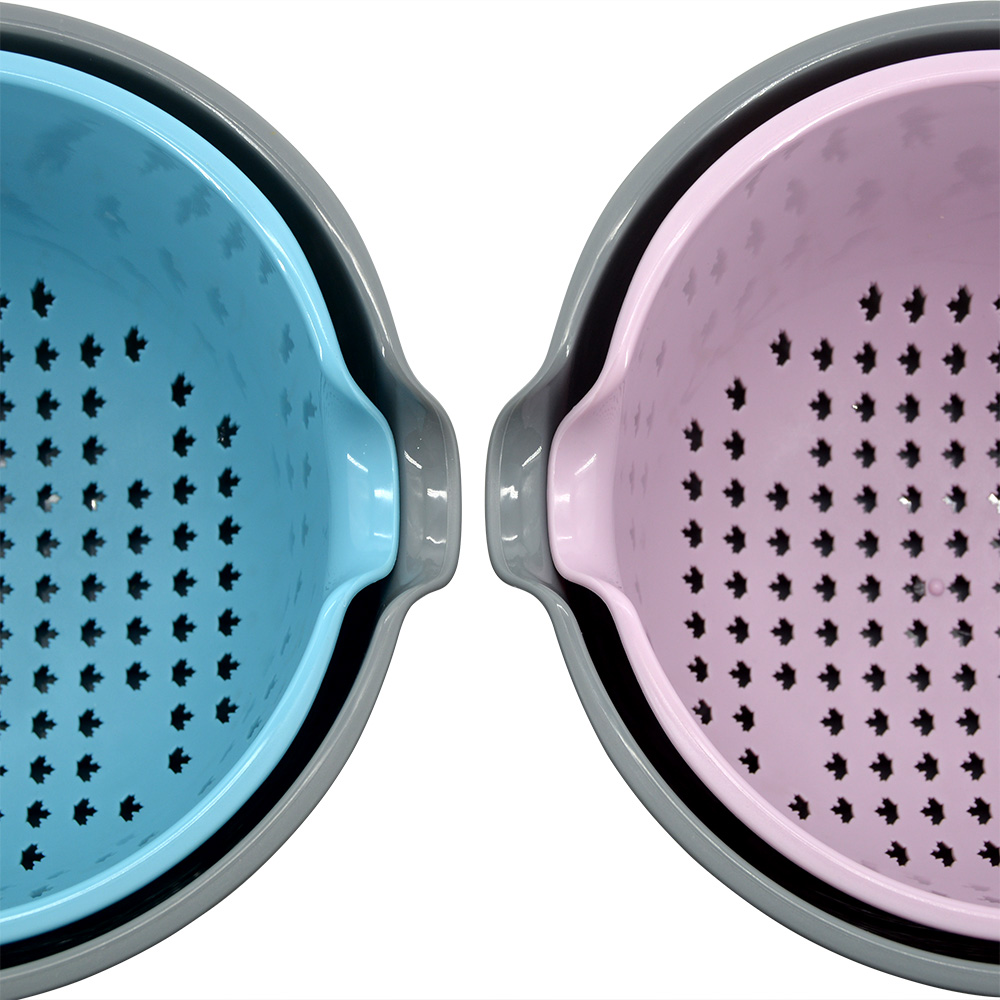
For importers, wholesalers, and private-label kitchenware buyers, a colander is a simple product only on the surface. The real sourcing challenge is finding a colander strainer factory that can deliver consistent draining performance, comfortable handling, stable nesting with a mixing bowl, and packaging suitable for retail or online distribution. The original product concept is a blue and gray plastic colander and matching mixing bowl set, designed for everyday tasks such as rinsing produce and draining pasta. This guide explains how to evaluate that type of product without relying on vague claims or decorative language.
Why the Factory Choice Matters
A colander and bowl set has several details that affect user satisfaction. Drainage holes or decorative cutouts must release water quickly without allowing common foods to slip through too easily. Handles need to feel secure when the strainer is loaded with wet vegetables or pasta. The bowl and colander should fit together cleanly so users can rinse, drain, mix, and serve with fewer tools on the counter.
When buyers search for a colander strainer factory, they are usually not only comparing one item. They are assessing whether a supplier can support repeat orders, packaging requirements, color matching, labeling, and quality control. Before requesting a quotation, prepare a clear specification sheet and ask the supplier to confirm what is standard, what is customizable, and what requires tooling or additional development.
Product Features to Evaluate
The original article describes a plastic colander manufacturer offering a blue and gray colander with a matching mixing bowl. It also notes decorative cutouts for draining and ergonomically designed handles. These are useful starting points, but buyers should translate them into measurable checks during sampling.
- Drainage pattern: Check whether the decorative cutouts drain water evenly from the base and sides.
- Handle comfort: Test the grip when the colander is wet and filled with food.
- Bowl compatibility: Confirm whether the colander nests securely in the matching bowl without wobbling.
- Color consistency: Review blue and gray samples under normal retail lighting.
- Surface finish: Look for rough edges around cutouts, handles, and the rim.
Do not assume a specific material grade, heat tolerance, dishwasher suitability, or food-contact compliance unless the supplier provides clear documentation. Those points should be requested and verified as part of procurement.
Comparison Checklist for Buyers
A structured checklist makes factory comparison easier, especially when several suppliers offer similar plastic colander and mixing bowl sets. Use the table below during sample review and supplier meetings.
| Evaluation Area | What to Check | Questions to Ask the Supplier |
|---|---|---|
| Drainage design | Water flow through decorative cutouts; food retention during rinsing | Can you provide samples with the current drainage pattern for testing? |
| Handle design | Grip comfort, edge smoothness, stability when loaded | Has the handle design been changed for any previous buyers? |
| Bowl fit | How the colander rests inside the mixing bowl; nesting for storage | Is the bowl supplied as a matched set or optional accessory? |
| Plastic quality | Finish, rigidity, odor, visible defects, color consistency | What material documentation can you provide for buyer review? |
| OEM options | Color, logo, packaging, barcode, carton layout | Which customizations are available, and which require extra cost or tooling? |
| Quality control | Inspection steps before shipment; defect handling | What inspection standard can be agreed before production? |
OEM and Wholesale Sourcing Questions
For B2B purchasing, the safest approach is to separate confirmed product facts from commercial questions. The confirmed concept here is a plastic colander and mixing bowl set in blue and gray, with decorative cutouts and handles. Everything else should be checked directly with the factory before order placement.
- What are the available colors for standard production, and can the blue and gray combination be matched to a buyer reference?
- Can the factory provide a pre-production sample for approval before mass production?
- What packaging formats are available for wholesale cartons, retail shelves, or e-commerce shipments?
- What are the minimum order quantity, lead time, and payment terms for the selected version?
- What quality documents, material information, and product test reports are available for the target market?
- How are scratches, color variation, deformation, or rough edges handled during inspection?
These questions help avoid misunderstanding. They also make it easier to compare a plastic colander manufacturer against other kitchenware suppliers that may quote a lower price but provide fewer details.
Sample Testing Before Purchase
Samples should be tested in practical kitchen conditions. Rinse leafy vegetables, berries, and larger produce to see whether the decorative cutouts perform well across different foods. Drain pasta and observe whether water collects in corners or releases quickly. Place the colander inside the matching mixing bowl and move it from sink to counter to check stability.
Buyers should also inspect the product by hand. Run fingers around the rim, handles, and cutouts. A colander may look attractive in photos but still feel uncomfortable if edges are not finished properly. If the set will be sold online, consider how well the bowl and colander photograph together, how much packaging protection is required, and whether the nested shape reduces shipping volume.
Packaging, Labeling, and Market Fit
Wholesale buyers often focus on the product first and packaging later, but packaging can determine whether a colander and mixing bowl set arrives in sellable condition. Ask whether the supplier can support plain cartons, color boxes, belly bands, labels, or other formats. Confirm who supplies artwork, who checks barcode placement, and whether packaging samples can be reviewed before production.
Market fit also matters. A blue and gray set may appeal to buyers looking for a modern, coordinated kitchenware item, but color preference varies by region and sales channel. If the factory offers color customization, confirm the approval process and tolerance for color variation. If customization is not available, assess whether the existing colorway matches your customer base.
Key Takeaways
- A colander strainer factory should be evaluated on drainage, handle comfort, bowl fit, finish quality, and sourcing support.
- The blue and gray plastic colander and mixing bowl set is best assessed through hands-on sample testing.
- Decorative cutouts can be useful, but buyers should confirm real drainage performance with common foods.
- Do not assume material grade, compliance, MOQ, lead time, or customization options without supplier confirmation.
- Clear OEM questions reduce risk when comparing kitchenware manufacturers and wholesale suppliers.
FAQ
What should I ask a colander strainer factory first?
Start with the product basics: available colors, bowl and colander dimensions, packaging options, sample availability, MOQ, lead time, and quality control process. Then request material and compliance documentation relevant to your market.
Is a matching mixing bowl useful for wholesale buyers?
Yes, it can improve perceived value and everyday usefulness because the user can rinse, drain, and mix with a coordinated set. Buyers should still verify nesting, stability, and packaging efficiency.
Are decorative cutouts better than standard holes?
They can improve appearance and may support effective draining, but performance depends on size, placement, and finish. Test samples with pasta, vegetables, and small produce before ordering.
Can I request OEM colors or branding?
Possibly, but this depends on the supplier. Ask which colors, logo methods, and packaging changes are available, and whether they require extra cost, tooling, or a higher order quantity.
How can I reduce quality risk before mass production?
Approve a physical sample, define inspection points in writing, confirm packaging, and agree how defects such as rough edges, color variation, deformation, or surface marks will be handled.
