




Colander Strainer Factory: B2B Sourcing Guide for Bowl and Colander Sets
For retailers, distributors, promotional product buyers, and kitchenware importers, choosing a colander strainer factory is not only about finding an attractive product. It is about confirming whether the supplier can consistently deliver a practical kitchen item that matches your market, packaging plan, quality expectations, and after-sales risk tolerance.
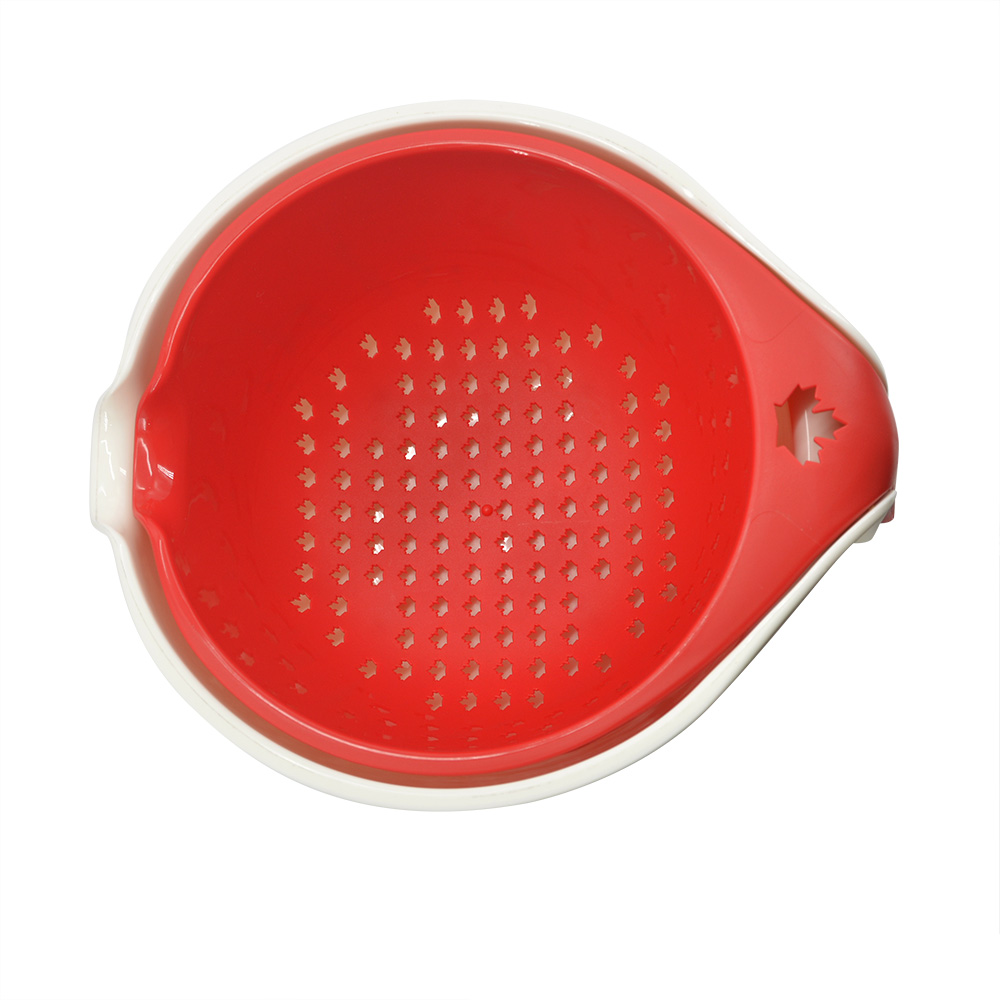
The original product concept is a dual-purpose bowl and colander set: a plastic colander designed for rinsing and draining, paired with a bowl for collecting water or serving. The article also described a vibrant blue appearance, uniform drainage holes, a stackable design, a handle, and a functional spout. These are useful features, but B2B buyers should verify the details directly with the supplier before placing an order.
What Buyers Should Expect From a Colander Strainer Factory
A capable colander strainer factory should understand both kitchen use and commercial sourcing requirements. A colander is a simple-looking product, yet small design issues can lead to customer complaints. Drainage holes that are too large may lose small berries or beans. Holes that are too few may drain slowly. A handle that feels comfortable in a product photo may flex too much when the colander is full of pasta or vegetables.
Before focusing on color or packaging, ask the factory how the product is designed for everyday use. Does the bowl sit securely under the colander? Does the spout pour cleanly? Is the handle shape comfortable for wet hands? Does the set stack neatly for storage and shipment? These questions help separate a decorative kitchen product from a dependable retail item.
Core Product Features to Review
The described product includes several features that matter in the market: a bowl and colander set, uniform holes for drainage, a vibrant blue color, easy stacking, a handle, a spout, and dishwasher-safe use as stated in the source. Buyers should not stop at the feature list. Each point should be checked with samples and supplier documentation.
- Drainage performance: Test rinsing pasta, leafy greens, berries, and small vegetables to see whether water drains quickly without losing food.
- Bowl fit: Confirm that the colander nests securely with the bowl and does not wobble during use.
- Stacking: Check whether multiple sets stack efficiently for warehouse storage and retail display.
- Handle and spout: Evaluate grip comfort, pouring control, and whether water spills along the rim.
- Dishwasher-safe claim: Ask what internal checks or buyer-approved tests support this claim for your intended market.
Comparison Checklist for Supplier Evaluation
When comparing plastic colander manufacturers, use the same checklist for every supplier. This makes quotations easier to compare and reduces the chance of selecting a factory based only on the lowest unit cost.
| Evaluation Item | What to Check | Questions to Ask the Supplier |
|---|---|---|
| Product design | Bowl fit, drainage holes, handle, spout, stacking | Can you provide samples for practical kitchen-use testing? |
| Material information | Material type, color consistency, durability expectations | What material is used, and can you provide the relevant material information sheet? |
| Dishwasher use | Heat exposure and repeated washing performance | How do you support the dishwasher-safe statement? |
| Quality control | Visual defects, burrs, warping, fit, drainage performance | What inspections are performed before packing? |
| Packaging | Retail label, barcode, carton protection, stacking efficiency | Can packaging be adapted for wholesale, retail, or e-commerce? |
| Commercial terms | MOQ, lead time, sample cost, payment terms | What are the current terms for this exact item and customization level? |
Material and Manufacturing Questions to Ask
The source article identifies the product as plastic and describes it as made from durable materials. However, buyers should not assume a specific plastic grade, temperature range, or compliance status unless the supplier confirms it. For kitchenware, material clarity is important because the product may contact food and may be exposed to warm water or dishwashers.
Ask for the exact material name, colorant information, and any documents relevant to your selling market. If you plan to sell in multiple regions, confirm what documents are available and whether they match your importer obligations. Avoid vague answers such as “food safe” without supporting details. A responsible supplier should be able to explain what information they can provide and what testing, if any, would need to be arranged by the buyer.
OEM and Wholesale Customization Considerations
Many buyers sourcing from a colander strainer factory want color, logo, packaging, or bundle customization. For the described blue bowl and colander set, customization may involve choosing a different color, adding a private-label package, adjusting carton quantities, or creating a set for a retailer’s kitchenware line.
Before requesting OEM changes, define the business purpose. A supermarket buyer may prioritize shelf-ready packaging and barcode placement. An e-commerce seller may need drop-test-friendly cartons and accurate product dimensions. A distributor may prefer neutral packaging that can serve several sales channels. Ask the supplier whether customization changes the MOQ, tooling needs, sample lead time, or production schedule.
How to Inspect Samples Before Ordering
A sample review should simulate real kitchen use, not just desk inspection. Fill the colander with wet greens, cooked pasta, and berries. Pour water through it. Hold it by the handle while loaded. Place it into the bowl and remove it repeatedly. Put several sets together to check stacking. Look for rough edges around holes, warping, inconsistent color, weak points near the handle, or a spout that drips down the side.
- Photograph the sample from all sides and record its weight and dimensions for internal comparison.
- Test drainage speed and note whether food escapes through the holes.
- Check whether the bowl remains stable on a flat countertop.
- Review packaging protection if the supplier provides packed samples.
- List any changes clearly before confirming a pre-production sample.
Key Takeaways
For B2B buyers, a colander strainer set should be judged by practical use, supplier transparency, and repeatable production quality. The dual-purpose bowl and colander concept can be attractive because it supports rinsing, draining, catching water, and compact storage. However, buyers should verify material details, dishwasher-related claims, packaging options, MOQ, lead time, and quality-control steps with the supplier. A low quote is useful only when the product performs reliably and the factory can answer sourcing questions clearly.
Practical FAQ
What should I ask a colander strainer factory first?
Start with the exact material, available colors, sample process, MOQ, lead time, packaging options, and quality-control checks. Then ask for samples so your team can test drainage, stacking, handle strength, and bowl fit.
Is a bowl and colander set better than a single colander?
It depends on the target customer. A set can be more useful for rinsing produce, draining pasta, and collecting water, while a single colander may be cheaper and simpler. Compare both options against your retail price point and packaging plan.
Can I claim the product is dishwasher safe?
The source states that the product is dishwasher safe, but buyers should ask the supplier how this claim is supported. If you sell in a regulated market or through major retailers, confirm documentation and testing expectations before printing claims on packaging.
What defects should be checked during inspection?
Common issues include rough hole edges, poor bowl fit, color inconsistency, warped rims, weak handles, blocked drainage holes, unstable stacking, and packaging damage. Include these points in your inspection checklist.
How do I compare quotations from different suppliers?
Make sure every quote is based on the same product size, material, color, packaging, order quantity, customization level, and delivery terms. If one price is much lower, ask what has been changed or excluded.
