




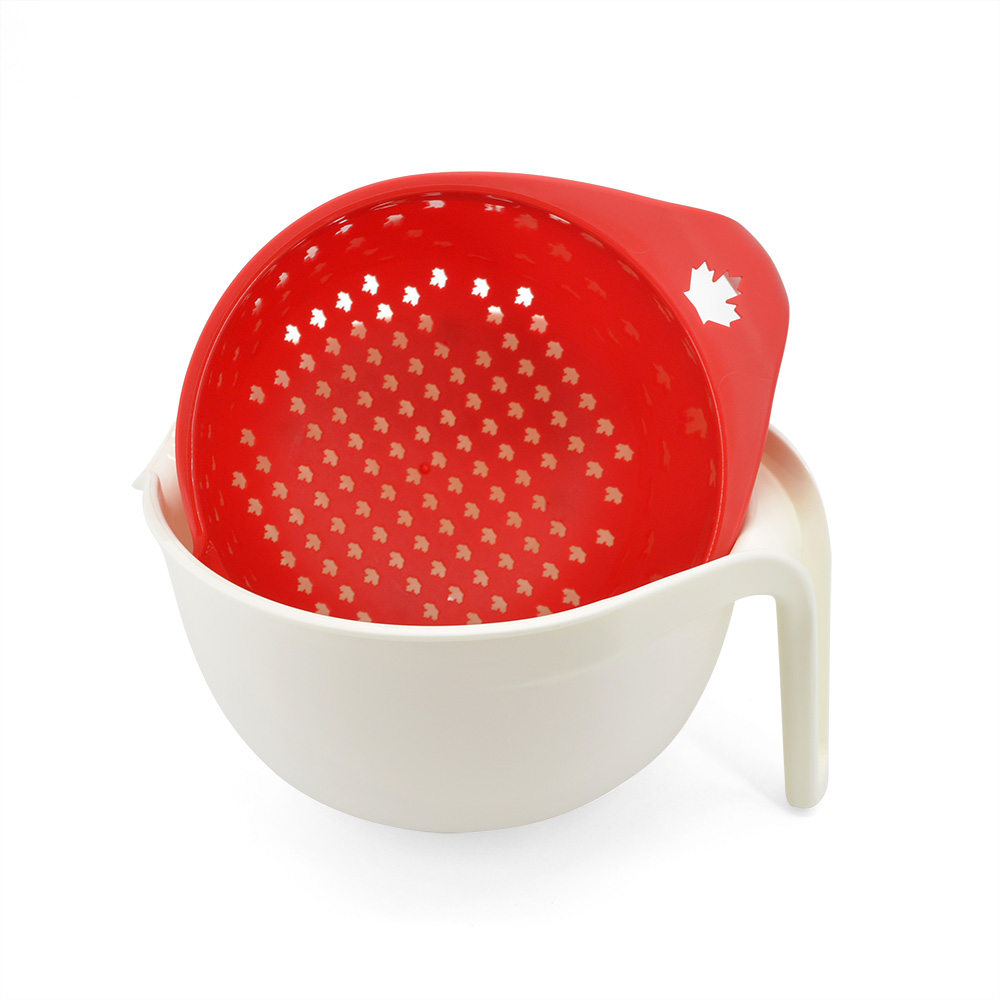
Colander Strainer Factory Sourcing Guide for 2-in-1 Plastic Sets
For importers, distributors, kitchenware brands, and retail buyers, sourcing from a colander strainer factory is not just about finding a low unit cost. A colander is a simple household item, but buyers still need to evaluate design usability, material questions, drainage performance, packaging suitability, and production consistency. The original product concept discussed here is a dual-toned 2-in-1 plastic colander and bowl set, with a serene blue colander and a sophisticated gray bowl. Its purpose is straightforward: help users rinse, drain, prep, and transfer food more efficiently.
This guide explains how to assess a plastic colander supplier without relying on vague marketing claims. It focuses on practical sourcing questions, product-selection details, and quality checkpoints that buyers can use before requesting samples or placing an OEM or wholesale order.
What Buyers Should Understand About the Product
A 2-in-1 colander and bowl set combines two common kitchen tools. The perforated colander drains washed vegetables, fruit, pasta, or other foods, while the matching bowl can catch water, support soaking, or serve as a temporary prep container. This format is useful for home kitchens because it reduces the need to move food between multiple containers during preparation.
The explicit product details available from the original article are limited but useful: the set is plastic, it has a dual-toned look, the colander is blue, the bowl is gray, and the holes are arranged for drainage. Buyers should treat all other details, including plastic grade, temperature resistance, dishwasher compatibility, certifications, and dimensions, as items to confirm directly with the factory.
How to Evaluate a Colander Strainer Factory
When selecting a colander strainer factory, buyers should look beyond product photos. A reliable supplier should be able to explain how the item is made, what material options are available, how colors are controlled, and what quality checks are performed before shipment. If an OEM project is involved, the supplier should also clarify mold ownership, tooling procedures, artwork handling, and packaging development.
Use a structured supplier review process. At minimum, ask for current product catalogs, available sizes, color options, sample lead time, production lead time, packaging formats, and inspection procedures. If compliance documentation is important for your market, ask what test reports or certificates are available for the exact material and product you intend to purchase. Do not assume that one certificate applies to every color, resin, or production batch.
Comparison and Sourcing Checklist
The following table can help buyers compare several plastic colander suppliers in a consistent way. It is especially useful when product photos look similar but commercial terms and quality controls differ.
| Evaluation point | What to check | Why it matters |
|---|---|---|
| Product design | Shape, nesting fit, drainage hole layout, bowl compatibility | Affects daily usability and consumer satisfaction |
| Material information | Ask for plastic type, food-contact suitability, colorant details | Supports market compliance and purchasing confidence |
| Sample quality | Check edges, stability, color consistency, surface finish | Reveals issues that may not appear in photos |
| OEM options | Confirm logo, color matching, packaging, and mold terms | Prevents misunderstandings before order placement |
| Inspection process | Ask what is checked during and after production | Helps reduce shipment disputes and inconsistent batches |
| Export support | Confirm carton packing, labeling, documents, and shipment coordination | Important for wholesale and retail supply chains |
Design Details That Affect Real Kitchen Use
For consumer-facing kitchenware, small design choices can determine whether a product is used regularly or left in storage. A 2-in-1 colander and bowl set should be easy to hold, simple to clean, and stable when filled. Buyers should examine whether the colander sits securely in or over the bowl, whether water can drain quickly enough for typical foods, and whether the bowl has enough depth for soaking or catching rinse water.
- Check that drainage holes are smooth and free from sharp plastic residue.
- Test whether the colander drains evenly when food covers part of the base.
- Confirm the bowl remains stable on a flat countertop.
- Evaluate whether the two pieces nest neatly for storage.
- Ask whether the factory can provide consistent blue and gray color matching across batches.
These checks are practical because buyers cannot rely only on appearance. A calm blue and gray color combination may suit modern kitchens, but performance depends on fit, balance, and finish.
OEM and Wholesale Questions to Ask Before Ordering
If you are sourcing for a private label, promotional program, supermarket line, or e-commerce brand, prepare a written question list before speaking with a factory. This protects both parties and helps the supplier provide accurate answers.
- What plastic material options are available for this colander and bowl set?
- Can the supplier provide documentation for food-contact requirements in the target market?
- Are the blue colander and gray bowl standard colors, or are they custom matched?
- What customization is possible for logo placement, packaging, barcode labels, and instruction sheets?
- What are the sample process, approval steps, and expected lead times?
- How are defects such as warping, color variation, blocked holes, or rough edges handled?
- What carton packing method is recommended to prevent deformation during transport?
These are not minor details. A product that looks acceptable in a sample may perform differently if the factory changes materials, adjusts colorants, or modifies packaging without buyer approval. Written specifications and approved samples should become the reference for production.
Quality Checks for a 2-in-1 Colander and Bowl Set
Quality control for a plastic colander should focus on both function and finish. Functional checks include drainage, stability, nesting fit, and general handling. Finish checks include color consistency, visible marks, clean hole edges, and absence of sharp burrs. If the product is intended for food preparation, buyers should also ask the supplier what testing or documentation can be provided for the exact material and color being used.
Before approving mass production, test samples under normal use conditions. Rinse leafy vegetables, berries, and cooked pasta to see how water exits the colander. Place the colander into the bowl and check whether standing water collects in an inconvenient way. Wash the pieces by hand and observe whether food particles remain around the drainage holes. These basic tests often reveal whether the product is practical for everyday consumers.
Packaging, Presentation, and Retail Readiness
Packaging should protect the set and explain its purpose clearly. For wholesale buyers, the right packaging depends on the sales channel. E-commerce shipments may need stronger protection against impact and compression. Retail shelves may require hang tags, color labels, or printed sleeves. Club stores or multipack programs may require different carton planning.
Do not assume the factory has your preferred packaging already developed. Ask for dielines, material options, carton dimensions, gross weight, and labeling capabilities. If the product will be sold internationally, confirm language requirements, recycling marks, and any retailer-specific packaging rules with your compliance team.
Key Takeaways
- A colander strainer factory should be evaluated on product consistency, material transparency, quality checks, and export support.
- The original product is a plastic 2-in-1 colander and bowl set with a blue colander, gray bowl, and drainage holes.
- Buyers should confirm all technical details, including material type, testing documents, size, packaging, and customization options.
- Sample testing should include drainage, stability, nesting fit, surface finish, and ease of cleaning.
FAQ
What is a 2-in-1 colander and bowl set used for?
It is used for rinsing, draining, soaking, and temporary food preparation. The colander drains water while the bowl can catch liquid or hold prepared ingredients.
What should I ask a plastic colander supplier first?
Start with material type, available colors, product dimensions, sample availability, customization options, packaging choices, and any documentation needed for your target market.
Can I assume the product is dishwasher safe?
No. Dishwasher compatibility was not specified in the source information. Buyers should ask the supplier to confirm heat resistance and recommended care instructions.
Is the blue and gray color combination customizable?
The source describes a blue colander and gray bowl, but it does not confirm custom color availability. OEM buyers should ask whether color matching is possible and what approval process is used.
How can buyers reduce quality risks?
Approve physical samples, create a written specification sheet, define acceptable defect limits, confirm packaging, and arrange inspection before shipment when order size or sales channel requirements justify it.
