




Corn Cooker Manufacturing: Quality Insights for Buyers
Corn cookers serve a simple purpose: they help prepare corn consistently for homes, food service counters, catering operations, and commercial kitchens. For buyers sourcing from a factory, supplier, OEM partner, or wholesaler, the important question is not only whether a cooker works, but whether it can be produced consistently, packed safely, delivered on time, and supported after purchase. This guide explains how to evaluate corn cooker manufacturing in a practical way without relying on unsupported claims or vague promises.
Key Takeaways
- Assess the manufacturing process, not only the finished sample.
- Ask suppliers about materials, heating performance, safety documentation, lead times, and after-sales support.
- Compare countertop, food service, and larger commercial options based on real use cases.
- Accessories such as corn holders and spice grinders can improve the serving experience, but should be sourced with the same quality discipline.
Understanding the Corn Cooker Manufacturing Process
Corn cooker production typically begins with product planning: capacity, heating method, user controls, housing design, and intended market. A unit for home use may prioritize compact storage and easy cleaning, while a food service buyer may focus on durability, fast recovery time, and convenient operation during peak hours. The original article highlights common production concerns such as even heating, durability, energy efficiency, and suitability for household or commercial needs. Buyers should treat these as evaluation points rather than assumptions.
During supplier discussions, ask how prototypes are reviewed before mass production. Important questions include: How is heating consistency checked? What parts are inspected before assembly? Are sample units tested under realistic cooking loads? If stainless steel, heat-resistant plastic, non-stick surfaces, digital timers, or other features are proposed, request written specifications and confirm whether those features apply to the exact model being quoted.
The Role of Corn Cooker Suppliers
A corn cooker supplier can be a manufacturer, trading company, wholesale distributor, or OEM sourcing partner. The supplier’s role is to connect the buyer with a product that matches the required use, order quantity, packaging needs, and delivery schedule. The original source notes that suppliers may offer different models, from small countertop cookers to larger industrial-style units. This range is useful, but it also means buyers must define their requirements before asking for a quotation.
When comparing suppliers, do not rely only on catalog photos. Request a product data sheet, instruction manual, packaging details, spare-part policy, and clear confirmation of what is included in the quoted price. If product certifications are important for your market, ask the supplier which documents are available for the exact model and destination country. Also ask about lead time, production schedule, warranty handling, and after-sales communication. These details often determine whether a supplier is suitable for long-term cooperation.
Manufacturing Quality Points to Check
Quality control for corn cookers should address both appearance and function. Cosmetic issues may affect retail acceptance, but performance problems such as uneven heating, weak assembly, poor fit of lids or baskets, and premature material wear can create more serious complaints. The original article mentions advanced methods such as automated welding and precision molding. If a supplier says these processes are used, ask where they are applied and how consistency is verified.
A practical inspection plan may include incoming material checks, in-process assembly checks, electrical or heat-performance checks where applicable, final visual inspection, carton drop considerations, and cooking performance sampling. Buyers should also ask how defects are recorded and corrected. A factory that can explain its quality process in detail is often easier to work with than one that only states that products are “high quality.”
Comparison Checklist for Sourcing Corn Cookers
| Evaluation Area | What to Ask | Why It Matters |
|---|---|---|
| Product type | Is it for home, countertop food service, or larger commercial use? | Prevents buying a model that is too small, too large, or unsuitable for the operating environment. |
| Materials | Which parts use stainless steel, heat-resistant plastic, coating, or other materials? | Confirms the construction of the exact quoted model instead of assuming from a catalog image. |
| Heating performance | How is even heating or cooking consistency tested? | Helps reduce complaints related to undercooked or inconsistent corn. |
| Compliance documents | Which certificates or test reports are available for the target market? | Supports import review, retailer requirements, and local regulatory checks. |
| Lead time | What is the sample time, production time, and shipping preparation time? | Protects seasonal promotions, restaurant openings, and wholesale delivery commitments. |
| After-sales support | How are defects, spare parts, and warranty questions handled? | Improves long-term customer service and reduces operational disruption. |
Choosing the Right Model for Your Business
Selection should begin with the end user. A household-focused buyer may want compact size, simple controls, safe handling, and easy storage. A restaurant or catering buyer may prioritize cooking volume, repeated use, cleaning speed, and availability of parts. A wholesale buyer may need attractive packaging, consistent carton labeling, and stable supply for repeat orders.
Consider making a simple usage brief before contacting suppliers. Include expected daily portions, preferred cooking method, space limitations, plug or power requirements if relevant, cleaning process, packaging language, and target retail price range. This allows the supplier to recommend a suitable model and prevents unnecessary back-and-forth. If OEM branding is required, ask about logo placement, packaging artwork rules, sample approval, and who is responsible for final proofreading.
Accessories That Support Corn Preparation
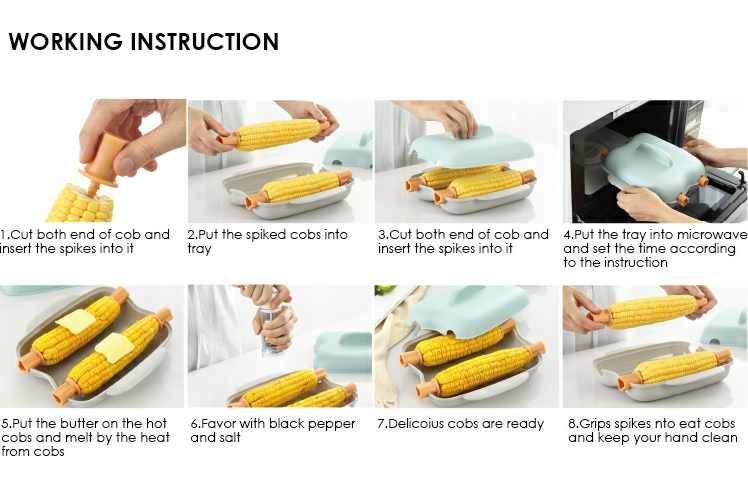
The original article also mentions complementary tools such as corn holders with ergonomic, heat-resistant handles and spice grinders with adjustable grinding. These accessories can be useful for retail bundles, barbecue sets, catering service, or food preparation displays. However, they should be evaluated independently rather than added only for appearance.
For corn holders, ask about handle material, tip strength, packaging safety, and whether the design is comfortable for the intended user. For spice grinders, confirm the body material, grinding adjustment method, cleaning guidance, and whether the mechanism is suitable for the spices your customers use. Accessories can improve the overall corn-serving experience, but only when they are reliable, easy to use, and clearly described.
Practical Supplier Questions Before Ordering
- Can you provide a sample of the exact corn cooker model being quoted?
- Which materials are used for the body, cooking area, handles, lid, and accessories?
- What quality checks are performed during and after assembly?
- How do you test heating consistency or cooking performance?
- Which product documents are available for my destination market?
- What are the sample lead time, mass production lead time, and packaging approval steps?
- How are damaged cartons, missing parts, or customer complaints handled?
- Can you support private label packaging, and what information must the buyer provide?
FAQ
What should buyers look for in a corn cooker manufacturer?
Look for clear product specifications, a transparent quality control process, sample availability, realistic lead times, and responsive after-sales communication. If certificates or test reports are required, confirm they apply to the exact model.
Are stainless steel and heat-resistant plastic always used?
They are common material options mentioned in the original topic, but buyers should not assume every product uses them. Ask the supplier to identify the materials used in each part of the specific model.
How can a buyer reduce the risk of uneven heating?
Request performance test information, review a working sample, and define an inspection method before mass production. If possible, test the cooker with the corn size and quantity expected in real use.
Should accessories be purchased from the same supplier?
It can simplify sourcing, but quality still matters. Evaluate corn holders, spice grinders, and other tools for safety, comfort, packaging, and material details before adding them to a bundle.
What information is needed for an OEM or wholesale quotation?
Prepare your target quantity, destination market, packaging requirements, branding needs, preferred model type, documentation requirements, and delivery schedule. This helps the supplier provide a more accurate quotation.
