




Custom Dressmaking Shears: Precision Tools for Tailors
Dressmaking shears are simple tools, but they have a direct effect on cutting accuracy, fabric handling and daily sewing efficiency. For tailors, alterations shops, fashion schools, sewing retailers and wholesale buyers, choosing the right range of scissors is not only about blade sharpness. It is also about size, comfort, edge type, packaging, replacement demand and the suitability of each tool for a specific task.
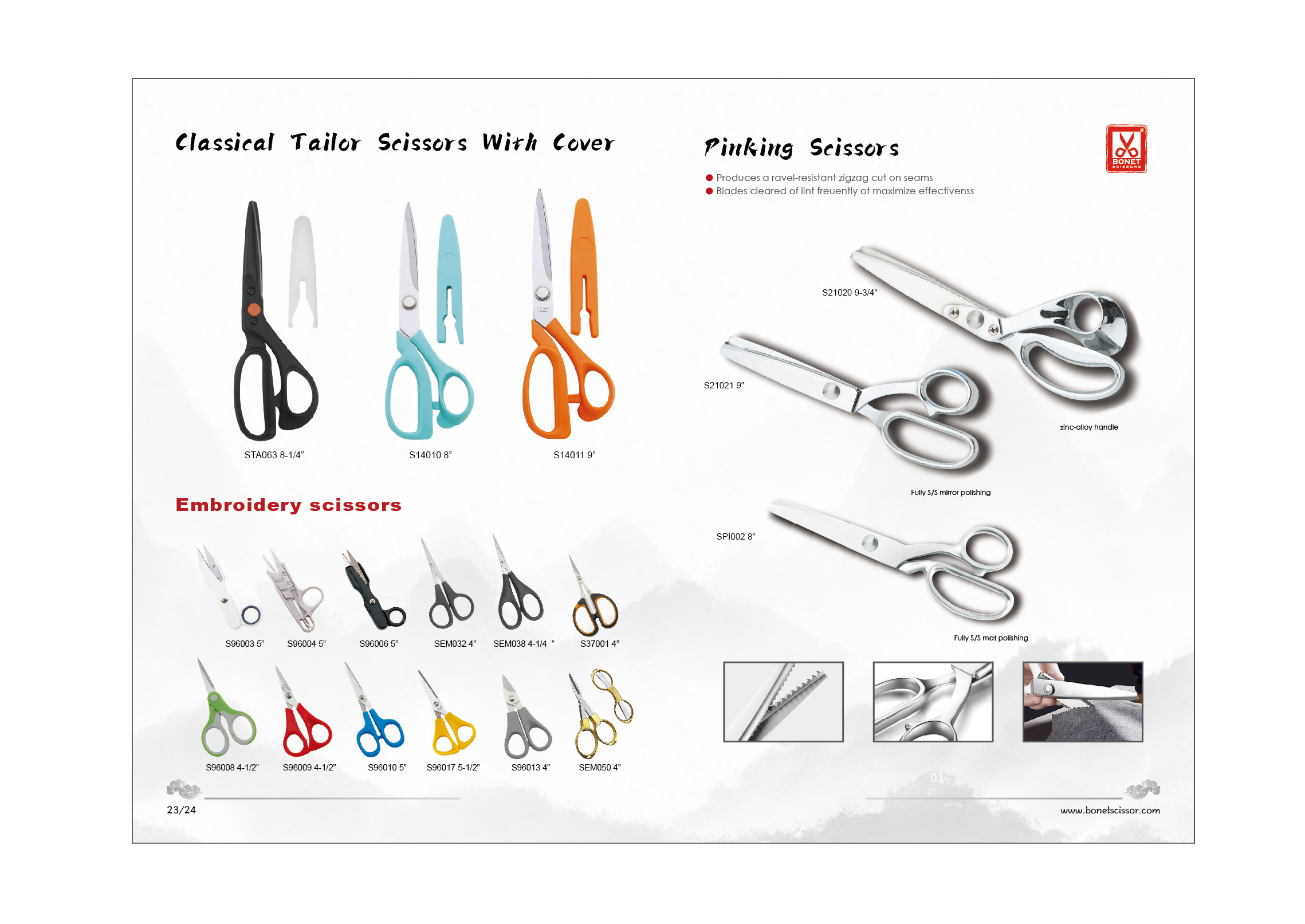
The original Bonet Houseware range highlighted classic tailor scissors in 8-inch and 9-inch sizes, a protective cover, handle color options such as black, blue and orange, pinking scissors for zigzag anti-fray edges, and smaller embroidery scissors from 3 to 5.5 inches. This guide explains how to evaluate those categories before placing a custom, OEM or wholesale inquiry.
Key Takeaways
- Tailor scissors, pinking scissors and embroidery scissors serve different cutting jobs; a balanced range often includes all three.
- For B2B sourcing, ask suppliers to confirm available sizes, handle colors, packaging options, samples, lead time and quality inspection process.
- Do not select shears only by appearance; comfort, blade alignment, cutting smoothness and safe storage matter for repeat use.
- Protective covers are useful for storage, shipping and retail presentation, especially for sharp dressmaking tools.
What Makes Dressmaking Shears Different?
Dressmaking shears are designed for fabric cutting rather than general household use. A good pair should cut smoothly through fabric without chewing, snagging or pushing the material out of position. Tailors often prefer longer blades for straight fabric cuts because they reduce the number of cutting strokes needed. Smaller scissors, by contrast, are better for trimming thread, embroidery work and detailed cutting around tight areas.
For buyers, the practical question is not simply, “Which scissor is best?” A better question is, “Which cutting tasks will my customers perform most often?” A professional tailor may need full-size shears for pattern cutting, pinking scissors for seam edge finishing and compact embroidery scissors for thread work. A sewing beginner set may need a simpler selection with clear packaging and basic use instructions.
Core Product Types to Consider
A well-planned dressmaking scissor assortment can cover everyday sewing, finishing and detail work. Based on the product information provided, the Bonet range includes several relevant options.
| Scissor type | Common use | Available details from source | Buyer checklist |
|---|---|---|---|
| Classic tailor scissors | Cutting fabric panels, patterns and general tailoring work | 8-inch and 9-inch sizes; protective cover; handle colors including black, blue and orange | Check cutting feel, handle comfort, cover fit and packaging options |
| Pinking scissors | Creating a zigzag edge to help reduce fabric fraying | Designed to create a clean zigzag edge for anti-fray finishing | Ask for edge consistency, sample cuts and recommended fabric applications |
| Embroidery scissors | Thread trimming, detail work and delicate cutting | Smaller sizes from 3 to 5.5 inches | Review tip precision, hand feel and safe storage method |
How to Select Sizes for Tailor Scissors
Size affects leverage, control and user comfort. The source article mentions 8-inch and 9-inch tailor scissors. These sizes are common choices for fabric cutting because they provide enough blade length for straight cuts while remaining manageable for daily bench work. Buyers should consider who will use the scissors and where they will be sold.
- 8-inch tailor scissors: Often suitable for general sewing, small studios, learners and users who want a manageable size.
- 9-inch tailor scissors: Useful when customers cut larger fabric pieces or prefer a longer blade for continuous cutting.
- 3 to 5.5-inch embroidery scissors: Better suited to thread trimming, embroidery, craft kits and detailed finishing work.
If you are sourcing for wholesale, request samples in each target size. Test them on the fabrics your customers are likely to use, such as cotton, lining, lightweight craft fabric or other common materials in your market. Avoid assuming one size will satisfy every user group.
Customization and OEM Questions to Ask
For custom dressmaking shears, buyers should clarify customization possibilities early. The source confirms handle color choices of black, blue and orange for the tailor scissors, but other commercial details should be confirmed directly with the supplier rather than assumed.
Before ordering, prepare a simple inquiry sheet with these questions:
- Which scissor sizes are currently available for tailor, pinking and embroidery scissors?
- Can the handle colors be selected by order, and are black, blue and orange available for the model requested?
- Is a protective cover included for the selected tailor scissors, and can the cover design or packaging be customized?
- What sample policy, production lead time and minimum order quantity apply?
- What inspection steps are used for blade alignment, cutting performance and appearance before shipment?
- What export packaging is recommended to protect sharp edges during transport?
- Can product labeling, barcode placement or retail packaging be arranged for wholesale distribution?
These questions help prevent misunderstandings and make supplier comparison easier. They also allow the buyer to confirm details that are not stated in the original product description, such as MOQ, private label options and quality control procedures.
Evaluating Cutting Quality Before Bulk Purchase
Samples are important for any tailor scissor sourcing project. A scissor that looks acceptable in a catalog may feel uncomfortable after repeated use, or it may cut well near the hinge but poorly near the tip. When samples arrive, inspect them consistently rather than relying on first impressions.
Check whether the blades open and close smoothly. Cut along a straight line and observe whether the fabric shifts. Try short snips at the blade tip. For pinking scissors, examine whether the zigzag pattern is clean and continuous. For embroidery scissors, test thread trimming close to the fabric surface, while taking care not to damage the fabric. Also inspect the handle surface, screw area, protective cover and packaging condition.
Packaging, Safety and Retail Presentation
Sharp tools need practical packaging. A protective cover, mentioned in the original product information for the tailor scissors, can help protect the blades and reduce accidental contact during storage. For retailers and distributors, packaging also supports shelf display, barcode scanning and product differentiation.
When comparing suppliers, ask how the scissors are packed individually and in export cartons. If you sell through e-commerce channels, consider whether the retail pack can withstand parcel handling. If you supply sewing schools or tailoring shops, simple durable packaging may be more important than decorative presentation. The best choice depends on the sales channel.
Use and Care Guidance for End Users
Even well-made dressmaking shears perform poorly if they are misused. Wholesale buyers can reduce complaints by including basic care guidance on packaging or product inserts. Encourage customers to reserve dressmaking shears for fabric and thread rather than paper, wire, plastic or household tasks. Scissors should be kept dry, closed when not in use and stored with the protective cover if supplied.
Users should avoid forcing thick material if the scissor is not intended for that application. If cutting becomes rough, the user should check for lint near the pivot and confirm that the blades have not been damaged. Clear after-sales instructions help customers understand normal maintenance and proper tool use.
FAQ
What size dressmaking shears should a tailor choose?
Many tailors use full-size shears for fabric cutting. The source product range includes 8-inch and 9-inch tailor scissors. Buyers should test both sizes to see which feels better for their target customers.
What are pinking scissors used for?
Pinking scissors create a zigzag edge. This type of cut can help reduce fabric fraying and is useful for seam finishing and craft work.
Are embroidery scissors the same as tailor scissors?
No. Embroidery scissors are smaller and intended for detail work such as trimming threads. The source range mentions embroidery scissors from 3 to 5.5 inches.
Can handle colors be customized?
The original product information mentions handle colors including black, blue and orange. For custom or wholesale orders, buyers should confirm available colors, order quantities and packaging options with the supplier.
What should wholesale buyers request before ordering?
Request samples, size options, packaging details, lead time, MOQ, inspection process and confirmation of any private label or OEM requirements. Avoid relying only on catalog images when sourcing cutting tools.
Final Sourcing Advice
Custom dressmaking shears should be selected around real cutting tasks: fabric cutting, anti-fray finishing and fine thread work. A practical sourcing plan compares sizes, sample performance, packaging, handle options and supplier communication. By asking clear questions before purchase, B2B buyers can build a scissor range that is easier to sell, easier to explain and better matched to the needs of tailors and sewing users.
