




Quick Answer:
A reliable custom kitchenware manufacturer should turn a product idea into a controlled specification, workable sample, repeatable production process and channel-ready package. Look past the sample photograph: check whether the team understands the category, challenges weak details, controls revisions, documents materials and stays involved after shipment. Put prices side by side only when construction, quantity, pack and delivery assumptions match.
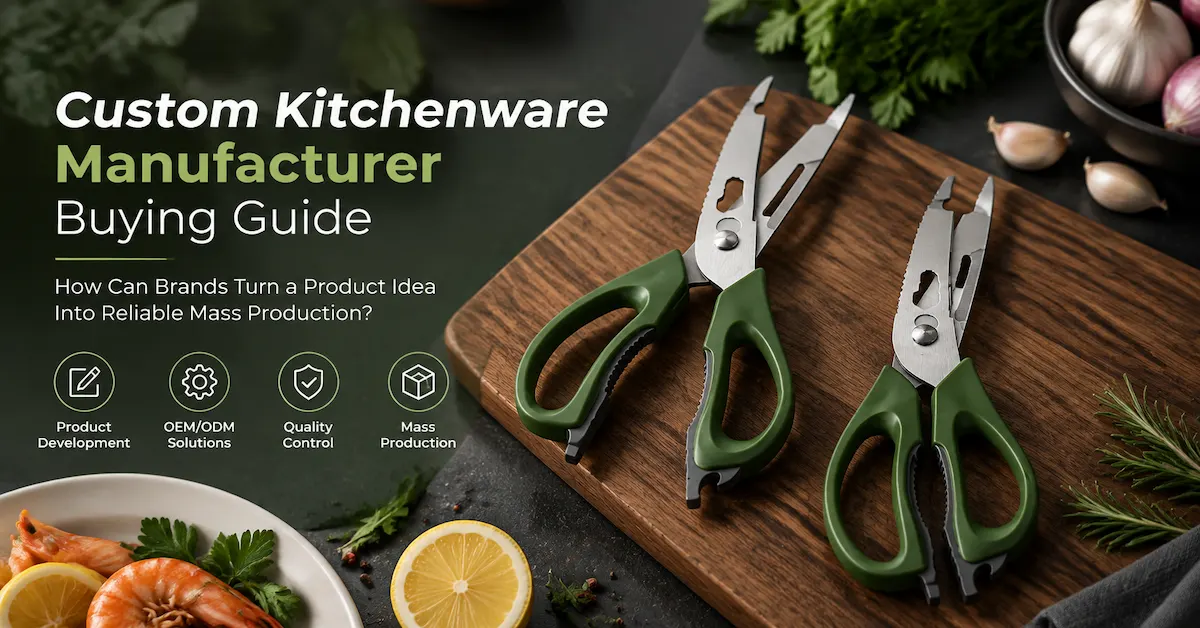
Introduction: A Product Idea Is Not Yet a Production Instruction
A kitchenware project often arrives as a deceptively neat folder: three reference photographs, a logo file, a target price and a date for launch. The buyer can already picture the item on a shelf. The production team sees unanswered questions. How thick is the working part? Which component carries the load? Is the color required on every material or only on the handle? Does the target price include the printed box? What exactly did the buyer approve when the first sample was described as "almost right"?
Those gaps matter because kitchenware is physical, handled and frequently washed. A spatula can have the correct Pantone color and the wrong flexibility. A board may look handsome in a photograph yet move on a wet counter. A pair of scissors may open smoothly in the sample room but drift after repeated use. Packaging can make an affordable utensil uneconomical to ship. The useful work of customization happens in the details between the mood board and the packed carton.
The intended reader is a brand owner, importer, retailer, distributor, promotional buyer or hospitality team that needs something beyond a standard shelf item. The following sections move from choosing a customization route through the brief, feasibility work, samples, quotation, quality planning and repeat-order control. They also show where OEM and ODM fit, because those labels are often used loosely in sourcing conversations.
BONET HOUSEWARE is used as a practical public reference. Its website presents kitchen knives, kitchen utensils, chopping boards, kitchen gadgets, multifunctional products and all-purpose scissors. Its OEM/ODM page describes production by drawing or sample, material and color choices, logo methods, packaging development, quality inspection and mass-production support. Those statements are useful starting points, not substitutes for a project agreement. MOQ, specifications, tests, tooling, prices and dates still need written confirmation for the exact item.
What Is a Custom Kitchenware Manufacturer?
A custom kitchenware manufacturer is a production partner that changes or develops kitchen products to meet a buyer's defined commercial and technical requirements. The work may begin with an existing catalog platform, a buyer's drawing, a physical sample or a product concept. Depending on the project, customization can include dimensions, construction, materials, color, surface treatment, logo, product assortment, packaging and inspection criteria.
The phrase does not describe one fixed production model. A light customization project may use a proven utensil with a selected color and branded sleeve. A structural OEM project may follow a controlled drawing and bill of materials supplied by the buyer. An ODM project may begin with a cooking problem and require feasibility discussion, structure development, prototypes and several revisions. A route named beside each SKU makes quotations easier to read; otherwise two factories may cost entirely different levels of work under the same word "custom."
Novelty is a weak reason to customize on its own. The change has to earn its place by serving a customer, channel or price position without making the item unrealistic to produce. In a supermarket, visual clarity and shelf footprint may dominate. An e-commerce item needs understandable features and parcel protection. A hospitality tool may prioritize repeated handling, cleaning and replacement. A promotional item may have a hard event date and a visible logo. One design cannot serve all of those jobs equally without an explicit trade-off.
| Development route | Where it starts | Typical decisions | Buyer must approve |
|---|---|---|---|
| Stock branding | Existing product | Logo, label, sleeve or carton mark | Exact SKU, logo result and packed sample |
| Limited OEM | Existing platform | Color, finish, grip, set contents and package | Permitted changes, specifications and reference sample |
| Structural OEM | Buyer drawing or sample | Components, dimensions, materials and performance | Controlled drawing, bill of materials and acceptance plan |
| ODM development | User problem or concept | Architecture, ergonomics, materials, tooling and prototypes | Design gates, risks, final design and ownership terms |
Step 1: Define the Commercial Job Before the Product
Begin with the purchase situation. Who will buy or use the product? Where will it be sold? Which kitchen task should feel easier? What price position is intended? How often is the SKU likely to reorder? A phrase such as "premium modern kitchen tool" is too elastic to guide engineering. "A compact prep tool for urban e-commerce customers, packed for parcel delivery and positioned above entry-level gadgets" gives the team something to work with.
Then separate requirements from preferences. A pack-size ceiling imposed by a retailer is a requirement. A matte handle may be a preference until cost and cleanability are understood. A delivery date tied to a promotion is a requirement. A particular internal construction copied from a reference product might be only one possible solution. Marking the difference gives the supplier room to solve the right problem without quietly removing something essential.
Write a one-page commercial brief before requesting a quote. It should name the market, channel, target user, intended function, price logic, forecast quantity, launch window and the products that will sit beside the item. Include why the project exists. A supplier can make better trade-offs when it knows whether the buyer is closing a range gap, replacing a product with high returns, building a gift set or creating a recognizable hero SKU.
A capable custom kitchenware supplier should respond with questions, not just a price. Questions about the user, food task, destination, pack and expected quantity show that the supplier is testing the brief against production. Silence can be fast, but it often means the missing decisions have been filled with assumptions.
Have a concept, reference sample or early product brief?
Request a Feasibility ReviewStep 2: Choose the Right Depth of Customization
Customization has a cost curve. A different carton print is not the same undertaking as a new molded handle. A color change can trigger a material MOQ. A small dimensional change can require a fresh tool rather than a simple machine adjustment. A new mechanism may add patents, reliability work and several prototype rounds. The buyer should choose the shallowest route that creates the required customer value.
Stock branding works when speed, lower commitment and a familiar function matter most. Limited OEM can create a coherent family through color, logo, finish, set configuration and packaging while retaining a proven base. Structural OEM suits buyers that already know the product in detail and can release drawings or an authoritative sample. ODM is appropriate when the buyer owns the consumer insight but needs manufacturing input to turn it into a feasible product.
Put every proposed change in a customization register. List the component, current state, requested state, reason, possible process, expected cost effect, MOQ effect, timing effect and approval evidence. This small document stops a project from accumulating expensive changes because each individual request sounded minor in an email.
An OEM kitchenware manufacturer normally works from a buyer's drawing, sample or detailed specification. An ODM kitchenware manufacturer contributes more of the product-development solution. The acronym on a presentation matters less than the division of work. Write down who defines structure, supplies the master files, pays for tools, owns the outcome and signs off any later change.
Step 3: Write a Product Brief That Can Survive Handover
A useful product brief lets another person identify the item without relying on the project manager's memory. Give each SKU a code and revision. Add an overall drawing or marked reference photograph, finished dimensions, component list, material direction, finish, color reference, intended function, logo, packaging and expected checks. Where information is open, say "supplier recommendation required" and set a date for the decision.
Do not specify materials only at product level. A pair of kitchen scissors may include blades, a pivot, grips and a cover. A utensil can combine a steel core, molded head and colored grip. A board may have a body, edge feature and non-slip feet. Write the material beside the component it controls. "Stainless steel and plastic" describes a family; it does not tell production which grade, resin or part is being discussed.
Functional language should be observable. "Strong" can mean resistance to bending, a secure joint or simply a substantial feel. "Easy to clean" might mean no inaccessible food traps, a suitable surface or dishwasher use under defined conditions. Replace adjectives with a use case or check wherever possible. Describe the food, force, motion, temperature, cleaning route and acceptable result that matter to the buyer.
| Brief section | Include | Common ambiguity to remove |
|---|---|---|
| Identity | SKU code, name, revision, route and reference | Which sample or catalog model controls the quote? |
| Construction | Components, dimensions, joint method and critical interfaces | Is the reference controlling shape, construction or both? |
| Materials | Material by component, grade or agreed performance direction | Does a broad material name hide several alternatives? |
| Appearance | Color standard, gloss, texture, finish and visual limits | Which surfaces are controlled and under what viewing conditions? |
| Function | User action, load, motion, food task and expected outcome | What does "durable," "sharp" or "heat resistant" mean here? |
| Brand and pack | Logo file, location, artwork, pack structure and carton data | Is the quoted unit packed for shelf, gift or parcel delivery? |
Put the Brief Through a Factory Reality Check
A design-for-manufacture (DFM) review asks a blunt question before the design is frozen: can this version be made repeatedly at the planned volume and cost? A factory may suggest a different wall thickness, radius, joint, surface treatment, color location or packing orientation. The recommendation should explain the reason and what changes in function, appearance, tooling, MOQ, price or lead time.
Good DFM feedback is specific enough to accept or reject. "Cannot do" is not helpful on its own. "The requested radius cannot release from this mold direction; increasing it by 1.5 mm avoids a slide and reduces tool complexity" creates a decision. Keep that decision in the project file so a later colleague understands why the production design differs from the first sketch.
Step 4: Check Category and Process Fit
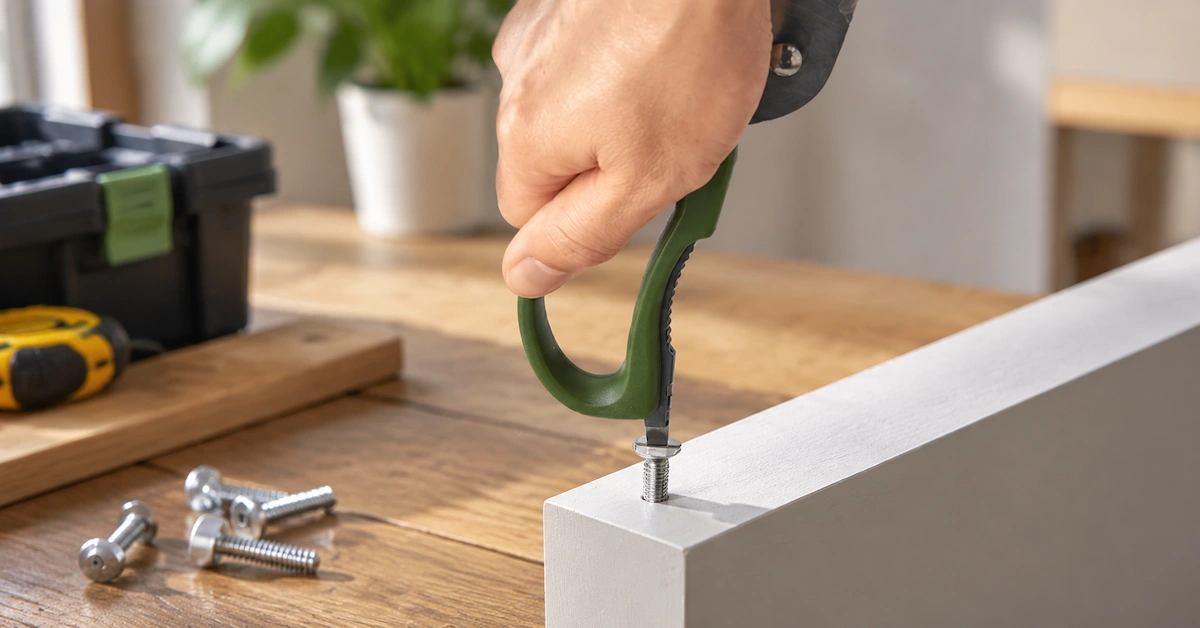
Kitchenware is a retail category, not a single manufacturing process. A knife brings steel preparation, heat treatment, grinding, polishing, handle assembly and edge protection into the conversation. A silicone utensil may involve molding, a supporting core and a joint that must remain clean. A chopping board raises questions about material condition, thickness, flatness, surface, edges and feet. A gadget can combine stamped, molded and moving parts in one small item.
Ask the supplier to map the actual process for the proposed SKU. Which operations are performed internally? Which are handled by an approved partner? Who owns the drawing and inspection standard at each location? Where can variation enter? A broad catalog can be commercially useful, especially for a coordinated range, but category breadth and process depth are different capabilities.
The BONET product pages provide practical starting points for this review: custom kitchen tools manufacturer and custom kitchen utensils manufacturer inquiries can begin with its kitchen-utensil category, while knife, board, gadget, multifunctional and scissors projects should be matched to their own category references. The next step is to ask for the nearest comparable construction, not simply the nearest photograph.
For a custom kitchenware factory China search, evidence should be tied to the product. Factory photographs, audit records and equipment lists establish useful context. They do not show that a particular pivot, molded joint or finish is under control. Pin the discussion to three names: the operation that creates the critical feature, the check that catches a failure and the person who owns the corrective action.
Planning a coordinated range of knives, utensils, boards or gadgets?
Discuss Your Product RangeStep 5: Specify Materials and Components Without Guesswork
Material selection sits between use, process, cost, appearance and destination requirements. There is no default "best" kitchenware material. Stainless steel, silicone, plastic, wood, bamboo, aluminum alloys and composites each belong to a different mix of use, appearance, process and cost. The useful choice belongs to a component and a purpose.
Start with exposure. Will the part touch food? Does it meet an edge, load, heat source, moisture, detergent or repeated flexing? Is it visible after assembly? Must it match another part in color? Then ask the supplier for a material recommendation and its reason. Record the agreed designation, supplier evidence or performance basis in the bill of materials. Avoid letting an approved color chip become the only definition of a molded compound.
Mixed-material products deserve extra attention at interfaces. A steel core and molded head can each be acceptable while the joint between them becomes the weak point. Feet can separate from a board. A printed mark can look correct before rubbing against an insert. Review how parts are joined, what surfaces touch, where water or food can remain, and which change would alter the fit.
| Product area | Material discussion | Sample observation |
|---|---|---|
| Blade or cutting edge | Steel designation, hardness direction, geometry, finish and corrosion context | Cutting task, edge consistency, burrs, finish and protection |
| Molded handle | Resin or elastomer, color, texture, wall section and joining method | Grip, seams, sink marks, flash, color and movement at the joint |
| Silicone working head | Compound, support core, flexibility, food-contact basis and stated heat use | Flex in the intended task, surface, odor, joint and cleanability |
| Board body | Material composition, thickness, surface, edge and moisture behavior | Flatness, movement, finish, usable area and stability in use |
| Logo and finish | Substrate, pretreatment, printing or engraving method and contact location | Position, contrast, edge definition, adhesion context and pack rubbing |
Step 6: Plan Tooling, Prototypes and Sample Revisions
Tooling is often discussed as one price line, but the buyer needs the story behind it. What tool is required? Which part does it produce? Is it a new tool, an insert or a modification? Who owns it? Where will it be stored? What production life or maintenance assumption supports the quote? Can the tool be used for another customer or only for this project? What happens to it if orders stop?
Before production tooling, ask whether a lower-commitment prototype can answer the current question. A printed model may be useful for hand fit and pack space without proving final strength or surface. A soft tool might produce closer material behavior but not represent full production speed. A hand-made metal sample can test shape while differing at joints. Label each prototype by what it can and cannot validate.
Give every physical sample a unique ID and revision. When it arrives, photograph it beside the label before distributing it internally. Review function first, then construction and dimensions, then appearance, logo and package. Put feedback into a numbered list with photographs, measured values where useful, an owner and a required response. "Improve the handle" invites interpretation. "Increase clearance at the marked point because the index finger contacts the edge during a rocking cut" describes an experience the supplier can examine.
The approved sample should be linked to the final files. A signature on a sample is not enough when dimensions, artwork and packing instructions continue to change afterward. Keep a release sheet showing the authoritative product drawing, bill of materials, color approval, logo artwork, packaging artwork, sample ID and inspection checklist. State which document wins if two references conflict.
Step 7: Make Every Quote Describe the Same Order
A low quotation may simply describe a different product. One supplier may include the printed box, while another prices a plain bag. One may use a standard catalog handle; another may include a new mold. One may quote a full order in one color; another assumes the quantity is split between three colors. Normalize the basis before comparing unit prices.
Build a landed-cost worksheet with separate rows for unit product, retail pack, master carton, tooling, setup, samples, testing, inspection and any consolidation. Record currency, quotation validity, trade term and named place. Add carton dimensions, quantity per carton, gross weight and the estimated transport basis. A small product price advantage can disappear when the packaging is bulky or the minimum order creates excess inventory.
MOQ should also be broken apart. Ask for the minimum product run, color batch, logo setup, packaging print run and order value. They may not match. For example, a product run may begin at 1,000 pieces even though the box printer starts at 3,000. The extra boxes are not necessarily a deal breaker, but their cash and storage cost must appear in the decision.
| Quote line | Normalize | Decision question |
|---|---|---|
| Product | Same SKU revision, construction, component materials and finish | Are all suppliers pricing the item that was sampled? |
| Branding | Same logo method, position, colors and setup assumptions | Is setup included and per SKU or per order? |
| Packaging | Same retail format, insert, print, labels and carton quantity | Does the pack suit the sales and shipping channel? |
| Quantity | Same pieces per SKU, color, size and delivery | Which minimum actually controls the order? |
| One-time costs | Tooling, inserts, fixtures, artwork plates and development fees | Who owns each asset and what does it cover? |
| Delivery | Same trade term, named place, timing and consolidation basis | Where do cost and risk pass to the buyer? |
Step 8: Build Quality Around the Approved Product
Quality control begins before inspection. The factory needs a stable target: current drawings, material information, approved colors, logo artwork, pack files, sample identity and acceptance points. An inspector cannot recover a requirement that was never agreed. The quality plan should translate the product brief into things that can be seen, measured or tested.
Separate critical, functional and appearance concerns. A dangerous edge where none is intended, a loose component or an incorrect food-contact material deserves different treatment from a small cosmetic mark. Functional checks should reproduce the relevant action: opening and closing, cutting a defined material, holding a load, standing on a work surface, flexing in a food-preparation task or fitting into the approved pack. The exact method and sample size depend on the product and destination.
Compliance evidence also belongs to the exact product. Ask which regulation, standard or buyer protocol applies in the destination market. Check the report holder, laboratory, date, sample description, material and tested clauses. A report for a different resin, color, construction or legal entity may be useful background but not proof for the order. Treat claims individually. Food safe, BPA free, dishwasher safe, antibacterial, heat resistant and sustainable wording all need evidence for the exact product and intended market.
Brand details have their own failure modes. A private label kitchenware manufacturer has to work from the released logo position, artwork, barcode, language, warnings and carton marks. These errors may not affect the tool's function, but they can stop a shipment or create expensive rework. Put packaging and labeling checks into the release and inspection files instead of leaving them with the marketing email chain.
Send the product, quantity, destination, customization and required date.
Ask for a Project QuotationStep 9: Design Packaging for the Selling and Shipping Route
Packaging is part of the product system. It keeps the item controlled between assembly and use, communicates the offer and lets warehouses handle the SKU. A peg card, color box, gift box, sleeve and e-commerce mailer solve different problems. Select the format from the route to market, not from a generic request for "nice retail packaging."
Start with protection. Identify sharp points, moving parts, polished surfaces, molded areas that can scuff and components that may shift. Then consider presentation: which side faces the shopper, whether the function is visible, how the logo reads and where required information sits. Finally, test logistics. Confirm packed dimensions, case quantity, carton strength direction, marks, gross weight, pallet or parcel constraints and any retailer labeling rules.
Artwork should have the same revision discipline as the product. Use a dieline supplied or confirmed by the packaging producer. Mark the barcode, language version, legal text, warnings, color references and finish. Ask for an artwork proof and a complete packed sample. A flat print sheet cannot reveal that a barcode folds around an edge or that a knife guard rubs through an insert.
For wholesale custom kitchenware, carton and pack choices compound quickly across a range. Shared structures can simplify purchasing and create visual consistency, but only where product size and protection allow. Keep the actual pack specification beside each SKU rather than relying on a collection mood board.
Step 10: Use Pilot Production and Change Control to Protect Scale
A pilot run is useful when new tooling, construction, materials, processes or packing methods create uncertainty. Its purpose is not simply to make a smaller order. It tests whether production can repeat the approved result at line conditions and whether inspection, packing and records work as intended. Before the run starts, write down the questions it must settle, the units to examine and the evidence that permits release to full production.
Turn the production calendar into visible checkpoints. Useful ones include material readiness, first output, pack availability, in-process review, final inspection, booking and document release. When a date slips, the affected task and its owner are already visible. A single promised ship date provides little warning until it moves.
The repeat order deserves its own discipline. Store an item master containing product code, current revision, controlled drawing, bill of materials, color standard, logo file, package file, approved sample ID, inspection plan, carton information, tooling record and commercial assumptions. Before a reorder, ask the supplier to declare any proposed change in material source, sub-supplier, tool, process, finish, packaging or production site.
Change is not automatically bad. Materials become unavailable, tools need repair and packaging rules evolve. Undeclared change is the risk. For each type of change, state whether notice alone is enough or whether the buyer needs a fresh sample, test or written approval. That rule gives the factory a legitimate path to improve or substitute and keeps the buyer from discovering it in delivered stock.
A Practical Supplier Evaluation
A supplier evaluation should follow the proposed product, not a generic scorecard alone. Ask the candidate to walk through one comparable item from brief to shipment. Listen for concrete ownership: who reviewed feasibility, who controlled the sample, where the critical feature was made, how defects were contained and how the final pack was released. A polished catalog is useful for range discovery; a traceable example reveals the operating habit behind it.
Use the same questions with each shortlisted supplier. Request evidence in stages so the process remains proportionate. Early on, category examples, a preliminary process map, an indicative schedule and a structured quotation may be enough. Before tooling or an order deposit, the buyer may need legal-entity details, applicable audit or management records, a final responsibility matrix, controlled specifications and agreed commercial terms.
| Evaluation area | Question to ask | Useful evidence |
|---|---|---|
| Category fit | Which current construction is closest to our item, and where is it different? | Comparable samples, process explanation and component map |
| Development | Who reviews DFM, records open decisions and controls revisions? | Marked review, sample log, schedule and named project owner |
| Production route | Which processes are internal or external, and who owns corrective action? | SKU process map, site information and responsibility list |
| Quality | How will the approved sample become line and inspection criteria? | Control plan, inspection checklist and records from a similar process |
| Capacity | What operation limits output, and what assumptions support the lead time? | Capacity by relevant process, production calendar and bottleneck plan |
| Repeat orders | How are files, samples, tools and process changes controlled? | Item master, tooling register and change-approval method |
Buyer Questions About Custom Kitchenware Development
What should I check when choosing a custom kitchenware manufacturer?
Start with a defined product and customization route. Shortlist suppliers with relevant category and process experience, then compare their DFM questions, sample-control method, production ownership, quality evidence, packaging support and change control. Normalize product, quantity, pack and delivery assumptions before comparing price.
What information should I send for a custom kitchenware quote?
Send the intended use, target market, product reference or drawing, approximate dimensions, component and material direction, color, logo, packaging, expected quantity, destination, requested timing and any applicable testing or retailer requirements. Mark undecided items as open for recommendation instead of leaving them invisible.
What is the difference between OEM and ODM kitchenware?
OEM generally starts from the buyer's drawing, sample or detailed specification, with the manufacturer producing to that controlled definition. ODM begins earlier, with the manufacturer contributing to concept feasibility, structure, material selection, prototyping or design development. Actual responsibilities and ownership should be written down because companies use the labels differently.
Can I customize only the logo and packaging?
Often yes, when a suitable existing product is available and the surface and package support the requested branding. Confirm the exact SKU, logo method, artwork, color, setup cost, MOQ and packed sample. Branding an established platform can be the most efficient route when unique construction would not add customer value.
How many samples are needed before mass production?
There is no universal count. The project needs enough rounds to close function, construction, materials, appearance, logo and packaging questions. A simple logo program may need one or two rounds; a new mechanism can need several prototypes and a pilot. Give each sample a purpose and revision so progress is measured by decisions, not parcel count.
Who should own custom kitchenware tooling?
Ownership is a commercial agreement. Put the arrangement on one page: name the payer and legal owner, storage site, exclusivity, maintenance duty, condition-reporting method and end-of-relationship plan. A paid tooling invoice answers only the first of those points.
How can buyers reduce risk on the first production order?
Limit unnecessary variants, close open specifications, approve a production-representative product and pack, use a pilot where the risk justifies it, define inspection points and keep milestones visible. Preserve all released files in an item master and require approval before material, tool, process or source changes.
Can BONET support several kitchenware categories in one project?
BONET's public catalog spans kitchen knives, kitchen utensils, chopping boards, kitchen gadgets, multifunctional products and all-purpose scissors. Its separate OEM/ODM page describes product, color, logo, packaging, sampling and production support. Send BONET the actual SKU list rather than a broad category name. Feasibility, source, MOQ, timing and price can then be answered item by item.
RFQ Checklist for a Custom Kitchenware Project
- Target user, sales channel, destination and intended price position are stated.
- Every SKU has a code, current revision and customization route.
- Reference photos, samples and drawings state what they control.
- Components, critical dimensions, joints and open design decisions are visible.
- Material and finish requirements are tied to specific components.
- Functional terms are described through observable use or checks.
- Color, logo location, artwork revision and appearance limits are included.
- Retail pack, protection, labels, carton quantity and channel constraints are stated.
- Applicable destination, retailer, food-contact and testing needs are identified.
- Quantity is broken down by SKU, size, color and delivery.
- Product, packaging, tooling, setup, samples, testing and inspection costs are separated.
- Trade term, named place, currency, validity and target timing are requested.
- Tool ownership, storage, maintenance, exclusivity and end-of-use terms are discussed.
- Sample IDs, feedback, approval gates and authoritative files are controlled.
- Pilot goals, production milestones, final inspection and change approval are defined.
Conclusion: Control the Decisions, Not Just the Final Photograph
Custom kitchenware succeeds when the commercial idea survives contact with materials, tools, production and distribution. The buyer does not need to design every process. The buyer does need to make the intended use clear, separate requirements from preferences, approve informed trade-offs and preserve the final result in records that other people can follow.
Choose the minimum customization depth that creates meaningful customer value. Give the supplier a quote-ready brief, invite specific DFM feedback and match the project to relevant category processes. Tie materials to components, prototypes to questions and samples to revisions. Compare like with like. Build quality and packaging around the actual product, then use pilot production and change control where the risk warrants them.
BONET HOUSEWARE's public portfolio and OEM/ODM services make it a relevant starting point for custom knives, utensils, boards, gadgets, multifunctional tools and scissors. A productive inquiry should name the product, market, quantity, required changes, package and date. That gives the team enough context to answer with a development route rather than a generic catalog response.
Turn your kitchenware idea into a clear, manufacturable project.
Contact BONET HOUSEWARE