




Custom Pepper Grinders: OEM and Wholesale Sourcing Guide
Custom pepper grinders are simple products, but buying them well requires more than choosing a shape and color. For restaurants, retailers, gift brands, catering companies, and promotional buyers, a grinder has to feel reliable in the hand, produce the right grind size, match the brand presentation, and arrive with commercial details clearly agreed. This guide explains how to evaluate custom and wholesale pepper grinders without relying on vague claims or purely decorative features.
Key Takeaways
- Define the use case first: restaurant table service, retail resale, gift sets, catering, or branded promotional programs.
- Compare materials such as wood, metal, and acrylic based on appearance, durability expectations, visibility of contents, and care requirements.
- Ask suppliers direct questions about grinder mechanism type, grind adjustment, packaging, logo options, and quality checks.
- For OEM or wholesale orders, confirm commercial terms in writing rather than assuming MOQ, lead time, compliance documents, or customization limits.
Why Custom Pepper Grinders Are Sourced in Bulk
Custom pepper grinders are commonly purchased when a buyer needs consistency across many units. A restaurant may want matching grinders on every table. A retailer may need a private-label pepper mill set. A catering business may want durable tools that can be transported and cleaned regularly. A gift or promotional buyer may focus on logo engraving, finishes, or packaging presentation.
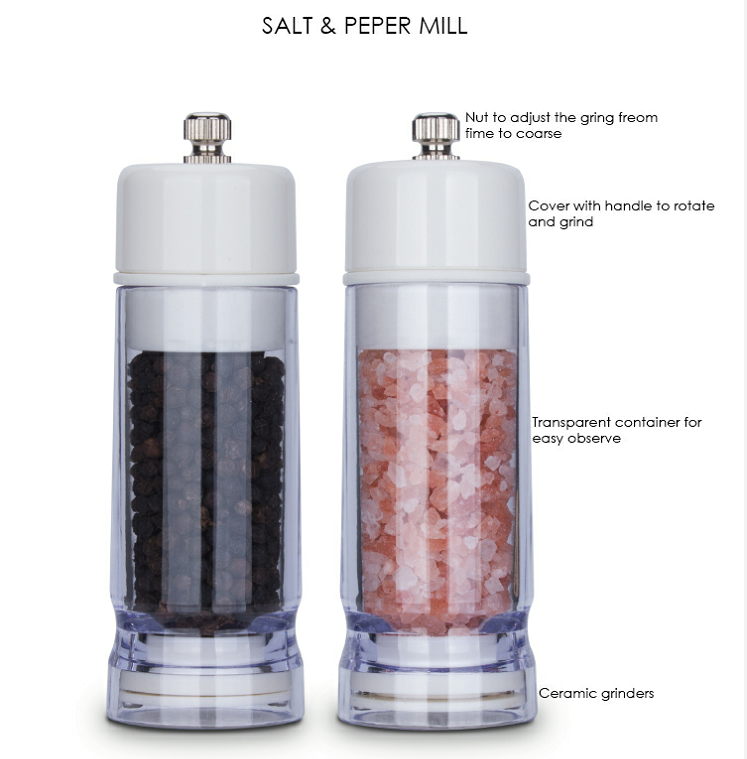
The value of customization is not only appearance. Buyers may request a specific body material, a transparent section for monitoring pepper levels, an adjustable top for grind control, or a set format that pairs pepper with salt. The best sourcing approach starts with the intended user and sales channel, then works backward to the product design.
Material Options: Wood, Metal, and Acrylic
The original choice many buyers face is material. Wood, metal, and acrylic are common options for pepper grinders, and each has sourcing implications. Wood can offer a traditional table-service look, but buyers should ask about finish consistency and care instructions. Metal can suit modern interiors or hospitality settings, but buyers should clarify surface treatment, resistance to visible wear, and cleaning guidance. Acrylic is useful when visibility matters because users can see the peppercorn level, but buyers should discuss scratch resistance and packaging protection during shipping.
Because material names alone do not confirm quality, request physical samples or production samples before placing a large order. Check whether the grinder feels balanced, whether the top or handle rotates smoothly, and whether the body finish is uniform across several units.
Mechanism and Grind Control Matter
A pepper grinder is judged by how it grinds. The source article mentions ceramic mechanisms and adjustable tops, both of which are common points to review during sourcing. Ceramic mechanisms are often selected because they are associated with corrosion resistance, but buyers should still ask the supplier what mechanism is used, what spices it is intended for, and whether salt and pepper require different configurations.
Grind adjustment is equally important. Users may want fine pepper for sauces or coarse flakes for roasts and table finishing. During sample evaluation, test several grind settings with the peppercorn size you expect end users to use. A grinder that looks attractive but slips, jams, or produces inconsistent particles can create returns or service complaints.
Comparison Checklist for Wholesale Buyers
| Decision Area | What to Check | Questions to Ask the Supplier |
|---|---|---|
| Material | Wood, metal, acrylic, or mixed construction | What finish options are available, and how should the product be cleaned? |
| Grinding mechanism | Consistency, smooth rotation, and intended spice use | Is the mechanism ceramic or another material, and is it suitable for pepper only or also salt? |
| Grind adjustment | Fine to coarse settings and stability during use | How is the grind adjusted, and does the setting hold after repeated rotation? |
| Customization | Logo engraving, color, finish, or packaging | What artwork format is needed, and what are the limits for logo size and placement? |
| Bulk order terms | MOQ, lead time, samples, and carton packing | What is the sample process, production timeline, and inspection method? |
Customization Options for Brand Programs
Custom pepper grinders can support brand identity when the decoration is practical and durable. Common requests include engraved logos, selected finishes, color matching, or retail packaging. For hospitality buyers, subtle branding may be preferred so the grinder looks appropriate on the table. For gift sets, the box, insert, and instructions may be as important as the grinder itself.
Before approving a design, consider how branding will look after normal handling. A logo placed where hands regularly grip the grinder may wear faster than one placed on a less-used surface. If the grinder has a transparent body, make sure the decoration does not block visibility of the pepper level. Ask for a pre-production sample showing the actual logo method rather than approving only a digital mockup.
Understanding Pepper Mill Manufacturing Without Guesswork
Pepper mill manufacturing may involve material selection, body forming, mechanism assembly, grind adjustment, finishing, and final packing. Some designs include transparent bodies or windows so users can monitor contents. Others use handles, knobs, or top-adjustment systems. However, buyers should not assume every factory offers every construction.
For OEM projects, prepare a clear specification sheet. Include target height, material preference, color or finish, grinder type, packaging needs, intended market, and any artwork requirements. If you need compliance documents or test reports for your sales channel, ask the supplier what is available and whether additional testing is required. Do not rely on general statements; request documents relevant to the exact product and order.
How to Evaluate Samples Before Ordering
- Inspect the exterior finish under good lighting and compare several samples for consistency.
- Fill the grinder with peppercorns and test fine, medium, and coarse settings.
- Rotate the top or handle repeatedly to check smoothness and comfort.
- Look for loose parts, rattling, leaking pepper dust, or difficult refilling.
- Review packaging protection, especially for acrylic or clear containers that may scratch.
- Confirm the sample matches the proposed production material and customization method.
Sample testing should reflect real use. A restaurant buyer may test cleaning and daily handling. A retailer may focus on shelf appearance and consumer unboxing. A distributor may check carton strength and barcode or label requirements. Keep written notes so supplier discussions remain specific.
Wholesale and OEM Questions to Ask
When sourcing wholesale pepper grinders, commercial details should be confirmed early. Ask about minimum order quantity, sample cost, lead time, payment terms, packaging options, carton dimensions, and whether mixed colors or sets are possible. If you need salt and pepper mill sets, ask whether both mills use the same mechanism or different mechanisms suited to each seasoning.
Also clarify inspection standards. Useful questions include: How is grind performance checked? Are visual defects categorized? What happens if logo placement is incorrect? Can replacement parts be supplied? These questions help prevent misunderstandings before production begins.
Practical FAQ
Can one grinder be used for both salt and pepper?
Not always. Ask the supplier whether the mechanism and internal parts are suitable for pepper, salt, or both. Salt can be more corrosive, so the intended use should be confirmed before ordering.
What grind sizes should a custom pepper grinder offer?
Many buyers look for adjustment from fine to coarse. Test the sample with real peppercorns to confirm the range is useful for sauces, table seasoning, and roasted foods.
Is acrylic better than wood or metal?
Acrylic is helpful when users want to see the fill level, while wood and metal provide different looks and handling qualities. The best choice depends on the sales channel, care expectations, and brand style.
What should be approved before mass production?
Approve the physical sample, logo placement, finish, packaging, grind performance, and written commercial terms. For OEM orders, also confirm any required documents for your market.
How can buyers avoid low-quality wholesale grinders?
Request samples, test multiple grind settings, inspect finish consistency, clarify the mechanism, and agree on inspection criteria before production. Avoid choosing only by unit price.
