




Custom Kitchen Scissors Manufacturer Sourcing Guide
Kitchen scissors are a small product with a large role in everyday food preparation. For retailers, distributors, promotional brands, and kitchenware buyers, choosing the right kitchen scissors manufacturer is not only about finding a sharp tool. It is about matching product design, usability, branding options, packaging, and repeatable supply with the expectations of your target market.
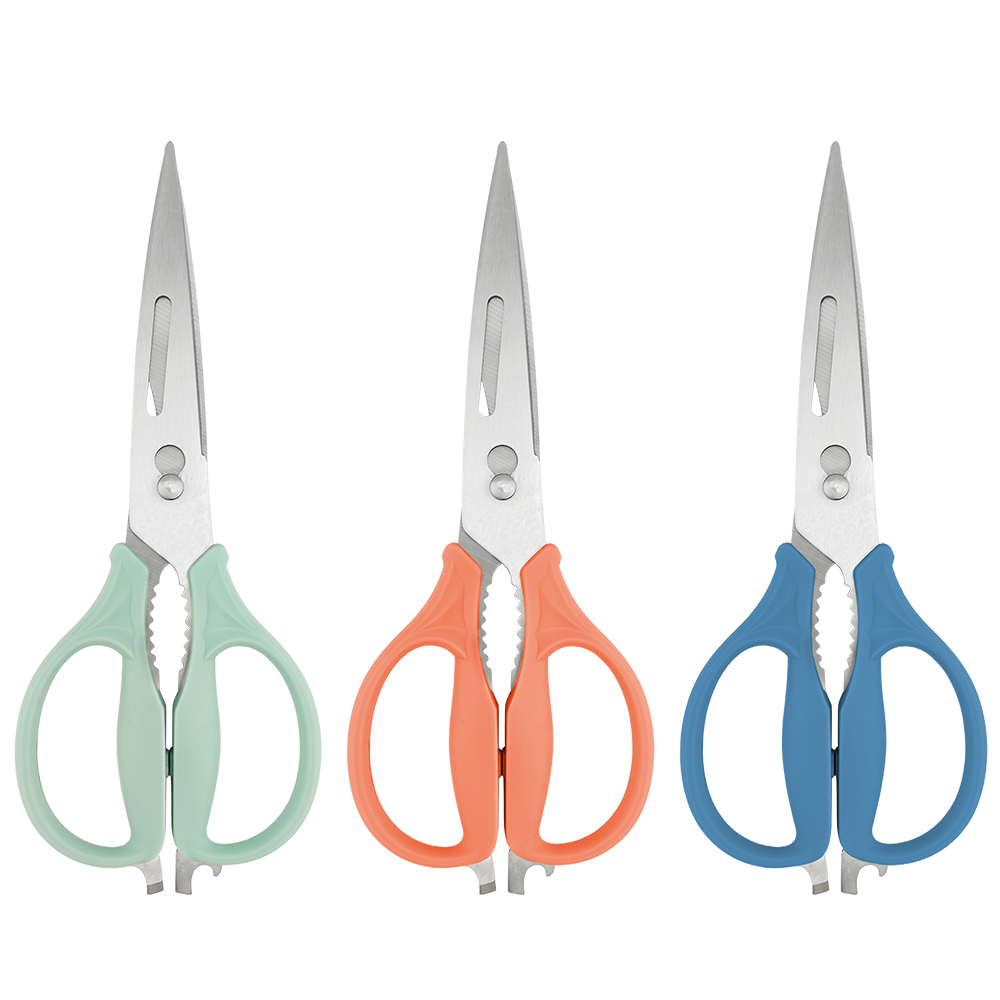
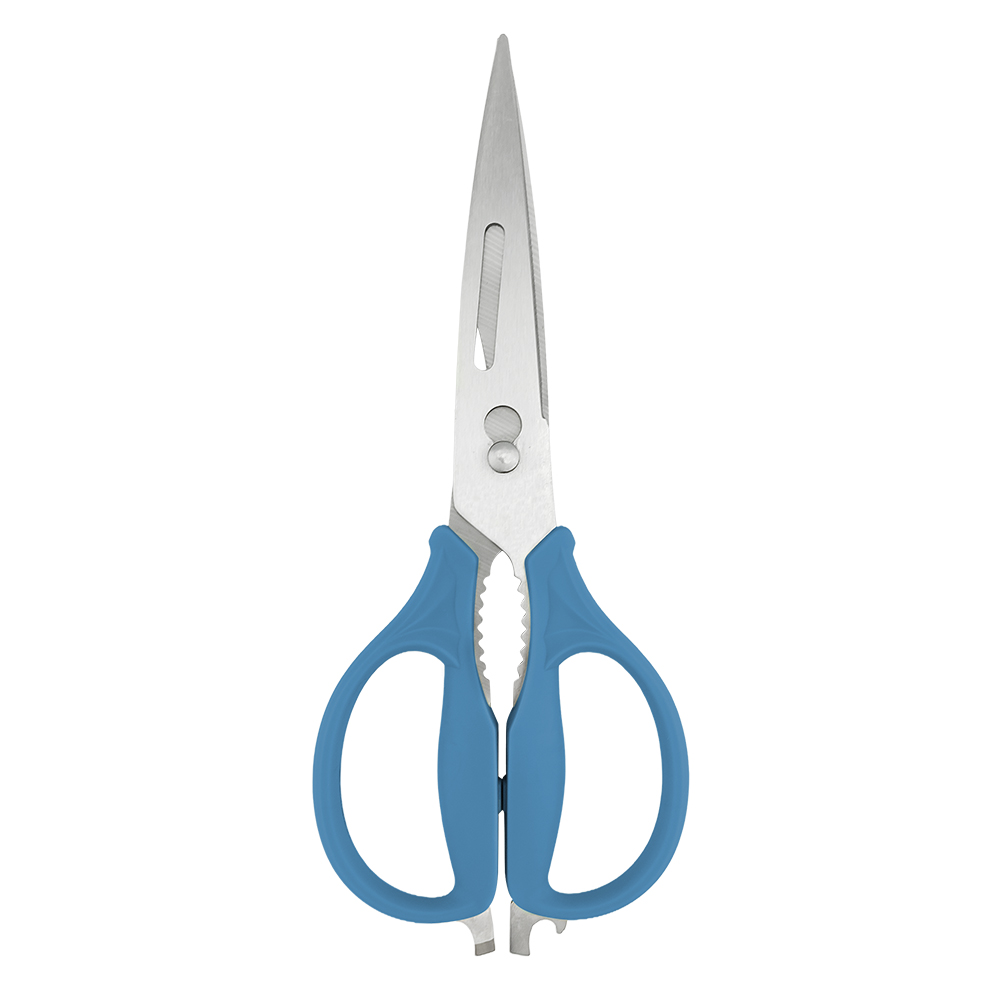
Bonet Houseware has presented kitchen scissors with practical details such as stainless steel blades, serrated edges, a built-in bottle opener, ergonomic soft-grip handles, color options including mint green, coral orange, and ocean blue, and a distinctive slit in the blade intended to reduce food adherence. These features are useful starting points for a sourcing discussion, but buyers should still confirm all commercial, technical, and compliance details before placing an OEM or wholesale order.
Key Takeaways
- Kitchen scissors sourcing should begin with the end user: home cook, gift buyer, retailer, distributor, or food-service customer.
- Confirm blade material, handle material, edge type, packaging, logo method, and quality inspection standards in writing.
- Do not rely on photos alone. Request samples and test cutting comfort, grip, cleaning, and durability under realistic use.
- For OEM kitchen scissors, ask suppliers about customization limits, artwork requirements, lead times, MOQs, and carton packing details.
What Buyers Should Expect from a Kitchen Scissors Manufacturer
A capable kitchen scissors supplier should help buyers translate market requirements into a practical product specification. That includes blade shape, handle design, color choices, packaging format, labeling needs, and the type of user the scissors are designed for. For example, a supermarket buyer may prioritize shelf-ready packaging and clear consumer instructions, while a promotional buyer may focus on logo placement and color matching.
The original product description highlights several user-facing functions: stainless steel blades for cutting performance, serrated edges for better grip on slippery foods, a built-in bottle opener, and soft ergonomic handles. These are marketable features, but each one should be clarified during sourcing. Ask what stainless steel type is used, whether the serration is on one blade or both, how the bottle opener is formed, and what handle material is used. If a supplier cannot provide consistent answers, the buyer should slow down before approving mass production.
Product Features to Review Before Ordering
Kitchen scissors are often used for quick tasks such as trimming herbs, cutting food packaging, portioning cooked meat, or preparing poultry. Because they may contact food, buyers should think beyond appearance. Comfort, hygiene, blade alignment, screw tightness, and edge retention all affect the final user experience.
- Blade performance: Check whether the scissors cut cleanly through herbs, vegetables, packaging, and cooked or raw food samples relevant to your market.
- Grip and handle comfort: Test both small and large hands. Soft handles can improve comfort, but buyers should confirm material and color stability.
- Serrated edge control: Serration can help hold slippery foods, but it should not make cutting feel rough or uneven.
- Built-in tools: A bottle opener may add value, but confirm it does not interfere with safe handling or packaging.
- Cleaning: Ask whether the scissors are designed for easy rinsing, hand washing, or other care methods. Do not assume dishwasher suitability unless the supplier confirms it.
OEM and Customization Options to Discuss
When sourcing custom kitchen scissors, the main goal is to create a product that fits your sales channel without adding unnecessary complexity. Customization can include handle colors, printed or engraved logos, packaging artwork, instruction cards, barcode labels, and assortment planning. The original article mentions OEM kitchen scissors and wholesale options, which are relevant for importers, retail chains, and private-label kitchenware brands.
Before requesting a quotation, prepare a simple specification sheet. Include target quantity, preferred colors, logo position, packaging style, destination market, and any required documentation. If your brand needs mint green, coral orange, ocean blue, or another color, ask whether the supplier can match Pantone references and whether color differences may occur between batches. For logo work, request photos or samples of the proposed method before approving production.
Comparison Checklist for Supplier Evaluation
| Evaluation Area | What to Check | Questions to Ask the Supplier |
|---|---|---|
| Blade and cutting quality | Sharpness, alignment, serration, cutting consistency | What blade material is used, and how is cutting performance inspected? |
| Handle design | Comfort, grip, color, size, finish | What handle material is used, and can colors be customized? |
| Added functions | Built-in bottle opener, blade slit, other practical details | How are these functions tested during production? |
| OEM branding | Logo method, artwork proof, private-label packaging | What files are required, and can pre-production samples be approved? |
| Wholesale supply | Carton packing, labeling, delivery schedule | What are the MOQ, lead time, payment terms, and packing details? |
| Compliance needs | Market-specific rules and documentation | Can the supplier provide documents required for your destination market? |
Quality Checks for Samples and Bulk Production
Sample approval is one of the most important steps in kitchen scissors sourcing. Buyers should not approve a design based only on catalog images. A sample lets you check hand feel, cutting motion, blade tension, finishing, and packaging accuracy. If the scissors include a slit in the blade to reduce food adherence, test it with moist herbs, cooked meat, or other foods your customers commonly prepare.
For bulk production, define inspection points before manufacturing begins. Useful checks may include blade opening and closing smoothness, handle bonding or assembly, logo placement, color consistency, packaging print accuracy, carton labeling, and random cutting tests. If you use a third-party inspection company, share the approved sample and inspection checklist with both the supplier and the inspector.
Packaging and Retail Presentation
Kitchen scissors are often sold in blister packs, hanging cards, gift boxes, or simple protective sleeves depending on the channel. Retail packaging should explain the main uses clearly without making unsupported claims. If the product has stainless steel blades, serrated edges, a built-in bottle opener, and ergonomic handles, these points can be communicated in plain language.
Wholesale buyers should also ask about inner box quantity, master carton dimensions, gross weight, barcode placement, and whether the packaging protects blade tips during transport. Good packaging reduces returns, improves shelf presentation, and helps warehouse teams identify products quickly.
Practical FAQ
What should I ask before choosing a kitchen scissors manufacturer?
Ask about blade material, handle material, customization options, sample cost, MOQ, lead time, packaging choices, inspection process, and documents needed for your destination market. Get answers in writing before placing an order.
Can kitchen scissors be customized for private-label brands?
Many suppliers offer OEM options such as handle colors, logo application, packaging artwork, and labeling. Buyers should confirm the exact customization methods, artwork requirements, and whether a pre-production sample can be approved.
Are stainless steel kitchen scissors all the same?
No. “Stainless steel” is a broad description. Buyers should ask the supplier to specify the steel type, blade thickness, heat treatment if applicable, and quality control method rather than assuming performance from the term alone.
How can I test kitchen scissors samples?
Use realistic tasks: snip herbs, cut food packaging, trim cooked meat, test the serrated edge on slippery foods, and check hand comfort during repeated use. Also inspect packaging, logo position, and blade movement.
What information is needed for a wholesale quotation?
Provide target quantity, preferred colors, packaging type, logo requirements, destination country, delivery expectations, and any required documentation. This helps the supplier quote more accurately and avoid later changes.
Final Sourcing Advice
A good kitchen scissors sourcing project balances product appeal with practical verification. Features such as colorful ergonomic handles, stainless steel blades, serrated cutting edges, a bottle opener, and a blade slit can help differentiate a product, but buyers should confirm every detail through samples, written specifications, and inspection criteria. For OEM and wholesale kitchen scissors, the best results come from clear communication before production, not from correcting problems after shipment.
