




Custom Textile Shearing Techniques for Precision
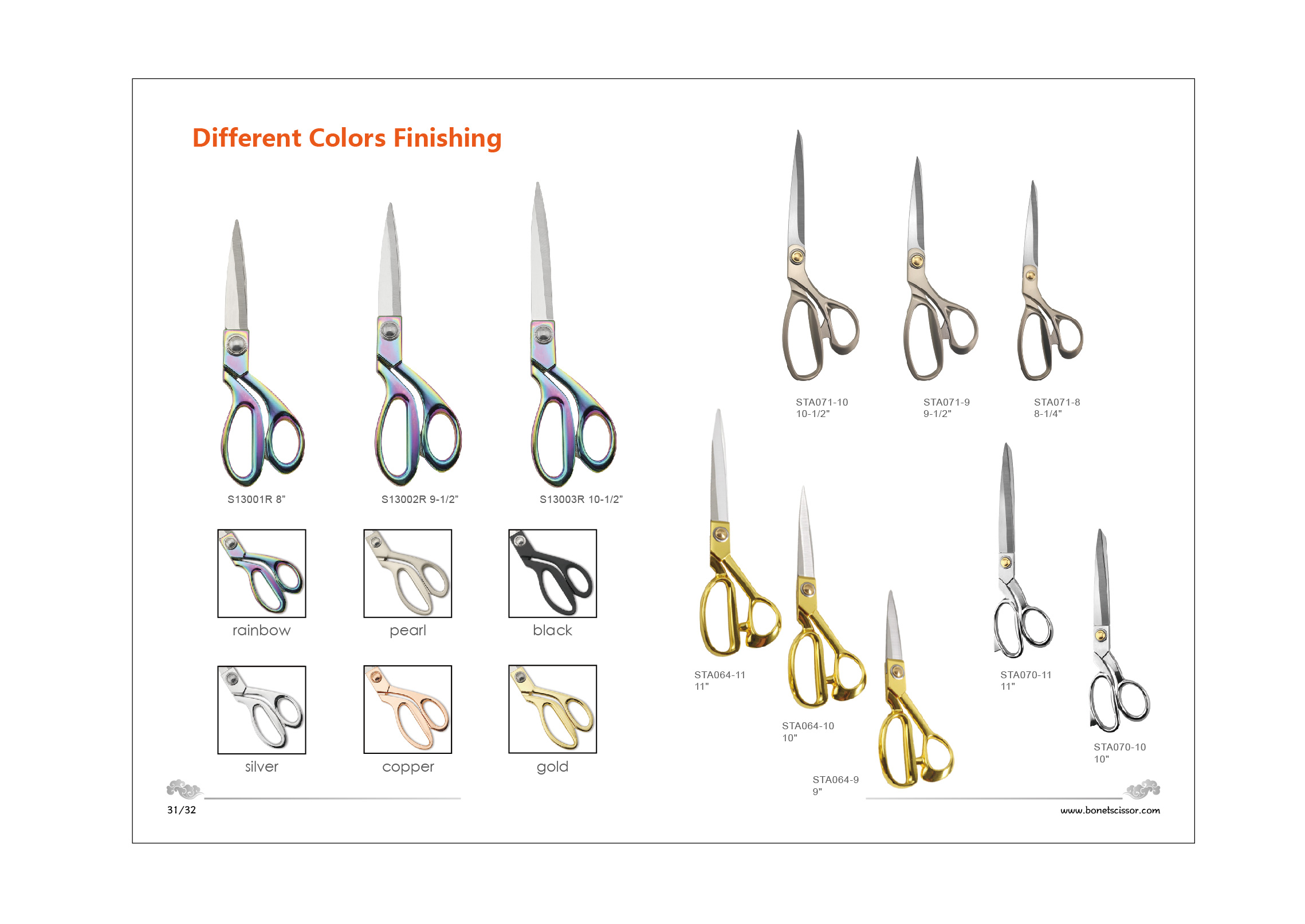
Clean textile cutting starts before the blades touch the fabric. The right tailor scissors, the correct cutting method, and consistent handling all affect edge quality, pattern accuracy, and production speed. For sewing studios, craft brands, garment workshops, and wholesale buyers, custom textile shearing is not only about choosing a sharp tool. It is about matching scissors to fabric type, work volume, hand comfort, finish preference, and repeat purchasing needs.
The original product information highlights tailor scissors available in sizes from 8-inch to 11-inch, with finish options including Rainbow enamel, Pearl, Gold, Silver, and Black. Those are useful starting points, but professional selection should go deeper. Buyers should confirm materials, blade geometry, handle construction, packaging, and quality control directly with the supplier rather than assuming specifications that are not stated.
Key Takeaways
- Precision cutting depends on blade sharpness, fabric control, and choosing the correct scissors size for the task.
- 8-inch to 11-inch tailor scissors can cover different work needs, from detailed pattern work to longer straight cuts.
- Finishes such as Rainbow enamel, Pearl, Gold, Silver, and Black may support merchandising, but performance details should be confirmed separately.
- B2B buyers should ask suppliers clear questions about materials, tolerances, samples, inspection standards, packaging, and reorder consistency.
Why Precision Matters in Textile Shearing
In garment production and fabric crafts, inaccurate cutting can create problems later in the workflow. A small deviation at the cutting stage may lead to mismatched seams, distorted pattern pieces, uneven hems, or wasted fabric. This is especially important when cutting layered fabric, slippery textiles, curves, notches, or pieces that must be repeated many times.
Precision textile shearing combines tool control and process control. The shears should open and close smoothly, the lower blade should stay stable against the cutting surface, and the user should avoid lifting the fabric excessively. Long, confident strokes usually produce cleaner straight cuts, while shorter controlled cuts are better for curves and corners. For production environments, consistency between operators can be improved by defining which scissor size is used for each fabric or task.
Matching Tailor Scissors to Fabric and Task
No single pair of scissors is ideal for every textile operation. Heavier materials often benefit from larger shears that provide longer cutting length and better leverage. Lightweight or delicate fabrics may require a more controlled hand and a blade that cuts cleanly without pushing the fabric. For small pattern details, trimming, and notches, oversized scissors may feel awkward, even if they are sharp.
When evaluating tailor scissors, consider the actual cutting work rather than only the catalog photo. Ask: Will the scissors be used for straight cutting on a table, pattern cutting, sample-room work, craft kits, workshop resale, or home sewing? Will users cut single layers, multiple layers, woven fabrics, denim, felt, lining, or synthetics? These questions help determine whether an 8-inch, 9-inch, 10-inch, or 11-inch option is most practical.
Size and Finish Comparison Checklist
| Selection Point | What to Check | Buyer Guidance |
|---|---|---|
| 8-inch scissors | Control for smaller pieces and lighter cutting tasks | Consider for sample rooms, craft use, or users who prefer compact tools. |
| 9-inch to 10-inch scissors | Balance between reach and control | Useful as a general-purpose size range; request samples for hand feel. |
| 11-inch scissors | Longer cutting strokes and leverage | Consider for larger fabric panels, but check weight and comfort for long use. |
| Rainbow enamel, Pearl, Gold, Silver, Black | Visual finish and merchandising fit | Confirm whether the finish affects care instructions, packaging, or availability. |
| OEM or wholesale order | Repeatability, labeling, packaging, and inspection | Ask the supplier what can be customized and what details require confirmation. |
Practical Cutting Techniques for Cleaner Results
Good textile shearing technique reduces fraying, uneven edges, and hand fatigue. Keep the fabric flat on the table and let the lower blade glide along the surface. Avoid closing the scissors completely at the end of every stroke when cutting long straight lines, because the tip can leave small jagged marks. Instead, use smooth overlapping cuts.
- Prepare the fabric by smoothing wrinkles and aligning the grain where relevant.
- Use pattern weights or pins to prevent shifting before the first cut.
- Keep the wrist relaxed and the scissors aligned with the cutting line.
- Use long strokes for straight edges and shorter strokes for curves.
- Reserve fabric scissors for textiles only; paper and hard materials can dull the edge.
For production teams, simple standard operating instructions can help. Define where scissors are stored, who checks sharpness, when tools are replaced or serviced, and which scissors are assigned to specific materials. This is more reliable than expecting every user to make the same judgment during a busy shift.
B2B Sourcing Questions to Ask a Supplier
For wholesalers, brands, and purchasing managers, the sourcing process should verify both product suitability and commercial consistency. The original article refers to tailor scissors and available sizes and finishes, but it does not state material grade, testing results, certifications, minimum order quantity, production capacity, or pricing. Those details should be requested directly before placing a bulk order.
- What blade material and handle material are used, and can the supplier provide written specifications?
- Which sizes are currently available from 8-inch to 11-inch, and are dimensions consistent across batches?
- Are Rainbow enamel, Pearl, Gold, Silver, and Black finishes all available for the same models?
- Can samples be provided before a wholesale or OEM order?
- What packaging options are available for retail, workshop, or bulk distribution?
- What inspection process is used for sharpness, alignment, surface finish, and opening/closing smoothness?
- What information is needed for logo, color, or packaging customization, if offered?
- How are lead time, payment terms, shipping terms, and after-sales handling confirmed?
Clear questions protect both sides. They also make supplier comparisons easier because each quote can be evaluated against the same requirements rather than only on appearance or unit price.
Use and Care for Longer Service Life
Even well-selected shears perform poorly if they are misused. Textile scissors should be kept clean and dry, especially after cutting fabrics that shed lint or contain finishes. Wipe the blades after use, store them closed, and protect the tips during transport. If the pivot becomes stiff or loose, follow the supplier’s care guidance rather than forcing adjustment without instructions.
In shared workplaces, labeling scissors by use can prevent accidental damage. A pair intended for fabric should not be used for cardboard, plastic ties, wire, or adhesive materials. If cutting performance declines, check whether the issue is dullness, blade misalignment, residue, or inappropriate fabric thickness. For wholesale buyers, care instructions are also part of the customer experience, so ask whether the supplier can provide usage guidance suitable for packaging or inserts.
FAQ
What size tailor scissors should I choose first?
For general fabric work, many buyers evaluate a mid-size option such as 9-inch or 10-inch, then add 8-inch or 11-inch models for more specialized cutting. The best choice depends on fabric type, user comfort, and cutting style.
Are decorative finishes related to cutting performance?
Not necessarily. Finishes such as Rainbow enamel, Pearl, Gold, Silver, and Black may affect appearance and product positioning, but blade material, sharpening, alignment, and construction should be confirmed separately.
What should I check in a sample before bulk ordering?
Check smooth opening and closing, blade alignment, edge cleanliness on target fabrics, handle comfort, finish consistency, packaging quality, and whether the delivered sample matches the quoted specification.
Can one pair of scissors cut all fabrics?
One pair may handle many common textiles, but heavier, slippery, delicate, or layered fabrics often require different handling or sizes. A small product range usually serves users better than a single universal option.
What details should OEM buyers confirm?
Confirm available customization, artwork requirements, sample approval process, packaging, inspection criteria, lead time, order quantity, and whether any claims on labels or listings need supporting documentation.
