




Quick answer: The most reliable approach to cutting board wholesale China sourcing is to approve a clearly specified board, calculate the landed cost of the complete retail-ready unit, verify material and packaging claims, and establish a repeat-order plan before scaling volume. For importers and private-label brands, the cheapest quoted board is not necessarily the most profitable: dimensional consistency, packaging damage, slow-moving variants, and replenishment delays can change the economics of an entire range.

Who Is Cutting Board Wholesale China Sourcing Best For?
A bulk cutting-board program makes sense when a business sells repeatable SKUs to a defined channel and can manage supplier approval, import responsibilities, and inventory. The strongest potential buyers include supermarket and homeware chains, kitchenware wholesalers, distributors, private-label brands, hospitality procurement teams, giftware companies, and e-commerce retailers. They may have different goals, but all need consistency between the sample shown to a customer and the product delivered months later.
Supermarket and homeware buyers usually need shelf-friendly dimensions, reliable barcodes, reasonable unit economics, and a plan for replenishing best sellers. A plain everyday board can be more valuable than a decorative design if it sells consistently and occupies less stockroom space.
Private-label brands need predictable colors, logo placement, packaging artwork, care instructions, and an approval process that prevents silent material substitutions. They should also determine who owns tooling, approved artwork, and technical files before funding customization.
E-commerce and marketplace sellers face shipping-weight and dimensional charges, handling damage, customer complaints, and return costs. For them, a small difference in unit packing can matter as much as a difference in the factory quotation.
Hospitality and food-service purchasers often focus on practical handling, appropriate cleaning procedures, surface durability, and clear product-use limits. They should not assume that a household board automatically meets requirements for heavy-duty commercial environments.
This buying approach is less suitable for someone purchasing a single household board or seeking a specialty commercial product without first confirming the supplier's exact product capabilities. An industrial butcher-block requirement, for example, should not be substituted with a lightweight consumer board simply because both are called cutting boards.
The Three Numbers That Matter More Than the Quoted Unit Price
For cutting board wholesale China orders, an effective wholesale decision begins with three numbers: landed cost per saleable unit, contribution margin, and inventory exposure . Those figures connect sourcing with retail performance and make quotations comparable.
1. Landed cost per saleable unit
Factory price excludes several expenses. Depending on the agreed trade term and route, buyers may also pay for branding, individual packing, master cartons, inland freight, international transport, cargo insurance, import duties, customs brokerage, sampling, laboratory testing, inspection, and final delivery. Not every cost applies to every order, and the same cost must not be counted twice.
A practical internal formula is:
Landed cost per saleable board = (product + packaging + allocated setup + freight + insurance + duties + brokerage + inspection + other attributable expenses) / expected saleable units.
Use the estimated number of saleable units rather than the original order quantity when damage or rejected units are expected. For accurate accounting, confirm which costs are already included in a supplier's quoted Incoterms rule and which remain with the importer.
2. Contribution margin after channel-specific costs
Retail price minus the purchase cost is not a meaningful final margin. Add marketplace fees, store promotions, warehousing, payment fees, domestic fulfillment, and an allowance for returns. A board that looks inexpensive at the factory may deliver poor contribution if packaging raises parcel charges or the SKU needs repeated discounting.
3. Inventory exposure and reorder cycle
Low purchase prices encourage larger orders, but excess stock ties up cash. Estimate average weekly demand, expected total replenishment time, minimum economically viable order quantity, and safety stock. Before adding extra colors, ask whether they will create real incremental sales or merely split demand among several slow-moving variants.
Start With a Verified BONET PP Cutting Board Reference
BONET's public Chopping Board product category identifies a PP Plastic Cutting Board for Kitchen Prep & Serving . The published reference measures 24.8 × 14.8 × 0.8 cm . It is positioned for everyday household food preparation and appropriate serving uses, rather than as a documented professional butchery board.
This makes it a practical starting point for a compact household kitchenware range. But a listed product is not the same as an approved purchase specification. The public information does not establish an independently verified food-contact certificate, standard MOQ, fixed lead time, approved custom color range, pack quantity, or current unit price. Those details require a project quotation and documentary confirmation.
| Specification field | Publicly listed BONET reference | What a buyer should confirm before ordering |
|---|---|---|
| Product | PP Plastic Cutting Board for Kitchen Prep & Serving | Exact approved product revision / SKU identifier |
| Main material | PP (polypropylene) | Resin grade, colorants, other food-contact components and supporting documents |
| Overall dimensions | 24.8 × 14.8 × 0.8 cm | Measurement method, tolerances and sample-to-batch consistency |
| Intended positioning | Household kitchen preparation; suitable serving applications | Intended food types, contact conditions, cleaning/care instructions |
| Net weight | Not publicly confirmed | Target and acceptable tolerance |
| Colors and surface texture | Not publicly confirmed for this reference | Available production options and sample approval |
| Individual packaging / carton | To be quoted | Material, artwork, protection, pieces per carton and carton dimensions |
| MOQ, price and delivery | To be quoted | Quantity breaks, trade term, sample date and production schedule |
| Test documentation | To be verified | Relevant evidence for the destination market and exact formulation |
For buyers, this transparency is useful. You can ask for a quote against a real published baseline while ensuring that every proposed improvement—larger working area, another color, anti-slip feature, hang-hole placement, or custom packaging—is recorded as a request for feasibility confirmation , not automatically treated as an existing BONET stock model.
Choose the Material Around the Channel, Not the Trend
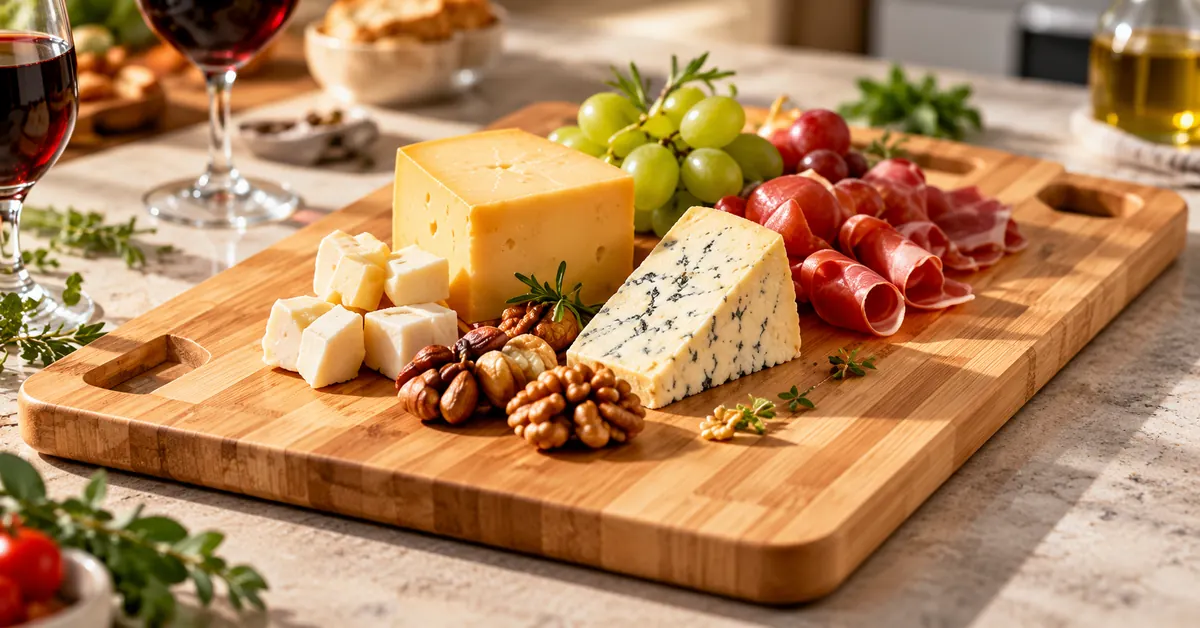
Plastic, bamboo, hardwood, and composite boards are often grouped under the same wholesale keyword. Yet their consumer positioning and technical risks are different. Material selection should follow the intended use, expected price point, care instructions, and claims the importer can substantiate.
| Material direction | Typical commercial appeal | Buyer evaluation focus | BONET availability status |
|---|---|---|---|
| PP plastic | Compact everyday prep, practical retail entry price | Formulation, flatness, finish, wash-care limits, labeling | An actual PP board reference is publicly listed |
| HDPE plastic | General prep and some larger work-surface formats | Grade, thickness, stability, cleaning instructions, intended workload | Confirm specific board availability and specification |
| Bamboo | Natural appearance, gift and serving positioning | Construction, adhesives, finish, moisture behavior, care label | OEM page lists bamboo as a supported material category; board models require confirmation |
| Solid or laminated wood | Presentation, gift sets, specialty kitchen ranges | Species, joint/adhesive, finish, flatness, packaging | Confirm specific board development and production capability |
| Composite / mixed-material | Differentiated design or special use | Full component list, coatings, compatibility, evidence | Project-specific feasibility check required |
There is no universal winner. For a price-sensitive homeware chain, a consistently molded and properly documented PP board might be the most sensible anchor SKU. A lifestyle brand may place greater value on the appearance of wood or bamboo. A food-service distributor may need a different thickness, working area, or sanitation program entirely.
Do not assume that natural-looking materials are automatically antimicrobial or that all PP boards are dishwasher safe. Such statements depend on the final product, its formulation, design, instructions, and supporting evidence. Likewise, if an assortment combines different materials, verify each SKU separately rather than applying a single certificate or care label to the entire collection.
Build a Small Wholesale Assortment With Clear SKU Roles
One of the biggest merchandising mistakes in cutting board wholesale China sourcing is launching too many similar SKUs before demand is known. A first order should make it easy to learn which board, package, and price point customers actually prefer.
A useful assortment architecture has three roles. The anchor SKU is the everyday item that can drive steady sales. The attachment SKU complements another product, such as a kitchen-knife or utensil set. The differentiated SKU provides a visible feature that justifies a higher price or gift positioning. The third role may not be necessary at launch.
Consider the following as planning formats , not a list of confirmed BONET production models:
| Proposed commercial format | Basis | Channel role | Approval questions |
|---|---|---|---|
| Standard compact PP board | Published 24.8 × 14.8 × 0.8 cm BONET reference | Entry or anchor SKU | Final specs, care label, carton pack and price |
| Private-label PP board | Customized version of a feasible reference | Branded retail line | Logo method, color, artwork, setup cost and MOQ |
| Board + kitchen tool bundle | Buyer-defined assortment concept | Cross-sell or promotion | Component sourcing, combined packaging, individual claims and carton design |
| Larger board format | New requested design, not verified catalog stock | Potential family-use upgrade | Tooling, mold economics, sample approval and capacity |
Keep the first assortment deliberately narrow. One neutral color and one packaging format are easier to validate than six colors and four printed boxes. If multiple boards differ only in surface color, use sales data to justify the additional variants rather than assuming a broader choice automatically leads to higher revenue.
When evaluating merchandising, also account for shelf footprint, number of facings, product photography, carton density, label readability, and the possibility of pairing the board with BONET kitchen knives or kitchen utensils . Bundling should remain subject to component suitability, exact packing approval, and agreed pricing.
OEM, ODM and Private Label: What Actually Changes?
BONET's public OEM/ODM services cover kitchen tools, cutting boards, scissors, knives, and related housewares. The company describes sample- or drawing-based OEM support, ODM development, material and color customization, logo application, packaging design, and coordination through production and inspection. The practical scope of any cutting-board project still depends on feasibility and the final agreement.
For an existing board, private label may mean adding a brand identity through a sleeve, label, carton, or approved marking method while retaining the original product structure. This is often simpler to manage than changing dimensions or the mold, although minimum order quantities and setup charges must be confirmed.
OEM production begins with a buyer-controlled sample, drawing, component specification, or detailed requirement. For a board, that file may define thickness, profile, edge radius, texture, color, logo location, label content, and individual packaging. Every measurable requirement should have an approved revision and acceptance method.
ODM development is more appropriate when the buyer wants a new structural design or needs the supplier to help evaluate options. A novel hanging feature, integrated anti-slip component, or materially different profile may require design review, tooling evaluation, development samples, and a longer project schedule. Do not market a feature as available until the supplier confirms the structure and the final sample passes review.
Before approving any customization, ask four commercial questions: What can be changed without new tooling? Which costs are one-time and which recur per unit? Who owns the design and artwork files? How will the supplier identify the approved production revision on a repeat order?
Packaging Is Part of the Product Economics
In cutting board wholesale China programs, a board may survive normal use but arrive scratched, bowed, mislabeled, or poorly presented if the packaging was not specified properly. That is a commercial issue for supermarkets and a potentially expensive fulfillment issue for online sellers.
For retail shelves , the packaging should communicate the exact material, intended use, product dimensions, care instructions, brand, barcode, and any substantiated claims. The buyer should determine whether an individual sleeve, hang tag, belly band, color box, or another format is appropriate. Barcode position and packaging orientation deserve a physical mockup rather than only a graphic proof.
For e-commerce , ask for a packed sample and check the complete shipping configuration. Inspect corner protection, abrasion between units, outer-carton strength, labeling, and how the product fits the intended fulfillment pathway. A package that is visually attractive in a showroom can still be costly or fragile in parcel distribution.
For bulk distribution , the key information is pieces per inner pack and master carton, carton gross weight, carton dimensions, palletization plan if used, and the method of preventing movement in transit. Actual carton density and maximum handling weight should be confirmed with the supplier and freight provider; do not assume the highest possible count is automatically the lowest-cost solution.
Ask that the packaging file identify product revision, language version, destination market, barcode allocation, care claims, carton markings, and approval date. This is particularly important when a retailer sells the same board under several private labels or in different countries.
Cutting Board Quality Control: From Golden Sample to Shipment
For cutting board wholesale China sourcing, a quality-control plan should connect buyer expectations to measurable inspection points. Verbal assurances such as “premium quality” are not acceptance criteria. A production-ready specification should describe what the inspector will measure and what constitutes a rejection.
Inspect function and workmanship
Check dimensions, thickness, flatness, stability on a representative work surface, surface texture, edge finish, discoloration, flash, cracks, and any molded or fitted components. Where practical, test the board after the cleaning routine that will appear in its approved care instructions. A board should be evaluated as a usable kitchen tool, not merely as a visually acceptable flat item.
Inspect packaging and traceability
Check printed product description, material, barcode readability, batch or traceability identification when applicable, care instructions, quantity per pack, correct language version, and outer-carton protection. If multiple colors or brand versions exist, maintain separate sample and artwork approvals for each one.
Use a written inspection plan
Agree on inspection timing, sampling approach, defect categories, acceptance criteria, and remedies. Third-party inspection may be appropriate, but a supplier should not be described as independently audited simply because inspection support is advertised. Where an acceptance quality limit (AQL) sampling scheme is selected, document the applicable standard, inspection level, defect definitions, and negotiated acceptance numbers rather than quoting AQL without context.
| Control stage | Practical evidence | Release decision |
|---|---|---|
| Pre-production | Approved reference sample, dimension drawing, material and packaging files | May production use this exact revision? |
| Early production | First-off samples, appearance photos, essential measurement records | Are initial units consistent with approval? |
| In-process review | Agreed dimensional and functional checks, change log | Is there any unapproved material or process change? |
| Pre-shipment inspection | Lot-based inspection report, carton and label checks | Does the shipment meet the agreed acceptance rules? |
| Post-delivery review | Complaints, returns, defects, feedback from retailers | What should be revised before reordering? |
BONET's published collaboration process includes quality inspection and packaging and delivery . It does not publicly establish specific inspection sample sizes or a universal defect threshold for the cutting-board reference. Those values belong in the buyer's purchase specifications and should be confirmed for the actual order.
Food-Contact Requirements: Ask for Evidence, Not Generic Badges
A cutting board is intended to contact food, so market-relevant material documentation can be a decisive factor in procurement. The question is not simply whether a supplier says a board is “food grade”; it is whether the finished article and its actual materials can be supported for the intended market and conditions of use.
For the European Union , the European Commission identifies Regulation (EC) No 1935/2004 as the general framework for food-contact materials and Commission Regulation (EU) No 10/2011 as the specific plastics regulation, with applicable amendments and associated requirements. Depending on the project, buyers should address declarations, intended use, migration compliance, and documentation appropriate to the finished plastic article. These regulations are referenced here to inform buyer due diligence; they are not a claim that BONET's listed board has been tested or certified .
For the United States , food-contact suitability should be reviewed against the applicable FDA framework for the specific substance and use conditions. For certain polypropylene materials, 21 CFR §177.1520 is among the potentially relevant provisions, but naming that regulation does not confirm that every PP grade, additive, colorant, or finished product qualifies. Ask for material traceability and supporting documentation relevant to the intended use.
For all markets, verify the legitimacy and scope of test reports: identify the tested product or formulation, the issuing laboratory, the test conditions, date, and any limitations. Check that claims about dishwasher compatibility, heat tolerance, antibacterial performance, or recyclability have product-specific support and appropriate consumer wording. Do not copy a competitor's claim or presume that a raw-material statement applies automatically to the entire finished board.
For buyers supplying restaurants or institutional kitchens, cleaning procedures and cross-contamination controls also belong in the product evaluation. A consumer household board must not be presented as suitable for every professional sanitation regime without appropriate evidence.
How to Compare China Wholesale Quotes on a Like-for-Like Basis
For cutting board wholesale China projects, once materials and requirements are defined, request quotations that use the same product specification, packaging revision, quantity, trade term, currency, and destination assumptions . An apparent price advantage disappears quickly if one supplier included retail packaging while another priced unbranded bulk units.
Request itemized or clearly allocated information for product cost, tooling or setup, logo method, artwork, unit packaging, master cartons, inspection, sampling, testing, quantity breaks, Incoterms rule and named location, production lead time, and quote validity. Use the International Chamber of Commerce's Incoterms 2020 terms correctly; they allocate delivery-related costs and risks, but do not by themselves determine payment terms or product quality.
Illustrative landed-cost comparison (not a BONET quote)
The following figures are a fictional arithmetic example in USD per board, designed only to show why a higher product price can produce a lower estimated landed cost. They are not current market prices, BONET quotations, or freight estimates.
| Cost element (USD / ordered unit) | Quote A: lowest product price | Quote B: better packing configuration |
|---|---|---|
| Board price | 1.10 | 1.20 |
| Approved unit packaging | 0.15 | 0.10 |
| Allocated freight and handling | 0.22 | 0.18 |
| Allocated duty, clearance and inspection | 0.08 | 0.07 |
| Expected loss / damage allowance | 0.10 | 0.03 |
| Illustrative total | 1.65 | 1.58 |
Despite its higher starting price, Quote B has an estimated $0.07 lower all-in cost per unit under the illustration's assumptions. Real buyers should verify whether an expected loss allowance is already built into saleable-unit yield to avoid double counting. They must also use their actual tariff classification, destination, shipping mode, and commercial terms rather than adopting the example amounts.
A procurement manager can add one more layer: estimated channel contribution after marketplace fees, retail discounts, and fulfillment. This turns the conversation from “Which quote is cheapest?” into “Which approved SKU produces the most reliable contribution after all foreseeable costs?”
Launch a Pilot That Answers Commercial Questions
A cutting board wholesale China pilot order is not simply a small production batch. It is a controlled test of a product specification, packaging format, inspection process, sales proposition, and replenishment assumptions. The ideal pilot scope should generate evidence without creating so many variants that results become impossible to interpret.
Before the pilot , document the target channel, approved board, expected selling price, forecast quantity, packaging design, customer-use claims, inspection criteria, and what would trigger a repeat order. Agree with the supplier whether the pilot uses standard production, a trial batch, or another arrangement; do not assume a particular minimum order size is available.
During the pilot , record actual delivered quantities, defects, landed cost, packaging damage, returns, conversion or sell-through, and customer comments. Group negative feedback by root cause: product design, care misunderstanding, freight protection, listing accuracy, or product damage. These categories point to different corrective actions.
After the pilot , make a deliberate decision: reorder unchanged, revise packaging only, modify the product specification, change the target channel, or stop the SKU. A written decision log protects future orders because it explains which version succeeded and what must not change without approval.
A practical retail scorecard might include first-month sell-through, gross contribution per saleable unit, return reasons, defect rate, carton damage, consumer questions about cleaning, and time needed to replenish. These metrics should be tracked in the buyer's own system rather than presented as performance data achieved by BONET.
Reorder Planning: Protect the Best Seller Without Overbuying
The commercial advantage of cutting board wholesale China sourcing becomes clear after the first successful order. At that point, consistency and available stock can matter more than an additional discount on a much larger shipment.
A basic reorder-point framework is:
Reorder point = average weekly demand × total replenishment lead time in weeks + safety stock.
For example, if a hypothetical retailer sells 80 boards per week , the end-to-end replenishment cycle is 10 weeks , and the business has chosen 240 boards as safety stock, the illustrative reorder point is 1,040 boards . This is an inventory-planning example, not BONET's production lead time or a forecast for its product. Buyers should include order approval, manufacturing, transportation, customs, and delivery in the actual cycle.
Reorder timing should also account for promotional events, minimum economic order sizes, seasonality, and warehouse constraints. If a larger order reduces unit price but creates twenty extra weeks of stock, the buyer should compare the savings with cash tied up and the possibility that packaging or consumer preferences change.
Before authorizing the repeat purchase order, ask the supplier to confirm that the approved resin/material specification, board dimensions, color, surface treatment, packaging artwork, carton packing, and inspection requirements remain unchanged. Require notification and approval for substitutions or tooling changes. Version-controlled replenishment is often what separates a one-off import from a sustainable wholesale category.
Manufacturing and Supplier Handoffs: A Six-Stage Approval Route
BONET's public OEM and ODM collaboration process provides a useful structure for reducing misunderstandings. It describes requirement communication, design and sampling, quotation and confirmation, mass production, quality inspection, and packaging and delivery. For a cutting-board order, buyers should translate each stage into an explicit output.
- Requirement communication. Send destination market, channel, intended user, material preference, reference product, dimensions, preliminary quantity, packaging brief, and testing needs. Identify which claims must appear on retail packaging.
- Design and sampling. Review the actual board, measurements, edge and surface finish, color, logo execution if relevant, packed sample, and care label. Keep a signed or otherwise formally approved reference version.
- Quotation and confirmation. Approve the final specification, per-unit and one-time charges, MOQ, quality expectations, trade terms, production and shipping schedule, and responsibilities for documentation.
- Mass production. Confirm whether the released product matches the approved reference. Agree on the process for reporting significant specification, material, tooling, or packing changes.
- Quality inspection. Use the documented plan to check dimensions, appearance, pack contents, labels, carton markings, and any required functional points before shipment.
- Packaging and delivery. Review carton quantities, shipping marks, packing lists, delivery arrangements, and any agreed inspection or documentation records for the shipment.
A stage should be considered complete when the required information and approvals exist—not merely when someone sends a message saying “confirmed.” This is especially valuable for importer teams involving design, regulatory, purchasing, marketing, and logistics specialists in different time zones.
A Buyer-Ready RFQ Template for Bulk Cutting Boards
For cutting board wholesale China transactions, a precise request for quotation helps the manufacturer respond with useful commercial information and helps your team compare quotations fairly. Instead of asking only for a price, send the following details in one concise RFQ:
Product: Cutting board / chopping board. Reference: BONET PP Plastic Cutting Board for Kitchen Prep & Serving, listed at 24.8 × 14.8 × 0.8 cm, or provide your own drawing. Destination market: Country or region. Sales channel: Retail, distributor, e-commerce, hospitality, gift or other. Estimated quantities: Trial quantity and expected reorder range, without presuming an approved MOQ. Material and design: PP reference or requested alternative, color, thickness, surface texture, handle/feet details if required. Branding: Logo method, artwork file, language, barcode. Packaging: Unit pack, inner/master carton expectations and distribution conditions. Compliance: Applicable market documentation and intended use conditions. Commercial terms: Quote currency, Incoterms rule and named location, payment discussion, sample/production dates and delivery window. Quality: Approved sample, testing, inspection and version-control requirements.
Ask the supplier to distinguish available standard options , custom options requiring feasibility review , and requirements not currently supported . That simple classification reduces sales misunderstandings and makes follow-up conversations more efficient.
For an initial inquiry, visit BONET's cutting board category to identify the baseline and use the contact form to request a project-specific quotation. If the program includes broader kitchenware, review the complete product catalog and clarify which items will be quoted together.
Five Wholesale Buying Mistakes That Create Avoidable Cost
Mistake 1: Buying the lowest quoted unit price. If suppliers are quoting different thicknesses, materials, carton packs, trade terms, or testing scopes, the prices are not directly comparable. Standardize the specification before comparing commercial offers.
Mistake 2: Describing a requested variant as an existing model. A larger board, an anti-slip feature, a specialty surface, or a branded package may require a feasibility review. Keep proposed configurations separate from published products and make no production commitment before approval.
Mistake 3: Printing claims before evidence arrives. Terms such as food-safe, dishwasher safe, recycled, antimicrobial, sustainable, or certified can create regulatory and customer-service problems if their scope is unclear. Approve the claims with appropriate supporting documentation and the relevant market team.
Mistake 4: Treating packaging as an afterthought. Wrong barcodes, abrasion, poor carton configuration, and unclear care instructions can lead to chargebacks, returns, or expensive repacking. Approve a physical packed sample where practical, not just artwork on a screen.
Mistake 5: Failing to control the second order. A repeat purchase order should include the same approved technical and packaging revisions. Otherwise, apparent improvements or material substitutions can unintentionally change performance, customer expectations, or product claims.
Frequently Asked Questions About Cutting Board Wholesale China
1. What should I check first when sourcing cutting boards wholesale from China?
Start with the material, dimensions, intended use, approved reference sample, destination market, and packaging requirements. Then request an itemized quote that identifies MOQ, trade terms, documentation, inspection expectations, and delivery assumptions. Comparing prices before these details are aligned creates misleading results.
2. Does BONET offer an actual PP cutting board?
Yes. BONET's public chopping-board category lists a PP Plastic Cutting Board for Kitchen Prep & Serving with published dimensions of 24.8 × 14.8 × 0.8 cm. Product revisions, available colors, packaging formats, price, MOQ and current availability should be confirmed directly before placing an order.
3. Are bamboo or wooden cutting boards available from BONET?
BONET's OEM/ODM page identifies wood and bamboo among its supported material categories, but that statement alone does not verify a specific bamboo or wooden cutting-board model ready for immediate wholesale supply. Ask for the current catalog, material construction, photos, samples, and a project-specific quotation.
4. Can I add my logo or private-label packaging?
The company's OEM/ODM service describes logo printing or laser engraving, branding support, and retail packaging customization for kitchenware. Availability of a particular marking method on a PP board must be verified because material, shape, finish, tooling and location can limit the technique. Request a branded sample and artwork approval before production.
5. What is the minimum order quantity for wholesale cutting boards?
There is no reliable universal MOQ stated for every BONET cutting-board configuration in the public information reviewed. MOQ may depend on whether the order uses an existing item, a custom color, new tooling, or printed packaging. Submit the proposed quantity and request an explicit minimum for the approved version.
6. How should I compare PP and HDPE cutting boards for retail?
Compare actual grade, thickness, flatness, surface feel, wear behavior, intended cleaning conditions, unit weight, packaging, and total cost. PP and HDPE are material families, not quality guarantees. Choose the material and finished construction that fit the shopper's use and support the exact claims you plan to make.
7. What food-contact documentation should an importer request?
Request evidence relevant to the country of sale, exact product composition, intended food-contact conditions, and applicable regulations. For EU plastic food-contact articles, this may involve documentation connected with Regulation (EC) No 1935/2004 and Regulation (EU) No 10/2011, as amended. For the US, assess the applicable FDA provisions for the actual formulation and intended use. Do not infer product compliance from the mere mention of a regulation.
8. What packaging works best for supermarket versus e-commerce orders?
Supermarket packaging prioritizes clear shelf information, branding, barcode placement, and handling within the retailer's display system. E-commerce packaging must also withstand distribution and fit the relevant fulfillment economics. Request physical pack samples, carton data, and freight cost comparisons before selecting a design.
9. How can I reduce variation between the first shipment and repeat orders?
Retain a formally approved sample, dimensioned specification, material and color description, artwork files, inspection criteria, and packing instructions. Put revision identifiers on purchase documents and require notification before substitutions. Review customer complaints and defect data before approving the next purchase order.
10. How do I request a cutting-board wholesale quotation from BONET?
Send the intended board or reference size, destination country, expected order quantity, sales channel, custom features, logo, packaging, and documentation requirements through BONET's contact page . Ask for standard versus custom options, sample arrangements, MOQ, lead time, price breakdown, trade terms, and quality documentation so you can evaluate the full sourcing program.
Conclusion
Successful cutting board wholesale China purchasing is not simply a search for the cheapest plastic or wooden board. It is a structured decision about product fit, verified specifications, landed cost, channel economics, packaging, quality assurance, and reliable replenishment. A focused range built around a real, approved product is easier to price, market, inspect, and reorder than a broad assortment based on assumptions.
BONET HOUSEWARE provides a publicly listed compact PP cutting board and describes OEM/ODM support for kitchenware, customization, sampling, inspection, packaging, and delivery. Overseas importers, distributors, retail brands, and sourcing teams can use these capabilities as a starting point, then confirm the exact technical and commercial terms for their project. Explore BONET cutting board products , review its OEM/ODM services , and contact BONET for a tailored wholesale quotation with your requirements, quantity, destination market, and packaging brief.
