




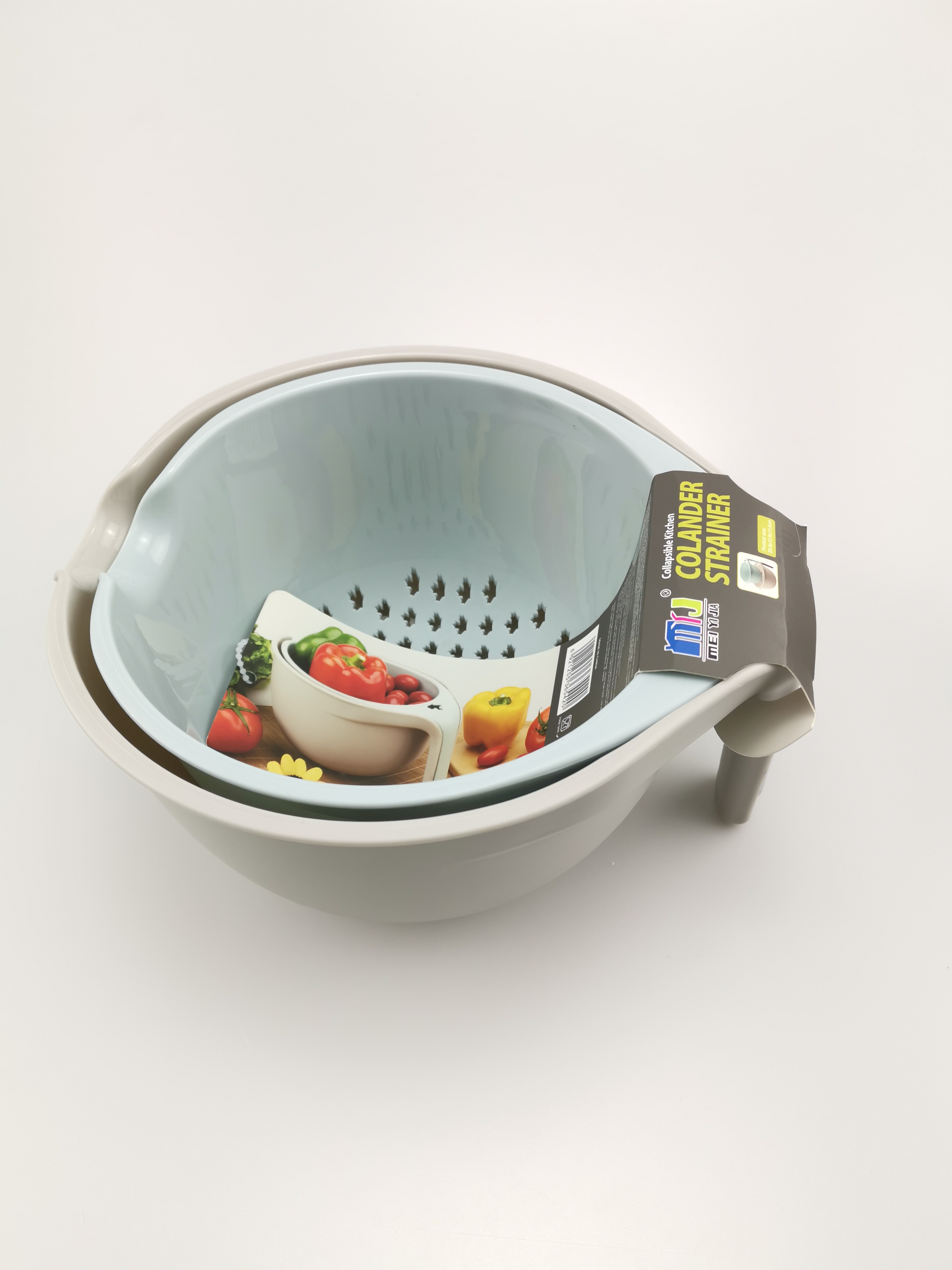
Cutting Tray Manufacturer: Sourcing Guide for Efficient Kitchen Prep
For retailers, importers, and kitchenware brands, a cutting tray is no longer just a flat board. Buyers increasingly look for compact preparation tools that help users chop, rinse, drain, and transfer ingredients with less mess. The original product concept described here combines a cutting surface with an integrated colander, a drain spout, a secure-grip handle, an anti-skid base, and four interchangeable stainless-steel blades for grating, julienne cuts, and ribbon-style preparation. Those explicit features make it relevant for product lines focused on small kitchens, meal prep, salad preparation, and everyday vegetable handling.
When evaluating a cutting tray manufacturer, the goal is not only to confirm whether the product looks useful. B2B buyers also need to understand material options, blade safety, packaging durability, quality control, replacement part policy, and whether the supplier can support OEM or wholesale requirements. This guide explains how to assess the category without relying on unsupported claims or vague marketing language.
What Makes a Cutting Tray Different from a Standard Board?
A standard cutting board provides a surface for chopping, while a cutting tray is designed to manage more steps in the preparation workflow. The integrated tray format can help contain ingredients, guide water toward a drain spout, and reduce transfers between a board, bowl, and colander. For consumers, that can mean fewer items to wash. For retailers, it creates a clear product story that is easy to demonstrate online or in store.
The original product description highlights a two-in-one design: a durable cutting surface combined with an integrated colander. It also mentions that users can slice, dice, or chop vegetables and rinse them in the same container. This is a useful distinction for buyers comparing food grade draining trays, plastic cutting trays, and multifunctional prep tools. However, if you plan to import or private-label the item, ask the manufacturer to document the actual materials, food-contact suitability, and care instructions rather than relying on general product language.
Core Features Buyers Should Verify
The most important sourcing step is to separate visible features from verified specifications. A sample may show an anti-skid base and a handle, but you still need to know how those parts perform after repeated washing and daily use. The same applies to blades: the source text states that the product includes four interchangeable stainless-steel blades, but buyers should ask about blade thickness, attachment method, replacement availability, and safe handling instructions.
- Confirm the tray dimensions, weight, and usable cutting area for your target market.
- Ask what plastic or other material is used for the tray body and cutting surface.
- Request written information on food-contact compliance for the markets where you sell.
- Check whether the drain spout pours cleanly without trapping small pieces of produce.
- Test the secure-grip handle and anti-skid base on wet and dry countertops.
- Review blade storage, blade change instructions, and warning labels for consumer safety.
Comparison Checklist for Supplier Evaluation
Use the following checklist when comparing a cutting tray manufacturer or OEM kitchenware supplier. It keeps discussions specific and helps avoid misunderstandings before quotation, sampling, or packaging design begins.
| Evaluation Area | What to Check | Questions to Ask the Supplier |
|---|---|---|
| Integrated draining | Colander area, drain spout, water flow, ingredient retention | Can you provide a sample video showing rinsing and draining with chopped vegetables? |
| Cutting surface | Surface stability, knife compatibility, ease of cleaning | What material is used, and what care instructions should appear on the packaging? |
| Interchangeable blades | Four stainless-steel blades, fit, sharpness, storage | Are replacement blades available, and how are blades secured during transport? |
| Handling and stability | Secure-grip handle and anti-skid base | Has the base been tested on wet countertops, and what is the recommended load limit? |
| OEM and wholesale support | Logo, color, packaging, carton packing, documentation | What customization options, MOQ, lead time, and artwork requirements apply? |
| Quality control | Inspection process, defect criteria, packaging drop risk | What inspection reports or pre-shipment checks can be provided for each order? |
OEM and Wholesale Considerations
If the product is intended for private label, marketplace sales, supermarket promotions, or kitchenware distribution, clarify commercial details early. Do not assume that every cutting tray manufacturer offers the same level of OEM support. Some suppliers may only provide standard colors and packaging, while others may support logo placement, color matching, instruction sheets, retail boxes, or bundled accessories. Because the original article does not state specific MOQ, capacity, price, certifications, or lead time, those details should be treated as supplier questions, not confirmed facts.
Ask for a formal quotation that separates unit price, tooling or mold fees if any, packaging cost, spare part cost, sample cost, and freight terms. For larger orders, discuss acceptable quality limits, inspection timing, barcode requirements, carton markings, and whether the supplier can provide product photos or packaging files. If selling in regulated markets, request documentation that supports food-contact claims and check it with your compliance adviser before purchase.
Sample Testing Before Placing an Order
Samples are essential for this product type because user experience depends on small details. The tray should sit firmly on the counter. The handle should feel secure when the tray contains rinsed vegetables. Water should leave through the drain spout without excessive splashing. The blades should attach and detach without wobbling, and users should be able to identify each blade function easily.
Run simple in-house checks with common ingredients such as leafy greens, carrots, cucumbers, potatoes, tomatoes, and onions. The original description says the blades are designed to handle soft tomatoes and hard root vegetables; buyers should verify this with their own samples because blade performance can vary by production batch, ingredient freshness, and user technique. Also test washing, drying, storage, and whether food fragments collect in corners or blade slots.
Positioning the Product for Consumers
For consumer-facing content, focus on practical use rather than exaggerated claims. A cutting and draining tray can be positioned for salad preparation, stir-fry ingredients, rinsing chopped vegetables, and reducing the number of bowls used during meal prep. The white and earthy orange color combination mentioned in the original description may support a modern kitchen look, but the strongest selling points are workflow, containment, and convenience.
Clear instructions will reduce returns and improve reviews. Explain which blade is used for grating, julienne strips, or ribbons. Include cleaning guidance, safe blade handling, and storage suggestions. If the tray is not dishwasher-safe or if blades require hand washing, that must be stated accurately based on the supplier's confirmed instructions.
Key Takeaways
- A cutting tray with an integrated colander can reduce transfers between chopping, rinsing, and draining steps.
- The explicit feature set includes a drain spout, secure-grip handle, anti-skid base, and four interchangeable stainless-steel blades.
- B2B buyers should verify materials, food-contact documentation, blade safety, packaging, and inspection procedures.
- MOQ, price, certifications, capacity, and lead time should be requested directly from the supplier and not assumed.
- Sample testing with real ingredients is the best way to judge stability, drainage, cleaning, and blade usability.
FAQ for Cutting Tray Sourcing
What should I ask a cutting tray manufacturer first?
Start with material details, product dimensions, blade configuration, food-contact documentation, MOQ, lead time, packaging options, and whether OEM logo or color customization is available.
Are stainless-steel blades enough to prove product quality?
No. Stainless-steel blades are useful, but buyers should also check blade attachment, sharpness consistency, corrosion care instructions, safe storage, and replacement availability.
How can I confirm the tray is suitable for my market?
Request supplier documents for the intended sales region, review labeling requirements, and test samples against your own quality and compliance checklist before ordering.
What defects should inspections look for?
Common checks include warped trays, loose handles, unstable bases, poor blade fit, sharp plastic edges, blocked drain areas, incorrect packaging, and missing instructions.
Is this product better for retail or wholesale channels?
It can work for both if the supplier supports your channel needs. Retail usually requires stronger packaging and instructions, while wholesale may prioritize carton efficiency, consistency, and reorder reliability.
