




Cutting Tray Manufacturer: Practical Sourcing Guide for Multi-Function Kitchen Tools
For kitchenware importers, retailers, and private-label buyers, a cutting tray is no longer just a flat board. The product described here combines a cutting platform, interchangeable blades, a bowl-style tray, and draining functionality in one compact system. That makes it attractive for consumers who want faster vegetable prep and fewer items to wash after cooking.
When sourcing from a cutting tray manufacturer, however, buyers should look beyond a product photo. Blade design, tray stability, plastic durability, cleaning convenience, packaging, and OEM support all affect customer satisfaction and repeat orders. This guide explains what to evaluate before choosing a supplier for a multi-function cutting and draining tray.
Key Takeaways
- A multi-function cutting tray should be assessed as a complete food-prep system, not only as a cutting board.
- Important product details include blade set, draining performance, anti-slip stability, detachable parts, and storage convenience.
- Do not rely on general claims such as “food grade” or “durable” without asking the supplier for material information and relevant documentation.
- For OEM or wholesale projects, confirm packaging, color options, spare parts, inspection standards, and after-sales handling before ordering.
What This Cutting Tray Is Designed to Do
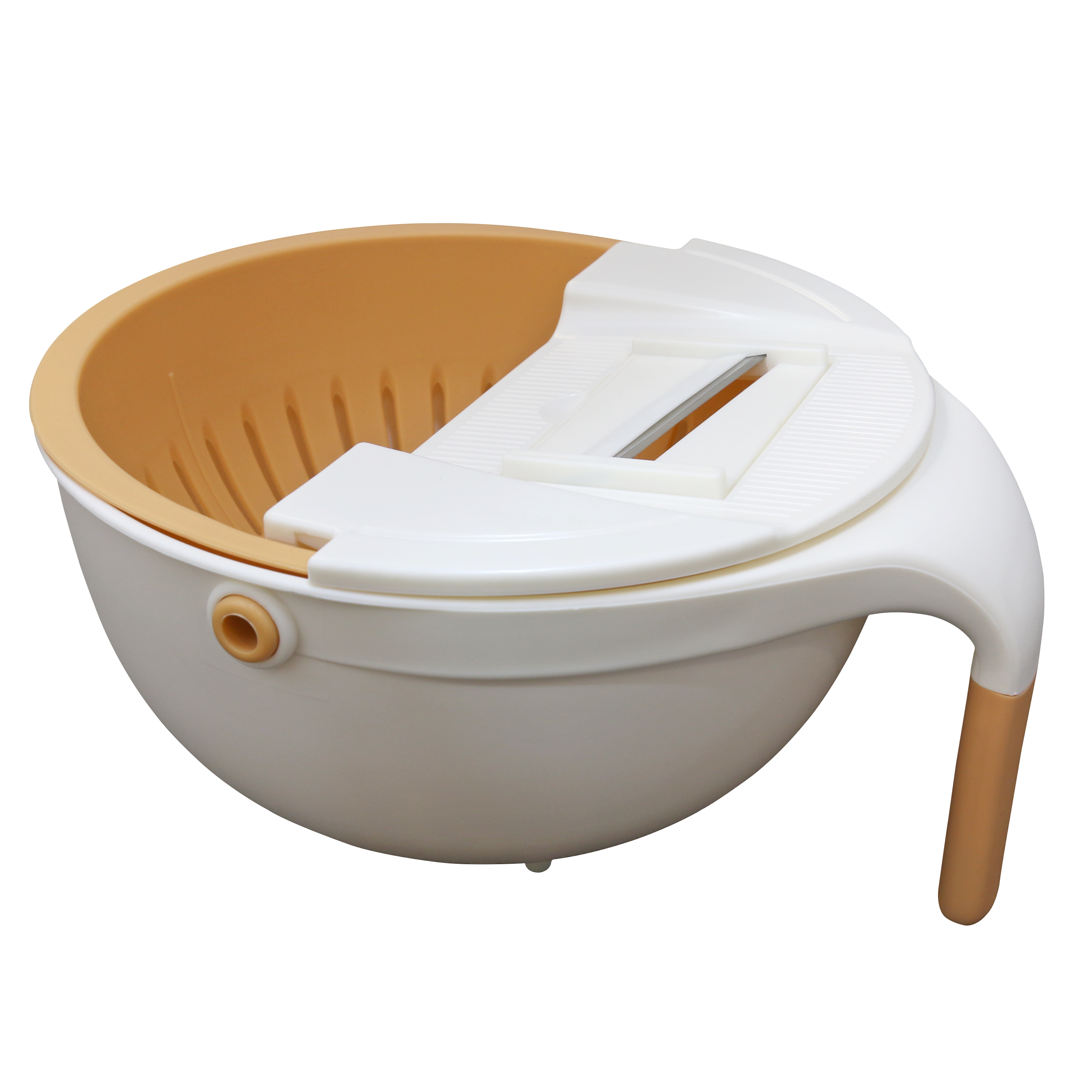
The original product concept is an all-in-one tray for slicing, washing, and draining fresh ingredients. It includes an integrated cutting platform and five interchangeable stainless steel blades for different cuts, ranging from fine juliennes to thicker ridged cuts. After slicing vegetables into the tray, users can rinse and drain them without switching to a separate colander.
This design targets a common consumer pain point: clutter during meal preparation. Instead of using a cutting board, bowl, strainer, and slicer separately, the user can complete several prep steps in one unit. For buyers, the value is easy to communicate in retail listings, product demonstrations, and shelf packaging because the function is visible and practical.
Core Features Buyers Should Verify
Several features from the product description are especially relevant for B2B sourcing. The tray is described as detachable, compact for storage, equipped with an anti-slip stand, and designed with a white exterior and orange interior. These points can support usability, safety perception, and visual appeal, but buyers should still verify how each feature performs in real use.
Before confirming an order, request samples and test the tray with common vegetables such as carrots, cucumbers, potatoes, onions, and leafy greens. Check whether the blades attach firmly, whether food collects cleanly in the bowl, whether the draining area clears water efficiently, and whether the anti-slip stand remains stable on wet countertops.
Comparison Checklist for Sourcing Cutting Trays
| Item to Check | Why It Matters | Questions to Ask the Supplier |
|---|---|---|
| Blade set | Interchangeable blades are central to the product’s usefulness. | Are five stainless steel blades included, and what cut styles does each blade produce? |
| Tray and bowl design | The tray must hold food securely during cutting, rinsing, and draining. | How does the drainage section work, and can samples be tested with different vegetables? |
| Anti-slip stand | Stability affects user confidence and safety during prep. | What material is used for the anti-slip part, and how is it fixed to the tray? |
| Detachable structure | Removable parts can make cleaning and storage easier. | Which components detach, and are replacement parts available? |
| Plastic material | Material choice affects durability, appearance, and consumer trust. | What plastic is used, and what documentation can be provided for the intended market? |
| Color and appearance | The described white and orange design may help product recognition. | Can colors be customized for private-label orders, and what are the color matching requirements? |
| Packaging | Packaging influences shipping damage, retail presentation, and instructions. | Can the supplier provide box layouts, user instructions, barcode placement, and warning labels? |
Material and Safety Questions to Ask
The original article mentions plastic cutting trays and food grade draining trays, but buyers should avoid accepting broad statements without confirmation. A responsible sourcing process asks the manufacturer to identify the exact materials used for the tray, bowl, blade holder, anti-slip component, and blades. Stainless steel blades are specified in the source, but the grade is not stated, so it should be requested rather than assumed.
Depending on the sales market, buyers may need documentation for food-contact materials, labeling, or restricted substances. The supplier should be able to explain what documents are available, what standards they relate to, and whether those documents apply to the exact product being ordered. If compliance is critical, arrange third-party testing on the final production sample rather than relying only on catalog claims.
OEM and Wholesale Considerations
For OEM kitchen tool sourcing, the commercial details matter as much as the product design. Ask the cutting tray manufacturer whether logo printing, custom color combinations, instruction manuals, retail boxes, or bundled accessories are available. If a buyer wants to keep the white exterior and orange interior, confirm color consistency between samples and mass production.
Wholesale buyers should also discuss order quantities, lead time, carton packing, spare blade handling, and inspection procedures. Because this product includes multiple removable parts, a missing blade or loose component can lead to returns. A clear packing checklist and pre-shipment inspection plan can reduce disputes.
- Request a full sample set with all five blades and packaging.
- Test cutting, rinsing, draining, detaching, cleaning, and storage.
- Confirm material information and any market-specific documents.
- Review packaging artwork, user instructions, and safety wording.
- Agree on inspection criteria before production begins.
How to Evaluate Sample Quality
During sample review, focus on practical use. The cutting surface should feel stable, the blade inserts should not wobble, and the tray should not flex excessively during normal pressure. The anti-slip stand should help the bowl stay in place, especially when the countertop is slightly wet. Edges should feel smooth enough for routine handling, and detachable parts should be easy to remove without feeling fragile.
Cleaning is another important test. Food residue can collect around blade slots, corners, and drainage openings. If the tray is marketed as easy to clean, the structure should support that claim. Buyers should also check whether the product stores compactly when disassembled or nested, because compact storage is a clear consumer benefit for small kitchens.
Retail Positioning Without Overclaiming
This product is best positioned around convenience, preparation efficiency, and reduced countertop clutter. It can appeal to home cooks who frequently prepare salads, stir-fries, soups, or meal-prep vegetables. However, marketing copy should not exaggerate safety, durability, or material quality unless those claims are supported by verified specifications.
Useful retail language can explain that the tray combines cutting, collecting, rinsing, and draining in one detachable design. The five stainless steel blades provide multiple cutting options, and the anti-slip stand supports steadier use. These are clear, product-based benefits that shoppers can understand quickly.
Practical FAQ
What should I ask a cutting tray manufacturer before ordering?
Ask for material details, blade specifications, available documentation, sample cost, packaging options, logo customization, production lead time, inspection standards, and replacement part policy.
Can this type of tray replace a separate colander?
For many vegetable washing tasks, the integrated draining function can reduce the need for a separate colander. Buyers should test drainage speed and capacity with the foods their customers commonly prepare.
Are five stainless steel blades included?
The source product description states that the tray includes five interchangeable stainless steel blades. Buyers should confirm the exact blade shapes, thickness, attachment method, and packaging count with the supplier.
Is the tray suitable for private-label projects?
It may be suitable, but buyers should confirm OEM options such as logo placement, color customization, retail packaging, instructions, and carton labeling directly with the manufacturer.
How can buyers reduce quality risks?
Approve a complete pre-production sample, define acceptable defects, check all detachable components, inspect blade installation, and verify packaging before shipment.
Final Sourcing Advice
A well-designed cutting and draining tray can be a practical addition to a kitchenware product line because it solves a real preparation problem. The strongest sourcing approach is to combine product testing with clear supplier questions. Verify the blades, plastic components, anti-slip structure, detachable design, packaging, and documentation before committing to a wholesale or OEM order. That process helps buyers select a product that is useful, understandable, and easier to support after sale.
