




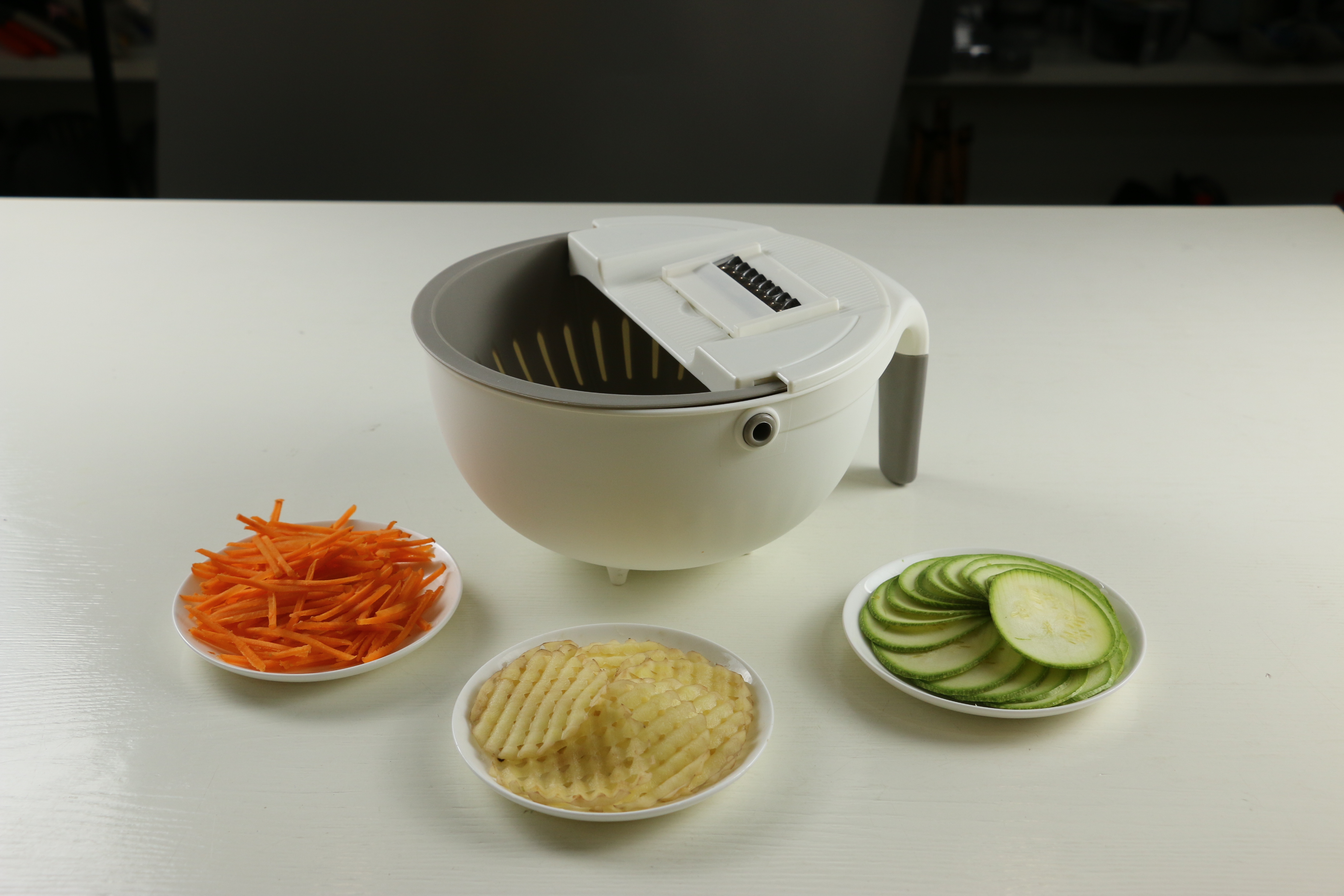
Cutting Tray Manufacturer: How to Evaluate a Multi-Functional Kitchen Prep Tray
A cutting tray can look simple at first glance, but buyers quickly learn that small design choices affect safety, cleaning, storage, and daily kitchen efficiency. The original idea behind a multi-functional vegetable cutting and draining tray is practical: combine a cutting surface, a container, and a draining function so users can rinse, slice, and collect ingredients with fewer separate tools. For retailers, wholesalers, private-label buyers, and kitchenware distributors, the key question is not only whether the product looks useful, but whether the manufacturer can support consistent quality and clear product information.
This guide explains how to evaluate a cutting tray manufacturer without relying on vague claims. It focuses on material questions, blade and tray usability, packaging considerations, and practical sourcing checks. It also helps consumer-facing buyers understand what features make the product easier to use at home.
What a Multi-Functional Cutting Tray Is Designed to Do
A multi-functional cutting tray usually combines several common food preparation tasks in one compact system. The user places produce on the cutting area, slices or shreds with a suitable blade or insert, and lets the prepared ingredients fall into an integrated bowl or tray. A draining section can then be used to rinse vegetables or fruit under the tap.
The main value is workflow. Instead of moving ingredients from a cutting board to a bowl and then to a colander, the user can keep preparation in one place. This can reduce countertop clutter and the number of dishes to wash. It is especially useful for everyday tasks such as preparing cucumbers, carrots, potatoes, onions, salad vegetables, and fruit.
However, convenience depends on execution. A tray that slides on the counter, flexes too much, or has awkward blade changes may create frustration rather than efficiency. That is why product evaluation should be detailed and practical.
Material Safety and Durability Questions to Ask
The source article notes the importance of choosing food grade draining trays. Buyers should treat this as a starting point for supplier verification, not as a complete answer. If a supplier describes a tray as food grade, ask which material is used, what documentation supports food-contact suitability, and whether the same material is used across all colors and production batches.
Durability also matters. A kitchen prep tray may be exposed to water, vegetable acids, pressure from slicing, repeated washing, and storage with other utensils. Buyers should ask how the product performs under normal use, whether the plastic is prone to staining, whether the tray resists cracking, and how replacement parts or blade inserts are handled if applicable.
- Ask the supplier to identify the tray, bowl, handle, and blade materials separately.
- Request food-contact documentation relevant to the target market instead of accepting general wording.
- Check whether colorants, coatings, or inserts change the compliance information.
- Review care instructions for dishwasher use, hand washing, drying, and storage.
- Ask how the manufacturer controls consistency between sample approval and bulk production.
Feature Comparison Checklist for Buyers
A useful sourcing review compares functions against real kitchen tasks. The table below can help buyers evaluate samples from a cutting tray manufacturer before moving to packaging, pricing, or order discussions.
| Evaluation Area | What to Check | Why It Matters |
|---|---|---|
| Cutting surface | Stability, usable area, resistance to deep scoring | A stable surface supports safer and cleaner prep work. |
| Draining function | Hole size, water flow, ease of rinsing | Poor drainage slows washing and can trap food pieces. |
| Blade inserts | Secure fit, simple changes, clear use instructions | Loose or confusing inserts can create safety risks. |
| Non-slip base | Grip on dry and slightly wet countertops | Movement during slicing reduces control. |
| Cleaning access | Corners, seams, blade storage, removable parts | Hard-to-clean areas can hold residue. |
| Packaging | Protection for blades, instructions, retail display needs | Good packaging reduces damage and improves user understanding. |
How to Assess Kitchen Efficiency in Real Use
The original article highlights a key benefit: slicing produce directly into an integrated bowl and then rinsing with the colander feature. To test this claim, buyers should use actual ingredients rather than only inspecting a sample visually. Try firm vegetables, softer fruit, and irregular shapes. Check whether cut pieces collect neatly or scatter outside the tray. Notice whether the bowl capacity is suitable for typical household portions.
Efficiency also includes cleanup. A product that saves one step during slicing but requires careful scrubbing around blades or corners may not feel efficient to users. The best samples are intuitive: the parts fit securely, water drains predictably, and the tray can be emptied without spilling chopped ingredients.
Supplier and OEM Sourcing Considerations
For B2B buyers, the manufacturer relationship is as important as the tray design. Do not assume that every supplier offering a similar product can support the same quality control, packaging, or documentation. Ask direct questions and keep written records of the answers.
If private labeling or OEM customization is required, clarify what can be changed. Possible discussion points may include color, packaging design, instruction sheets, barcode placement, carton labeling, and accessory configuration. Avoid assuming mold changes, exclusive designs, or custom materials are available unless the supplier confirms feasibility, cost implications, and lead time.
Commercial details such as MOQ, unit price, sample cost, production lead time, and shipping terms should be requested from the supplier. These details can vary by configuration, packaging, destination, and order size, so they should not be guessed from a product description.
Practical Use and Care Guidance for End Users
Clear user guidance reduces complaints and helps the product perform as intended. A cutting tray with blades should include simple instructions for blade selection, safe handling, cleaning, and storage. Users should place the tray on a stable surface before cutting and avoid forcing oversized or very hard ingredients through inserts that are not designed for them.
- Wash the tray and removable parts before first use.
- Place the tray on a flat countertop and confirm that it does not slide.
- Select the correct blade or cutting insert for the intended cut.
- Keep fingers away from cutting edges and use any provided holder if available.
- Rinse produce in the draining section and dry parts fully before storage.
Care instructions should match the actual material and construction. If dishwasher use is not confirmed, hand washing should be recommended. Blades should be dried carefully to reduce residue and stored so they do not contact hands unexpectedly.
Key Takeaways
A cutting tray is most useful when it genuinely simplifies rinsing, slicing, collecting, and draining ingredients. For buyers, the strongest product is not just the one with the most attachments, but the one with stable construction, clear material information, safe blade handling, and easy cleaning.
- Verify food-contact material claims with supplier documentation.
- Test samples with real vegetables and fruit before placing a bulk order.
- Check drainage, stability, blade fit, and cleaning access carefully.
- Ask OEM and wholesale questions in writing, including packaging and lead time.
- Provide clear use and care instructions to reduce misuse and returns.
FAQ
What should I ask a cutting tray manufacturer first?
Start with material identification, food-contact documentation, available configurations, sample availability, packaging options, MOQ, lead time, and quality control process. These answers help you compare suppliers on more than appearance.
Is a multi-functional cutting tray better than a separate board and colander?
It can be more convenient for quick vegetable and fruit preparation because cutting, collecting, and rinsing happen in one system. For large meal prep or heavy chopping, some users may still prefer a larger separate cutting board.
Can I assume all plastic cutting trays are food grade?
No. Buyers should ask the supplier to confirm the exact material and provide relevant food-contact information for the intended sales market. General product wording is not a substitute for documentation.
What makes a cutting tray easier to clean?
Removable parts, smooth corners, accessible drainage holes, and simple blade storage all help. Samples should be checked for seams or tight areas where food residue can collect.
What should be included in retail packaging?
At minimum, packaging should protect sharp parts, explain functions clearly, identify care instructions, and show safe use. For wholesale or private-label projects, confirm artwork, labeling, and carton requirements with the supplier before production.
