




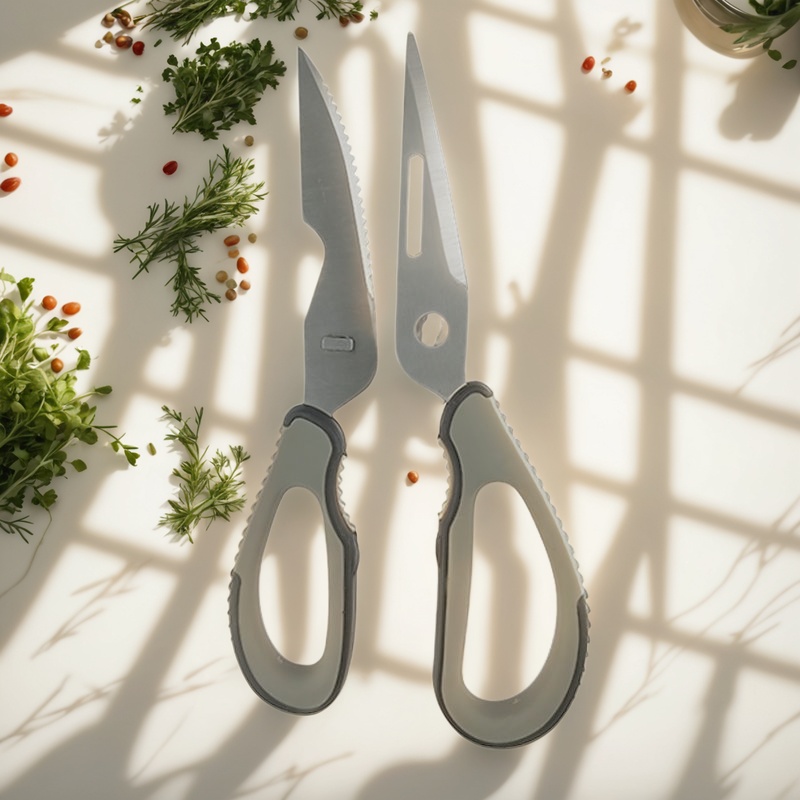
Detachable Kitchen Scissors: Essential Culinary Tool
Detachable kitchen scissors are designed to separate into two blade halves, making them easier to clean, dry, inspect, and store than many fixed-pivot scissors. For home cooks, this design can reduce the frustration of trapped food around the joint. For retailers, distributors, and private-label buyers, it is also a practical product category because the value is easy to understand: cutting, trimming, opening, cracking, and quick cleaning in one compact tool.
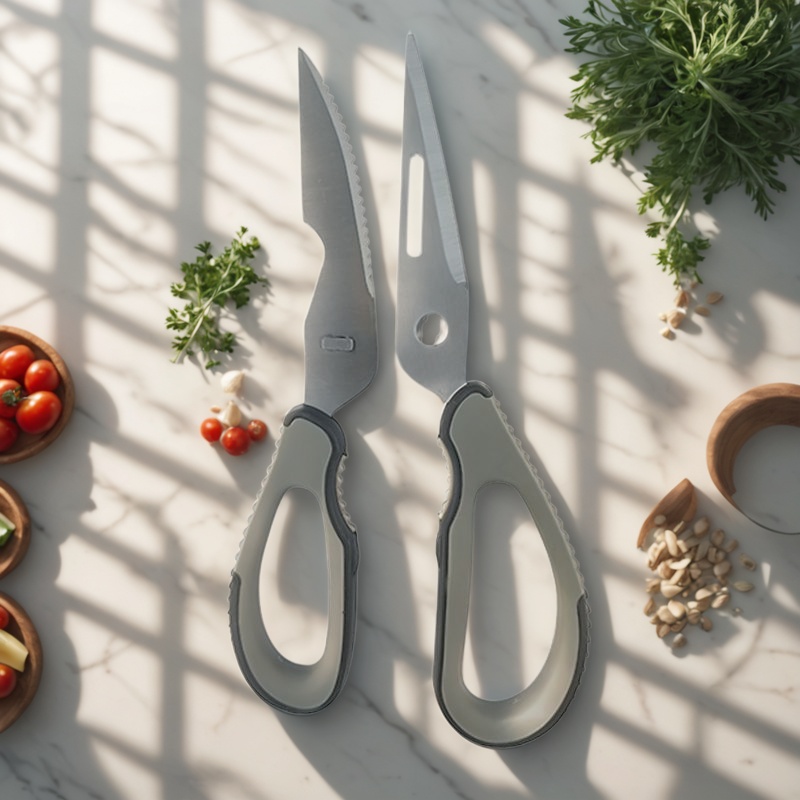
The original product description highlights several common features in this category, including stainless steel construction, ergonomic handle design, bottle opener and nutcracker functions, textured blade edges, and herb stripping slots. When evaluating any detachable kitchen scissors, the key is to verify which of these features are present on the exact model being purchased and how they perform in daily use.
Key Takeaways
- Detachable blades make cleaning and drying more straightforward, especially around the pivot area.
- Stainless steel blades and ergonomic handles are important selection points, but buyers should confirm the exact material and finish with the supplier.
- Multipurpose features such as bottle openers, nutcrackers, and herb stripping slots can be useful when they are well integrated.
- OEM, wholesale, and private-label buyers should ask clear questions about samples, packaging, quality checks, and customization options.
Why Detachable Kitchen Scissors Are Useful
Kitchen scissors often handle foods that leave residue: herbs, poultry skin, packaging, dough, seafood shells, and small stems. With a fixed pivot, food particles and moisture can collect where the two blades overlap. A detachable design helps users separate the blades so both sides can be washed and dried more thoroughly.
This does not remove the need for careful food hygiene. Scissors used for raw meat or seafood should still be washed promptly, dried completely, and stored safely. However, the detachable format gives users better access to the surfaces that are hardest to clean. That practical advantage is one reason this product type appeals to both consumer kitchens and commercial product assortments.
Common Features to Compare
Not all detachable kitchen scissors are built the same way. A good comparison should consider the blade, handle, pivot, added functions, and cleaning method. The table below summarizes practical selection points for home users and sourcing teams.
| Feature | Why It Matters | Questions to Ask |
|---|---|---|
| Detachable pivot | Allows the two halves to separate for cleaning and drying. | Is the separation process simple, secure, and explained in the instructions? |
| Stainless steel blades | Supports durability and cutting performance in kitchen use. | What stainless steel type is used, and how is corrosion resistance checked? |
| Ergonomic handle | Helps reduce strain during repeated cutting tasks. | Does the handle fit both small and large hands comfortably? |
| Textured blade edge | Can improve grip when cutting slippery food or packaging. | Is the edge suitable for the intended foods and easy to clean? |
| Bottle opener or nutcracker | Adds multipurpose value when the functions are practical. | Are these features tested during sample evaluation? |
| Herb stripping slot | Can speed up preparation of herbs with firm stems. | What stem sizes does the slot handle effectively? |
How to Choose Scissors for Everyday Kitchen Use
For consumer-facing selection, start with the tasks you expect the scissors to perform. If you mainly cut herbs, parchment, food packaging, and cooked foods, comfort and easy washing may matter more than heavy-duty strength. If you often cut poultry, seafood shells, or thicker stems, blade grip and handle stability become more important.
- Check that the blades open and close smoothly without wobbling.
- Confirm that the detachable mechanism locks securely during cutting.
- Look for handles that feel stable when your hands are wet.
- Review cleaning instructions before placing scissors in a dishwasher.
- Dry the separated parts fully before reassembling or storing.
Dishwasher-safe claims should be verified on the product instructions or supplier documentation. Even when dishwasher cleaning is allowed, hand washing and immediate drying may help preserve the cutting edge and reduce water spots, especially around joints and handle inserts.
Use and Care Tips for Better Performance
Detachable kitchen scissors last longer when they are used for appropriate tasks. Avoid cutting hard bones, frozen blocks, wire, or materials that the product is not designed to handle. If the scissors include a nutcracker or bottle opener, use those built-in areas rather than forcing the blade tips.
After cutting raw meat, poultry, or seafood, separate the blades if the design allows, wash with warm soapy water, rinse thoroughly, and dry both halves. Pay attention to the pivot surfaces, textured edges, and any herb stripping slot. Store the scissors in a dry drawer, knife block slot, or protective cover if supplied. Keeping the edge away from other metal utensils can help reduce accidental dulling.
Guidance for OEM, Wholesale, and Private-Label Buyers
For B2B sourcing, detachable kitchen scissors should be evaluated as both a tool and a packaged retail product. An OEM scissors manufacturer may offer input on blade geometry, handle materials, color options, logo placement, packaging, and function combinations. However, buyers should avoid assuming details that have not been confirmed in writing.
Before placing a wholesale or private-label order, ask the supplier practical questions: What material is used for the blades and handles? Are samples available for cutting, cleaning, and drop handling checks? What packaging formats are offered? Can the supplier provide product-use instructions in your target language? What inspection steps are used before shipment? Are there sharp-edge, corrosion, or dishwasher-related evaluations available for review?
Buyers should also compare the detachable mechanism across samples. A pivot that is too loose can feel unsafe, while one that is too stiff may frustrate end users. Packaging should explain how to separate and reassemble the scissors clearly, because confusion at first use can lead to product returns or negative reviews.
What to Avoid When Comparing Products
A long feature list does not always mean a better product. Extra functions should not weaken the handle, create difficult-to-clean crevices, or make the scissors uncomfortable. For example, a nutcracker area can be useful, but only if it is placed where users can apply pressure safely. A bottle opener can add value, but it should not interfere with grip.
Also be cautious with vague claims such as “premium steel,” “professional grade,” or “commercial quality” unless the supplier can define what those terms mean. For online listings, clearer language about cleaning, detachable operation, and intended kitchen tasks is usually more helpful than broad promotional claims.
Practical FAQ
Are detachable kitchen scissors more hygienic?
They can be easier to clean because the blades separate, giving access to the pivot area. Hygiene still depends on proper washing, drying, and storage after use.
Can detachable kitchen scissors go in the dishwasher?
Some models may be dishwasher-safe, but this should be confirmed from the product instructions or supplier documentation. Hand washing and drying are often safer for maintaining the edge.
What foods can kitchen scissors cut?
They are commonly used for herbs, vegetables, cooked foods, food packaging, parchment, and some meat preparation tasks. Avoid hard materials unless the product is specifically designed for them.
What should wholesale buyers request before ordering?
Ask for samples, material details, packaging options, instruction wording, customization choices, and quality inspection information. Confirm any certifications or compliance documents rather than assuming they apply.
Are multipurpose features worth it?
They are useful when they work naturally and do not compromise comfort or cleaning. Evaluate the exact model with real kitchen tasks before committing to a large order.
