




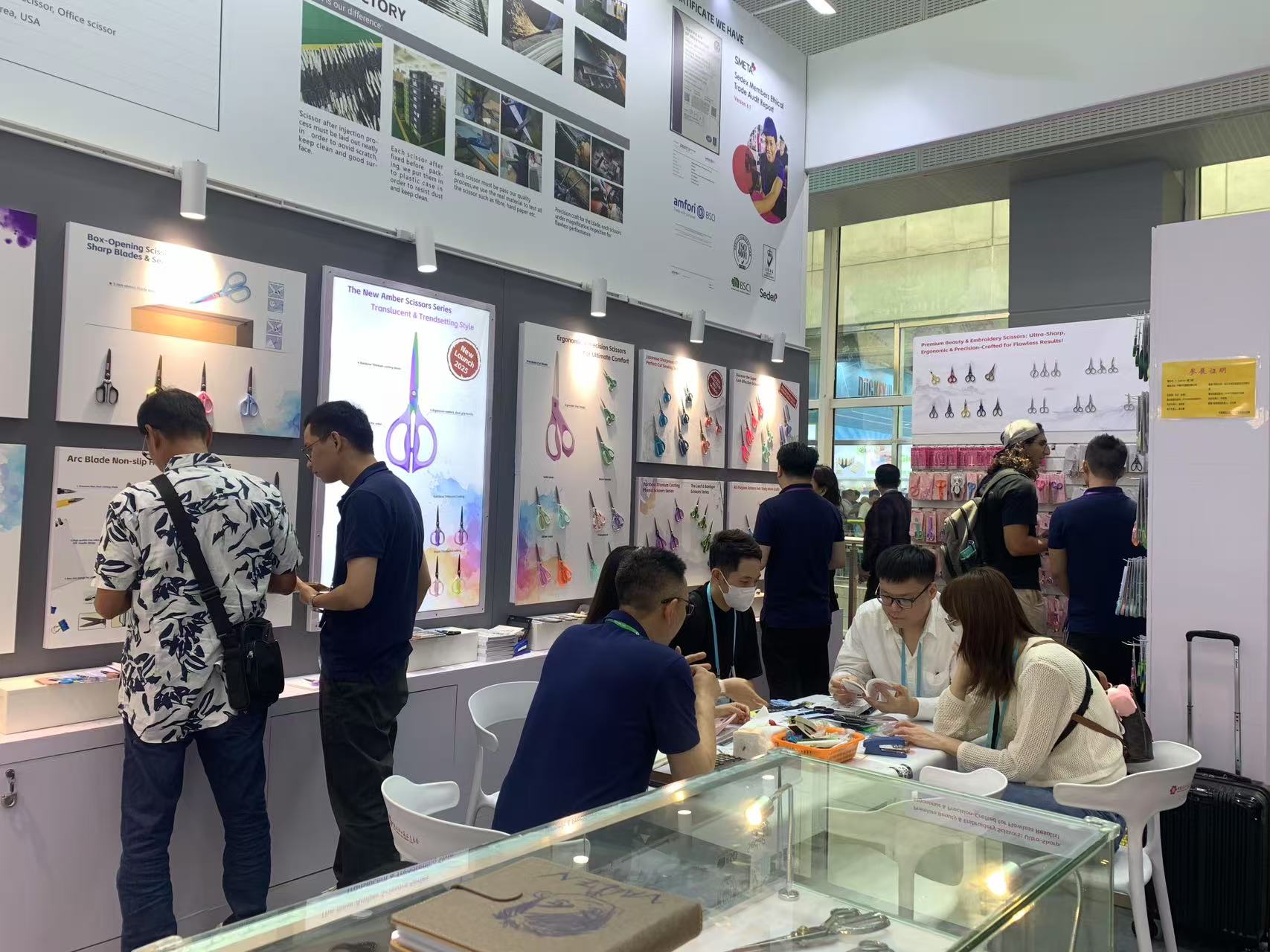
Discovering Bonet Scissors at the Canton Fair Stationery Showcase
For stationery importers, distributors, office-supply buyers, and retail purchasing teams, the Canton Fair is not only a place to find new products. It is also a chance to compare suppliers, inspect samples, discuss packaging, and understand whether a product line fits a target market. Bonet scissors appeared in the original Canton Fair stationery showcase article as a range of cutting tools for professional, craft, school, and everyday use. This rewritten guide focuses on how buyers can evaluate those scissors with a clear sourcing process rather than relying on broad promotional claims.
Scissors may look simple, but small differences in blade feel, handle comfort, tip shape, packaging, and user safety can affect return rates and repeat sales. If you are considering Bonet scissors or any comparable stationery scissors at a trade fair, the goal is to identify the right assortment, confirm the supplier’s capabilities, and test real samples before committing to a wholesale order.
What Buyers Can Learn From a Trade Fair Display
A booth display can show the breadth of a scissors line in a short time. The original article described Bonet scissors as including professional models, craft and hobby scissors, colorful safety scissors for young users, compact everyday options, and designs with patterned handles. These categories are useful starting points, but buyers should treat them as product directions to verify, not final specifications.
At the fair, handle each sample as an end user would. Open and close the blades repeatedly. Cut different materials if testing is available. Check whether the pivot feels stable, whether the handles fit the intended user group, and whether the blades meet cleanly from the pivot to the tip. A visually attractive product is not enough if the cutting action is rough or inconsistent.
Core Scissors Categories to Review
A balanced stationery scissors program usually covers several customer needs. When reviewing Bonet scissors, consider whether each model has a clear role in your catalog rather than adding similar items that compete with each other.
- Office and everyday scissors: General-purpose models for paper, envelopes, packaging, and desk use.
- Craft and hobby scissors: Lightweight options intended for more detailed cutting tasks and creative projects.
- Professional-use scissors: Models positioned for heavier or more frequent cutting, such as tailoring, workshop, or production-room tasks.
- Children’s or safety scissors: Colorful, gentler designs for school or supervised use, where tip shape and cutting control matter.
- Special designs: Options such as compact scissors, patterned handles, or serrated-style designs if they are confirmed in the supplier’s sample range.
For each category, ask the supplier to define the intended material, user age or application, and expected retail channel. A school scissors item, for example, should not be evaluated with the same criteria as a professional cutting tool.
Comparison Checklist for Sample Evaluation
Use a consistent checklist when comparing Bonet scissors with other suppliers at the Canton Fair. This helps your team avoid decisions based only on appearance or booth presentation.
| Evaluation point | What to check | Questions to ask the supplier |
|---|---|---|
| Cutting performance | Clean cuts on intended materials, smooth blade movement, stable pivot | What materials is this model designed to cut? |
| Handle comfort | Grip size, finger opening, pressure points, left/right-hand suitability | Are different handle sizes or colors available? |
| Product range fit | Clear differences between office, craft, safety, and professional models | Which models are best sellers by channel or use case? |
| Packaging | Retail card, blister, bulk pack, barcode area, labeling space | Can packaging be customized for OEM or private label orders? |
| Quality control | Consistency between samples, blade alignment, handle finish, defect handling | What inspections are performed before shipment? |
| Commercial terms | MOQ, lead time, payment terms, sample policy, reorder support | What are the current order requirements and production timelines? |
Key Supplier Questions for Wholesale and OEM Buyers
If your sourcing intent is wholesale, private label, or OEM, ask direct questions and record the answers in writing. Do not assume that a display sample represents every future shipment. A strong conversation should cover product, packaging, production, and after-sales support.
- Which models are standard stock items, and which require custom production?
- What customization options are available for handle colors, logo placement, packaging, and assortments?
- What is the MOQ for each model and for mixed-model orders?
- What lead time applies to samples, pilot orders, and repeat orders?
- What material information can be provided for blades, handles, pivots, and packaging?
- What quality checks are used for blade alignment, cutting tests, appearance, and packing accuracy?
- Can the supplier provide documents required by your market, if applicable?
- How are defective products, shortages, or shipment discrepancies handled?
These questions help separate general interest from a practical buying decision. If the supplier cannot answer immediately at the fair, request a written follow-up with photos, specifications, and quotation details.
How to Assess Style Without Overlooking Function
The original article emphasized that Bonet scissors included style-driven handle colors and some patterned handle options. Appearance can matter, especially for craft, school, gift, and retail stationery channels. Bright colors may help children’s or hobby products stand out on shelves, while neutral tones may suit office or professional users.
However, style should support the product’s purpose. A decorative handle still needs comfortable edges, good grip control, and stable construction. For retail buyers, consider whether the design matches your customer base. For distributors, think about whether the same model can be sold across several accounts or whether it is suitable only for a narrow seasonal promotion.
Sample Testing Before Placing an Order
Before confirming a larger purchase, request pre-production or approved samples and test them under realistic conditions. For office scissors, cut printer paper, envelopes, light card, and common packaging. For craft scissors, test curved lines, small details, and repeated use. For safety scissors, check supervision needs, tip shape, cutting control, and packaging warnings suitable for your market.
It is also helpful to keep one approved sample in your office as a reference. When the shipment arrives, compare production units against the approved sample for color, packaging, handle feel, blade movement, and overall finish. This simple step can prevent misunderstandings between buyer and supplier.
Key Takeaways
- Bonet scissors were presented as a stationery cutting-tool range covering professional, craft, safety, and everyday uses.
- Trade fair samples should be tested for cutting feel, handle comfort, blade alignment, and packaging suitability.
- Wholesale and OEM buyers should confirm MOQ, lead time, customization, quality-control steps, and documentation needs.
- Color and design can support retail sales, but function and consistency should guide the final sourcing decision.
Practical FAQ
Are Bonet scissors suitable for wholesale sourcing?
They may be considered for wholesale sourcing if the available models, pricing, MOQ, lead time, and quality-control process match your market requirements. Buyers should verify these details directly with the supplier.
What should I test first when reviewing scissors samples?
Start with cutting smoothness, blade alignment, pivot stability, handle comfort, and consistency across multiple samples. Then review packaging and labeling needs for your sales channel.
Can I request OEM packaging or private label options?
Possibly, but buyers should ask the supplier which customization options are available, what the MOQ is, and whether artwork, logo placement, barcode, and packaging materials can meet the buyer’s requirements.
Should I choose one model or build an assortment?
An assortment is often better for stationery channels because office, craft, school, and professional users have different needs. Choose models with clear differences so the range is easy to sell and manage.
What information should be included in a supplier quotation?
A useful quotation should include model numbers, photos, unit price, MOQ, packaging method, carton details if available, sample cost, lead time, payment terms, and customization charges if applicable.
