




Custom Pepper Grinders: A Practical Wholesale Sourcing Guide
Custom pepper grinders are more than countertop accessories. For restaurants, catering companies, retailers, promotional gift buyers, and kitchenware distributors, they are small products that must feel reliable in daily use, look consistent across a shipment, and support a clear brand position. The original appeal is simple: freshly ground pepper improves seasoning control, while a customized grinder can match a menu concept, retail collection, or corporate gift program.
When buying at wholesale level, however, the decision should not be based only on appearance. Buyers need to understand grinder mechanism options, refill visibility, adjustment style, packaging, branding methods, and the questions to ask a manufacturer before committing to production. The following guide explains how to evaluate custom pepper grinders and salt and pepper mill sets with practical sourcing discipline.
Key Takeaways
- Custom pepper grinders should be assessed for grind consistency, ease of adjustment, refill convenience, and durability in the intended use environment.
- Wholesale buyers should request samples and clarify customization, packaging, inspection, lead time, and after-sales handling before placing a bulk order.
- Transparent acrylic containers and ceramic grinding mechanisms are useful features when they are offered, but buyers should confirm exact materials for each model.
- A salt and pepper mill set can work well for retail, hospitality, and gift channels when both mills are clearly differentiated and packaged securely.
What Makes a Pepper Grinder Suitable for Custom Orders?
A custom pepper grinder usually involves more than choosing a color. Depending on the supplier’s capability, customization may include logo printing, labeling, packaging design, color matching, handle style, cap design, or pairing with a matching salt mill. Before discussing branding, define the product’s actual use case. A restaurant table grinder may need frequent refilling and a practical shape that staff can clean quickly. A retail kitchenware item may need shelf appeal, clear packaging, and consistent finishing. A corporate gift may prioritize branding area and presentation.
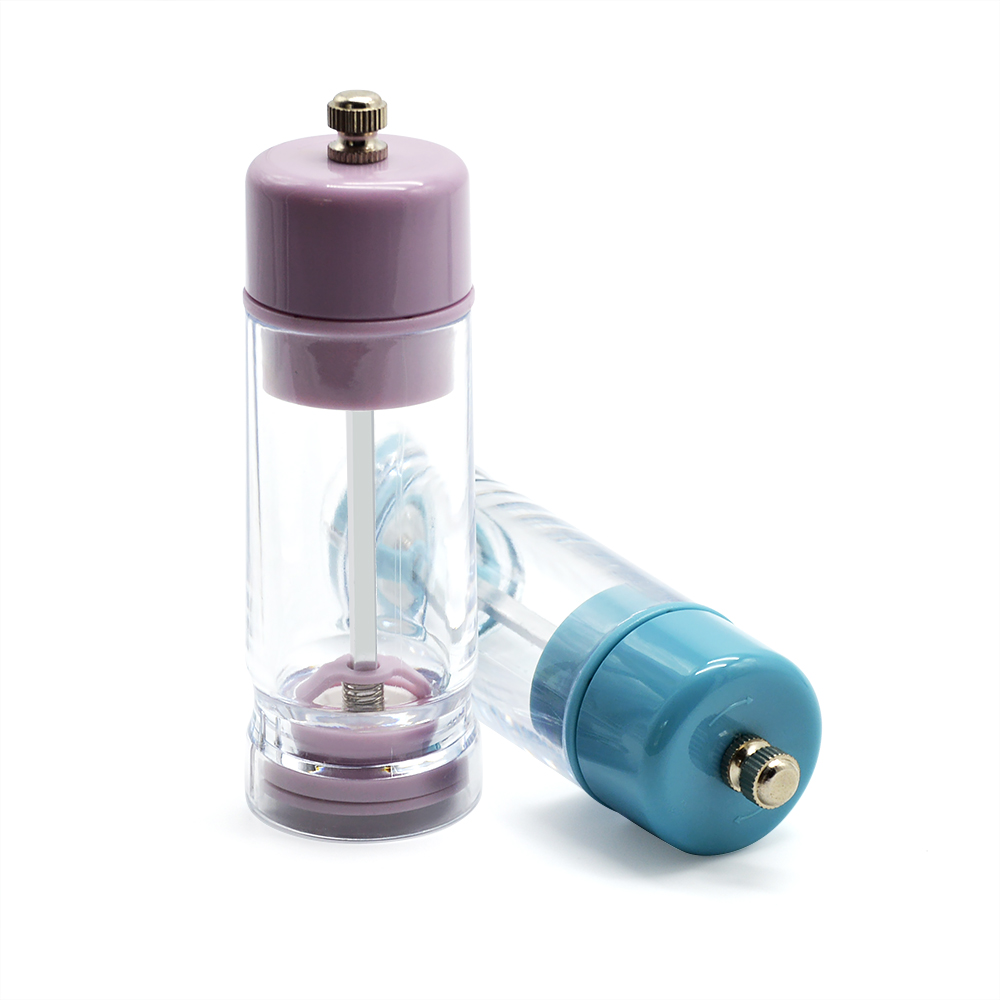
The source article highlights several useful product features: a fine-to-coarse adjustable grinding nut, a smooth rotatable handle, a covered design, a transparent acrylic container, and a ceramic grinder. These are valuable details to verify because they affect everyday usability. An adjustable nut gives users control over texture, from a finer sprinkle to a coarser crack. A transparent container helps users see when peppercorns or salt need refilling. A ceramic mechanism is often selected for seasoning mills, but buyers should always confirm the exact mechanism material, recommended contents, and maintenance instructions for the specific model being quoted.
Wholesale Pepper Grinders: How to Compare Options
Wholesale pepper grinders are commonly ordered for foodservice, retail, promotional, and hospitality needs. Bulk buying can reduce unit handling complexity, but it also increases risk if the product is not checked carefully before production. A sample that looks acceptable on a desk may perform differently after repeated twisting, refilling, and cleaning.
Use the table below to compare sourcing factors before selecting a supplier or confirming a purchase order.
| Check item | Why it matters | Questions to ask the supplier |
|---|---|---|
| Grinding adjustment | Controls fine-to-coarse seasoning texture | How is the grind adjusted, and can users change it easily? |
| Mechanism material | Affects performance and suitability for pepper or salt | What is the grinder mechanism made from, and what seasonings are recommended? |
| Container material | Influences visibility, weight, and appearance | Is the container acrylic, glass, plastic, wood, or another material? |
| Refill design | Impacts restaurant and household convenience | How is the mill opened and refilled? Are instructions included? |
| Custom branding | Supports retail, hospitality, or promotional use | Which logo methods are available, and where can branding be placed? |
| Packaging | Protects the mill and presents the product | Can the supplier provide individual boxes, set packaging, or buyer-specified artwork? |
| Quality inspection | Reduces defects in bulk shipments | What checks are performed for function, appearance, and packaging before shipment? |
Understanding Pepper Mill Manufacturing Without Overlooking Details
Pepper mill manufacturing involves the coordination of parts that must fit and move smoothly: body, lid or cover, handle or top, grinding mechanism, adjustment component, and packaging. Even small variations can affect user experience. A loose top may feel cheap. A poorly aligned mechanism may grind unevenly. A refill opening that is too narrow may frustrate users in a busy kitchen.
Buyers should avoid assuming that all models in a catalog share the same materials or construction. If a sample includes a transparent acrylic container and ceramic grinder, confirm that the production order will use the same specifications. Ask whether any changes occur when the order quantity, color, or packaging changes. Also ask how the supplier handles pre-production samples, approval samples, and mass-production consistency.
For OEM or private label projects, provide a clear brief. Include intended market, target retail price range if relevant, preferred appearance, packaging expectations, labeling language, logo files, and any required carton marks. If compliance, food-contact documentation, or market-specific testing is needed, ask what the supplier can provide and what must be arranged by the buyer. Do not rely on general claims; request written confirmation for the exact model and destination market.
Salt and Pepper Mill Sets: When a Set Makes Sense
A salt and pepper mill set is often easier to merchandise than a single grinder because it creates a complete table or kitchen solution. The original article describes a set with fine-to-coarse adjustment, a smooth rotatable handle, a sleek cover, a transparent acrylic container, and a ceramic grinder. These features can be appealing for modern kitchens, but set buyers should consider practical differentiation as well.
For example, the pepper and salt mills should be easy to tell apart, either through labeling, cap color, fill visibility, or packaging notes. If both mills look identical, users may confuse contents after refilling. Buyers should also confirm whether the same mechanism is recommended for both peppercorns and salt, or whether the supplier provides different internal components for different seasonings.
Checklist Before Placing a Bulk Order
- Request physical samples and test them with the intended seasoning.
- Check grind range, handle movement, refill process, and stability on a table.
- Confirm exact material descriptions for the body, container, mechanism, lid, and adjustment parts.
- Ask for available branding methods and artwork requirements.
- Review individual packaging, set packaging, inner carton, and export carton details.
- Clarify whether instructions, labels, barcodes, or multilingual packaging can be supplied.
- Agree on sample approval, production inspection, defect handling, and shipment documentation.
- Ask about lead time, minimum order quantity, payment terms, and whether repeat orders can match the approved sample.
Care and Use Guidance for End Users
Even well-made pepper grinders perform better when used correctly. End users should fill the mill with clean, dry peppercorns or the seasoning recommended by the supplier. Avoid overfilling, because the mechanism and lid need space to operate smoothly. If the grinder includes an adjustable nut, change the setting gradually instead of forcing it. For transparent containers, refill before the mill is completely empty to maintain convenient service during meals.
Cleaning guidance should come from the supplier, but in general, mills with internal grinding mechanisms should not be soaked unless the product instructions specifically allow it. Wipe the exterior with a soft cloth and keep the mechanism dry. For foodservice use, staff training is useful: employees should know how to refill the mills, identify salt versus pepper, and remove damaged units from circulation.
Practical FAQ
Can custom pepper grinders be ordered with a logo?
Often yes, but available methods depend on the model and supplier. Ask about print area, logo file format, color limits, durability of the marking, and whether a branded pre-production sample can be approved.
Are ceramic grinders suitable for both salt and pepper?
The source product mentions a ceramic grinder, but suitability depends on the exact design. Ask the supplier which seasonings each mill is intended to grind and whether separate mechanisms are used for salt and pepper.
What should I test in a sample?
Test grind consistency, adjustment range, refill ease, handle comfort, stability, appearance, packaging protection, and whether the production sample matches your branding requirements.
What commercial details should wholesale buyers confirm?
Ask about minimum order quantity, lead time, available customization, packaging options, inspection process, payment terms, shipping method, and how defects or shortages are handled. These details should be confirmed in writing before production.
Is a transparent acrylic container useful?
Yes, when offered, a transparent acrylic container lets users see the remaining seasoning level. Buyers should still confirm the exact material, thickness, care instructions, and whether the production order matches the approved sample.
