




Custom Silicone Ice Trays: Practical Sourcing Guide for B2B Buyers
Custom silicone ice trays are used by hospitality businesses, drinkware brands, promotional product buyers, and retailers that want ice molds tailored to a specific shape, color, logo, or packaging concept. Compared with rigid trays, silicone trays are valued for flexibility, repeated-use durability, and easier ice release. The original product concept also highlights options such as custom shapes, imprints, stackable storage, dishwasher-safe use, and BPA-free silicone, although buyers should always confirm the exact specification with the supplier before placing an order.
For business purchasing, the key question is not simply whether a tray looks attractive. Buyers need to understand mold development, material confirmation, packaging requirements, sample approval, quality control, and whether the supplier can maintain consistency across bulk orders. The following guide explains how to evaluate a silicone ice cube trays supplier or manufacturer without relying on vague marketing claims.
Key Takeaways
- Custom silicone ice trays can support branding, hospitality presentation, retail assortment planning, and promotional campaigns.
- Ask suppliers to confirm material, BPA-free status, dishwasher suitability, temperature range, packaging, and logo method in writing.
- For custom shapes or engravings, clarify tooling cost, sample lead time, revision process, and ownership of the mold.
- Large ice forms, including spheres or specialty molds, should be tested for release, clarity, cracking resistance, and melting performance in real use.
- Choose a supplier based on communication, sample quality, repeatability, and inspection process rather than price alone.
Where Custom Silicone Ice Trays Fit in the Market
Custom silicone ice trays are relevant for several commercial channels. Bars and restaurants may use them to create distinctive ice for cocktails, whiskey, soft drinks, or event service. Promotional buyers may want a logo or branded shape that supports a beverage campaign. Retail buyers may need a line of silicone ice molds in different colors, sizes, or gift packaging. Homeware brands may use custom trays as part of a broader kitchen accessories range.
The source article mentions custom designs, logo use, novelty shapes, standard cubes, colors, sizes, and imprints. These are realistic customization directions, but they require different production choices. A simple color change is usually easier than a fully custom 3D cavity shape. A logo on packaging is different from a logo molded into the ice cavity. Before discussing price, define the exact use case: retail resale, hotel and bar operations, corporate gifting, or private-label kitchenware.
Supplier vs. Manufacturer: What Buyers Should Compare
A silicone ice cube trays supplier may trade, source, assemble, or coordinate production. A silicone ice tray manufacturer may handle molding directly or work with partner facilities. Either model can work, but buyers should understand who controls tooling, material sourcing, quality checks, and final shipment.
| Evaluation Point | What to Ask | Why It Matters |
|---|---|---|
| Product scope | Can you make standard cubes, novelty shapes, large spheres, or custom logo molds? | Confirms whether the supplier matches the intended product concept. |
| Material details | What silicone is used, and can you provide written material and BPA-free confirmation? | Prevents assumptions about safety claims or material grade. |
| Customization method | Is the logo molded, printed, engraved on the mold, or added to packaging? | Each method affects appearance, cost, durability, and lead time. |
| Sample process | Can you provide pre-production samples before bulk manufacturing? | Helps verify ice release, shape accuracy, color, and packaging. |
| Quality control | What checks are performed for shape, flashing, odor, flexibility, and packaging damage? | Bulk orders need repeatable quality, not only a good sample. |
| Commercial terms | What are the MOQ, tooling fee, lead time, payment terms, and shipping options? | These details determine whether the project is commercially practical. |
Important Product Features to Confirm
The original article describes silicone ice trays as flexible, durable, easy to fill, easy to release, and able to maintain shape over time. It also references dishwasher-safe, BPA-free, stackable designs and food-grade silicone. These are useful buying criteria, but they should not be treated as automatic for every product or order. Ask for the exact product specification sheet and review it against your target market requirements.
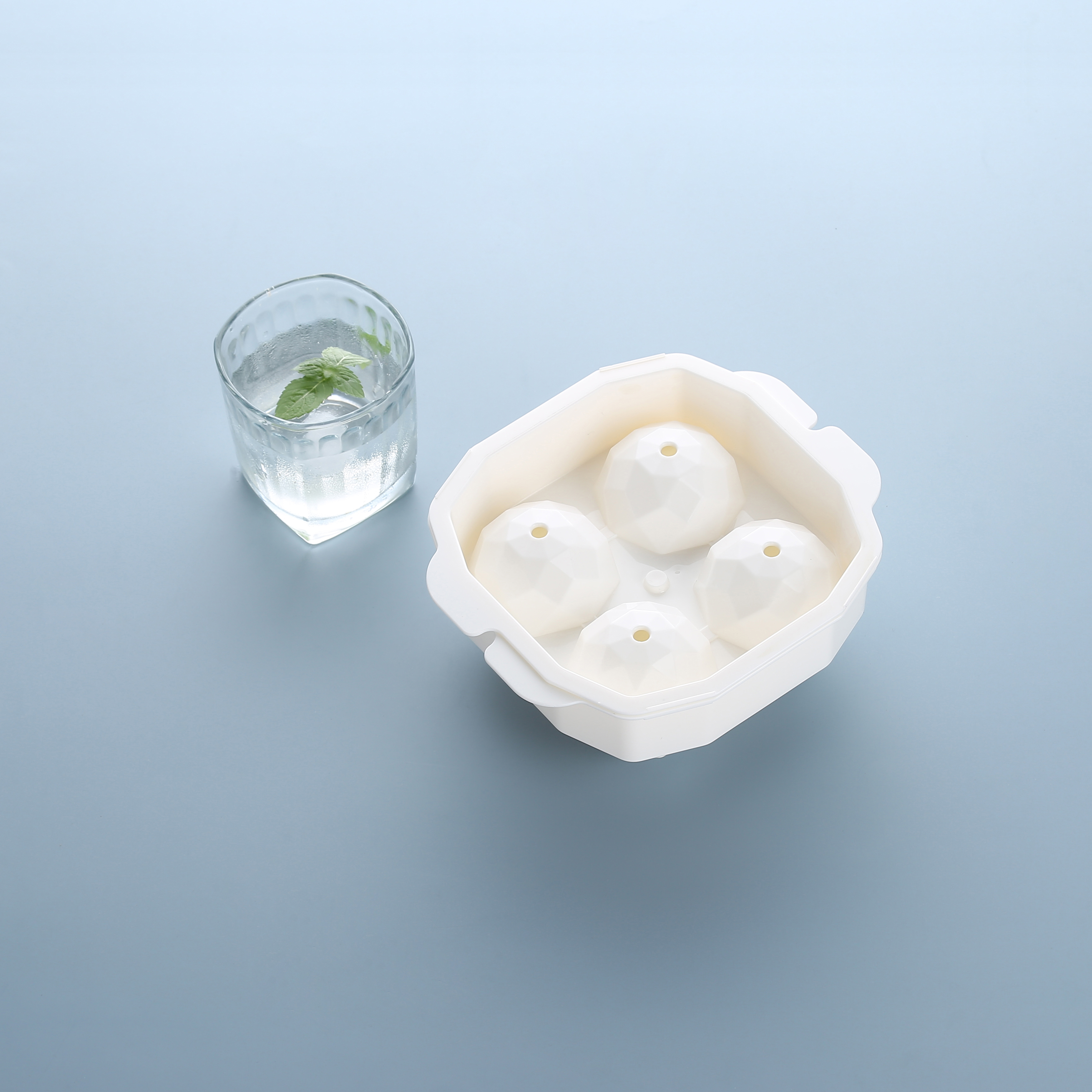
If you are considering a large-format mold, such as a hexagonal ice mold set or a tray designed for large ice balls or spheres, request a working sample. Large ice pieces are often chosen because they melt more slowly than small cubes, helping reduce dilution in cocktails or whiskey. However, actual performance depends on ice size, freezer conditions, water quality, and mold design. The source also mentions small drainage holes intended to help prevent cracking and support clarity; if this feature is important, ask the supplier to show how it works and whether it is included in the specific model being quoted.
Customization Decisions Before Requesting a Quote
A clear request for quotation saves time and reduces misunderstanding. Instead of asking for “custom silicone ice trays,” prepare a short specification that explains your desired result. Include the target ice shape, approximate tray size, number of cavities, color, logo location, packaging type, and order quantity range. If the tray is for retail, provide barcode, insert card, carton labeling, and packaging artwork requirements. If it is for hospitality use, focus on durability, ease of cleaning, stackability, and repeatable release.
- Define the final user: bar, hotel, retailer, promotional campaign, or home consumer.
- Choose the ice format: cube, sphere, novelty shape, logo ice, or large slow-melting form.
- Confirm whether customization is on the tray, the ice cavity, the packaging, or all three.
- Request a sample and test filling, freezing, release, washing, storage, and odor.
- Approve a final specification before mass production begins.
Quality Checks for Bulk Silicone Ice Tray Orders
For wholesale and OEM purchasing, quality control should be practical and measurable. Buyers can inspect whether the tray sits flat, whether cavities are consistent, whether the silicone feels uniform, and whether there is excess flashing around edges. Test how easily ice releases after a full freeze cycle. Check whether the tray keeps its shape when filled with water and moved to a freezer. If stackable storage is part of the design, test stacking when the trays are empty and when they are in retail packaging.
Packaging also deserves attention. Silicone trays may pick up dust during handling, and gift or retail packaging can be damaged in transit if cartons are not specified properly. Ask the supplier how products are packed per inner box and master carton, and whether they can support inspection photos or third-party inspection if needed. Do not assume certifications, test reports, or market compliance are included; request current documents relevant to your destination market.
Use and Care Guidance to Share With End Users
Even B2B buyers benefit from simple end-user guidance because it reduces complaints and improves product satisfaction. Recommend washing the tray before first use, placing it on a stable surface before filling, and leaving enough expansion space as water freezes. For clearer ice, users can experiment with filtered or boiled-and-cooled water, although results vary by freezer and water conditions. When removing ice, gentle twisting is usually better than using sharp tools, which may damage silicone.
If the product is marketed as dishwasher-safe, confirm the supplier’s care instructions and include them accurately on packaging. For large ice spheres or specialty shapes, advise users to freeze the mold fully before release and allow a short rest at room temperature if the ice is difficult to remove.
FAQ
Can silicone ice trays be customized with a logo?
Yes, many suppliers can support logo customization, but the method matters. Ask whether the logo is molded into the tray, formed into the ice cavity, printed on the tray, or added only to packaging.
Are all silicone ice trays food-grade and BPA-free?
No assumption should be made. The source article mentions food-grade silicone and BPA-free designs, but buyers should request written confirmation for the exact product and order.
What should hospitality buyers test before bulk ordering?
Test filling, freezing, ice release, washing, odor, storage, and whether the ice shape fits the intended glassware. For bars, slow melting and consistent presentation are especially important.
Is a custom mold necessary?
Not always. If a standard cube, sphere, or novelty shape meets the project goal, custom packaging or color may be enough. A custom mold is more useful when the ice shape or molded logo is central to the brand concept.
What commercial details should be confirmed with a supplier?
Ask about MOQ, tooling fees, sample cost, lead time, payment terms, packaging options, inspection process, shipping method, and any documents required for your market.
