




Discover Grater Factory Yangjiang: Practical Sourcing Guide for Kitchenware Buyers
Yangjiang is widely associated with kitchenware manufacturing, especially cutting tools and everyday food-preparation products. For buyers searching for a grater factory Yangjiang, the real task is not simply finding a supplier; it is understanding how to compare product designs, confirm production suitability, and ask the right commercial and quality questions before placing an order.
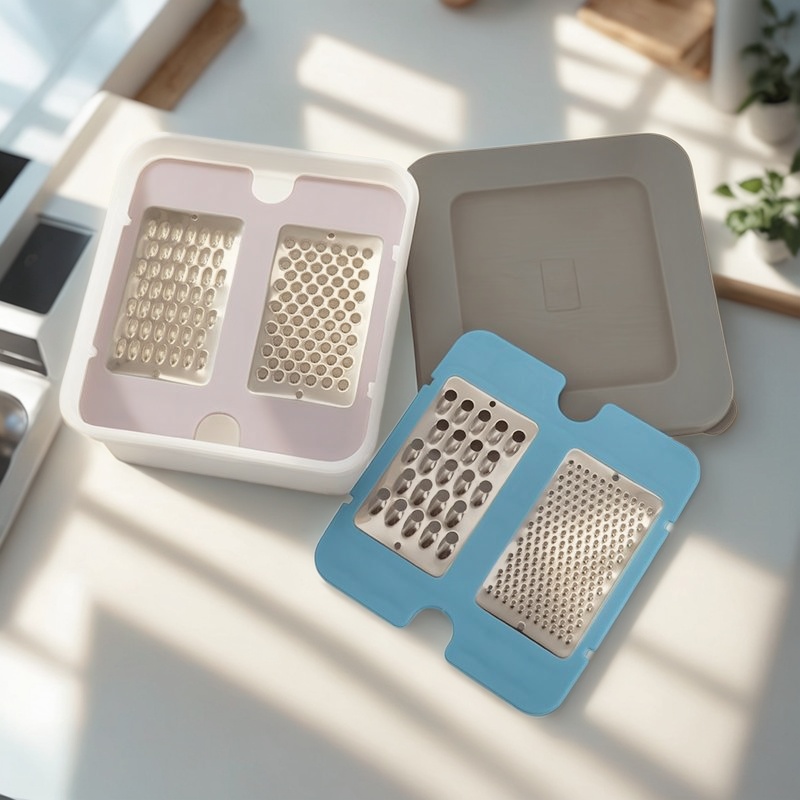
The original article introduced Yangjiang as a kitchenware hub and highlighted a product concept called the Grater Master Duo. Useful explicit details included a grater with two interchangeable lids, different grating sizes, a silicone frame, a compact stackable build, an integrated container to catch ingredients, and a secure lid for storage. This rewritten guide keeps those product ideas while turning the topic into a practical sourcing reference for importers, wholesalers, retailers, and OEM buyers.
Why Yangjiang Is Relevant for Grater Sourcing
Yangjiang has a strong reputation in kitchen tools, so it is often included in supplier searches for graters, peelers, knives, and related accessories. A buyer may look to this region when seeking a factory familiar with metal forming, kitchen-tool assembly, plastic or silicone components, packaging coordination, and export-oriented communication.
However, a regional reputation should never replace supplier verification. Different factories may specialize in different product categories, materials, finishes, molds, and packaging formats. Before assuming a Yangjiang supplier can support your exact grater project, confirm whether the factory has experience with similar structures, such as container-style graters, interchangeable lids, non-slip frames, or private-label packaging.
Product Concept: What to Check in a Grater Master Duo-Style Item
A product like the Grater Master Duo is designed around convenience: multiple grating options, a frame for handling, and a container to reduce mess. For a B2B buyer, these details become inspection points. Each feature should be reviewed for usability, durability, cleaning, packing efficiency, and consumer expectations in the target market.
- Interchangeable lids: Check how securely each lid fits and whether users can switch sizes without force.
- Grating surfaces: Ask what material and finish are used, and request samples to evaluate sharpness, consistency, and cleaning ease.
- Silicone frame: Confirm the grip feel, color options, attachment method, and resistance to loosening during normal use.
- Integrated container: Test whether grated ingredients collect cleanly and whether the container is stable during use.
- Secure storage lid: Review fit, closure strength, and whether it helps keep prepared ingredients contained in normal kitchen handling.
Supplier Evaluation Checklist
When evaluating a grater factory in Yangjiang, buyers should separate confirmed facts from assumptions. Do not rely only on catalog language such as premium, innovative, or modern. Instead, request documents, samples, production photos where appropriate, and clear written answers. The checklist below can help structure early supplier conversations.
| Evaluation Area | What to Ask | Why It Matters |
|---|---|---|
| Product experience | Have you produced graters with containers, silicone frames, or interchangeable lids before? | Relevant experience can reduce sampling delays and design misunderstandings. |
| Material details | What materials are used for each component, and can they be changed for our market needs? | Material choices affect cost, durability, cleaning, and compliance planning. |
| OEM support | Can you support logo, color, packaging, instruction sheet, or mold adjustments? | Private-label buyers need to know which changes are practical before quoting. |
| Quality control | What inspections are performed during production and before shipment? | Clear QC steps help prevent issues with fit, sharpness, color, and packaging. |
| Commercial terms | What are the MOQ, lead time, sample cost, tooling cost, and payment terms? | These details determine whether the supplier fits your buying plan. |
| Compliance support | Which documents or test reports can you provide for our destination market? | Buyers should verify suitability for their own legal and retail requirements. |
How to Compare Grater Designs for Wholesale Programs
Wholesale buyers often compare graters by appearance first, but practical performance is more important for repeat orders. A bright frame or compact shape may attract attention, yet a product that slips, clogs, stains, or is difficult to wash can lead to returns and poor reviews.
For a container grater, evaluate stability on a countertop and in hand. For interchangeable lids, check the tolerance between the grating plate and the container rim. If the fit is too loose, ingredients may spill; if too tight, customers may struggle to remove the lid. For silicone-framed designs, inspect whether the silicone is firmly attached and whether color matching remains consistent between batches.
Packaging should also be reviewed early. A stackable grater with several components may need inserts or protective wrapping to prevent scratches and movement in transit. Ask whether the supplier can provide drop-test guidance, carton measurements, and packaging options, but verify any performance claim through your own testing or third-party inspection when needed.
OEM and Private-Label Questions to Ask
If you are sourcing for an OEM or private-label project, treat the grater as a system of connected parts rather than a single item. A small change to color, lid fit, handle thickness, or carton layout can affect cost, tooling, assembly, and inspection criteria.
- Which parts can be customized without new tooling?
- Which color options are available for the silicone frame and other components?
- Can the supplier provide neutral packaging, brand packaging, or retailer-ready packaging?
- What files are needed for logo placement and packaging artwork?
- How will the supplier confirm pre-production samples before mass production?
- What tolerances or approval samples will be used as the quality reference?
Do not assume every factory can support all customization requests. Some suppliers may be stronger in standard wholesale supply, while others may be better suited for OEM development. The right match depends on your order size, timeline, target price, and quality requirements.
Quality Points Before Confirming an Order
Before confirming a purchase order, request samples that represent the intended production version. Test the grater with common ingredients such as cheese, carrot, citrus peel, or ginger, depending on the use case you plan to market. Check whether the grating action is smooth, whether residue is difficult to remove, and whether the container remains comfortable to hold.
Also inspect the edges, corners, and contact points. A kitchen grater should feel controlled in use, with no unexpected sharp plastic edges or unstable lid movement. If the product includes a storage lid, test the closure after repeated opening and closing. If the product is promoted as compact or stackable, check how it fits into retail packaging and typical kitchen drawers.
For larger orders, consider arranging a pre-shipment inspection. Inspection criteria may include quantity, appearance, assembly, component fit, packaging, barcode placement, carton marks, and basic function checks. The supplier should understand your acceptable quality limits and any retailer-specific packaging requirements before production begins.
Key Takeaways
- Yangjiang is a relevant sourcing location for kitchenware, but each supplier still needs individual verification.
- A grater with interchangeable lids, a silicone frame, an integrated container, and a secure storage lid should be checked as a complete user system.
- Buyers should ask direct questions about materials, customization, MOQ, lead time, packaging, QC, and compliance support.
- Samples, approval references, and inspection criteria reduce the risk of misunderstandings in OEM and wholesale orders.
- Product descriptions should be backed by confirmed specifications rather than broad claims about quality or innovation.
FAQ
What should I ask a grater factory in Yangjiang first?
Start with product experience, available designs, customization options, MOQ, sample process, lead time, and quality control steps. If you have a target market, ask what documents the supplier can provide for your compliance review.
Can a Yangjiang supplier make OEM graters?
Some suppliers may support OEM work, but capabilities vary. Ask which changes can be made to logo, color, packaging, component shape, and materials, and whether any change requires tooling or a higher order quantity.
How do I evaluate a container-style grater sample?
Test lid fit, grating performance, grip comfort, container stability, cleaning ease, storage-lid closure, and packaging protection. Use real ingredients that match your intended customer use.
Should I rely on catalog claims about stainless steel or premium materials?
No. Only use material claims that the supplier confirms in writing and supports with appropriate documents when required. If the exact grade or specification is important, make it part of the purchase agreement and inspection plan.
What is the biggest risk in sourcing wholesale graters?
Common risks include inconsistent lid fit, weak component assembly, unclear material specifications, packaging damage, and customization misunderstandings. Clear samples, written specifications, and inspection criteria help reduce these risks.
