




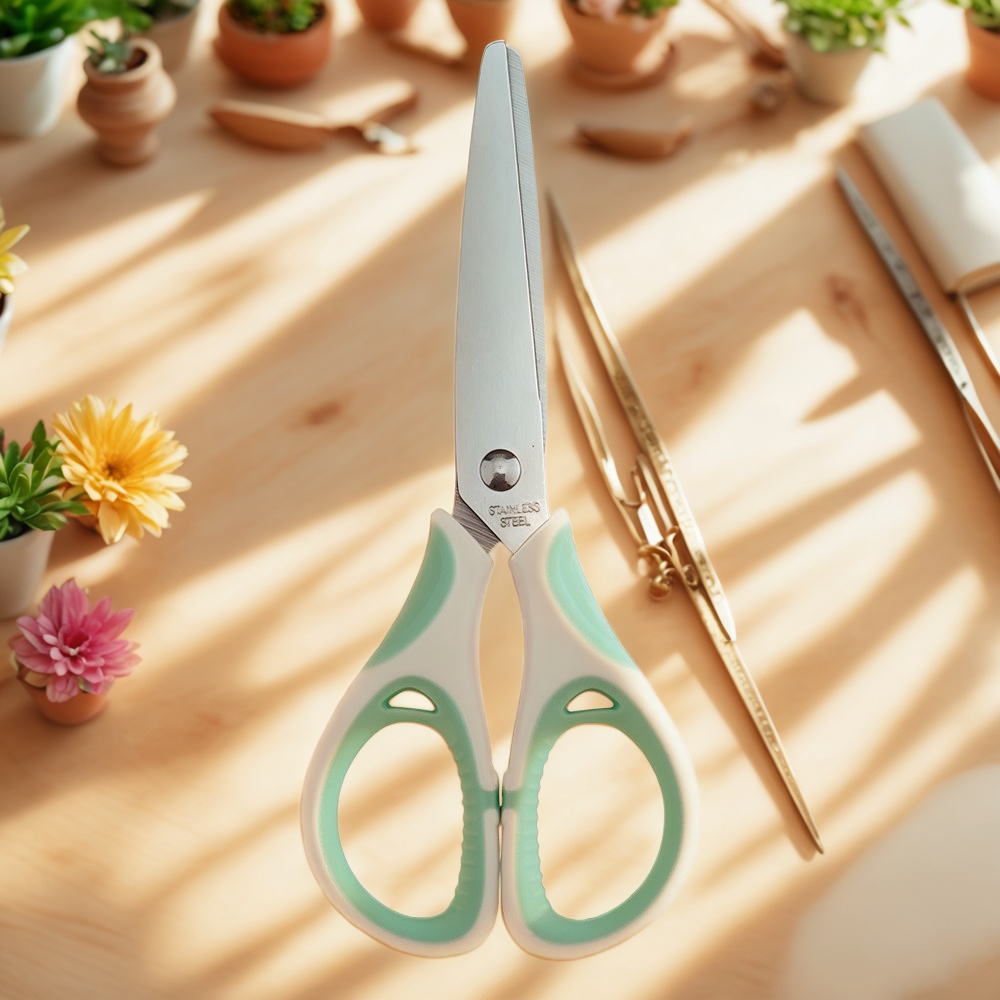

High-Quality Office Scissors for Precise Everyday Cutting
High-quality office scissors are one of the simplest tools in a workplace, yet they affect how quickly and neatly everyday tasks get done. From opening packaging and trimming labels to preparing classroom materials or cutting paper for presentations, a dependable pair of scissors can reduce frustration and improve consistency. The office scissors shown here are designed for general workspace and school use, with stainless steel blades, an ergonomic handle, a soft-touch seafoam green and white grip, and a screw hinge for smooth pivoting.
This guide explains what to look for when selecting precision office scissors, how to match scissors to common tasks, and how to care for them so they remain useful over time. It is written for office buyers, teachers, administrators, home users, and anyone comparing scissors for repeated daily use.
Key Takeaways
- Choose office scissors based on the materials you cut most often, not appearance alone.
- Stainless steel blades are suitable for many routine paper, label, and light craft tasks.
- An ergonomic, soft-touch handle can improve comfort during repeated cutting.
- A screw hinge helps support smooth movement and accurate control.
- For schools or shared offices, consider comfort, ambidextrous use, storage, cleaning, and replacement planning.
What Makes Office Scissors Suitable for Daily Work?
Good office scissors should cut cleanly without forcing the hand into an awkward position. In a busy office, uneven cuts and sticky blade movement slow down simple tasks. In a classroom, scissors may be used for worksheets, art projects, bulletin boards, and teacher preparation. For these environments, the most important qualities are reliable blade performance, comfortable handling, and control.
The original product description identifies several useful features: blades crafted from high-grade stainless steel, an ergonomic handle with a soft-touch grip, a seafoam green and white color design, compatibility with both left- and right-handed users, and a screw hinge for smooth pivoting. These features make the scissors suitable for everyday cutting rather than highly specialized industrial or heavy-duty work.
Blade Quality and Cutting Precision
Blade material is one of the first details to check when comparing office scissors. Stainless steel is widely used because it resists ordinary corrosion better than many untreated metals and can provide a sharp cutting edge for common office materials. For paper, envelopes, thin card, labels, and light craft materials, a sharp stainless steel blade helps produce cleaner lines with less snagging.
Precision also depends on how the two blades meet. If the blades are loose, paper may fold or tear instead of cutting cleanly. If the hinge is too tight, the scissors may feel tiring during repeated use. A screw hinge is useful because it supports controlled pivoting and may allow the tool to maintain a more consistent cutting motion than a loose rivet-style joint. Buyers comparing options should ask suppliers how the hinge is assembled, whether it can be adjusted, and what maintenance is recommended.
Handle Comfort, Grip, and Ambidextrous Use
Comfort matters when scissors are used for more than a quick cut. Teachers preparing classroom materials, office staff processing mail, or craft users cutting many pieces at once will notice handle shape quickly. The ergonomic handle and soft-touch grip described for this model are intended to reduce discomfort during extended use and provide a more secure hold.
The seafoam green and white color may also help scissors stand out in a drawer, supply cabinet, or classroom tool tray. While color is not a performance feature, visibility can reduce time spent looking for shared tools. The original article also notes that the handle accommodates both left- and right-handed users, which is practical for schools, reception areas, copy rooms, and other shared spaces where tools are used by many people.
Common Uses in Offices, Schools, and Home Workspaces
Office scissors are most effective when used within their intended range. They are useful for paper-based and light-duty cutting tasks, including document preparation, cutting labels, trimming printed forms, opening lightweight packaging, preparing classroom visuals, and simple craft projects. In schools, they support art activities, lesson preparation, bulletin board displays, and general classroom organization.
For shared educational settings, it is worth creating a simple usage policy. Keep scissors in a consistent location, check them regularly for loosened hinges or damaged blades, and separate general office scissors from scissors used for adhesive-backed materials whenever possible. Cutting tape or glue-backed labels repeatedly can leave residue on the blades, reducing smoothness and making future cuts less clean.
Comparison Checklist for Selecting Office Scissors
Before buying scissors for a desk, supply room, or classroom, compare practical details. The table below can help users and purchasing teams evaluate options without relying only on product photos.
| Selection Point | Why It Matters | What to Check |
|---|---|---|
| Blade material | Affects sharpness, durability, and resistance to ordinary moisture | Confirm stainless steel or other stated material with the supplier |
| Handle design | Influences comfort during repeated cutting | Look for ergonomic shaping and a soft-touch grip if used often |
| Hand orientation | Important for shared spaces | Check whether the scissors suit left- and right-handed users |
| Hinge type | Controls smoothness and blade alignment | Ask whether the hinge is screw-based and how it should be maintained |
| Task suitability | Prevents misuse and early wear | Match scissors to paper, labels, light card, or classroom craft needs |
| Storage plan | Improves safety and helps prevent loss | Use drawers, tool cups, labeled bins, or classroom stations |
Use and Care Tips for Longer Service
Even well-made scissors need basic care. Most performance problems come from sticky residue, accidental drops, cutting unsuitable materials, or poor storage. A few simple habits can help preserve smooth movement and clean cutting.
- Use office scissors mainly for paper, envelopes, labels, and light craft materials.
- Avoid cutting wire, thick plastic, metal, or other materials that may damage the blades.
- Wipe blades after cutting adhesive labels or tape to remove residue.
- Store scissors closed in a dry drawer, organizer, or classroom container.
- Do not force the blades if the hinge feels stuck; inspect for residue or misalignment first.
- For shared environments, assign separate scissors for craft glue, tape, and clean paper cutting.
If scissors become difficult to open or close, check the pivot area. A screw hinge should move smoothly, but dust, paper fibers, or adhesive buildup can affect motion. Clean gently with a dry or slightly damp cloth, then dry immediately. Do not make unsupported claims about sterilization, food safety, or specialized cleaning unless the supplier provides written instructions.
Buying Guidance for Offices and Schools
For a single desk, one comfortable pair of precision office scissors may be enough. For schools, administrative offices, studios, or supply rooms, selection should be more structured. Buyers should ask suppliers practical questions before ordering larger quantities: What blade material is used? Is the handle suitable for both left- and right-handed users? Is the hinge adjustable or fixed? What packaging options are available? Are replacement or reorder details consistent? What inspection process is used before shipping?
If purchasing for children, confirm age suitability and supervision requirements with the supplier or school policy. The original description calls these scissors useful for educational settings, but buyers should still verify whether the design is appropriate for the intended student age group and classroom activity.
FAQ
Are these office scissors suitable for schools?
Yes, the described scissors are positioned for school and office use. They can support classroom preparation, art projects, and general cutting tasks. Schools should still confirm age suitability, storage rules, and supervision requirements.
What materials can precision office scissors cut?
They are best used for typical office and classroom materials such as paper, envelopes, printed documents, labels, and light craft materials. Avoid hard or heavy materials that could damage the blades.
Why is a soft-touch ergonomic handle useful?
A soft-touch ergonomic handle can make repeated cutting more comfortable and provide better grip control, especially for teachers, office staff, and users preparing multiple documents or projects.
Do stainless steel blades need maintenance?
Yes. Stainless steel blades should still be kept clean and dry. Wipe off adhesive residue after cutting tape or labels, and store scissors closed to protect the cutting edge.
What should buyers ask before bulk purchasing?
Ask about blade material, handle design, left- and right-hand usability, hinge construction, packaging, reorder consistency, and any relevant product documentation the supplier can provide.
