




Plastic Handle Tailor Scissors: A Practical Guide for Fabric Cutting
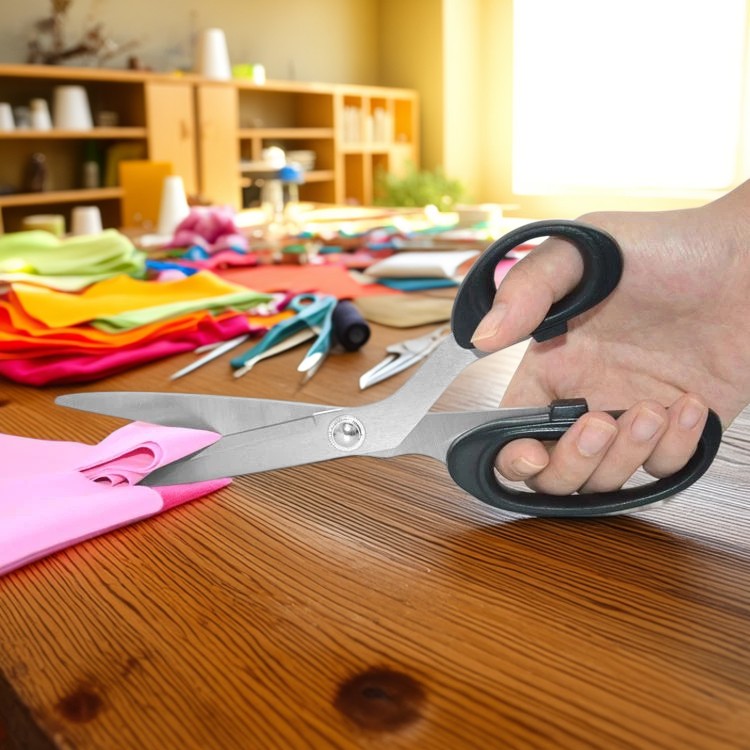
Tailoring, sewing, and craft work all depend on a clean, controlled cut. Plastic handle tailor scissors are a common choice because they combine a firm grip with metal blades designed for fabric work. The original product description highlights stainless steel blades, an ergonomic black plastic handle, a rubberized texture, a contoured grip, and a reinforced pivot point. Those are useful features to evaluate, but the best pair for your work still depends on the fabrics you cut, how long you cut at a time, and how carefully the scissors are maintained.
Key Takeaways
- Choose tailor scissors based on fabric type, cutting frequency, hand comfort, and blade control.
- Stainless steel blades can be a practical option for general sewing and craft use when kept clean and dry.
- A contoured plastic handle may reduce hand strain during repeated cutting, but fit should be checked in person when possible.
- Do not use fabric scissors on paper, wire, plastic sheet, or other hard materials if you want to preserve sharpness.
What Plastic Handle Tailor Scissors Are Best Used For
Tailor scissors are intended for cutting fabric, thread, light interfacing, patterns on cloth, and similar sewing materials. Compared with small craft scissors, they usually offer a longer blade and better leverage for straight cuts. Compared with rotary cutters, scissors are easier to use for notches, curves, quick trimming, and areas where a cutting mat is not available.
Plastic handle tailor scissors are especially useful for home sewing rooms, alteration counters, fashion classrooms, fabric shops, and craft stations where tools may be used for long sessions. The handle material is not the only quality factor, however. A comfortable handle is helpful only when the blades are aligned, the pivot feels stable, and the cutting action is smooth from the base of the blade to the tip.
Features to Check Before Buying
The source article mentions stainless steel blades and an ergonomic black handle with a rubberized, contoured grip. When comparing this type of scissor, use those visible features as a starting point and ask practical questions before purchase. How does the handle fit your hand? Does the blade close evenly? Is the pivot too loose or too tight? Can the tip cut small details cleanly?
Blade sharpness is important, but sharpness alone is not enough. A scissor with poor alignment can fold fabric rather than cut it. A handle that is too small can press into the fingers. A tool that feels comfortable for one person may not fit another, especially if the user cuts fabric daily. If you are sourcing for a sewing classroom, tailoring shop, or craft business, request samples or inspect units before placing a larger order.
Comparison Checklist for Selection
| Selection point | What to look for | Why it matters |
|---|---|---|
| Blade material | Stainless steel blades, as stated in the product description | Supports general fabric cutting when cleaned and stored properly |
| Handle comfort | Contoured plastic handle with rubberized texture | Helps maintain grip and may reduce fatigue during longer sessions |
| Pivot quality | Stable reinforced pivot point with smooth opening and closing | Improves control and keeps the blades aligned while cutting |
| Cutting task | Match the tool to delicate fabrics, plush fabrics, or thicker materials | Different materials need different pressure and blade control |
| Care routine | Dry storage, fabric-only use, and regular wiping | Protects cutting performance and extends usable life |
How to Test Cutting Performance
Before relying on a new pair of tailor scissors for production work, test them on scrap fabric rather than a finished garment. Start with a single layer of cotton or lining fabric, then test the material you use most often. The scissors should cut without snagging, chewing, or pushing the fabric forward. The tips should be able to make small snips for notches and curves.
- Open and close the scissors several times to feel for stiffness, grinding, or looseness.
- Cut a long straight line and check whether the fabric shifts excessively.
- Cut a gentle curve to test control through the middle of the blade.
- Use the tip for a small notch, but avoid forcing it through thick layers.
- Wipe the blades after testing, especially if the fabric has lint or finishing residue.
For thicker fabrics, take shorter cuts and avoid twisting the blades. For delicate fabrics, support the cloth on a flat surface and use slow, continuous pressure. Even good scissors perform poorly if they are forced through unsuitable materials.
Comfort, Grip, and Hand Fatigue
A major advantage of plastic handle tailor scissors is the ability to shape the handle for finger placement. The original description refers to an ergonomic black handle, rubberized texture, and contoured grip. These details can improve control, particularly when hands are dry, tired, or working with slippery cloth.
Comfort is personal. A tailor who cuts for hours may prefer a larger handle opening, while a home crafter may prioritize light weight and easy storage. Left-handed users should confirm whether the scissor design is suitable for their cutting direction. Buyers sourcing multiple units for shared workstations should consider the range of users rather than choosing only by appearance.
Care and Storage Tips
Fabric scissors stay useful longer when treated as a dedicated tool. The simplest rule is to reserve them for textiles. Paper dulls fabric scissors faster than many users expect, and hard materials can damage the edge or alter alignment.
- Wipe blades with a dry soft cloth after cutting lint-heavy fabrics.
- Store scissors closed in a drawer, sleeve, or tool roll to protect the edge.
- Keep them away from moisture and avoid leaving them under piles of fabric.
- Do not drop them; impact can affect the pivot or blade alignment.
- If cutting becomes rough, ask whether sharpening or replacement is more practical.
If the pivot area collects lint, clean it carefully rather than adding excessive oil. If any lubricant is used, it should be minimal and kept away from fabrics to prevent stains.
When to Replace Tailor Scissors
Replacement may be better than repair when the blades no longer meet cleanly, the pivot cannot hold alignment, or the handle is cracked. Warning signs include fabric folding between the blades, uneven cutting near the tip, a gritty opening motion, or the need to squeeze harder than usual. For business use, keeping a spare pair prevents delays during alterations or cutting sessions.
For sourcing, ask the supplier practical questions: What materials are used for the blade and handle? Is the pivot adjustable or fixed? Are replacement or sample units available for evaluation? How should the scissors be packed to protect the tips during shipping? These questions help buyers compare options without relying on vague claims.
FAQ
Can plastic handle tailor scissors cut thick fabric?
They may cut some thicker materials, as the original description indicates use on heavier-duty materials, but performance depends on blade sharpness, alignment, fabric density, and the number of layers. Test first on scrap material.
Are stainless steel blades always rust-proof?
Stainless steel is generally more corrosion resistant than some steels, but it still should be kept clean and dry. Avoid long exposure to moisture.
Should I use these scissors for paper patterns?
It is better to use separate paper scissors for paper patterns. Keeping tailor scissors for fabric helps preserve the edge.
How do I know if the handle is ergonomic for me?
Check whether your fingers sit naturally in the handle, whether the grip feels secure, and whether you can open and close the scissors repeatedly without pressure points.
What should bulk buyers confirm before ordering?
Ask for blade and handle material details, packaging method, sample availability, quality inspection process, and any applicable compliance documents rather than assuming specifications.
